• Members of the previous forum can retrieve their temporary password here, (login and check your PM).

John Dee & Edward Kelly 1588 extraction using George Ripleys method

B.Valentinus

Esteemed member
All ideas welcome, please help if you can. Thanks

I am working on how Edward Kelly extracted DMT from Powdered Acacia root bark using George Ripleys method.


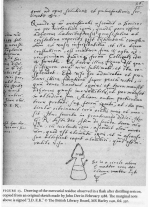
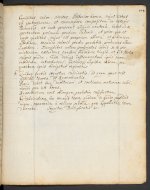
Below is a page from John Dees Diary which I believe documents it.

“Feb. 8th, Mr. E.K. (Edward Kelly) at 9 of the clock after none sent for me to his laboratory over the gate: to see how hee distilled sericon, according as in tyme past & of late he heard of me out of Riplay”. The Private Diary of Dr. John Dee.


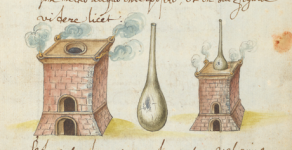
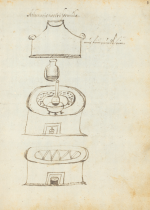
Can any one offer some insight on how they may have used the apparatus pictured below, assuming the "crystalline residue" is DMT.


Side note on the image below reads

“I saw the same on 8 February 1588 (new style) in Třeboň in Bohemia. From 2 lb. of sericon dissolved in distilled vinegar, and by means of spirit of wine cleansed of much sediment, came 4 oz. of red wine or oil. JD. E.K.”


Main Text on the image below reads

“When our menstrual “mercury” ascends from the sericon by the violence of the fire, a certain part of it is found cleaving to the side of the flask after the complete distillation and cooling of the glass, like salt and of a crystalline appearance. . . . And the form of this earth is like mercury sublimed, and therefore shines brightly. . . . Th is secret I learned through practice: G[eorge] R[ipley], as God is my witness”


At the bottom of the text

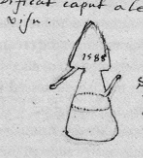
“small picture of a flask and receiver, depicting the crystalline residue as a ring around the inner circumference of the flask. A note adds, ‘So in a circle aboue the matter was the cleare matter lyke [mercury]”
 

Attachments
  • Screenshot 2025-07-20 at 11.19.52.png
    Screenshot 2025-07-20 at 11.19.52.png
    32.3 KB · Views: 4
  • Screen Shot 2024-02-14 at 16.59.38 (1).png
    Screen Shot 2024-02-14 at 16.59.38 (1).png
    1.9 MB · Views: 4
Last edited:
Fascinating stuff! I can well believe that Dee and Kelly may have produced and "experienced" DMT on account of their general reputation. Do you have a copy of all the texts that could possibly be associated with this process?

There's this on sericon:
(paywalled)

I'll take closer look at it and see how it could be a method for distilling/subliming a freebase alkaloid.
Hi Transform

Here is the link to some of Jenifer Ramplings work on Sericon, however I should say before your read I completely disagree with her conclusions so it may just be better to ignore for now. https://www.jstor.org/stable/10.1086/678094?seq=16

I believe that these are all Deckname or code for Acacia - Sericon, Antmony, Red Lead, Lead, Spongey Lead, Red Earth, Toade , Body, Adam ,Saturn (there are many more this is just a sample)

Here are some quotes from other alchemical authors that may help.

“Take the sharpest Juice of Grapes, and being distilled, dissolve into a clear Cristalline Water, the Body being well Calcined to a Redness, which is by the Philosophers called Sericon” The Simple stinking Menstruum of Ripley. Medulla Phil. Chym. pag. 170.


“Take of Sericon or Antimony thirty Pounds, out of which you will have twenty Pounds or thereabout of Gum, if the Vinegar be good” The Menstruum of Sericon of Ripley. In Vade Mecum, commonly called the Bosom-Book


"First take 30 lbs. weight of Sericon or Antimony, which will make about 21 lbs. of Gum, provided it is well dissolved, and the vinegar is very good, and dissolve each pound in a gallon of vinegar. twice distilled while still cold, and while in solution in a suitable glass vessel, stir it with a clean stick very often every day, the more often the better, and when it is well rid of its gangue1 at the bottom, then filter the liquor three times, which you will keep covering it tightly, and throw away the residue, because it is superfluous dirt which must be removed, and which does not enter into the work but are called "Terra damnata" (damned land)." George Ripley The Book of Breviary.


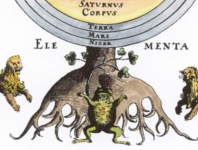
-Vision of a red toade, which drinks to much “juice of grapes"
"When busie at my booke I was upon a certeine night, This Vision here exprest appear’d unto my dimmed sight, A Toade full rudde I saw did drinke the juce of grapes so fast, Till over charged with the broth, his bowells all to brast" The Vision of Sir George Ripley,” in Theatrum Chemicum Britannicum, ed. Elias Ashmole (London, 1652), 374. On the various versions of the poem, see CRC (cit. n. 7), 195–6.


- Samuel Norton whose great grandfather was Thomas Norton commentary on ripley's Toade
" this toad (Ripleys Toade) meaneth red Ledd that is Adrop or Minium or Saturne, or Capricorne or Rupescissus Antimonie.” Getty Research Institute, MS 18, Vol. 10, Pt. 2 156

- Red Lead as the root Bark. Some of descriptions of a red spongey lead could be Bark that has been submerged in wine or vinegar?
"Take of Lead calcinced or rubifyed, or the best Minium, that is, Mineral Antimony, prepared, what quantity you please, yet with this consideration, that you must have so many quarts of distill’d Vinegar, as you have pounds of the aforesaid calcined Lead" Menstruum made of the Red Lead of Ripley. In pupilla Alchym. pag. 303.

- Red spongy Lead that is antimony
"To speak more plainly, saith Ripley, I affirm, that the more subtil a Body is, of the easier Dissolution it is. And moreover you must know, that Dissolution ought to be performed by our Vegetable Menstruum, or some other Vegetable. And this Vegetable Mercury, (Vegetable Menstruum) cannot penetrate a Body, so as to complete the dissolution of it, except the Body be first made spongy; but no Lead is so spongy, nor so subtil, as Red Lead or Minium (Vitriol calcined) and therefore if we would not be frustrated of our expectation, it is necessary for us to take Red Lead, that is Antimony prepared, which is more spongy and subtil, than any other Lead” Secret of Adepts Johannes Segerus Weinfield


- Spongy redde lede
"Take redde lede which is verey spongeouse rather then eny other lede which is neither so spongeouse ne so sotill for in it anon the water will entre and make his dissolucion as nedefull is to be" Sloane 3747 (cit. n. 26), 49
 

Attachments

  • Screenshot 2024-06-12 at 18.16.03.png
    Screenshot 2024-06-12 at 18.16.03.png
    477.6 KB · Views: 0
Last edited:
Indeed - just as vegetable mercury is nothing (in the modern sense) to do with the metal of that name, there is similarly no reason to believe that the "lead" or "antimony" mentioned here are any kind of metallic substances.

Do you recall that thread by an Italian alchemist friend of ours, where a red oil is obtained by dry distillation of phalaris mixed with calcined clay? I feel it has some relevance here, and just need to do a bit of searching to unearth it once more.
 
Indeed - just as vegetable mercury is nothing (in the modern sense) to do with the metal of that name, there is similarly no reason to believe that the "lead" or "antimony" mentioned here are any kind of metallic substances.

Do you recall that thread by an Italian alchemist friend of ours, where a red oil is obtained by dry distillation of phalaris mixed with calcined clay? I feel it has some relevance here, and just need to do a bit of searching to unearth it once more.


Im not sure Ive looked at so many texts, you mean this the PHALAIA AND ASA. But I couldnt find enough evidence for Phalarsis, so I changed my opinion. I now think that its most likely PHALAIA root meaning Panacea root so root of Acacia. That ASA isnt plant Asafoetida but instead Literally translation Asafoetida meaning a “stinking gum”. Im still not sure if stinking gum is the result of some process on Acacia root or another substance that necessary for the extraction.


Spagyric Medicine John Pharamund Rhumelius

THE PHALAIA AND ASA MEDICINES. HOW TO PREPARE AND USE THEM

"Take perfectly cleaned phalaia root and pour four fingers' breadth of heavenly dew over it. The receptacle must have a flat bottom, and the very long neck must be hermetically sealed. Put it in a steam fire and not in a common fire made with coal or wood. When the substance has stood in this heat for one month, it will have had the time to open, and its menstruum will have taken on the color of the most beautiful golden yellow."
 
Here we are:
Initially I used clay that I collected in nature and treated at 450°C. You can heat the clay in a pan, also at lower temperatures. Using bentonite, kaolin or others I don't see much difference because they don't react.
Probably other minerals are also fine, each will give a different spectrum (spectrum of the alkaloid: taste, effect etc...) to the product you are looking for.
I used a pot turned into still using a lid of an still 25 centimeters in diameter. I also have a 40-centimeter one.
I heavn't heated with direct fire but with heated ceramic plate.

You can use the grass powder or the juice. Better is the dryed grass powder (dryed at room temperature).

The distiller can be made with glazed iron components/pots, stainless steel, ceramic copper etc... Copper turns a little green.

I collected the exudated steam by connecting a glass tube leading to a glass container. So you can see the formation of liquids or salts.
In the clay I didn't see great things but I didn't think about it. Your question is interesting.

With grasses it is simple, cacti instead must be processed A/B style or similarly.


You can extract the alcaloids of phalaris for use them safely or better.
Every plant containing DMT contains also MAOI's and also the Phalaris contains them.

I didn't found a natural source of pure dmt without inhibitors.
The juremamine of mimosa can be destroyed/converted* by heating but is bot sure.

*Converted: it converts into another molecule which, however, bears the trace of maoi

In my opinion, crossing the border using maoi is like bribing to obtain the permit. Perhaps some psychoactive amines could replace the maoi but these are experiments and I do not recommend doing tests that could be dangerous.


I hope that we do not deviate too much from the argument of dithyramb, since it is dedicated exclusively to phalaris.

 
Thanks Transform I had never heard of this method before

"distillation using a layer of clay, then a layer of plant powder and another layer of clay"

I had assumed that "red earth" was a reference to powdered Acacia but i may have been mistaken.

"Adam is a synonym for the prima materia, the substance from which it was believed the universe and all the things in it were created. The name ‘Adam’ was thought tohave been derived from the Hebrew adom, meaning ‘red earth’, and thus the prima materia is sometimes referred to as the *red earth. "

Im going to review everything now see if I can find any evedince to suggest that clay was used in the extraction.
 
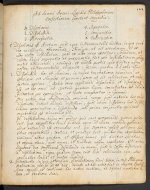
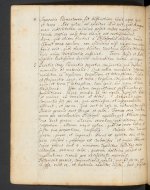
Here is are several pages for Edward Kelly Book to Emperor Rudolf II. That may help if anyone has and ideas. The translation is a working progress and should not be considered to be complete. Ive also attached several of Kellys apparatus from the same book that may be relevant. If anyone has any ideas please comment.


I believe that Gummi Arcani is a reference to Gummi Arabicum


To the Gummi Arcani, the following pertain to the preparation of the Philosopher's Stone.

  1. Dissolvens (Dissolving)
  2. Dissolubile (Dissoluble)
  3. Putrefactio (Putrefaction)
  4. Separatio (Separation)
  5. Conjunctio (Conjunction)
  6. Calcinatio (Calcination)

1. Dissolving
Dissolvens is vinegar, which is called the instrumental water, in which two things must be observed: First, it must be very sharp and distilled from white vinegar, which is derived from white wine. Second, its proper separation and preparation must be done by distilling and discarding the phlegm; the sharper and middle part, which is called our instrumental water, should be chosen; the dregs, which are separated from it, are discarded by us.


2. Dissoluble
Dissolubile, that is, Sericon, in whose handling care must be taken that it is primarily simple and pure; furthermore, that it is calcined and red, done excellently. The method of applying the dissoluble and the dissolvens is that it should be stirred three times with a wooden spatula, then filtered through a sponge, so that it evaporates into a gum. Here, two things must be considered: namely, that the material, once dissolved, must then be distilled; and that the dissolvens, through distillation, is exhausted by the dissoluble, where the first conjunction of the vegetable and mineral spirit occurs.

In the distillation of this substance, degrees of fire must be applied: the first expels a gentle water, excellent for healing ulcers; the second separates the phlegm of the vegetable spirit; the third and fourth expel two things, namely a white and thick smoke, called the spirit, and a rosy oil, which is called our soul and tincture. These two liquids combine during distillation into one, and what remains in the retort after distillation will be a black earth, to be calcined with a gentle fire. This is called the Basis and Mother of the Stone.


3. Putrefaction
In putrefaction, it must be noted that circulation should take place in a hermetically sealed Pelican vessel for 40 days, and this action must occur in a gentle, equal, and continuous heat, with the caution that it is not frequently moved from its place and station.


4. Separatio
The separation of the elements is done by distinguishing air, water, fire, and earth. The air, or spirit, is that which, due to its subtlety, can be moved with minimal heat and must then be rectified seven times in a well-sealed vessel. The water, also called the river by philosophers, resembles a vein in appearance and does not ascend unless with greater heat. The fire, which is the oil called the tincture of the Stone, is yellow in color, and a single rectification suffices for it. The earth, the Basis and Mother of the Stone, is then calcined with the gentlest heat, as mentioned above.


5. Conjunction
Once the elements are pacified, conjunction follows, which is twofold: manual and material. The manual conjunction is divided threefold: into double, triple, and quadruple. The double is the conjunction of water and earth; the triple is the conjunction of air, water, and earth; the quadruple is the conjunction of fire, air, water, and earth, and these prevail. These conjunctions are accomplished through imbibitions, the knowledge of which depends on this rule: drink that you may eat, and eat that you may drink. The natural conjunction, however, is achieved through things that are extrinsic and inseparably inherent, and through those that are naturally inherent in the substance itself. Of the former kind are the furnace and heat. The furnace, which philosophers call the Athanor par excellence, is of two types: one secret, made of glass or composite material; the other, more suitable, made of baked brick, constructed according to its proper proportions. There are also two types of heat: pure and impure. The pure is from the spirit of wine and flame, as is evident; the impure is from coals and a larger Athanor. Its degrees are four: tepidity, warmth, intense heat, and the highest heat, the doctrine of which depends on doubling the cycle as needed for the regimen. Of the latter kind, the natural conjunction, which occurs through things naturally inherent in the substance and material, are coldness, humidity, heat, and dryness. The latter of these, whose power is to putrefy and corrupt the composite in the other elements so that something neutral may be generated from it, pertains to the first degree of heat. The former, which is the quality of water, whose property is to wash and produce whiteness, will enjoy the second degree of heat, producing the white Stone. Humidity, the property of air, spreading through the material, tinges it yellow and occurs in the third degree of heat. Finally, heat, the instrument of fire, introducing its redness and producing the red Stone, is directed by the fourth degree of the regimen.


6. Calcination
Once these are done, calcination follows, for which an earthen pyxis and reverberation are necessary.

The pyxis must be well-glazed and contain the material to be calcined for 24 hours.
The reverberation will be oblong and gradually heated.
In this calcination, a certain black earth arises at the bottom of the vessel, to be separated from the remaining dust, which is called the damned earth. Multiplication follows, etc.
 

Attachments

  • ms_0398_0123r.JPG
    ms_0398_0123r.JPG
    4.5 MB · Views: 2
  • ms_0398_0123v.JPG
    ms_0398_0123v.JPG
    4.1 MB · Views: 1
  • ms_0398_0124r.JPG
    ms_0398_0124r.JPG
    3.7 MB · Views: 2
  • Screenshot 2025-07-23 at 18.01.40.png
    Screenshot 2025-07-23 at 18.01.40.png
    237.2 KB · Views: 2
  • Screenshot 2025-07-23 at 18.02.40.png
    Screenshot 2025-07-23 at 18.02.40.png
    583.3 KB · Views: 2
Back
Top Bottom