• Members of the previous forum can retrieve their temporary password here, (login and check your PM).

LSH (LAH) from aspergillus fungi

_Trip_

Titanium Teammate
Senior Member
This is a great paper on aspergillus homomorphus's ability to produce LAH and the genes responsible. Could be a future starting point.
 

Attachments

  • jones-et-al-2021-independent-evolution-of-a-lysergic-acid-amide-in-aspergillus-species.pdf
    2.4 MB · Views: 18
Literally came here to post this! Was just searching for some legit confirmation that"LSH" really exists and stumbled upon it.

Is it this one? I can't access what you posted:Independent Evolution of a Lysergic Acid Amide in Aspergillus Species

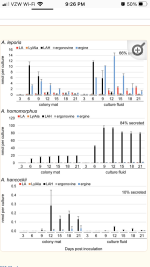
How about that A. homomorphous alkaloid profile?

Makes me wonder about the Eleusinian Mystery Rights/Kykeon. Maybe they just had an A. homomorphous culture? Certainly would be a fitting name for an ancient entheogen at the center of the birth of Western civilization - homo (man) morphous (shape)

Assuming of course that LSH/LAH has the effects people claim it does.

Given the almost 100% LAH alkaloid profile of A. homomorphous, it would be interesting to experiment with some petris.

It does produce sécalo of acids (ergochromes), but it's seems these are not an acute risk (though they are teratogenic) "Based on our and published data, the importance of SAs in acute intoxication seems to be negligible..."


Attachments

  • IMG_5412.png
    IMG_5412.png
    365.2 KB · Views: 3
Certainly would be a fitting name for an ancient entheogen at the center of the birth of Western civilization - homo (man) morphous (shape)
Just a point of etymological pedantry, but the 'homo' in this case almost certainly refers to its consistent shape, i.e. in opposition to "heteromorphous", which would display mixed morphology (two or more distinct forms).

Fascinating to consider that a mould species such as this may have been behind the Eleusinian kykeon, though. That is very much the kind of knowledge that would get lost to history.

It also raises the question of what are the areas of usual natural occurrence for these moulds - and , possibly, what moulds might occur in trace amounts on, say, [pennyroyal] mint leaves?

This leaves me wary of raising the somewhat infamous spectre of LSA and peppermint speculations, so I'll move on to another thought - that the barley also said to have been used in the kykeon may not (or, not only) have been infected with ergot, but could have been cultured with a mould such as A. homomorphous in a manner analogous to the use of koji (Rhizopus oligosporus) for tempeh production. It seems particularly noteworthy that one of the recipes for kykeon involved grated goats' cheese, which seems like a plausible way of introducing a particular mould species.

Volume two of the Encyclopedia of Psychoactive Plants by Rätsch and Berger includes a section on lysergamide/ergoloid-producing moulds. I'll append some further references in due course.
 
@aliendreamtime - that ergochromene article is also rather interesting. It sent me on a bit of a tangent with its data on the relative levels of secalonic acids (SAs) and ergot alkaloids (EAs). What caught my eye was the apparently consistent and relatively favourable balance between SAs and EAs in Claviceps spartinae. This somehow piqued my interest - pinged my radar, so to speak - and a bit more digging ensued. It turns out one of the main host genera of this species, formerly Spartina, since renamed Sporobolus, is a globally widespread genus of coastal grasses on mudflats and salt marshes.

It goes a little deeper for me - many years ago I found a sizeable detached clump of marsh grass which had washed ashore in the Severn estuary, UK. The stout grasses were infected with a surprising amount of ENORMOUS claviceps cornutae, and I'm now fairly certain that the grass species was Sporobolus anglicus (syn. Spartina anglica). Now, where did I put those mycological specimens? :unsure:
 
Yes, homo in Latín Is "human" while homo in Greek is "same." So we might have to go with the Greek root here. It was a tongue-in-cheek silly joke.

The A. homomorphous piqued my curiosity because it's basically pure "LSH" (where's Tregar haha - surely on his way). It would be interesting to see what the effects are (of course, in addition to whatever other multitude of sketchy metabolites the fungus might produce).

Yes, the idea of a psychedelic "culture" could explain why the kykeon took so many forms - goat cheese in your example. I was wondering whether a grape leaf could be host to a fungus similar to that which is responsible for producing ergolines in morning glory seeds (any idea what that species is?). Perhaps Aspergillus is another candidate, which could help explain the mystical qualities of Bacchus' wine, which Mururesku hypothesizes could have been the proto Christian blood of Christ as it were.

There's also the "Piri Piri" phenomenon in South America, where it seems fairly evident that different but similar species of grasses (sedges?) host different but similar species of ergoline producing fungi. The natives use different grass species for different symptoms, and they all contain differing ratios of the common morning glory type ergolines (if I remember correctly). Some are purported to be psychedelic - another potential kykeon analogue.

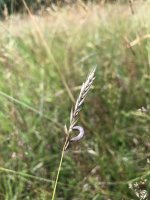
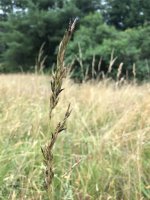
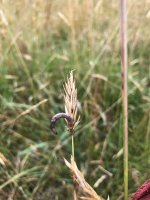
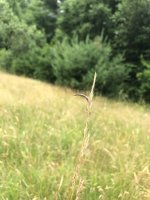
Man I love those treasured moments happening upon the random gifts of nature in that way (e.x. Sporobolus clump washed ashore), which fungi seem particularly masterful at trigggering. I have ergot smut growing in the hayfield behind my house, I wonder what species it is. I just assumed purpúrea was the only spp that grew kernels. But these are native grasses with small kernels. The kykeon no doubt haha.
 

Attachments

  • IMG_5029.jpeg
    IMG_5029.jpeg
    1.4 MB · Views: 5
  • IMG_5034.jpeg
    IMG_5034.jpeg
    1.6 MB · Views: 5
  • IMG_5031.jpeg
    IMG_5031.jpeg
    1.4 MB · Views: 5
  • IMG_5032.jpeg
    IMG_5032.jpeg
    1.2 MB · Views: 5
Back
Top Bottom