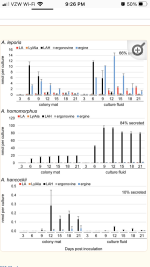
Certainly would be a fitting name for an ancient entheogen at the center of the birth of Western civilization - homo (man) morphous (shape)
Just a point of etymological pedantry, but the 'homo' in this case almost certainly refers to its consistent shape, i.e. in opposition to "heteromorphous", which would display mixed morphology (two or more distinct forms).
Fascinating to consider that a mould species such as this may have been behind the Eleusinian kykeon, though. That is very much the kind of knowledge that would get lost to history.
It also raises the question of what are the areas of usual natural occurrence for these moulds - and , possibly, what moulds might occur in trace amounts on, say, [pennyroyal] mint leaves?
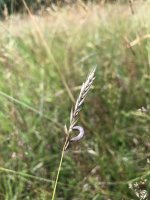
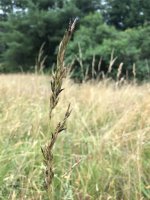
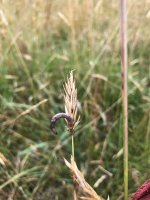
This leaves me wary of raising the somewhat infamous spectre of LSA and peppermint speculations, so I'll move on to another thought - that the barley also said to have been used in the kykeon may not (or, not only) have been infected with ergot, but could have been cultured with a mould such as
A. homomorphous in a manner analogous to the use of koji (
Rhizopus oligosporus) for tempeh production. It seems particularly noteworthy that one of the recipes for kykeon
involved grated goats' cheese, which seems like a plausible way of introducing a particular mould species.
Volume two of the Encyclopedia of Psychoactive Plants by Rätsch and Berger includes a section on lysergamide/ergoloid-producing moulds. I'll append some further references in due course.




 www.ncbi.nlm.nih.gov
 www.ncbi.nlm.nih.gov