psilocybin
Rising Star
Any questions or problems you may run into during an extraction can be asked to get other members input in this thread.


This a question for one of the more acacia-focussed threads, but the red part sounds promising to me. If you can get hold of a small UV light, shining that onto various cracked-open parts of the material may give you some additional clues through fluorescence. There's a discussion on this somewhere as well - maybe here, but one of our more dedicated acacia growers might well know… @CheeseCat, @acacian or @_Trip_ being some good candidates. Anyhow, here were the search results:I have a bunch of sticks/twigs the largest being about 3cm wide (which I sustainably harvested off a broken branch of the tree) should I use all parts of the bark?
or just the outer bark? or the white/beige layer under the outer bark? or the red core in the middle?
I will try use phyllodes next time, just wanted to clarify of which part of the bark as I have been told various different things by different people
 forum.dmt-nexus.me
"..repeated maceration with...

Sounds like polymeric DMT has formed, which is typical of later pulls and results from the longer base contact times. Running it through a mini A/B process should clear it up somewhat.Have a naptha pull thats my last pull from a long worked over STB, upon freeze precip, after some evap, I am noticing a darker reddish substance starting to form, seems "liquidy" along with a hazy cloud - assumning that DMT crystal + what else? there was no basified liquid in the solvent prior to evaping/freeze precipitation.
You did this? Or you're planning to?First time
Using acacia obtusifolia
Hydrochloric acid 2l water and bark
3pulls 1hr each pull in stainless pot below simmer
Then reducing
50g of salt the stir to dissolve
50g of caustic 50 burps
Then wash with shillete
Then then watch magic spice form
Any tips tricks pls
Thanks yeah checked out the acacia grow thread got a couple-months old acuminata, posted a picture of over there, to answer your question no my twigs etc arent dried but I just scrape off/ separate layers with a knife takes time but ey all good things take time. Dont have a UV light however the red inner-core of the bark looks kinda shiny so maybe that's a good sign, Acacia Acuminata is reported to have 0.7% to 1.6% DMT in the bark so if SWIM has a successful extraction with the inner red stuff will let you knowThis a question for one of the more acacia-focussed threads, but the red part sounds promising to me. If you can get hold of a small UV light, shining that onto various cracked-open parts of the material may give you some additional clues through fluorescence. There's a discussion on this somewhere as well - maybe here, but one of our more dedicated acacia growers might well know… @CheeseCat, @acacian or @_Trip_ being some good candidates. Anyhow, here were the search results:
Search
I've a pile of home-grown acacia twigs to sort out (I forgot the species, but it was selected for having a chance of being active) so I'll be interested to see how you get along with this. Have your twigs dried out yet? That'll make a big difference in whether you're even able to separate the different bark layers.
..i think it is good to pool all Acacia extraction info into one thread, as they behave differently sometimes to even related plants like Mimosas..
i'm still building this OP, but i will pool all the info from the Acacia Info thread, and various scientific papers into this OP in the future..anyone feel free to contribute/add etc..
methods included will have with certainty 'worked successfully' on a number of ocassions..
i) the 'CSIRO-method' of the late 1960s (as used with Acacias phlebophylla, maidenii etc. ) is briefly described here:
"..repeated maceration with...Propagation of Acacias
This thread is a dedicated space in which nexians are welcome to post their progress/knowledge in propagating acacia. Share techniques, grow logs, media, failures/successes, seed sourcing/collecting and any other propagation related info here. I'd love to see what members are doing in this area, as its a bit scattered on the forums.. hoping that this may consolidate discussion of the topic into a succinct space, and develop into a useful resource for anyone interested in propagating these plants.
Below is some basic info on propagating...
- acacian
- Replies: 457
- Forum: The Ethnobotanical Garden
I get a lot of mileage out of a kids' "secret message" spy pen light, at least for harmala alkaloids. They're only deep violet, so their efficacy with simple indoles remains to be seen. Cobbling something together with an actual UV LED would be a matter of just swapping the LEDs over. [Edit: that's assuming they're of a compatible voltage range, which they mostly should be.]Wow that UV thing is a good read I needa get my hands on one of those lights
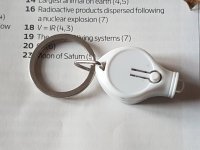
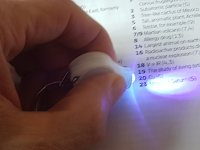
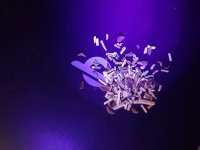
Hey @_Aurelias, with regard to the bark, you can strip the skin from larger branches. I wouldn't bother doing this to small sticks and twigs though, you'll be there all day. Just pull the bark off till you get to the white/beige layer and that's it. You can then dry everything (bark strips/sticks/twigs) in preparation for the next stage. If the broken branch you mentioned is very old the bark will likely be dry/brittle and might not be suitable.I have a bunch of sticks/twigs the largest being about 3cm wide (which I sustainably harvested off a broken branch of the tree) should I use all parts of the bark?
or just the outer bark? or the white/beige layer under the outer bark? or the red core in the middle?
I will try use phyllodes next time, just wanted to clarify of which part of the bark as I have been told various different things by different people
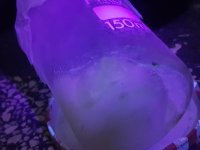
Thanks, yeah dont strip the twigs i just break em up n use em like that but the bark I have isn’t tooo old, have started an extraction based off no man’s tek so fingers crossed keen to see the resultsHey @_Aurelias, with regard to the bark, you can strip the skin from larger branches. I wouldn't bother doing this to small sticks and twigs though, you'll be there all day. Just pull the bark off till you get to the white/beige layer and that's it. You can then dry everything (bark strips/sticks/twigs) in preparation for the next stage. If the broken branch you mentioned is very old the bark will likely be dry/brittle and might not be suitable.
Stick it in the freezer for a while then poke it until it solidifies, or absorb it onto herbs. Two ways among various others. Creativity is also permitted.Ok this might be the wrong thread to ask this question but how do y’all store dmt goo? Seems like a damn nuisance to bring around with u.
Maybe your material was simply weak, leading to the low yield. It's hard to comment on extraction efficiency in absence of further details. Similarly, goo is a frequent outcome of a simple acacia extraction. Most have a more diverse alkaloid profile than MHRB does.Thanks, this is a slightly different topic but when I was extracting I put the naptha solution (was cloudy and yellow) in the freezer for 2 days, no crystals formed but I tried the evap and got a lil hit of goo out of it didnt expect much as only used 20ish grams of acuminata bark but was wondering what might cause it not to crystallise? And any reason why I’d get such a small yield besides the amount of bark used? I felt the dmt but def wasn’t enough for a proper trip
Thanks, used a stb similar to lazy man’s tek, but if what DrPotato said is true about dry lye frying dmt/ degrading it i think that might have been where I went wrong as I added some extra to my base\bark soup, I realise now also that goo isn’t really that bad of an outcome, was reading a thread where people said goo was all that was available back when extractions were a new thing, will try again soon with a larger quantity of bark (also a different part of the bark) and update with my results. Also this forum is such a great learning resourceMaybe your material was simply weak, leading to the low yield. It's hard to comment on extraction efficiency in absence of further details. Similarly, goo is a frequent outcome of a simple acacia extraction. Most have a more diverse alkaloid profile than MHRB does.
As mentioned, you'll have to be more specific with the method you've used so far. Cleanup steps might increase your chances of getting crystalline material, but that's not a given for acacias.

Small, but not too small. I got the impression @_Aurelias started with a very small amount so there is a little headroom. 200 g should be manageable once one has the technique dialled in. Then again, I've seen great results from 20 g MHRB and getting the whole job done with a couple of jam jars, which was super convenient.you would be better to stick with smaller amounts bark tell you perfect .. besides smaller extractions are more eficient .. just a sugestion
i am no exSPIRT

Yeah I think I used a bit too little amount of bark, as you said im just trying to get the technique dialled in so I can do it successfully every time, using a tall 1L jar which works good enough for me, my next extraction I’ll try more like 50-80g bark and I’ll be sure to dry the material out before as I’ve heard has benefits when extracting, still got a pull or two left to try of the 20g extraction so I’ll see if I get anything off that anywaysSmall, but not too small. I got the impression @_Aurelias started with a very small amount so there is a little headroom. 200 g should be manageable once one has the technique dialled in. Then again, I've seen great results from 20 g MHRB and getting the whole job done with a couple of jam jars, which was super convenient.
If you have a solvent that can freeze precip you should freeze precip. It's really not much more difficult, if at all.Oh yeah, if I am doing an stb and not worrying about trying to get crystals, (just trying to get some kind of yield i.e goo) would it be better to evap instead of freeze precip?