psilocybin
Rising Star
Any questions or problems you may run into during an extraction can be asked to get other members input in this thread.


Test tubes are so underrated!to reiterate something in my big wall of text; many people inadvertently just use distilled vinegar as their only source of water, and totally bypass the use of home tap water, or use so little it never has any impact. unlike adding too much lye, theres no consequences in using too much vinegar.
also, maybe get a test tube and shake the heptane with water and a single grain of lye to alkalize it, and without, and just get an idea of how its behaving


gratitude for the reply, drpotato!a few things cause emulsions, you can get it because something is disrupting the barrier between phases, like an emulsifier, anything can become one of these but, if your material seems kinda foamy that could do it. Otherwise, if the phases are too similar, one reason excess lye is advised is its affinity for water is so great it crashes other things out, but its also just endlessly soluble and results in potentially, extremely dense water, this is half of why overbasing is done, besides reducing solubility of literally anything else and altering the charge on the water, it also just straight up makes the water much denser, a barely ph14 alkaline sodium chloride brine will perform similarly to like, 10% lye solution in many situations. the greater the density difference the more rapidly you should see seperation occur.
instead of something interfering with surface tension via some weak surfactant, something that can occur is physical emulsifiers, which need only be very fine particulates. calcium silicates and fluoride precipitates can cause this, basically just common stuff in your tap water. they form annoying precipitates that dont go away once they form, they show up looking like a waxy skin that wraps around the smallest bubbles of your solvent, and they kinda flake away a bit once things do settle. what they are is just solvent wicked around particulates too small to interact with the main volume of solvent, so they stay trapped floating in the water. these can be avoided by using demineralized water. if you have copper in your water, it interacts with calcium and soluble silicates to form the absolute most annoying form of calcium silicate, sulfate, or perhaps just silica, imperceivable quantities of this will clog a vacuum filter.
the lack of seperation may resolve if you add a bunch of salt, just make sure its not pool salt that contains calcium or magnesium, or else youll get a bunch of precipitate. its handy to keep a bottle of salt slurry on hand, full of a saturated brine, it makes the water more dense and adding it can do things that may give insight, like crashing stuff out, or settling at the bottom and clarifying the solution there indicating a density problem, or running tests in a test tube.
if you go with a quicklime base method, you can use calcium chloride to saturate your solution.
a hot bath is needed to get heptane to dissolve your DMT, heptane is a poor solvent for DMT, which is kind of the point. this is why i dont use naptha or hexane anymore for my initial pull, it has to actually be hot or else it wont do very much. a long contact time will more than make up for a lack of stirring though. and the hotter it is, the more it will seperate, this is almost universal in fact, most things that emulsify in water will seperate when heated close to boiling.
Its probably fine to just shake it like crazy into danger-milk while warm, but not so much vapors present a pressure problem, then put it in a hot water bath at 60C or whatever is recommended for heptane, and once it seperates, thats probably going to pull most of it. if your vessel permits, actually pushing it past 80 or almost simmering with a quick stir at the end, would be ideal.
to avoid the hot bath, use a solvent DMT is actually soluble in. toluene, DCM, chloroform, ether, maybe ethyl acetate but you need to salt it and be really gentle with basifying (sodium/potassium carbonate) or youll hydrolyze it and end up with ethanol, limonene, xylene, and if you salt the living daylights out of it, even acetone and isopropanol have precedented phase seperation, though thats highly experimental, and not neccesarily as applicable to a DMT wet process, dry maybe, but not wet.
using other solvents, you then end up with oil or goo that must be dissolved in hot heptane after the solvent is removed, and recrystalized. ideally it ought to be mini AB'd as this will fix any polymerization that occured, and in the case of DCM/chloroform, you might want to defat it first. unless exceptionally pure, DMT wont crystalize out of anything its VERY soluble in, or may struggle to. So thats the tradeoff, two extractions, granted the second one scales down to like 50ml or something, otherwise you have to deal with hot hex/heptane.
if you have a test tube, try experimenting to see what salt and heat does to the seperability after violently shaking it. similarly, what effect demineralized water has. PS, distilled vinegar used as your sole water source satisfies this too.
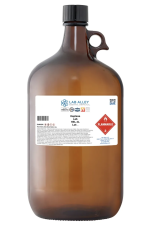
Thanks, Transform. I am using distilled water. There's more info on the heptane here.Can you show us the labels of both your heptane and your lye? Your situation sounds like there's some kind of detergent effect involved somewhere.
One more thing - what kind of water are you using?

I ended up with 650ml distilled water (as per Cyb's tek) + 60ml vinegar and 50mg lye. I then added another 300ml distiled water and 20g lye (when the heptane refused to rise).to reiterate something in my big wall of text; many people inadvertently just use distilled vinegar as their only source of water, and totally bypass the use of home tap water, or use so little it never has any impact. unlike adding too much lye, theres no consequences in using too much vinegar.
also, maybe get a test tube and shake the heptane with water and a single grain of lye to alkalize it, and without, and just get an idea of how its behaving
Well - that all looks fine. Is it the same batch of bark as the previous, trouble-free extraction with naphtha?Thanks, Transform. I am using distilled water. There's more info on the heptane here.
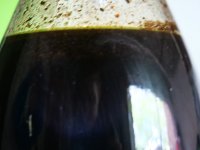
View attachment 109087View attachment 109088
I ended up with 650ml distilled water (as per Cyb's tek) which included 60ml vinegar and 50mg lye. I then added another 300ml distiled water and 20g lye.
Yeah, same batch of MHRB.Well - that all looks fine. Is it the same batch of bark as the previous, trouble-free extraction with naphtha?
What about trying with adding a bit more heptane? Sometimes the bark will "eat" a bit of solvent to start with.
If you try heptane first, and it still doesn't work, there's always the option of adding naphtha afterwards. Then again, the naphtha might be the secret sauce here - if this aspect of the puzzle really interests you, splitting the extraction in half and trying with one or other of the solvents in its own portion would be another way of going about it.Regarding the previous batch, I will add some more heptane to it, thanks (unless I should add naptha?)
 forum.dmt-nexus.me
Cool! will try it out, thanks. I had some luck yesterday on a different batch using my magnetic stirrer (rather carefully), sucked the emulsion right into it's vortex portal.i find emulsions break much quicker when theres already an established layer or mass of solvent, otherwise micro-beads will struggle to overcome one anothers surface tension and merge.
sucking emulsion through a vacuum filter is always a god tier solution though. the hand pumps used for brake line purging are the best ones ive encountered. i recommend using a nice flat buchner however you get one, with the cheapest purpose built fast filter paper disks, but then with a rubber gooch, they come as a set of concentric rings. you can also put a normal funnel with a cotton plug in them, and gently get results that way as well.
dont get the fritted glass ones, they look fancy but you cant really wash them, esp for stuff that is insoluble like calcium precips, they have specific utility which isnt applicable here.
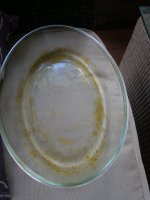
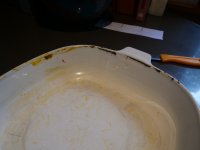
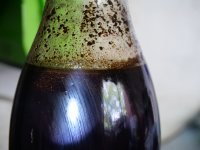
There's no way that crystalline DMT would crash out of xylene even at freezing temperatures, let alone at or above room temperature. DMT is way too soluble in xylene for that to happen. There might be the slenderest chance that crystallisation occured from out of the water, but I'd be 99.9% certain that it was something other than DMT. What exactly, it's foolish to speculate in absence of an actual sample, or at least a decent close-up photo of the material.1-1: Upon adding xyelene, I noticed almost immediately a large amount of crystals forming between the base and xylene, sitting in their own plane right above the interface of the base/solvent. How much, if at all, would this have been with DMT? I suspect the xyelene was so effective at pulling that perhaps either the DMT or other alkaloids had no option but to crash out at the warm temperatures of the liquid.
Either will do - I'd suggest the former, as what you've collected seems unlikely to be of further interest, therefore making it undesirable to expend unnecessary effort. Also, in future it might be wiser to keep those isolate fractions separate, just in case they're not of the same composition, i.e. -1-2: Building upon the previous question, it was impossible to pull the crystals without disturbing the base layer, but I didn't want to leave them in the event it was DMT crashed out in solution, and therefore I scooped them up (and surely some base product too) after the xylene pulls, added it to a dish and left to evaporate, leaving behind what you can see in the images below. Assuming there is valuable substance in there, I intend to recrystallize as per the final step of Cyb's tek using just heated naptha, or would a mini A/B be more appropriate?
the addition of the xylene to the acid/water mix again resulted in the formation of a defined crystal layer, which was also extracted after the clean xyelene, and added to the pan to evaporate as per question '1-2' above.
The transfer of DMT freebase from the xylene into the acidic aqueous phase occurs via proton transfer at the interface between the two liquid phases, so a continuous rolling action for a minute or two will maximise that area of interphase contact while (hopefully) preventing emulsions.should one spend a lot more time mixing the xyelene and acid/water mix and allowing to separate multiple times, or does the uptake of alkaloids into the acid/water mix occur quite quickly?
Your inference here seems likely to be correct, unfortunately.I believe I have an emulsion, and I believe it might be because I powdered the product far beyond what is required, allowing tiny particulate matter to cling to the solvent.
You may indeed have to make your best attempt at separating the dirty xylene and then filtering it - but it may prove easier to pull straight from the dirty xylene into acid and filter the acid back-pull instead. The acid phase might separate more readily from the xylene than the basic one does; this is something that you'd do well to check out at the test tube scale first.I have tried adding more water/lye, additional salt, and am currently attempting a vibrational separation with the bottle atop the washing machine on a spin cycle, no success so far. If no luck I will attempt to filter the particulate matter and continue.
No worries - rather a thorough and well-considered line of questioning than a series of brief, ill-defined grunts.Apologies for the long-windedness.
i dont really do teks. i did them starting out to get a sense of what was happening, but mostly just because with processing plant material its substantially an art in addition to science. the fine details of DMT forming crystals or some nuanced behaviours like with FASA are a bit tricky, as is the processes that involve solids, which is why i always strain my acid soup and thoroughly filter it. But the overall chemistry is pretty simple, its a poorly or usually under the circumstances insoluble base, and extremely soluble salt, and that is exploited to migrate it between mediums, which are also tuned to be selective. almost nothing but DMT migrates under the circumstances (fats dont form salts for example in acid).Cool! will try it out, thanks. I had some luck yesterday on a different batch using my magnetic stirrer (rather carefully), sucked the emulsion right into it's vortex portal.
is the tek that you generally follow available to view somewhere? or is it more advanced science that I likely wouldn't comprehend...
There does seem to be a causal link between base contact time and the formation of darker, polymeric goo. This can be depolymerised up to a point, but leave it long enough and the material becomes irreversibly altered into inactive crud.is it true DMT degrades in the base and/or acid solution the longer you leave it to soak?
thanks, doubt i will need to do this but how do I de-polymerise? Do i do a re-x or something?There does seem to be a causal link between base contact time and the formation of darker, polymeric goo. This can be depolymerised up to a point, but leave it long enough and the material becomes irreversibly altered into inactive crud.
Mini A/B - the acid phase does a good job of breaking up the polymer. Ime, re-x of polymeric goo tends to be wasteful and confusing, as different sizes of polymer dissolve at different temperatures.thanks, doubt i will need to do this but how do I de-polymerise? Do i do a re-x or something?
 It's the stuff on the razor i'm trying to understand for next steps...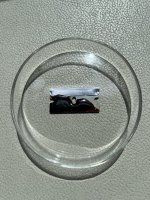
I'd guess that's polymeric goo from prolonged base contact time. See above post.Sorry, i know there are a billion goo posts, but none i could find that match my particular goo, lol. I'm doing Cyb's ATB (MHRB) tech and am seeing a lot of this stuff now. I'm realizing that the background of the photo looks like the motherload of crystal, but it's just the upholstery on my mobile lab
View attachment 109245
ugh, thanks, Transform. I used a magnetic stirrer and maybe left it on too long.I'd guess that's polymeric goo from prolonged base contact time. See above post.