Ive used GA3 for hard to germinate seeds in the past with great results. I haven't used it for phalaris but im sure it would work. This is a simple way to apply it Use of GA3 - Ontario Rock Garden & Hardy Plant Society

-
Members of the previous forum can retrieve their temporary password here, (login and check your PM).
You are using an out of date browser. It may not display this or other websites correctly.
You should upgrade or use an alternative browser.
You should upgrade or use an alternative browser.
Phalaris farmin'
- Thread starter JungleGhost
- Start date

JungleGhost
Nocturnal Scavenger



If you're already growing tobacco, you can prepare a tobacco decoction and apply it with a brush. It's a pesticide.What's some natural pesticide/pest repellent!?
JungleGhost
Nocturnal Scavenger
Ouu good idea!If you're already growing tobacco, you can prepare a tobacco decoction and apply it with a brush. It's a pesticide.
My blunt guts may have a recycling use then huh?
If it's already used I'm not sure, but as long as it still has nicotine, yes.My blunt guts may have a recycling use then huh?
JungleGhost
Nocturnal Scavenger
I think any cheap lawn food would do. probably best to start low in case they get burned.What kinda fertilizer is good for these guys?
I was thinking fish emulsion but something cheaper would be better...
what sort of temperature fluctuations would we be looking at here to trigger germination in the more dormant seeds? Anyone have any good results to share with temps, times and light/dark that work consistently?
I have heard once of an accelerated protocol, but for fungi, where it needed successive ideal cycles to trigger fruiting, but a day could be condensed down to like 8 hours, so effectively 3 day cycles a day.
im wondering if this couldnt maybe be accomplished using a cheap peltier fridge, everyone probably has a crappy wine fridge, 4-can sized mini desktop fridge, or a 12v travel fridge that would probs go great on a simple $5 hardwarestore mechanical timer. they would make great little precision seed boxes rather than a fixed cold-source like a fridge.
I have heard once of an accelerated protocol, but for fungi, where it needed successive ideal cycles to trigger fruiting, but a day could be condensed down to like 8 hours, so effectively 3 day cycles a day.
im wondering if this couldnt maybe be accomplished using a cheap peltier fridge, everyone probably has a crappy wine fridge, 4-can sized mini desktop fridge, or a 12v travel fridge that would probs go great on a simple $5 hardwarestore mechanical timer. they would make great little precision seed boxes rather than a fixed cold-source like a fridge.

Grasshoppers
Titanium Teammate
A wide range of generic fertilizers appears to be suitable. With smaller plants, care should be taken to avoid root disturbance. Both mineral fertilizers and well-aged manure have been reported to work adequately.
For guidance on breaking dormancy in more persistent seeds, late autumn to early winter conditions typical of the Mediterranean climate can serve as a useful reference. In nature, dormancy is often interrupted by alternating cool and mild periods rather than constant conditions.
These fluctuations typically span from approximately –3 °C to +5 °C at the lower end and +8 °C to +15 °C at the higher end, often cycling on a roughly 24-hour rhythm. Maintaining high moisture in an inert substrate can support this process, while some insulation helps buffer against abrupt freezing or thawing events if a normal fridge is used.
For guidance on breaking dormancy in more persistent seeds, late autumn to early winter conditions typical of the Mediterranean climate can serve as a useful reference. In nature, dormancy is often interrupted by alternating cool and mild periods rather than constant conditions.
These fluctuations typically span from approximately –3 °C to +5 °C at the lower end and +8 °C to +15 °C at the higher end, often cycling on a roughly 24-hour rhythm. Maintaining high moisture in an inert substrate can support this process, while some insulation helps buffer against abrupt freezing or thawing events if a normal fridge is used.


neurobloom
Titanium Teammate
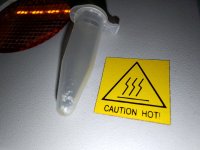
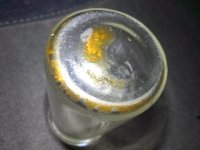
25mg dry crushed leaf sample was added to 1.5ml centrifuge vial. 0.3ml 25% ammonia and 1ml chloroform was added and vial shaken periodically for 5 hours. Chloroform fraction transferred to another vial and left to evap slowly and this is the result
That's DMT freebase crystals in case you're wondering. Leaf sample is from a selected hybrid clone from our selected DMT breed line.
That's DMT freebase crystals in case you're wondering. Leaf sample is from a selected hybrid clone from our selected DMT breed line.
Attachments
Nice work!
Aquatica/Arundinacea hybrid?
Aquatica/Arundinacea hybrid?
neurobloom
Titanium Teammate
No just selected clones of phalaris aquatica from different wild accessions hybridized together and reselected for for high clean DMT yield
neurobloom
Titanium Teammate
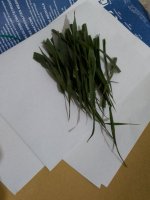
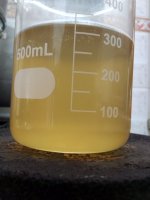
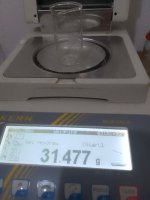
Another aquatica DMT clone
8.5g fresh leaf dried to 2g using a moisture analyzer. Acid base extracted with chloroform yielded 18mg crude freebase.
Bioassay proved the same as DMT extracted from MHRB.
8.5g fresh leaf dried to 2g using a moisture analyzer. Acid base extracted with chloroform yielded 18mg crude freebase.
Bioassay proved the same as DMT extracted from MHRB.
Attachments





0.9% dry yield? That's more than respectable - not to mention the aspect of breeding it yourselfAnother aquatica DMT clone
8.5g fresh leaf dried to 2g using a moisture analyzer. Acid base extracted with chloroform yielded 18mg crude freebase.
Bioassay proved the same as DMT extracted from MHRB.

neurobloom
Titanium Teammate
Well less than 0.9 if we take into account the fact its a crude freebase pulled with a wide spectrum solvent like chloroform.0.9% dry yield? That's more than respectable - not to mention the aspect of breeding it yourself
Based on the bioassay dose potency it felt like that extract is roughly 0.4 to 0.5%
I didn't have enough leaf material from that clone to do a proper mini acid base and recrystallization to get absolute numbers but that will be possible by November this year after break of summer dormancy
JungleGhost
Nocturnal Scavenger
Def need more seeds. Love ths research project.
neurobloom
Titanium Teammate
You will be harvesting your seedlings once they flower and ripen..if you are on schedule with the harvest you should end up with more seeds than you started with at least twice as much it's exponential.
I started with just two clones in 2020 and after clonal propagation in two seasons was able to harvest 600g seeds last year.
I started with just two clones in 2020 and after clonal propagation in two seasons was able to harvest 600g seeds last year.

Are you growing these indoors? I'nm assuning so, as I thought I read somewhere that if grown outdoors you run the risk of Open pollination and that would effect the potential alkaloid profile of said clones?You will be harvesting your seedlings once they flower and ripen..if you are on schedule with the harvest you should end up with more seeds than you started with at least twice as much it's exponential.
I started with just two clones in 2020 and after clonal propagation in two seasons was able to harvest 600g seeds last year.
neurobloom
Titanium Teammate
I grow Tanit outdoors in a seperate farm to avoid contamination with other phalaris aquatica i haveAre you growing these indoors? I'nm assuning so, as I thought I read somewhere that if grown outdoors you run the risk of Open pollination and that would effect the potential alkaloid profile of said clones?
I live in a semi arid Mediterranean region where aquatica dosent grow naturally so i have no concerns of contaminating the cultivar genetics so long as it's grown in a seperate place of its own.
To avoid cross pollination between Aquatica cultivars/strains the minimum distance required is 350 meters according to one research paper i read.. the same paper proved that pollen isolation non woven fabric by PBS international ® manufactured specifically for breeding of grass species is highly efficient as pollen barrier if you want to grow multiple strains adjacent to each other.
Similar threads


- Replies
- 6
- Views
- 357


- Replies
- 0
- Views
- 284


