• Members of the previous forum can retrieve their temporary password here, (login and check your PM).

Recent Scientific Article Examines the Genetic Legacy of Historical Trichocereus Consumption

Migrated topic.

Grey Fox

Esteemed member

Have any if you seen this article? Any thoughts on it?

Thought I'd share it here in case anyone is interested.

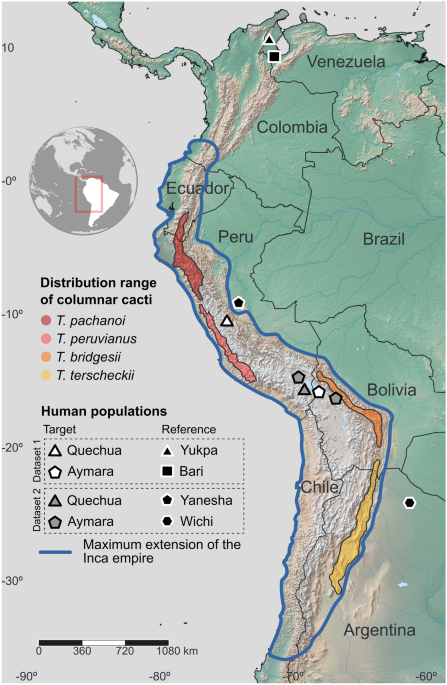
Here's a helpful map from the article:
 

Attachments

  • Screenshot_20220805-110843-352.png
    Screenshot_20220805-110843-352.png
    1.3 MB · Views: 1
Very nice paper...

Im from Argentina, and here the Diaguita peoples use long time ago Wachuma (T. Tersechekii)
 
Great article, this is very valuable input to the "full spectrum" topic often discussed here on nexus.

"
Chemical profile of cactus alkaloids
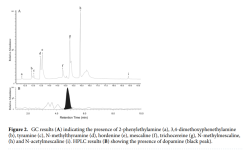
We found that the alkaloids concentration of T. terscheckii ranged between 0.33—0.46 mg/g of fresh tissue. Our Gas Chromatography (GC) analysis revealed consistent retention times in all samples, with detectable levels of nine identified phenylethylamine alkaloids (Fig. 2A; Figure S1). The Mass Spectrum (MS) analysis showed the distinctive molecular ion mass peak and fragmentation pattern of 2-phenylethylamine, tyramine, hordenine, 3,4-dimethoxyphenethylamine, N-methylthyramine, mescaline, trichocereine, N-methylmescaline and N-acetylmescaline. The experimental analysis of our reference alkaloid standards in GC–MS confirmed the presence of tyramine, hordenine and 3,4-dimethoxyphenethylamine, excluding the presence of the 3-methoxytyramine and 3,5-dimethoxy4-hydroxyphenylethylamine alkaloids (Table S1). The Nuclear Magnetic Resonance (1H-NMR) spectra confirmed the presence of mescaline and trichocereine as the major components of the chloroform and ether fractions, respectively (Figure S2). Major compounds, according to relative peak area (GC) were N-acetylmescaline (< 1—8%), N-methyltyramine (3—14%), N-methylmescaline (3—16%), hordenine (4—20%), mescaline (3—22%) and trichocereine (18—51%). Our High Pressure Liquid Chromatography (HPLC–MS/MS) analysis of the acid extraction of T. terscheckii and the dopamine standard confirmed the presence of this alkaloid in a concentration of 6 ppm (Figs. 2B and S3; Table S1).
"

 
Yes that is interesting. Here is "Figure 2" from the article, which shows the relative abundance of these alkaloids and of dopamine:
 

Attachments

  • Screenshot_20220806-081052-792.png
    Screenshot_20220806-081052-792.png
    161.1 KB · Views: 0
Fascinating stuff - a great find, GF, and also great that a prestigious journal like Nature is publishing a topic like this. And OPen Access, too.

The presence of compounds such as - in particular - hordenine, N-methyltyramine (not "thyramine [sic]), N-methylmescaline and trichocerine in greater concentration than mescaline goes a long way towards explaining the more highly stimulating nature reported for T. terscheckii. Hordenine is known to be quite stimulating and it seems likely that the other compounds would synergise with it at a metabolic level at the very least. I wonder if perhaps they competitively inhibit the breakdown of dopamine too; there is about as much N-methyl mescaline as there is dopamine and the trichocerine isn't too far behind.

It'll take me a bit more background reading to grasp the implications of any genetic adaptations in populations with a history of Trichocereus cactus use, but already I do wonder if they might serve to smooth out some of the subjective effects.
 
Back
Top Bottom