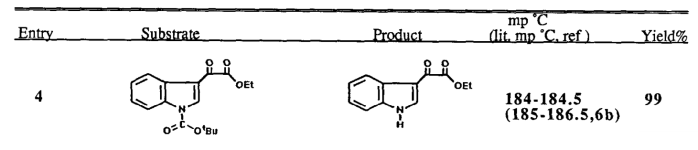
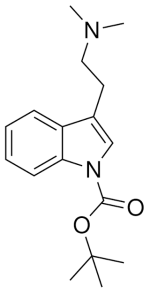
I do see reports in the literature that BOC-protected indoles and pyrroles are deprotected by simple thermolysis with good yield, for example
this paper. Perhaps that guided the developers of this compound. It still doesn't seem like a great tradeoff to me though, to take the risks of an unknown compound at best in exchange for the benefits of a known compound. Absent legal prohibition, I don't think this compound would be sold. The doses I've seen reported also seem to imply incomplete (~50%) conversion, increasing concern about side products.
TLC would confirm at least partial conversion, but would probably say nothing about the side products. GC may result in that thermolysis in the injection port, but I can't find anything published. It's possible that more controlled thermolysis (e.g. on an oil bath) would result in better yield and fewer side products than simple smoking, but I again can't find anything published.
ETA: Here's the most relevant compound from the paper:
View attachment 106915
They deprotected by heating on an oil bath at 180-185 C under argon, for 20-30 min until the bubbling stopped. That seems like it could be improvised pretty readily. That's potentially safer and more efficient than smoking directly, especially if it's followed by crystallization and identity of the product is confirmed (melting point, TLC).





 Be careful if it's NB-DMT, though.