• Members of the previous forum can retrieve their temporary password here, (login and check your PM).

Solvents in Australia

Migrated topic.

DMTPanda

Rising Star
Joined
Dec 25, 2012
Messages
46
Merits
507
Taking a stroll through a local Bunnings the other day, SWIM could really only find Shellite and Xylene as solvents for extraction.
Shellite leaving an oily residue and Xylene stinking like a major chemical spill, are there any other solvents that could be suggested to SWIM?

Toluene I believe is highly carcinogenic.

D-Limonene sounds ideal for its smell, safety, and pulling ability however I'm pretty sure it's not an available product in Australia.

Are there any other suggestions of what products that can be used for extracting Obtusifolia?
 
Toluene I believe is highly carcinogenic.
That's a bit of an overstatement. It's not as carcinogenic as benzene, and there are worse carcinogens than benzene. Prop. 65 carcinogenicity is kind of overarching in that anything even suspected of causing cancer in just about any organism under even the most extreme circumstances gets chucked onto the list. That still doesn't mean that unnecessary exposure shouldn't be avoided, of course.
Germ cell mutagenicity
Test Type: In vitro mammalian cell gene mutation test Test system: Mouse lymphoma test
Metabolic activation: with and without metabolic activation Method: OECD Test Guideline 476
Result: negative
Test Type: Ames test
Test system: S. typhimurium
Metabolic activation: with and without metabolic activation
Method: Mutagenicity (Salmonella typhimurium - reverse mutation assay) Result: negative
Test Type: Chromosome aberration test Species: Rat
Cell type: Bone marrow Application Route: i.p.
Result: negative Remarks: (ECHA)
Carcinogenicity
No data available
 
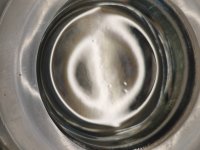
Test of Sydney Solvents Shellite x55

I think we have a winner.
I did this test about 10 times. Always pouring straight from the bottle.
The 1st had film rings. I assume this was the remains of the Diggers Shellite from testing the other day. I thought I cleaned it well before starting.
As I did more tests, the film and rings lessened.
I have some photos of a middle testing where the rings are few and very faint. I can put the up if you want.
The final test provided no film at all.

Photo 301 - initial drop along the right-hand edge with part of the drop moving towards the centre.
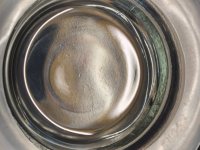
Photo 302 - view after a evaporation. I tried to keep the phone in the same position but wasn't successful.
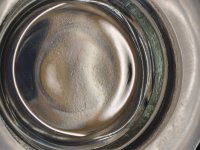
Photo 303 - another snap.
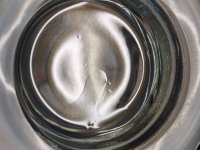
Photo 304 - I tilted the phone so that I could light glare across the area. The light glare would usual show any film but its very clear.

The x55 smells nice too. Better than the Diggers Shellite - and I didn't mind the Diggers.

What do you think?
Any other way I should test this to make sure?
 

Attachments

  • 304.jpg
    304.jpg
    1.4 MB · Views: 5
  • 303.jpg
    303.jpg
    1.8 MB · Views: 4
  • 302.jpg
    302.jpg
    1.8 MB · Views: 5
  • 301.jpg
    301.jpg
    1.6 MB · Views: 5
I can't really see these results clearly in the pics unfortunately. Do you perhaps have a small mirror or some other flat glass surface you could use? Baking dish maybe? I would recommend cleaning a small area with some ipa or acetone and using a brand new microfibre cloth or similar to buff away any residues before doing a series of tests.
 
I used brand spice jars (you can also run your piece of glass through a dishwasher) -- the surface must be pristine before you apply any shellite. Next, I recommend either placing your jar into a kitchen sink or doing this outdoors, then spashing the shellite directly from the container onto your glass surface -- that way you avoid introducing another vessel into the mix (e.g. a pipette, a spoon, etc). The shellite should evaporate quickly and leave the glass in the same pristine state.
 
I did a mirror test but the results arent clear.

101 - initial splash - drop
102 - moved the cameras to see if I could get a better shot of the drop.
103 - me pointing to the drop. It can be seen because of blurry edge
104 - the middle has shrunk. its inside the black power cord. No edge can be seen from the initial larger drop.

I also did the same test with Diggers and got the same result. No clear edge or residue. So I dont think this is conclusive.
 

Attachments

  • 104.jpg
    104.jpg
    1.6 MB · Views: 1
  • 103.jpg
    103.jpg
    1.5 MB · Views: 1
  • 102.jpg
    102.jpg
    1.5 MB · Views: 1
  • 101.jpg
    101.jpg
    1.7 MB · Views: 1
I then tried using a shinny bowl.
Here I put Diggers on the left (or top in this photo) and Sydney S X55 on the right (bottom).
Both leave a similar outline. Again inconclusive or it means they are similar.
 

Attachments

  • 200.jpg
    200.jpg
    1.6 MB · Views: 2
I used brand spice jars (you can also run your piece of glass through a dishwasher) -- the surface must be pristine before you apply any shellite. Next, I recommend either placing your jar into a kitchen sink or doing this outdoors, then spashing the shellite directly from the container onto your glass surface -- that way you avoid introducing another vessel into the mix (e.g. a pipette, a spoon, etc). The shellite should evaporate quickly and leave the glass in the same pristine state.
My tests using a shining bowl have left only an outer ring. The mirror wouldnt show an outer ring for both.
 
Unfortunately the outer ring is still a fail. If you were to pour some of this into a dish on its own straight from the bottle and freeze it, then decant the solvent after, you would end up with a sticky layer full of unwanted crap stuck to the glass where the soluble contaminents would have crashed out a low temp. This gunk will also be amongst your dmt if you used this for extraction and scraping it all together would not only yield contaminated product, the actual weight of your yield would be misleading. Edit: this can however be minimised if you are careful when scraping the crystal and try to only scrape the crystals themselves instead of the entire surface of your dishes. This product is usable, especially for enhanced leaf or changa, if you really allow ample time for it to dry out but i would still recommend a re x with clean solvent
 
Last edited:
Unfortunately the outer ring is still a fail. If you were to pour some of this into a dish on its own straight from the bottle and freeze it, then decant the solvent after, you would end up with a sticky layer full of unwanted crap stuck to the glass where the soluble contaminents would have crashed out a low temp. This gunk will also be amongst your dmt if you used this for extraction and scraping it all together would not only yield contaminated product, the actual weight of your yield would be misleading. Edit: this can however be minimised if you are careful when scraping the crystal and try to only scrape the crystals themselves instead of the entire surface of your dishes. This product is usable, especially for enhanced leaf or changa, if you really allow ample time for it to dry out but i would still recommend a re x with clean solvent
Thanks MrA
I'll continue with me Fumaric Acid (Salting) and converting to freebase with acetone to clean it all up.
Any issue with the Diggers Acetone?
 
Thanks MrA
I'll continue with me Fumaric Acid (Salting) and converting to freebase with acetone to clean it all up.
Any issue with the Diggers Acetone?
I've not used it for chemistry application, only general cleaning lol, sydney solvents does stock lab grade though if you're willing to pay the extra
 
Ive got another 250g of ground Acacia Acuminata root bark on the way.
I'll have it and do a comparison between the two shellites. Diggers vs Syd Sol x55. See who has the better unsafe pulling power.
I note the Diggers is 100% hydrocarbon where the Syd Sol x55 has a very small amount of toluene in it.
 
perhaps if i end up getting d-lim from them, ill get the acetone at the same time ..... but they may look a little fishy hey?
They are a solvent retailer, from what I've heard they're much more interested in doing business than asking questions. Their main concern is more focused on safe transportation as most of their products are listed as dangerous goods and certain standards for transportation need to be met. It even says on the FAQ on the website that anyone can indeed come in and pay with cash
 
I've got some Fumaric Acid, Sodium carbonate and acetone on the way.
After I do this solvent pull test (Diggers vs Syd Solv.) I can add the yield to the batch I just did with the Diggers and then do one big salt-free base conversion.
I was able to pull 330mg of dirty DMT from 250g of Acacia Acuminata.
First batch of 100g got me 7mg (dirty weight).
A 2nd batch (experiment) of 50g at room temperatures didn't result in any yield.
3rd batch of 100g got me 323mg (dirty weight).
Not a good result but it looks like I'm getting better.
 
I recommend outlining your extraction approach in the extraction help thread to troubleshoot your unsatisfactory yields, I was able to get 0.51g white crystal from my latest 50g batch using Acacia acuminata and there are a number of ways to pre treat acacia bark that are necessary for proper release of alkaloids
 
I recommend outlining your extraction approach in the extraction help thread to troubleshoot your unsatisfactory yields, I was able to get 0.51g white crystal from my latest 50g batch using Acacia acuminata and there are a number of ways to pre treat acacia bark that are necessary for proper release of alkaloids
Thanks again. I'll check that thread.
I didnt realise that acacia had ways of pre-treating for proper release. I'll look for that too. Is that the freeze-thaw-freeze-thaw of the bark prior to first boil, that I've read is some posts?
 
Thanks again. I'll check that thread.
I didnt realise that acacia had ways of pre-treating for proper release. I'll look for that too. Is that the freeze-thaw-freeze-thaw of the bark prior to first boil, that I've read is some posts?
That's one of them yes, I like to do an overnight acid soak prior to extraction days using hot distilled water and vinegar at a ph of around 4. This works well for podwer but if one is working with shredded bark or bulkier material such as phyllodes and stems then acid simmers/filtering is recommended.
 
perhaps if i end up getting d-lim from them, ill get the acetone at the same time ..... but they may look a little fishy hey?
Those two solvents would make a reasonable pairing - you'll effectively be using the acetone to clean up the slow-evaporating limonene residues more quickly anyhow...
 
The SDS for Diggers Shellite indicates that it has a small amount of benzene in it.
The SDS for Sydney Solvents indicates that it has a small amount of toluene in it.

Both these chemical are said to be toxic. Probably a reason not to used them as final cleaning process.
It sounds like the d-lim and fumaric acid path is the safest way to produce the goods.
 
Back
Top Bottom