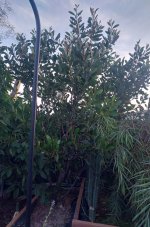
Hey cheesecat yh I've lost one in clay but it was heat stress related, still have another rin clay soil that's doing well and another in a elevated garden bed of sandy loam which is huge now.

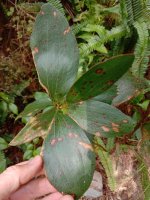
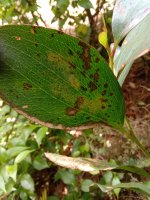
Thanks @_Trip_. A raised garden bed is probably something I should do. Glad you're having success with phleb, it's a unique looking acacia. This is the disease I was talking about, pretty certain it's from excessively wet roots. Acuminata and phleb seem to be quite sensitive comparative to other species.Hey cheesecat yh I've lost one in clay but it was heat stress related, still have another rin clay soil that's doing well and another in a elevated garden bed of sandy loam which is huge now.
Beautiful looking phleb and garden!Here's one my phlebs in a raised garden bed in a 50% native soi


Thanks _Trip_. That is some very helpful information. It sounds like i have a good chance with acuminata and phlebophylla. What is the annual rainfall in your area? My biggest concern at this point is fungal issues or root rot. I plan to plant on a super well draining granitic slope or ridge though so that might make it work well.Courtiis could survive but they are fussy in the cold I have a min for short periods of -4c and average night temps of 1c for 4 months a year and have several courtiis growing, I have found they don't like sandy loam as much as acuminata they seem to respond to more moist soil with slightly better fertilizer. Your climate sounds good for acuminata. And Mt buffalo hits 37c and it gets hot and dry in summer. They're all quite drought hardy but will need water in the warmer months especially when being established. Phlebophylla I would say is harder to grow.
My best phleb is in very well draining poor quality soil in a raised garden bed. Biggest I've seen outside of its native environment and much healthier than the ones in the wild.
Acacian will have more information to add.
Ps we have 45c summers. I'm not too far from Mt Buffalo but much similar altitude to you. I think you'll have a good chance.
Thanks Jamie01. Very encouraging.I’m in PNW and growing a floribunda strain atm entirely outside all winter in an unheated greenhouse. In summer they are in the yard. They are only a year old now . It’s PNW lol so ya I do not want them being rained on for 7 months.
In the past I grew the narrow phyllode variety of acuminata. I never tried it outdoors all winter back then but I bet it would be okay and I’m starting some this week.
Similar to you approx 750mm so like almost 30inches anually.What is the annual rainfall in your area?
Thanks Jamie01. Very encouraging.
I plan to plant some floribunda as well but need to find a way to source seed for an active variety.
What is the coldest temp your acuminata and floribunda ever survived outdoors?
Sounds like our conditions are quite similar. This is the crucial information that i needed. Really appreciate the data your sharing from all your direct experience and research.Similar to you approx 750mm so like almost 30inches anually.
Just note they prefer well draining soil. But I have 2 broad phyllode acuminats that have survived poor clay soil and 2 years of quite serious flooding.
However I must say our native fungi and bacteria is likely quite different, however acacias are tough and adapatable.
Sounds like a special location. Are you in the rainshadow? How many millimetres of rain do you get annually?It doesn’t get all that cold here. I’m on an island and I think all winter this year we had like a cm of snow that stuck around a few hours. We had a few nights around -5C etc but it warms up in the day. We get that one cold snap a year for a week usually then it’s back to 3 seasons.
Ok. That is pretty wet. I wonder if the floribunda and acuminata can take that if in really well draining soil.1481 mm a year we average.
I would keep in the greenhouse. One day when you have acacia abundance, it would be an interesting experiment to try them unprotected.me too but I’m not willing to see and find out until I have too many acacias. My worry is that we will get heavy rain right before one of those odd deep freezes we get every few years. Once in feb it hit -17 C with a windchill at night and it was like 2 degrees a day later. I just use the greenhouse because I have the space so why not?
very interesting. thanks for the tip!In ground and established trees usually survive freezes even if die back from frost damage. Unless you get a hard freeze to the ground. the moist soil actually safer than dry soil since the water keeps the soil a bit warmer than dry soil. Farmers tend to keep sprinklers on overnight during cold blasts to protect the plants like citrus and other crops.