Cactus Analysis Results
Water content in Trichocereus cact (dry vs fresh equivalency)
62-95%, 90% being common (Trout 2018)
93.5% water (Poisson 1960 ref Trout)
94.4% water (Fable@DMT-Nexus)
95% water (Urtica@DMT-Nexus)
95% water (@endlessness dec2022)
96.9% (DansMaTete@DMT-Nexus)
96.2% (Skunk@DMT-Nexus)
Average Trichocereus mescaline content (n=130. Source)
(median values)
Trichocereus bridgesii: 0.76% dry (all results) - 0.56% dry (only GC/LC-MS confirmed results)
Trichocereus pachanoi: 0.71% dry (all results) - 0.59% dry (only GC/LC-MS confirmed results)
Trichocereus peruvianus: 0.30% dry (all results) - 0.22% dry (only GC/LC-MS confirmed results)
Other alkaloids in Trichocereus cact (n=50. Source)
Trichocereus bridgesii: Out of 8 samples, 1 found with unquantified 3,4-DMPEA, another found with 0.0025%-0.00025% 3,4-DMPEA, 0.0025%-0.00025% 3-methoxytyramine, 0.0025%-0.00025% tyramine
Trichocereus pachanoi: Out of 36 samples, 1 found with <0.0038% dry 3,4-DMPEA, another found with 0.01% 3-methoxytyramine, another found with 0.0025%-0.00025% 3,4-DMPEA, 0.0025%-0.00025% 3-methoxytyramine, traces tyramine, traces hordenine, traces 3,5-dimethoxy-4-hydroxyphenylethylamine, traces 3,4-dimethoxy-5-hydroxyphenylethylamine, traces anhalonidine, another found with unidentified minor compounds, another found with minor peaks,
Trichocereus peruvianus: Out of 6 samples, 1 found with unquantified 3,4-DMPEA, another found with Primary and secondary amines ++, free phenolics +, triterpenes/steroids +, +catechins +, another found with no mescaline but with 0.005% - 0.0005% Tyramine, 0.0005 - 0.00005%, 0.0005 - 0.00005% 2 unknown compounds, traces 3-methoxytyramine
Other compounds:
Pachanols A & B (kinoshita et al 1995)
Bridgesigenins A, B & C (kinoshita et al 1995)
Unidentified lactone-forming acid(Kringstad & Nordal 1975)
Cactus slime (mucilage) = Arabinose, galactose, galacturonic acid, rhamnose, xylose ) (Trout)
Spines are a composite of cellulosic microfibrils embedded in a matrix of arabinan.(Vignon et al 2004)
Controversial: lophophine, 3,4-methylenedioxyphenethylamine (homopiperonylamine),and N,N-dimethyl-3,4-methylenedioxyphenethylamine (lobivine) as minor alkaloids in pachanoi and in peyote (Bruhn et al 2008 , even Shulgin expressed doubts, should be viewed with caution)
Size to weight equivalency
1 foot (30cm) = 575 grams fresh = 21.8 dried grams (Skunk@DMT-Nexus)
1 foot (30cm) = 725 grams fresh = 40.9 dried grams (Fable@DMT-Nexus)
Increasing mescaline content with darkness
Keeping a cactus cutting in the dark for 3-12 months after harvest and before extracting doubles the amount of mescaline in most samples. (Experiment 1, Experiment 2, Anecdote: highest yielding confirmed pachanoi was also in the dark for several months)
Effect of grafting on mescaline content
Seems to mantain potency, so even if plant grows faster it doesn't reduce proportionately the mescaline content, but just 1 test with 1 sample and control (Pummangura & Mclaughlin 1982)
Location of mescaline in plant
Mescaline is concentrated in the green parenchyma closer to the top of Trichocereus spp., but on the sides and further away from the center in Lophophora spp. (Van der sypt 2022)
Nexus Analysis:
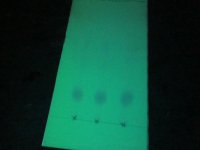
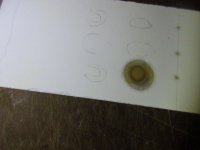
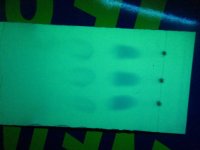
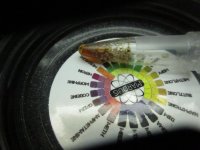
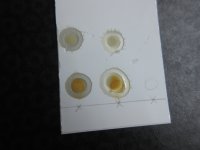
Tested with both GC-MS as well as LC-MS (unless specified), using pure mescaline reference standard and doing a calibration curve for quantification accuracy.
Sum up of our results (right click and "view image" to be able to zoom in)
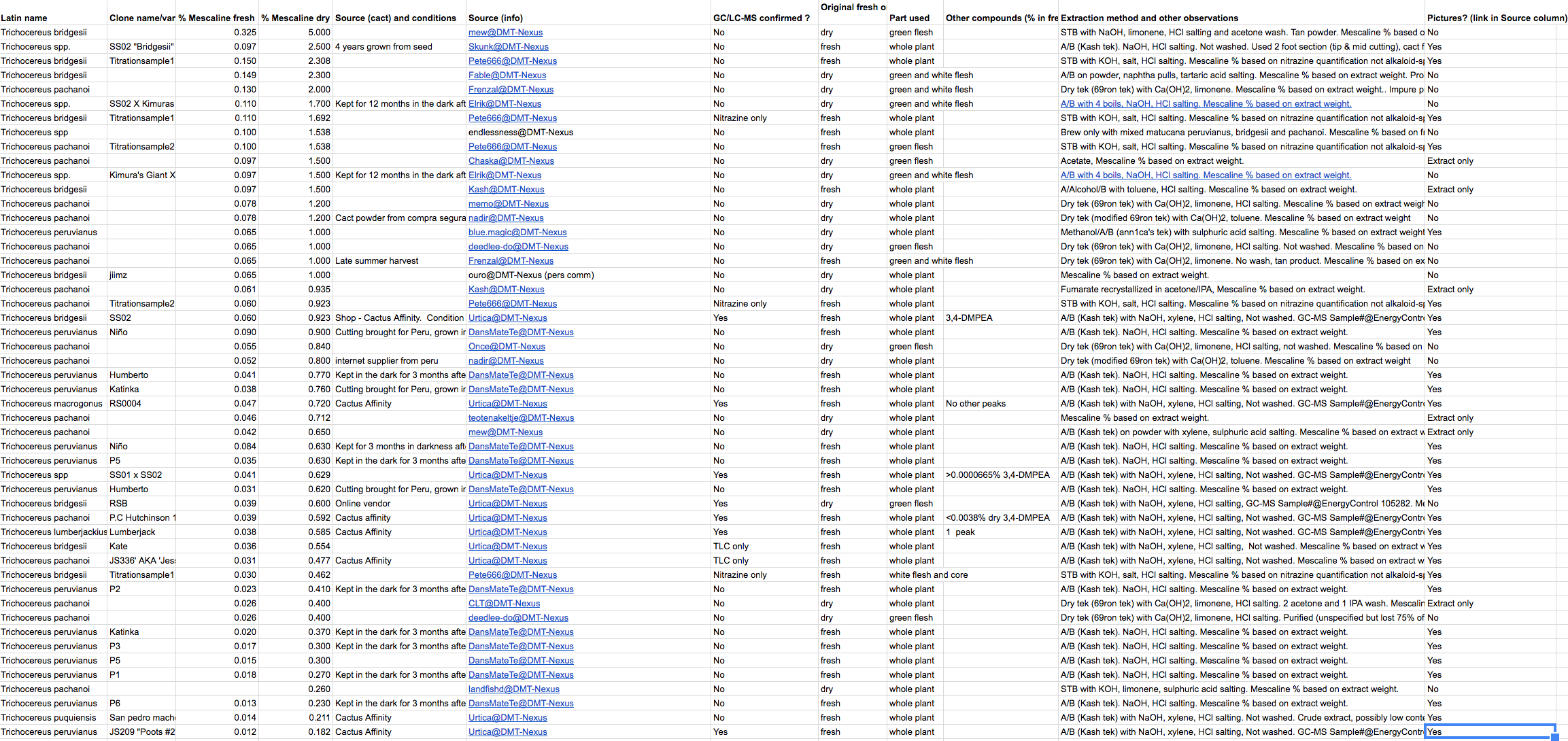

Sum up of ALL results including journal publications, Nexus research, bioassays etc
Average Cactus Mescaline Content Mega-Thread
Previous analysis and info:
Cactus Chemistry by Species - Trout
(Trichocereus bridgesii, pachanoi and peruvianus analysis on pages 63-69)
Cactus Alkaloids - Trout
(Great info on cactus chemistry. Detailed info on Mescaline pharmacology, Mescaline physical and chemical properties , also distribution of alkaloids within cactus etc. )
Sacred Cacti - Trout
(Online book on cacti with notes on history, uses, chemistry etc)
Pachanoi or pachanot - Trout
Illustrated guide on diferentiating between true San Pedro and PC (Predominant Cultivar) San Pedro which has very little mescaline.
More tests to come in the future Im attaching the GC/LC-MS files too, as well as trout's Cact Alkaloids PDF for reference. Thanks to Energy Control for the analysis.
Water content in Trichocereus cact (dry vs fresh equivalency)
62-95%, 90% being common (Trout 2018)
93.5% water (Poisson 1960 ref Trout)
94.4% water (Fable@DMT-Nexus)
95% water (Urtica@DMT-Nexus)
95% water (@endlessness dec2022)
96.9% (DansMaTete@DMT-Nexus)
96.2% (Skunk@DMT-Nexus)
Average Trichocereus mescaline content (n=130. Source)
(median values)
Trichocereus bridgesii: 0.76% dry (all results) - 0.56% dry (only GC/LC-MS confirmed results)
Trichocereus pachanoi: 0.71% dry (all results) - 0.59% dry (only GC/LC-MS confirmed results)
Trichocereus peruvianus: 0.30% dry (all results) - 0.22% dry (only GC/LC-MS confirmed results)
Other alkaloids in Trichocereus cact (n=50. Source)
Trichocereus bridgesii: Out of 8 samples, 1 found with unquantified 3,4-DMPEA, another found with 0.0025%-0.00025% 3,4-DMPEA, 0.0025%-0.00025% 3-methoxytyramine, 0.0025%-0.00025% tyramine
Trichocereus pachanoi: Out of 36 samples, 1 found with <0.0038% dry 3,4-DMPEA, another found with 0.01% 3-methoxytyramine, another found with 0.0025%-0.00025% 3,4-DMPEA, 0.0025%-0.00025% 3-methoxytyramine, traces tyramine, traces hordenine, traces 3,5-dimethoxy-4-hydroxyphenylethylamine, traces 3,4-dimethoxy-5-hydroxyphenylethylamine, traces anhalonidine, another found with unidentified minor compounds, another found with minor peaks,
Trichocereus peruvianus: Out of 6 samples, 1 found with unquantified 3,4-DMPEA, another found with Primary and secondary amines ++, free phenolics +, triterpenes/steroids +, +catechins +, another found with no mescaline but with 0.005% - 0.0005% Tyramine, 0.0005 - 0.00005%, 0.0005 - 0.00005% 2 unknown compounds, traces 3-methoxytyramine
Other compounds:
Pachanols A & B (kinoshita et al 1995)
Bridgesigenins A, B & C (kinoshita et al 1995)
Unidentified lactone-forming acid(Kringstad & Nordal 1975)
Cactus slime (mucilage) = Arabinose, galactose, galacturonic acid, rhamnose, xylose ) (Trout)
Spines are a composite of cellulosic microfibrils embedded in a matrix of arabinan.(Vignon et al 2004)
Controversial: lophophine, 3,4-methylenedioxyphenethylamine (homopiperonylamine),and N,N-dimethyl-3,4-methylenedioxyphenethylamine (lobivine) as minor alkaloids in pachanoi and in peyote (Bruhn et al 2008 , even Shulgin expressed doubts, should be viewed with caution)
Size to weight equivalency
1 foot (30cm) = 575 grams fresh = 21.8 dried grams (Skunk@DMT-Nexus)
1 foot (30cm) = 725 grams fresh = 40.9 dried grams (Fable@DMT-Nexus)
Increasing mescaline content with darkness
Keeping a cactus cutting in the dark for 3-12 months after harvest and before extracting doubles the amount of mescaline in most samples. (Experiment 1, Experiment 2, Anecdote: highest yielding confirmed pachanoi was also in the dark for several months)
Effect of grafting on mescaline content
Seems to mantain potency, so even if plant grows faster it doesn't reduce proportionately the mescaline content, but just 1 test with 1 sample and control (Pummangura & Mclaughlin 1982)
Location of mescaline in plant
Mescaline is concentrated in the green parenchyma closer to the top of Trichocereus spp., but on the sides and further away from the center in Lophophora spp. (Van der sypt 2022)
Nexus Analysis:
Tested with both GC-MS as well as LC-MS (unless specified), using pure mescaline reference standard and doing a calibration curve for quantification accuracy.
Sum up of our results (right click and "view image" to be able to zoom in)
Sum up of ALL results including journal publications, Nexus research, bioassays etc
Average Cactus Mescaline Content Mega-Thread
Previous analysis and info:
Cactus Chemistry by Species - Trout
(Trichocereus bridgesii, pachanoi and peruvianus analysis on pages 63-69)
Cactus Alkaloids - Trout
(Great info on cactus chemistry. Detailed info on Mescaline pharmacology, Mescaline physical and chemical properties , also distribution of alkaloids within cactus etc. )
Sacred Cacti - Trout
(Online book on cacti with notes on history, uses, chemistry etc)
Pachanoi or pachanot - Trout
Illustrated guide on diferentiating between true San Pedro and PC (Predominant Cultivar) San Pedro which has very little mescaline.
More tests to come in the future
Im attaching the GC/LC-MS files too, as well as trout's Cact Alkaloids PDF for reference. Thanks to Energy Control for the analysis.