• Members of the previous forum can retrieve their temporary password here, (login and check your PM).

The Yoga Practice Thread

I have done some of the meditation he showed me, recently. MadanJi also gave me a mantra, to repeat 21 times at the end of the practice, but he told me not to tell anyone what it is.
 
Thank you for sharing. Based on my limited understanding of yoga, I feel that asana prepares you for pranayama and the subsequent steps in the Ashtanga system.
Pranayama works directly with our energy and is the most important step leading toward pratyahara and dhyana. Further, practicing ujjayi on its own induces a very calm and warm state. I think it was ingenious to include it as part of the flow; combined with other techniques, it creates a magical method for inner work. Do you have a separate pranayama session after your practice? What does that look like? How has your practice influenced your meditation and focus in general?
While I was doing a few acid cooks of some caapi vine last night, an answer to your question that I'd not thought about hit me clear as day, as I spontaneously started chanting Ohm during the filtering process.
Now, I wouldn't say that I've become an avid chanter, but I do love it on occasion, and have come a long way since my initial exposure to the practice, and the visceral anger it seemed to manifest in me.
 

Attachments

  • DSC04666.JPG
    DSC04666.JPG
    748.8 KB · Views: 1
Now, I wouldn't say that I've become an avid chanter, but I do love it on occasion, and have come a long way since my initial exposure to the practice, and the visceral anger it seemed to manifest in me.
Anger is a fine response to chanting. It shows that this practice works for you. Usually, the practice that we resist the most is what we need. I saw lots of psychic knots untangle just through chanting these mantras. Doing the Om in a conscious manner is very healing and brings a certain state each time (at least under the influence of a medicine).

I love my Ram chants. Ram represents the sound of Now, Being, and Presence. It is a wisdom fire that burns all afflictions in a slow, constant manner. Sure, there are some more active mantras that bring a more rapid change, but I like the simplicity of bija syllables. Hung, from the Tibetan tradition, is another such powerful sound. You just need to find what resonates with you and stick to it.

Once, I did half a day of mental repetition of shiva-shiva, and it brought a strong change in state. Shiva is the pointer to underlying awareness, and just repeating it nonstop leads there. However, the ego is against such practices, and it is extremely hard for me to do all the time. It is a constant inner battle. Someday, something is going to give. I am sure of it.

🙏
 
Anger is a fine response to chanting. It shows that this practice works for you. Usually, the practice that we resist the most is what we need. I saw lots of psychic knots untangle just through chanting these mantras. Doing the Om in a conscious manner is very healing and brings a certain state each time (at least under the influence of a medicine).

I love my Ram chants. Ram represents the sound of Now, Being, and Presence. It is a wisdom fire that burns all afflictions in a slow, constant manner. Sure, there are some more active mantras that bring a more rapid change, but I like the simplicity of bija syllables. Hung, from the Tibetan tradition, is another such powerful sound. You just need to find what resonates with you and stick to it.

Once, I did half a day of mental repetition of shiva-shiva, and it brought a strong change in state. Shiva is the pointer to underlying awareness, and just repeating it nonstop leads there. However, the ego is against such practices, and it is extremely hard for me to do all the time. It is a constant inner battle. Someday, something is going to give. I am sure of it.

🙏
Tenzin Wangyal Rinpoche includes the syllables AH, OM, HUNG, RAM, and DZA (reminds me of RZA and GZA from the Wu-Tang Clan) in his practice of Tibetan Sound Healing, as described in his book by the same name.

In Tibetan Buddhism, the syllables OM, AH, and HUNG represent body, speech, and mind, pointing to the integrative quality of mantra practice.
 
Last edited:
With all this talk of the breath, pranayama and Ujjayi, specifically, I thought I'd give a little explanation of exactly what this pranayama is, and how you practice it.
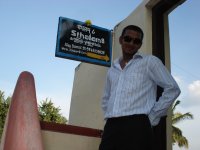
I should first say that I am not a qualified pranayama teacher, and have limited practice in the field, except for ujjayi, which I have performed for a few thousand hours as part of my ashtanga vinyasa practice.
As with all pranayamas, the practitioner should sit comfortably, with the spine straight. This can range from padmasana (full lotus), to simple cross legged, or anywhere in between. If this is still uncomfortable, try vajrasaana, or kneeling with your butt on your heels, and if this is still too much, you can always sit in a chair. Keeping the spine straight is the most important.

Ujjayi is a kind of thoracic breathing, where the stomach and abdominal muscles are drawn gently back towards the spine (uddiyana bandha), and the practitioner focuses on inhaling into the thoracic area, expanding the chest and shoulders. Both inhalation and exhalation are always through the nose. The face, mouth and tongue should all be relaxed, with the tip of the tongue resting behind your front teeth.

Ujjayi translates as victorious or conquering breath, and it is commonly referred to as 'ocean breathing', due to the sound created by the other important element of the practice, the slight constriction of the throat muscles (glottis). It's like the sound you make when breathing onto glass to create a fog, only with the mouth closed and breathing out of your nose.

The inhalation and exhalation should be deep, full and even, and when used in ashtanga vinyasa, there should be no pause between inhalation and exhalation. If the pranayama is being performed seated, more advanced techniques, such as holding for a period after exhalation or inhalation, can be performed.

In Sanskrit, inhalation is puraka and exhalation is rechaka. Advanced techniques include holding the breath with full lungs, Antara Kumbhaka, or with empty lungs, Bahya Kumbhaka. These are advanced techniques to be approached with care, and best done, initially at least, under the supervision of a teacher. Pranayama is an incredibly powerful practice, and without proper preparation of the body, mind and energetic systems (asana being the perfect way), can lead to the student causing themselves harm. Holding the breath causes an increase in blood pressure, so anyone suffering from hypertension or the like needs to be extremely careful.
Here is a little study on its effects. Breath hold
and here is a small study, showing the benefits of Ujjayi

As my teacher in India says, breathe deep, it makes you a better person.
Ommmmm
 

Attachments

  • ajay sthalam 8.jpg
    ajay sthalam 8.jpg
    578.7 KB · Views: 2
Last edited:
Thank you for your insights on pranayama. My limited understanding comes mostly from medicine sessions where I used ujjayi breath to work through nausea or calm my overstimulated system. The ujjayi sound is the same as what you might hear from a sleeping person - that deep oceanic hum. I agree that having a straight spine is the first step in any breathwork. It doesn't really matter how you achieve it, but you need to sit straight for a prolonged period. That itself gives clarity, and if you shift your attention to the breath, it becomes a pranayama leading to meditation (anapanasati style).

Chanting is a form of pranayama too, because by singing, you are regulating your breath based on the rhythm and sounds. It may be an easier entry point for modern people. I like ventilating my lungs during difficult experiences (a simple form of bhastrika), as it helps to shift the energy. In the Indian medicinal system (ayurveda), the mind runs on inner winds (prana), so it is the easiest way to change a state of mind. I only do breath holds when they occur naturally. Even then, I remind myself not to overdo it. It is something one needs to be extra careful about.
 
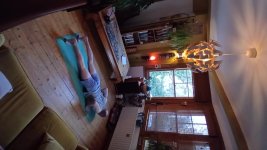
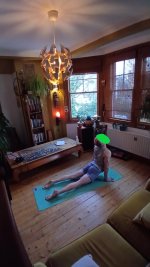
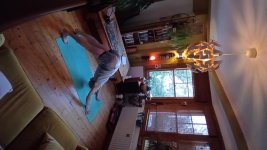
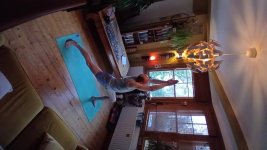
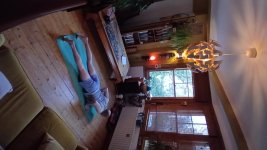
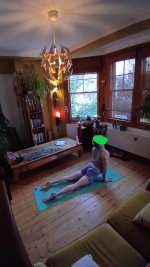
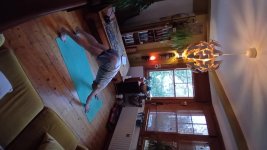
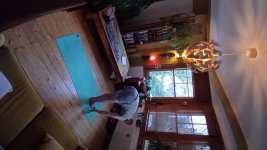
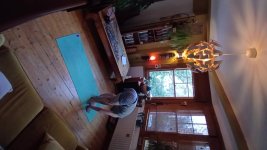
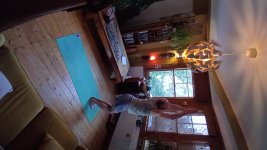
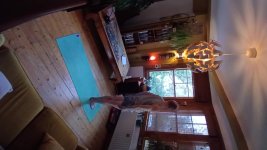
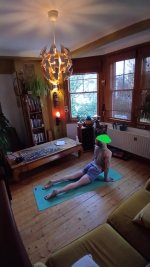
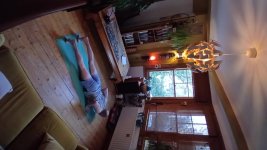
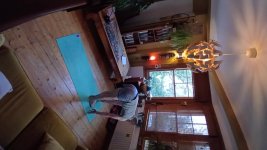
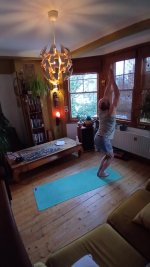
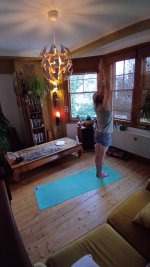
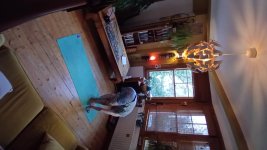
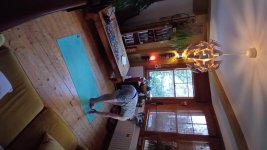
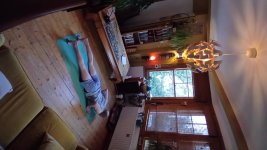
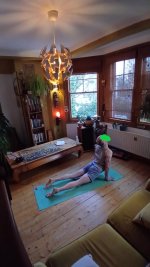
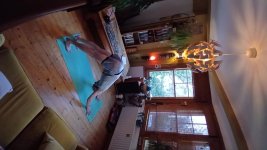
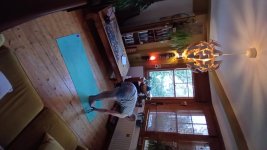
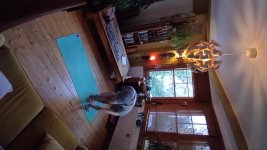
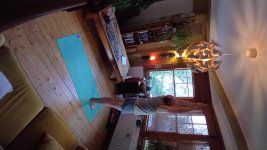
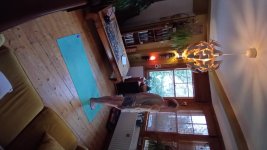
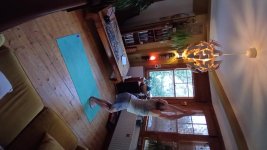
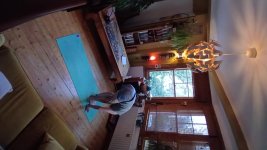
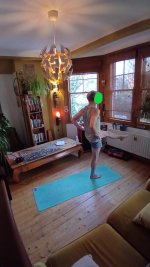
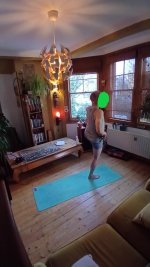
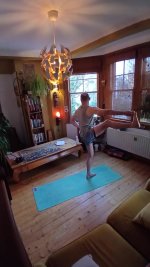
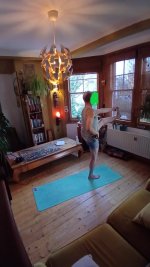
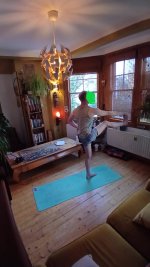
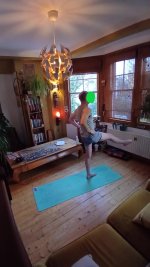
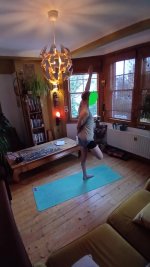
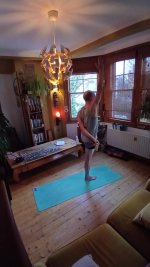
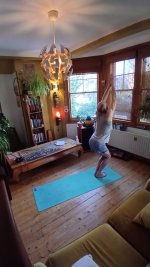
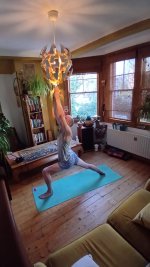
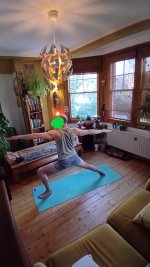
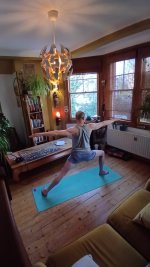
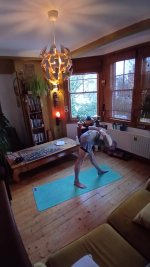
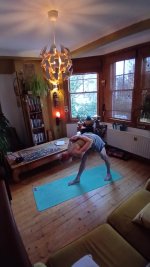
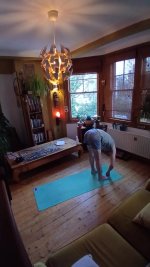
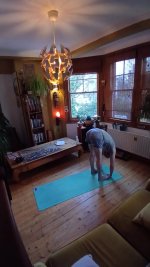
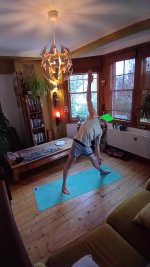
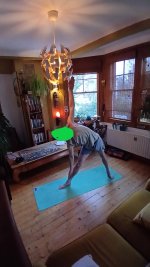
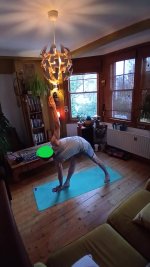
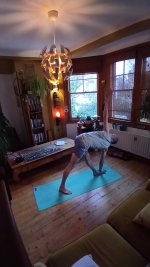
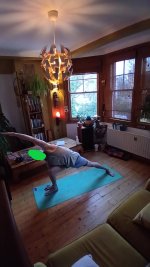
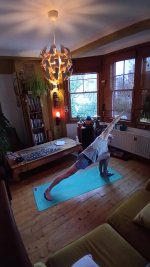
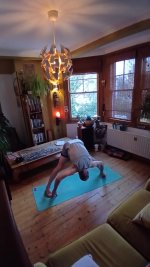
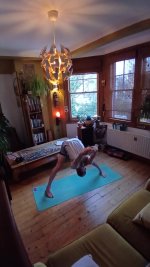
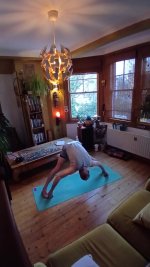
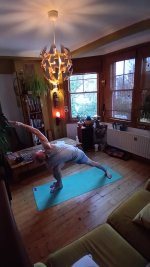
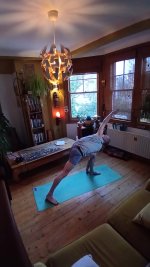
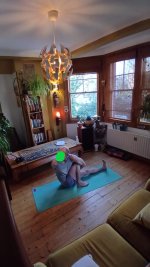
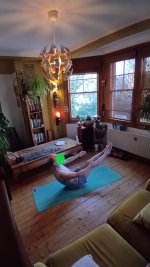
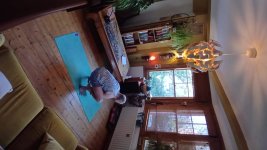
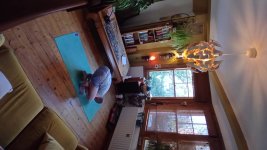
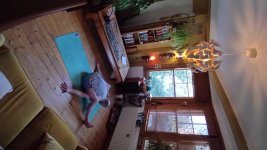
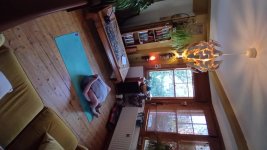
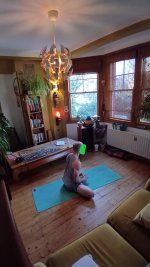
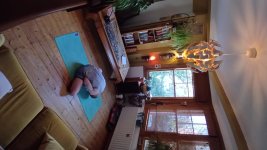
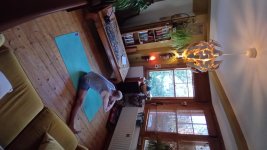
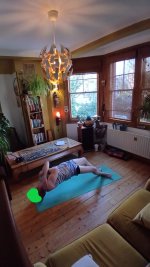
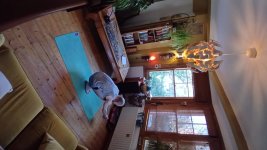
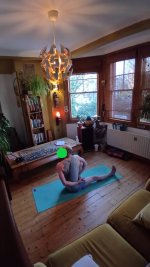
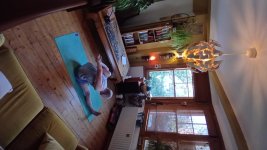
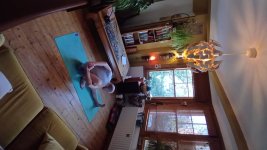
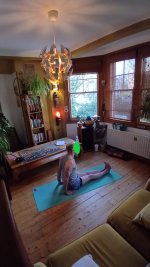
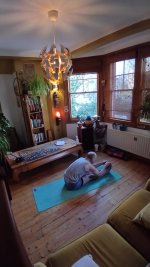
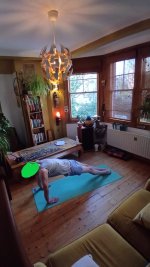
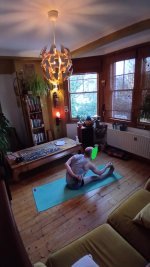
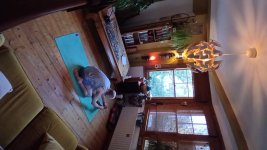
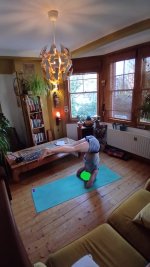
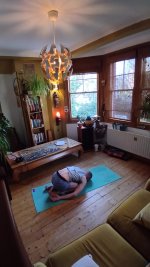
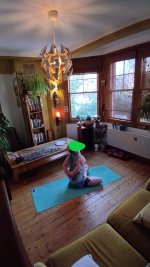
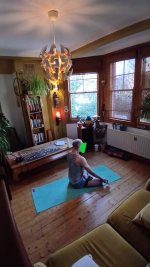
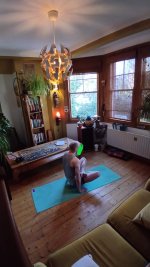
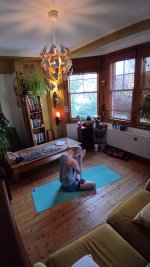
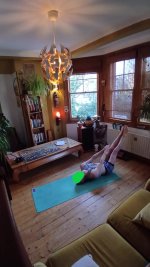
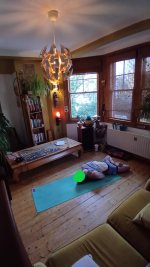
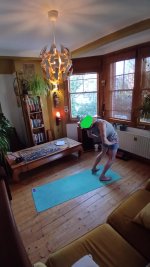
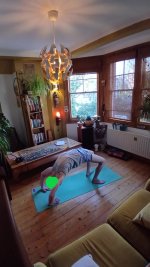
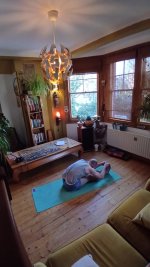
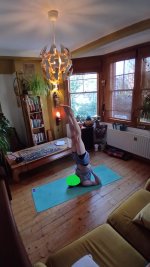
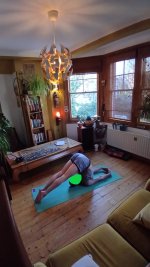
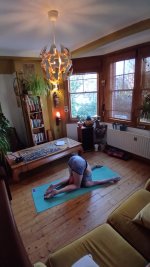
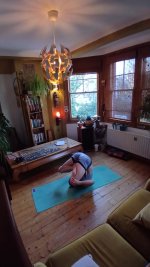
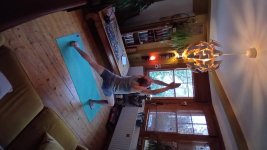
I've just done a full 70 mins or so of my practice punctuated with Vaping some short 2-3 second DMT hits throughout. I had hints last time that there could be some deep relaxation within this, what I've found is that there are indeed certain poses and stretches that you zone-into, though there are also breaks in an otherwise sensible structured session when you simply forget what comes next.

The gains I see are things like pigeon pose where when the torso is upright I always feel a relaxed, focused calm without DMT, this is nice.
Once you've got passed the wobble that DMT brings early on the balances are nice and Warrior feels lovely when you let your arms do what they feel and create more of a flourish in the movement. By the end of an hour of these tiny hits you can actually feel a slight tolerance build up.

Overall though I think this will probably be the last assisted Yoga session for me as, albeit I've had a nice session, it's felt like half watching a film through partially closed eyes.... and honestly I think I'd quite like to watch the full film!

An interesting experiment none the less.
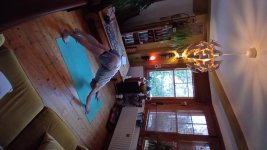
 
I've just done a full 70 mins or so of my practice punctuated with Vaping some short 2-3 second DMT hits throughout. I had hints last time that there could be some deep relaxation within this, what I've found is that there are indeed certain poses and stretches that you zone-into, though there are also breaks in an otherwise sensible structured session when you simply forget what comes next.

The gains I see are things like pigeon pose where when the torso is upright I always feel a relaxed, focused calm without DMT, this is nice.
Once you've got passed the wobble that DMT brings early on the balances are nice and Warrior feels lovely when you let your arms do what they feel and create more of a flourish in the movement. By the end of an hour of these tiny hits you can actually feel a slight tolerance build up.

Overall though I think this will probably be the last assisted Yoga session for me as, albeit I've had a nice session, it's felt like half watching a film through partially closed eyes.... and honestly I think I'd quite like to watch the full film!

An interesting experiment none the less.
Interesting experiment. Must say I've never even thought of using dmt and practicing! I've had some lovely practices after smoking mj, but I'm very comfortable with that high, and it lasts the duration. Once I'm in the flow I'd not want to break it.
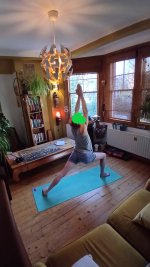
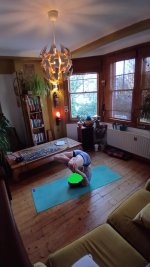
Still been on the mat every morning, and it feels great. Laptop should be fixed by the end of the week l, so I'll carry on with my writing.
 
Back
Top Bottom