• Members of the previous forum can retrieve their temporary password here, (login and check your PM).

Trichocereus potency testing

pete666

Established member
Joined
Jan 13, 2018
Messages
905
Merits
384
Here are the first results from testing cacti grown in my garden. I did not want to standardize the testing in the usual way (by extracting from dried green tissue). Instead, the aim was to make the cacti directly comparable to each other.

For that reason, all plants were grown under the same conditions: a small 5 cm apical scion was grafted onto a vigorous rootstock. Once the cactus reached a weight of 1.5–2.5 kg (after roughly 12–14 months, including a 6-month vegetative rest period), it was cut and stored at 22 °C in complete darkness for three months. The apex was removed to prevent further growth, and any emerging buds were also removed.

Alkaloids were then extracted from the complete fresh material of each cactus (including core, white flesh, green flesh, wax, spines) using an STB extraction, followed by quantitative analysis.

The table shows the percentage of alkaloids relative to the total fresh mass, along with a relative potency comparison expressed as a percentage of the strongest cultivar. The most potent cultivar is G2 atm, which has consistently been my strongest since I have it. In previous extractions, it reached levels of up to 0.26%, which is about twice as much as in this trial. This difference makes sense, as in this case the plants were grown under ideal, low-stress conditions and for only one year, rather than over a longer period.

More cultivars will be tested and added later...

Cultivarpotency %/freshpotency %/G2
Ogun0,051%39,8%
Eileen0,075%58,67%
Urubamba0,042%33,39%
Zhuracpamba0,061%48,14%
G20,127%100%
Liria0,045%35,57%
W.Baker 54520,102%80,18%
JxH0,044%34,34%
 
Last edited:
Very interesting, thanks. Extraction of the whole plant is strictly more informative than the usual smaller samples, just a lot of work. Is the reported potency by mass of crude alkaloids, or by a more selective method (chromatography etc.)?
 
Very interesting, thanks. Extraction of the whole plant is strictly more informative than the usual smaller samples, just a lot of work. Is the reported potency by mass of crude alkaloids, or by a more selective method (chromatography etc.)?
Just crude alkaloids. The extraction process is quite precise - no heat, with a defatting step - so the result is usually fairly pure and off-white. I expect it to contain at least 80% mescaline.
 
the plants are all in your cultivation so the fresh yield should provide adequate information but I've been scratching my head on this for presenting increase in yields.

my fresh yield increase is around 10-15% where the dried yield of the same exact plant (recorded both weights) the increase is 40-45%.

Dry weight seems to be the most reliable due to being able to make uniform dry material but the control had a higher dry weight than the same mass after the experiment. 300g fresh for both same clone and almost uniform size but control is 15g dry vs 9-10g dry for the experiment meaning loss of volatile compounds (I suspect mostly certain compounds being converted and release more CO2 and others like ethylene and JA among others.

You collection seems to be uniform treatments so not a big issue. But even different hydration say the same clone after a long drought would cause the fresh yield to vary a lot no?

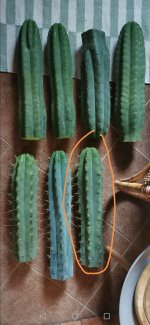
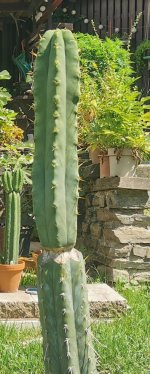
Can you share a picture of your G2 clone :)
 
the plants are all in your cultivation so the fresh yield should provide adequate information but I've been scratching my head on this for presenting increase in yields.

my fresh yield increase is around 10-15% where the dried yield of the same exact plant (recorded both weights) the increase is 40-45%.

Dry weight seems to be the most reliable due to being able to make uniform dry material but the control had a higher dry weight than the same mass after the experiment. 300g fresh for both same clone and almost uniform size but control is 15g dry vs 9-10g dry for the experiment meaning loss of volatile compounds (I suspect mostly certain compounds being converted and release more CO2 and others like ethylene and JA among others.

You collection seems to be uniform treatments so not a big issue. But even different hydration say the same clone after a long drought would cause the fresh yield to vary a lot no?
I fully agree with you. In my case, however, drying such a large number of cacti is impractical and not strictly necessary, as my goal is not to directly compare my results with those of other growers. The primary aim was to compare my own cultivars under identical conditions. Once this internal comparison is established, it becomes possible to relate my dataset to those of others by using well-known reference cultivars (such as Eileen, Ogun, Baker, etc.). All cacti were grown under identical conditions, including the same watering regime. While this approach is not fully bulletproof, it should provide a reasonable basis for estimating relative potency. If that is even possible with these plants.
 
Added High Voltage and Crown...

Cultivarpotency %/freshpotency %/G2
Ogun0,051%39,8%
Eileen0,075%58,67%
Urubamba0,042%33,39%
Zhuracpamba0,061%48,14%
G20,127%100%
Liria0,045%35,57%
W.Baker 54520,102%80,18%
JxH0,044%34,34%
High Voltage0,055%42,99%
Crown0,040%31,65%
 
Added SS02 and Foolsbreath...

Cultivarpotency %/freshpotency %/G2
Ogun0,051%39,8%
Eileen0,075%58,67%
Urubamba0,042%33,39%
Zhuracpamba0,061%48,14%
G20,127%100%
Liria0,045%35,57%
W.Baker 54520,102%80,18%
JxH0,044%34,34%
High Voltage0,055%42,99%
Crown0,040%31,65%
SS020,078%61,23%
Foolsbreath0,093%72,92%
 
Added Kate's Bridgesii (Cactus Kate) and Decosta

Cultivarpotency %/freshpotency %/G2
Ogun0,051%39,8%
Eileen0,075%58,67%
Urubamba0,042%33,39%
Zhuracpamba0,061%48,14%
G20,127%100%
Liria0,045%35,57%
W.Baker 54520,102%80,18%
JxH0,044%34,34%
High Voltage0,055%42,99%
Crown0,040%31,65%
SS020,078%61,23%
Foolsbreath0,093%72,92%
Kate's Bridgesii (Cactus Kate)0,064%50,35%
Decosta0,067%52,75%
 
Wow!to the untrained eye, it look like a simple tab ... but i can only imagine the level of work and deciation to get there ! congrats!
Would you be able to provide a wet/dry ratio, even if very approximate, for your setting ?
And this is the yield for HCL or which salt?

I hope in the next 2 years to do exactly the same thing with my collection (around 30 species) ; thought it would be in real setting (outdoor) so more bias i guess. And i was thinking to do mini-cielo , so i'm also curious why you choose that approach (and which tek was used ; STB... with which solvent? which acid? )
 
Wow!to the untrained eye, it look like a simple tab ... but i can only imagine the level of work and deciation to get there ! congrats!
Thank you Quetzal. Yes :), there is quite strong relationship between cacti and me. And a lot of energy within I can work with. And obviously not all goes just to the inner work :)

Would you be able to provide a wet/dry ratio, even if very approximate, for your setting ?
You mean for whole cactus?

And this is the yield for HCL or which salt?
Yes, HCl. I forgot to mention before.

I hope in the next 2 years to do exactly the same thing with my collection (around 30 species) ; thought it would be in real setting (outdoor) so more bias i guess. And i was thinking to do mini-cielo , so i'm also curious why you choose that approach (and which tek was used ; STB... with which solvent? which acid? )
Yes, there is so many factors that should be taken into account it is almost impossible to do so. My are outdoor too, but not in ground. They all have the same media and watering/feeding regime (mineral fertilizer blend), so some of these factors are under control.
But any endeavour in that area has a lot of value, even with more bias. (y) It may help other seekers to orient in their selection. It is funny, I did all this to find my top pick, but found it before any testing. It just came and told me. I continued(and still continue) with the testing, but the more data I have, the more I realize how useless it is (and ever was) from my point of view. But priceless from another point of view.
I use more or less this STB(Toluene) with HCl titration(salting). The reason is I use it many years and it is so stable, clean and straightforward, easy choice :). If toluene, KOH and HCl is not problem, otherwise cielo would be the next choice.
HCl is because of solubility - I like it without any stomach discomfort/nausea.
 
Last edited:
Yes, whole cactus to dry ; in my case it vary beetween 4% to 7% dry weight, which is a big variation.

I started my tests last summer, i happen to have 30 big cactus which are all from the same clone. So i did kind of the opposite, i tested for the bias rather than the genetic itself.
Time of harvest seemed to have big influence : harvest before the "wake up" in the spring gave double alkaloid. But cactus age (or rather, the age of the used section) seems also super critical.
it's really not clear if "aging in the dark" worked ; i think i have to redo that one. The thing is, too many parameters... so i join you, it seems a bit pointless. My conclusions could be all quite wrong.

My goal is to roughly stop propagating the weakest ones, and focus more on the clearly promissing ones.
 
Yes, whole cactus to dry ; in my case it vary beetween 4% to 7% dry weight, which is a big variation.
I don’t have the wet/dry ratio, as I skip the drying step in my process. I wouldn’t be surprised if it differed for each cultivar, cactus size, or other factors, though.

I started my tests last summer, i happen to have 30 big cactus which are all from the same clone. So i did kind of the opposite, i tested for the bias rather than the genetic itself.
This is a good opportunity to test things like aging in the dark, potency in different sections of the cactus, stressing, etc.
The problem is that they should be as uniform as possible so that the results have at least some value. This may be difficult if they weren’t grown with this idea in mind from the beginning.

Time of harvest seemed to have big influence : harvest before the "wake up" in the spring gave double alkaloid. But cactus age (or rather, the age of the used section) seems also super critical.
it's really not clear if "aging in the dark" worked ; i think i have to redo that one.
This sounds interesting - do you have any numbers? Is it documented anywhere? I’ve had the feeling that dormancy might increase potency, but I’ve never tried to test it. It would be great to have some data on that.

I use aging for three months in the dark at 22 °C, but to be honest, I’m not sure it works. I don’t think it does any harm, so I keep doing it, but I suspect that temperature might also be an important factor in the process. Your setup would be better than mine for this type of testing, as I don’t have many identical clones of the same cultivar.

My goal is to roughly stop propagating the weakest ones, and focus more on the clearly promissing ones.
Yes, the same goal here. I may keep one specimen of each, but propagate only two or three of the strongest ones.
 
Now i have a reliable result with CIELO so i will do a side to side for the aging. i will cut in 20cm sections, dry immediatly half and age the other half, making sure i alternate the sections as i know potency vary along the length.
Trying to eliminate biases is in itself a bias... as we kind of also want to mesure how things are "in reality" ; and reality is messy, chaotic, magic. Some cactus might perform well under this specific control , presice nutrients dadadi dadada ... but what about that caci that thrive on the side, on the rocky part of the land ? and what about all the other compound aside of mescaline , that give their specific caracter? testing for "%" is clearly the tip of the iceberg , affortunatly , as you mention, we got other tool, like more direct communication.
(anedocticly, the way i discover they might be stronger before spring was because a massive storm came just for the spring equinox and knock off a fat boy. I would never have harvested so early normally... but here it was. )
 
Now i have a reliable result with CIELO so i will do a side to side for the aging. i will cut in 20cm sections, dry immediatly half and age the other half, making sure i alternate the sections as i know potency vary along the length.
Trying to eliminate biases is in itself a bias... as we kind of also want to mesure how things are "in reality" ; and reality is messy, chaotic, magic. Some cactus might perform well under this specific control , presice nutrients dadadi dadada ... but what about that caci that thrive on the side, on the rocky part of the land ? and what about all the other compound aside of mescaline , that give their specific caracter? testing for "%" is clearly the tip of the iceberg , affortunatly , as you mention, we got other tool, like more direct communication.
(anedocticly, the way i discover they might be stronger before spring was because a massive storm came just for the spring equinox and knock off a fat boy. I would never have harvested so early normally... but here it was. )

This whole topic is complex, but it can be reconstructed piece by piece. Ultimately, AI can take all this scattered information and distill the “truth.”
Which type of cactus do you want to use—bridgesii, peruvianus, or pachanoi? Aging may work for some and not for others, especially with the crosses that are available now. Even it might work for one bridgesii but not for another. This isn’t a deal-breaker for this kind of test, it’s just important information to take into account.
 
Last edited:
Added Jiimz Twin Spine, KR04, Lupita

Cultivarpotency %/freshpotency %/G2
Ogun0,051%39,8%
Eileen0,075%58,67%
Urubamba0,042%33,39%
Zhuracpamba0,061%48,14%
G20,127%100%
Liria0,045%35,57%
W.Baker 54520,102%80,18%
JxH0,044%34,34%
High Voltage0,055%42,99%
Crown0,040%31,65%
SS020,078%61,23%
Foolsbreath0,093%72,92%
Kate's Bridgesii (Cactus Kate)0,064%50,35%
Decosta0,067%52,75%
Jiimz Twin Spine0,050%39,58%
KR040,040%31,36%
Lupita0,048%37,74%
 
Added a column - mg/year/G2 - indicating overall gain (again expressed as a percentage of the strongest cultivar), taking into account not only potency but also the clone’s growth rate. This value is more prone to error, as rootstock size and strength slightly differ between clones, but it still provides a useful overall picture.

Cultivarpotency/freshpotency/G2mg/year/G2
Ogun0,051%39,8%35,05%
Eileen0,075%58,67%48,76%
Urubamba0,042%33,39%34,41%
Zhuracpamba0,061%48,14%55,67%
G20,127%100%100%
Liria0,045%35,57%33,77%
W.Baker 54520,102%80,18%49,17%
JxH0,044%34,34%39,52%
High Voltage0,055%42,99%32,44%
Crown0,040%31,65%27,96%
SS020,078%61,23%38,75%
Foolsbreath0,093%72,92%44,52%
Kate's Bridgesii (Cactus Kate)0,064%50,35%36%
Decosta0,067%52,75%30,07%
Jiimz Twin Spine0,050%39,58%39,02%
KR040,040%31,36%34,18%
Lupita0,048%37,74%28,47%
 
Last edited:
Added a column (mg/year/G2) indicating overall gain, taking into account not only potency but also the clone’s growth rate (again expressed as a percentage of the strongest cultivar). This value is more prone to error, as rootstock size and strength slightly differ between clones, but it still provides a useful overall picture.

Cultivarpotency/freshpotency/G2mg/year/G2
Ogun0,051%39,8%35,05%
Eileen0,075%58,67%48,76%
Urubamba0,042%33,39%34,41%
Zhuracpamba0,061%48,14%55,67%
G20,127%100%100%
Liria0,045%35,57%33,77%
W.Baker 54520,102%80,18%49,17%
JxH0,044%34,34%39,52%
High Voltage0,055%42,99%32,44%
Crown0,040%31,65%27,96%
SS020,078%61,23%38,75%
Foolsbreath0,093%72,92%44,52%
Kate's Bridgesii (Cactus Kate)0,064%50,35%36%
Decosta0,067%52,75%30,07%
Jiimz Twin Spine0,050%39,58%39,02%
KR040,040%31,36%34,18%
Lupita0,048%37,74%28,47%
g2 is your strongest clone and fastest growing? In my collection my slowest and thinnest clone clone is my strongest.

fresh weight however is very variable... 0.114% after a month 0.161% one experiment and another 0.102% to 0.141%. Even the control just laying them 0.0995% to 0.129%
with dry weight since water is removed it is not an issue.

Visually your G2 Doesn't look dehydrated.. is there a way to test hydration in plants?
 
g2 is your strongest clone and fastest growing? In my collection my slowest and thinnest clone clone is my strongest.

fresh weight however is very variable... 0.114% after a month 0.161% one experiment and another 0.102% to 0.141%. Even the control just laying them 0.0995% to 0.129%
with dry weight since water is removed it is not an issue.

Visually your G2 Doesn't look dehydrated.. is there a way to test hydration in plants?
G2 is the strongest, but not the fastest. It produced 2,096 kg per year. The highest yield was from Zhuracpamba at 2,424 kg/year, followed by JxH with 2,412 kg/year. The average yield is 1,710 kg/year, so G2 is quite above average.

I know the weight both at harvest and before processing (after three months in darkness). G2 weighed 2,232 kg when cut and 2,096 kg before processing, which corresponds to a water loss of 6%. Overall water loss ranges between 5–9%, with an average of about 7%.

The difference you mention, based on your experience, seems too large to be explained by water loss alone. There are likely biochemical processes taking place in the cut material, which is why I leave it to rest for three months.

Obviously, some cultivars contain more water than others when freshly cut—that’s simply how it is. The same applies to diameter, which I suspect plays an important role in my case. I accept these discrepancies because they save me a lot of work when cutting and drying large amounts of material.

None of my cacti looked dehydrated, either when cut or after processing. I think the only real way to test hydration is to dry it and compare 🙂
 
Last edited:
G2 is the strongest, but not the fastest. It produced 2,096 kg per year. The highest yield was from Zhuracpamba at 2,424 kg/year, followed by JxH with 2,412 kg/year. The average yield is 1,710 kg/year, so G2 is quite above average.
I miss interpreted your new column it is mg per based on growth I interpreted it as the growth rate compared to G2.

My experiments were from stress treatments from a foliar (true color) and ethylene gas (both have very similar results). Do all your cacti get the same amount of sunlight? Your data is really nice and with each new addition really comes together.
 
Back
Top Bottom