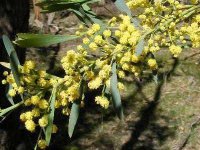
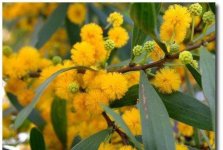
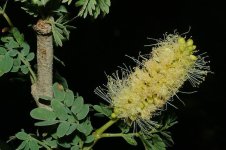
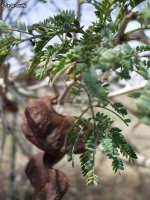
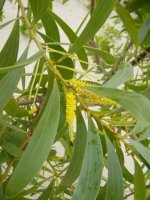
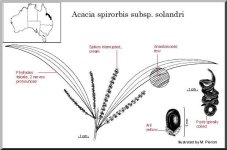
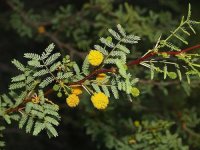
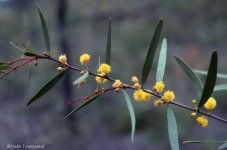
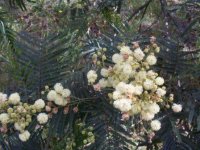
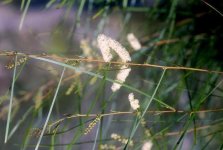
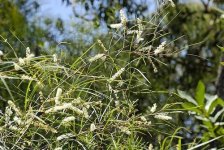
..here's what Alexander Shulgin had to say a while back on A. berlandieri (and A. rigidula)
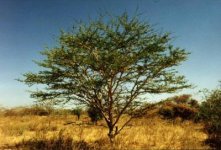
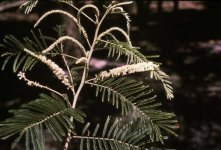
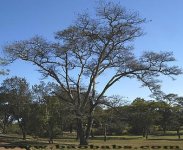
...two very interesting trees indeed
anyone here live in Texas..?
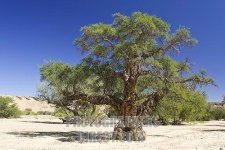
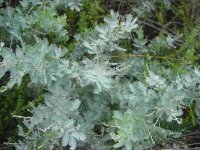
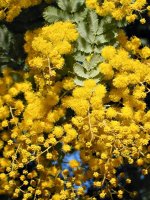
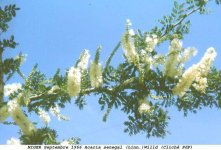
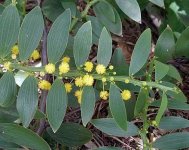
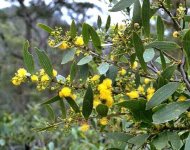
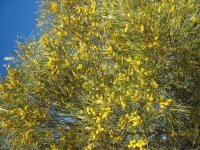
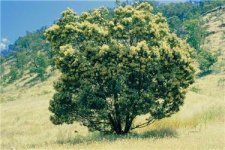
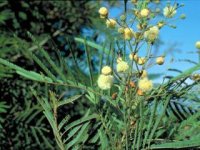
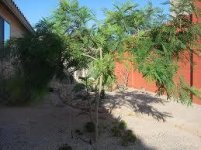
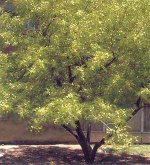
here's the Guajillo Tree
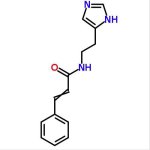
My first thoughts as to origin were directed towards the well known natural hydroxylated amphetamines such as norephedrine, ephedrine and N-methylephedrine. I know that ephedrine and pseudoephedrine, frequent precursors in the illegal synthesis of methamphetamine, can be reduced to methamphetamine as an artifact of analysis. The sample insertion conditions of the gas chromatograph can effect this conversion. But then, there was no mention of any of these hydroxylated alkaloids as being present in either Acacia.
Might a contaminated round-bottomed flask have been purchased at a garage sale outside an abandoned meth-lab and served as the source of these "man-made" compounds? Unlikely, even in Texas.
Even more dramatic, one of these amphetamines, the 4-Methoxyamphetamine, is the increasingly notorious PMA that is appearing as one of the lethal "Ecstasy" offerings in the rave scene.
Several months ago I tried to contact, individually, the two principal authors, by both e-mail and personal snail-mail, and I have received no response as yet.
There is certainly precedent for a drug which was originally man-made, to be discovered in a plant. N,N-Dimethyltryptamine (DMT) was first synthesized by Manske, in Canada, in the 1930s. It was over twenty years later that it was discovered in a plant from South America. But such an event usually evokes considerable commentary. Here it seems that an exciting story is being ignored. Am I missing something? - Shulgin
...two very interesting trees indeed
anyone here live in Texas..?
here's the Guajillo Tree


 Thanks for the work nen!