
-
Members of the previous forum can retrieve their temporary password here, (login and check your PM).
You are using an out of date browser. It may not display this or other websites correctly.
You should upgrade or use an alternative browser.
You should upgrade or use an alternative browser.
Trying to improve Acacia information
- Thread starter nen888
- Start date
Migrated topic.


DreaMTripper
Rising Star
hxxp://nature.com/hdy/journal/v88/n4/full/6800036a.html

nice pic nen...
hey.. where on earth are seldom, spice sailor and Gowpen these days? I miss those guys..
.. still haven't cracked this metho/toluene problem yet either
hey.. where on earth are seldom, spice sailor and Gowpen these days? I miss those guys..
.. still haven't cracked this metho/toluene problem yet either
DreaMTripper
Rising Star
Hey another great thread, huge amounts of info but slightly downhearted about the success rate, seems it isn't many peoples time to receive the gift from the plants.
However nobody said it would be quick, I've decided to focus on mearnsii and floribunda they seem to be most common around here. Also may look at dealbata but would need a large amount.
I found these down my road very pretty plants but I've yet to come up with any ID or images that are similar has anyone seen these before?
The second one smells of marijuana, would be a good plant to grow alongside an outdoor weed plant. All really pretty plants especially the last one..
However nobody said it would be quick, I've decided to focus on mearnsii and floribunda they seem to be most common around here. Also may look at dealbata but would need a large amount.
I found these down my road very pretty plants but I've yet to come up with any ID or images that are similar has anyone seen these before?
The second one smells of marijuana, would be a good plant to grow alongside an outdoor weed plant. All really pretty plants especially the last one..
Attachments
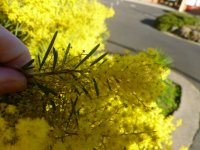
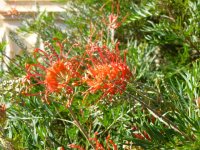
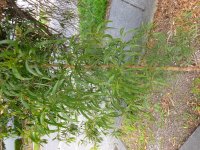
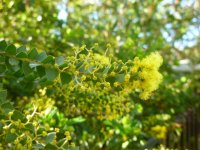
hey DreamTripper  .. yeah acacia's require a lot of dedication and patience - though I assure you that your efforts will be rewarded in good time if you stick at it... a lot of people I talk to seem to think that any old acacia will give up dmt for them only to realise that the journey takes a lot of time, hardwork and respect... acacia's certainly aren't alkaloid mines that one can just harvest and expect something in return - they are a very compex genus, as I have certainly come to realise
I think your first tree is Acacia Fimbriata, your third one either acacia implexa or leiocalyx, and your last one acacia pravissima - I've read that Fimbriata has been tested and contained mainly phenethylamines, so it may be an interesting one to test... implexa I think definitely needs research - I think Seldom may have gotten something out of it a while back.. thats all i've heard about it regarding alkaloids. I picked a few branches the other day from a very tall implexa and tasted the phyllodes.. horribly bitter and generally unpleasant... I plan on testing it this week. though it has rained recently so my result should not be taken conclusively by any means... leiocalyx is definitely worth a shot and has had a couple findings of dmt at good yields..
good luck!
.. yeah acacia's require a lot of dedication and patience - though I assure you that your efforts will be rewarded in good time if you stick at it... a lot of people I talk to seem to think that any old acacia will give up dmt for them only to realise that the journey takes a lot of time, hardwork and respect... acacia's certainly aren't alkaloid mines that one can just harvest and expect something in return - they are a very compex genus, as I have certainly come to realiseI think your first tree is Acacia Fimbriata, your third one either acacia implexa or leiocalyx, and your last one acacia pravissima - I've read that Fimbriata has been tested and contained mainly phenethylamines, so it may be an interesting one to test... implexa I think definitely needs research - I think Seldom may have gotten something out of it a while back.. thats all i've heard about it regarding alkaloids. I picked a few branches the other day from a very tall implexa and tasted the phyllodes.. horribly bitter and generally unpleasant... I plan on testing it this week. though it has rained recently so my result should not be taken conclusively by any means... leiocalyx is definitely worth a shot and has had a couple findings of dmt at good yields..
good luck!
DreaMTripper
Rising Star
Thanks man, indeed alot of rain recently here too. Just went for a walk and found up to 20 mearnsii and felt so peaceful among them. Some had what looked like balls of shit hanging off them lol , only one had a seed pod and this was isolated elsewhere, any idea why only this one had a pod?
There were also a couple with grey-green phylodes and grey-yellow flowers were these a variant of mearnsii or another species entirely?
Beautiful trees.
There were also a couple with grey-green phylodes and grey-yellow flowers were these a variant of mearnsii or another species entirely?
Beautiful trees.
if you don't mind me asking, what general area are you from? mearnsii won't get pods generally for a little while but it does vary a bit... it also flowers later up in NSW I noticed than down here in vic.. and yeah there is something calming about being amongst the acacias.. quietens the mind
the one with grey green phyllodes could well be acacia dealbata - .. dealbata has brilliant yellow flowers which smell fantastic. I actually picked a sprig of it the other day and was inspired to start making wattle flower perfume.. its quite easy by the way if anyones interested..i found a good article on it the other day which essentially just said to do the following: macerate flowers in oil (preferably warm-hot) and leave for 24 hrs before mixing thoroughly with ethanol .. allow to separate, discard oil and put the wattle scented ethanol in a misting bottle or something like that.. mearnsii perfume would be beautiful
the one with grey green phyllodes could well be acacia dealbata - .. dealbata has brilliant yellow flowers which smell fantastic. I actually picked a sprig of it the other day and was inspired to start making wattle flower perfume.. its quite easy by the way if anyones interested..i found a good article on it the other day which essentially just said to do the following: macerate flowers in oil (preferably warm-hot) and leave for 24 hrs before mixing thoroughly with ethanol .. allow to separate, discard oil and put the wattle scented ethanol in a misting bottle or something like that.. mearnsii perfume would be beautiful
DreaMTripper
Rising Star
That sounds cool they are truly sensual plants.
I have more photos of them and on second look the one with the seed pod hasnt nearly as many flowers and what it does have is bigger.
I have more photos of them and on second look the one with the seed pod hasnt nearly as many flowers and what it does have is bigger.
..many acacia devotees come to a quiet place, at one with the tree, without the need to say much to the world about their ally..i miss them too and wish them well..acacian said:hey.. where on earth are seldom, spice sailor and Gowpen these days? I miss those guys..


hey.. where on earth are seldom, spice sailor and Gowpen these days? I miss those guys..
I'm here, reasons I don't post often are my own, but foremost of these is that I've found a lot of the information people are seeking here has already been done, professionally. CSIRO publications are a good place to start, for eg. White's early NZ studies .. publicly available info is however but a candle to the sunlight of work being done through universities and research departments (one not far from you acacian up there in the frozen North) .. it's about finding an in .. i can give a few hints; for new species look at recent revisions being made based on genetic (or even chemotaxonomic) methods of classification rather than morphology .. learn the chemistry behind what you're doing, i can't think of how many examples i've seen of amateur mistakes leading to type 2 errors .. also the legal ramifications of getting caught doing 'research' (extracting) are that you'll likely have very serious charges or even convictions on your police record, meaning you'll find it very difficult to get any jobs requiring a police check, and to travel abroad. If this happens, provided you're over 18, they'll be there for life. Think think think .. don't think of yourself as an inert receptacle for 'the wisdom of the acacia', it's about cultivating a receptivity to what it can show you, it's value is to be found in the practical consequences it produces in your normal life. It's not there for your entertainment, and things like hallucinogen persisting perception disorder are real, and can proper fuck your life. there may not be studies demonstrating a causal link between conditions like HPPD with DMT, the reasons for this absence have their basis in ethical and bureaucratic factors, and not truth .. Acacia alkaloids are only a newly uncovered area - if you want to be involved in this realise that you are the canary in the coal mine regarding the dangers of what you're doing.
be safe trippers,
thanks for posting your thoughts there Seldom I'm glad you brought these issues up....and good to hear from you!... ultimately I think your right - there are real dangers to this path in a myriad of differen't ways that need to be taken into account, and which often I worry about too... most notably the legal ramifications are something I have thought a lot about recently. it is really quite scary pondering the potential consequences of what I consider genuinely good intended and humbling research..
..at the end of the day I can only make my intentions so clear.. for the sake of this conversation I'll at least reitterate that I absolutely do not condone the selling dmt ... the environmental impacts and potential social impacts are risky... and regarding social impacts, similarly to LSD being "pushed to the masses" I actually think it could potentially do more harm than good in some cases. acid - whilst an entheogen I hold close to my heart - can and has definitely had some long lasting negative impacts on people's lives (including yours truly in some aspects) ... it can open an analytical can of worms that for some may be better left closed
you are right in saying that these are issues any researcher should be weary of... I guess there's no concrete way of burying these dangers, though I take a few precautions to limit risk... I distance myself from the commercial side of things, am very careful about the set and setting in which I partake, I try to work in the best interests of the plants as well as other people, and I treat every extract as a teacher that must be listened to with open heart.. who knows where the journey will take me. I'm still very young though and I'm happy not knowing
gotta finish cooking curry so I'll leave it at that but hope you are well Seldom! hope to catch up again someday soon.. i'll hopefully be up in NSW again soon
..at the end of the day I can only make my intentions so clear.. for the sake of this conversation I'll at least reitterate that I absolutely do not condone the selling dmt ... the environmental impacts and potential social impacts are risky... and regarding social impacts, similarly to LSD being "pushed to the masses" I actually think it could potentially do more harm than good in some cases. acid - whilst an entheogen I hold close to my heart - can and has definitely had some long lasting negative impacts on people's lives (including yours truly in some aspects) ... it can open an analytical can of worms that for some may be better left closed
you are right in saying that these are issues any researcher should be weary of... I guess there's no concrete way of burying these dangers, though I take a few precautions to limit risk... I distance myself from the commercial side of things, am very careful about the set and setting in which I partake, I try to work in the best interests of the plants as well as other people, and I treat every extract as a teacher that must be listened to with open heart.. who knows where the journey will take me. I'm still very young though and I'm happy not knowing
gotta finish cooking curry so I'll leave it at that but hope you are well Seldom! hope to catch up again someday soon.. i'll hopefully be up in NSW again soon
..nice to hear from you Seldom and thanks for your perspective..
DreamTripper..nice photos and thank you..but, please, can you post photos like this in the
Acacia Identification Thread..otherwise this thread becomes unwieldy..that's why the ID thread was created, as a spin-off from this thread..
DreamTripper..nice photos and thank you..but, please, can you post photos like this in the
Acacia Identification Thread..otherwise this thread becomes unwieldy..that's why the ID thread was created, as a spin-off from this thread..
..also, i want to concur with a comment Seldom made about 20 pages ago..
Acacia (especially orally) is not entry-level DMT access..it's a new and largely un-mapped terrain..there are inherent risks which have been mentioned (see safety and risks, index) and there is no guarantee of success..
it's about appreciating Trees..
.
Acacia (especially orally) is not entry-level DMT access..it's a new and largely un-mapped terrain..there are inherent risks which have been mentioned (see safety and risks, index) and there is no guarantee of success..
it's about appreciating Trees..
.
Acaciasubliminata
Rising Star
Just as ayahuasca is a rite of passage for some cultures, as a 5th generation Australian married to a native Australian, I believe that Knowledge of these plants is my birth right. This thread has not only nurtured an unsurpassed wonder and passionate alchemical quest, it has also prevented many I know from falling to the temptation of dirty street "drugs" from raped and pillaged trees.
My identification skills are growing everyday, and i'm sure that the longifolia type trees that my favourite psilocybes love to grow under have resinous phyllode margins! Have to wait a couple of agonising weeks to go and confirm unfortunately.
I am in love with the gorgeous A.vestita which is everywhere in my area Have a few seedlings coming up too, those acuminata babies sure are brightly coloured!
My identification skills are growing everyday, and i'm sure that the longifolia type trees that my favourite psilocybes love to grow under have resinous phyllode margins! Have to wait a couple of agonising weeks to go and confirm unfortunately.
I am in love with the gorgeous A.vestita which is everywhere in my area
Have a few seedlings coming up too, those acuminata babies sure are brightly coloured!..thank you Acaciasubliminata..quote of the month..Acaciasubliminata said:Just as ayahuasca is a rite of passage for some cultures, as a 5th generation Australian married to a native Australian, I believe that Knowledge of these plants is my birth right. This thread has not only nurtured an unsurpassed wonder and passionate alchemical quest, it has also prevented many I know from falling to the temptation of dirty street "drugs" from raped and pillaged trees.
My identification skills are growing everyday, and i'm sure that the longifolia type trees that my favourite psilocybes love to grow under have resinous phyllode margins! Have to wait a couple of agonising weeks to go and confirm unfortunately.
I am in love with the gorgeous A.vestita which is everywhere in my area
the pillaging of trees is an appalling reflection of how disconnected and greedy some in modern culture have become..these trees are highly sacred..around the world..
speaking of birth-right and acacias, i want to mention again the Masai of Kenya..
we discussed their men's Acacia nilotica ceremony on p26 here as well as oral activity..
at a recent talk i gave in London, it was pointed out by a knowledgeable african guest that the Masai use several acacias, which is true, for different kinds of ceremony, with different purposes.. (thank you Mr. 'K'..not sure if i should mention your name..?) ..this probably in part reflects the different kinds of compounds found in acacias (tryptamines, betacarbolines, phenethylamines etc..)
i should also point out that there are womens' ceremonies associated with certain acacia trees..
beyond this the Masai, like most world traditions, remain highly secretive about these rites/trees..it is an initiation process..and it requires trust and integrity..this is good..
another acacia utilised by the Masai for ceremony is 'Whistling Acacia' Acacia drepanolobium..it is a favourite (indeed essential) food of the Black Rhino (as mentioned on p.60, along with more A. nilotica info) ..like a number of species, alkaloids are confirmed but not specifically identified..
as i also said in my recent talks, in respecting old traditions i will remain in the oral tradition to go further on these topics..i will not break these traditions by writing some things in a book or the net..
the wise and motivated will find what they need to..or are meant to..
..in East Africa the Acacia is indeed a significant birth-right and rite..
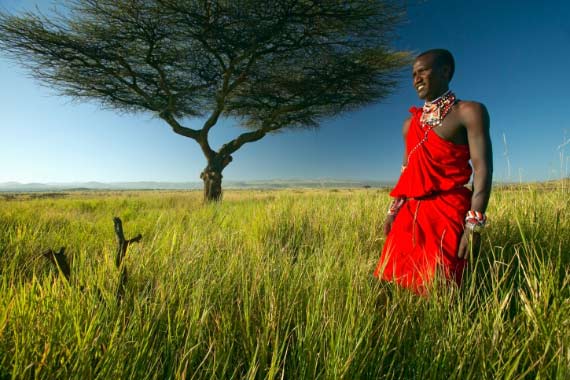
..more Masai with sacred Acacia images attached below, and Acacia drepanolobium first..
Attachments
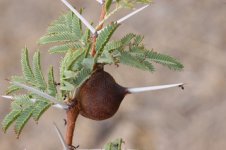
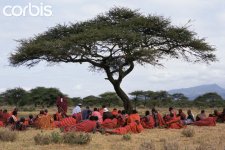

..and a reminder (in line with the DMT-Nexus policy)
do not buy or sell DMT..
and remember almost all of this 'DMT' has come from a plant..did the dealers treat her well?
this thread is for general information, ecological education, and conscious self-empowerment for those who choose..
please don't buy into the murk of the greedy..
.
do not buy or sell DMT..
and remember almost all of this 'DMT' has come from a plant..did the dealers treat her well?
this thread is for general information, ecological education, and conscious self-empowerment for those who choose..
please don't buy into the murk of the greedy..
.
DreaMTripper
Rising Star
Found this before not really new information but goes into a bit more detail regarding the other chemicals to be found and to avoid..
You can read the following and more here.. Acacia info
You can read the following and more here.. Acacia info
Alkaloids - is a general term for basic (alkaline) nitrogen containing organic compounds, generally bitter in taste and strong physiological action, many plant derived drugs and medicines are alkaloids, eg quinine, scopolomine, codiene, morphine, ephedrine, tryptamines etc. A lot of them can be potentially toxic, even fatal, especially when in the form of purified alkaloids extracted from plants, quite often only a small amount of the alkaloids can have a strong effect. Obviously some or at least the plants that contain them have proved immensely useful to people for disease and illness, for thousands of years.
1.2.8Alkaloids from the species of acacia
Alkaloids are relatively common in the leguminosae as a whole, and within the genus acacia in Australia alkaloids that have been reported include N, N-dimethyltryptamine, N-methyltryptamine, tryptamine, tetrahydroharman, N-methyl-tetrahydroharman, b-phenethylamine, N-methyl-b-phenethylamine, hordenine (N, N-dimethyl-4-hydroxy-b-phenethylamine), N-cinnamoylhistamine….. For the number of species, there has been little research on the alkaloids of Australian acacias, and like many studies of Australian plants there has been quite a lot of variability in the results. For example the root bark of Acacia holoserica is reported in a few publications as containing the B-phenethylamine alkaloid hordenine, up to 1.22% of the dry weight. Yet in a recent study of aboriginal medicinal plants all parts of this species were found to give a negative result for alkaloids. It was still used medicinally and another species, Acacia auriculiformis, which was used in a similar way, was found to give a positive test for alkaloids, both are members of section Juliflorae . Other studies have found that there can not only be variation in the amount, but also in the type of alkaloids present, eg A. baileyana has been found to contain both B-carboline and tryptamine alkaloids at different times of the year. Qualitative studies of the alkaloids have found that B-phenethylamine alkaloids are quite common in the uninerved members of section Phyllodineae with flowers in racemes, with some specimens found to contain more than 1% alkaloids. B-phenethylamines have been found in other species from section Phyllodineae . N-cinnamoylhistamine has been isolated from at least one member of section Juliflorae . Tryptamine or its N-methyl and N, N-dimethyl derivatives have been found in a number of members of section Juliflorae , and a single species from the Botrycephalae . An extra-Australian member of sub-genus Phyllodineae is recorded as containing methylated tryptamine and B-carboline alkaloids together. A member of section plurinerves is reported to contain B-carboline alkaloids.
So the picture regarding alkaloids seems complex, with much variation from different areas or amongst types or chemical races. Other plants in the Australian flora exhibit this sort of phenomena, with great variation in the amount and even the constitu ents of the volatile oils (Eucalyptus, Melaleuca ), alkaloids (Duboisia) or other compounds between types or localities. Many Aboriginal people recognised this trait in the Australian bush by using plants from one
area, and claim that the same plant from a different spot would not be effective, or may even be toxic.
^..thanks for that nice little summary DreaMTripper..
it's worth noting that tryptamines have now been found in quite a few members of Subgenus Phyllodineae..while this work is not formally published, it has been presented at a few conferences..these species have been reported in the thread..
as for variation..there was a bit on this in the thread here on p43..
there has been increasing evidence from a few nexians, including some private research PMs sent to me, of diurnal variation..in other words, the time of day can make a big difference (from negative to positive)
..also, other compounds in acacias can change whether or not a standard extraction technique will get alkaloids out..tars/polymer matrices etc..
they can be tricky, and moody, some of these trees..just like people..
remember, as mentioned somewhere earlier, while DMT is found in human blood and urine, it is not present in all people at all times..we too are apparently variable..
.
it's worth noting that tryptamines have now been found in quite a few members of Subgenus Phyllodineae..while this work is not formally published, it has been presented at a few conferences..these species have been reported in the thread..
as for variation..there was a bit on this in the thread here on p43..
there has been increasing evidence from a few nexians, including some private research PMs sent to me, of diurnal variation..in other words, the time of day can make a big difference (from negative to positive)
..also, other compounds in acacias can change whether or not a standard extraction technique will get alkaloids out..tars/polymer matrices etc..
they can be tricky, and moody, some of these trees..just like people..
remember, as mentioned somewhere earlier, while DMT is found in human blood and urine, it is not present in all people at all times..we too are apparently variable..
.

DreaMTripper said:Time of day? Wow the plot thickens!
Edit: any idea what this one is my little handbook came up with no answers!
It's possible that you're looking at Acacia Coriacea
..^ wage's response was to a post now moved to Acacia Identification Thread p24
.
as for the plot..well, there's also phase of the moon to consider as well..not to mention ambient temperature..
.
.
as for the plot..well, there's also phase of the moon to consider as well..not to mention ambient temperature..
.
Similar threads

- Replies
- 0
- Views
- 526
- Replies
- 6
- Views
- 2K

- Replies
- 4
- Views
- 474

- Replies
- 2
- Views
- 383

- Replies
- 149
- Views
- 16K
