As always , nen , you've called it right ... Today I filled a petri dish with Diggers metho , and evaporated it . There is a definite film of residue left behind . This is something I had never considered . I had always assumed metho was just de-natured with methanol only .Looks as if I will have to find something else ; or pay big bucks for " Pure Polish Spirit " ... [ and tighten my belt ] ....

-
Members of the previous forum can retrieve their temporary password here, (login and check your PM).
You are using an out of date browser. It may not display this or other websites correctly.
You should upgrade or use an alternative browser.
You should upgrade or use an alternative browser.
Trying to improve Acacia information
- Thread starter nen888
- Start date
Migrated topic.

pirateb0b wrote:
So I'm one of those squabbling petty shit scene corroboree forum wankers. Pardon me.
I just want to thank the creators of this thread for what you've done for everyone. Free flowing information.
I really like the Nexus and have been totally inspired by it.
So Mama Maidenii begat Nen who begat.
And Acacian and Seldom! Cool dudes. Or is that dudessess. And all the other Characters.
All I can personally add for now - DID YOU GUYS KNOW DMT AS WELL AS 5-TRI-METHOXY-TRYPTAMINE HAVE RECENTLY BEEN FOUND IN Citrus bergamia. Source Dennis McKenna recently. Earl Gray!
Oops. Wrong Family of Plants. Well I also did an A/B of Faidherbia albida from 'Palestine'. Jesus! I'd say about 0.3 percent of Total Light from stem bark. Citric. Lye. Xylene. Fan Evap. Re X.
Thanks everyone in this thread. I've attached some photos in the Nen tradition an encourage all lurkers and guests to join so they can really see what it's all about.
I guess I better start contributing to get full membership. Sorry to butt in so rudely.
As for the Corroboree, I post there about cultivation and avoid chemistry talk. Most threads I read (not ones I've posted in) seem to end in squabbling about some petty shit. Probably some scene bullshit I don't understand - but they seem helpful enough. My floribundas have just recently surpassed me in height.
So I'm one of those squabbling petty shit scene corroboree forum wankers.
Pardon me.I just want to thank the creators of this thread for what you've done for everyone. Free flowing information.
I really like the Nexus and have been totally inspired by it.
So Mama Maidenii begat Nen who begat.
And Acacian and Seldom! Cool dudes. Or is that dudessess. And all the other Characters.
All I can personally add for now - DID YOU GUYS KNOW DMT AS WELL AS 5-TRI-METHOXY-TRYPTAMINE HAVE RECENTLY BEEN FOUND IN Citrus bergamia. Source Dennis McKenna recently. Earl Gray!
Oops. Wrong Family of Plants. Well I also did an A/B of Faidherbia albida
from 'Palestine'. Jesus! I'd say about 0.3 percent of Total Light from stem bark. Citric. Lye. Xylene. Fan Evap. Re X.Thanks everyone in this thread. I've attached some photos in the Nen tradition an encourage all lurkers and guests to join so they can really see what it's all about.
I guess I better start contributing to get full membership. Sorry to butt in so rudely.
Attachments
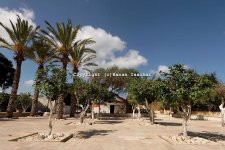
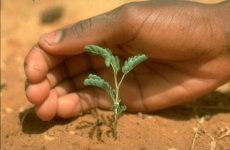
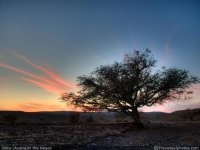

zombicyckel
Armchair activist
phyllode said:All I can personally add for now - DID YOU GUYS KNOW DMT AS WELL AS 5-TRI-METHOXY-TRYPTAMINE HAVE RECENTLY BEEN FOUND IN Citrus bergamia. Source Dennis McKenna recently. Earl Gray!
Was the dmt in the fruit? I guess it not that easy
 If so, what % was in there? Just get this feeling its not that easy, im guessing it would be pretty common in stores in that case. Is it safe if melatonin is in there? if one were to do an extraction could it be easy to seperate it from the dmt?

..ok..that was going to be It! 1888 posts..and someone's made an interesting enough post to lure me out..
phyllode wrote: ..i don't need to post on shaman aus with a militant plat activist like phyllode around..isn't there a Texas in queensland..? oops..
zombicyckel wrote:
..well, i can confirm via Snu Voogelbreinder that indeed small amounts of DMT and 5-Tri-Methoxy-Tryptamine (or similar) have been found in (i believe) the leaf of the Bergamot Tea plant (Citrus bergamia)Rutaceae..Earl Gary indeed! ..i don't know the %, but it wouldn't be hard to get bulk..extract a vat..ha.ha..as for the other tryptamines, i'm looking into them, but, as phyllode probably knows, i am a researcher of unknown tryptaimes from plants and their potential therapeutic or healing properties..so, unless receiving toxicological data, i wouldn't be trying to fool around with the plant's contents..i guess in the interests of interesting, a diversion into the Citrus family is ok..the Rutaceae family is rich in tryptamine alkaloids..the citrus family was, interesting, recently determined by genetic/molecular biologists to have originated in Australia..then spread to Asia via Indonesia..
....and yes, the restless botanists have reclassified Acacia albida as Faidherbia albida (Fabaceae) ..other african acacias have been renamed Senegalia, and some central American ones Vachellia..but they're all Acacias to me!
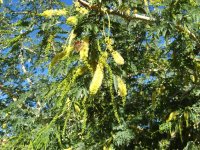
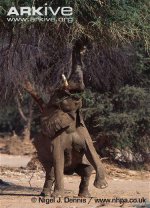
..Ana Tree (or Winter Thorn) , a scared judaic/biblical tree, is, like many acacias, a world-class nitrogen-fixing tree, working closely with symbiotic micro-organisms to improve the land..from New Agriculturalist
below, Bergamot and then Ana Tree...
phyllode wrote:
..welcome phyllode..lady of the fallen leafSo Mama Maidenii begat Nen who begat.
And Acacian and Seldom! Cool dudes. Or is that dudessess. And all the other Characters.
All I can personally add for now - DID YOU GUYS KNOW DMT AS WELL AS 5-TRI-METHOXY-TRYPTAMINE HAVE RECENTLY BEEN FOUND IN Citrus bergamia. Source Dennis McKenna recently. Earl Gray!
Oops. Wrong Family of Plants. Well I also did an A/B of Faidherbia albida from 'Palestine'. Jesus! I'd say about 0.3 percent of Total Light from stem bark. Citric. Lye. Xylene. Fan Evap. Re X.
..i don't need to post on shaman aus with a militant plat activist like phyllode around..isn't there a Texas in queensland..? oops..zombicyckel wrote:
Was the dmt in the fruit? I guess it not that easy If so, what % was in there? Just get this feeling its not that easy, im guessing it would be pretty common in stores in that case. Is it safe if melatonin is in there? if one were to do an extraction could it be easy to seperate it from the dmt?
..well, i can confirm via Snu Voogelbreinder that indeed small amounts of DMT and 5-Tri-Methoxy-Tryptamine (or similar) have been found in (i believe) the leaf of the Bergamot Tea plant (Citrus bergamia)Rutaceae..Earl Gary indeed! ..i don't know the %, but it wouldn't be hard to get bulk..extract a vat..ha.ha..as for the other tryptamines, i'm looking into them, but, as phyllode probably knows, i am a researcher of unknown tryptaimes from plants and their potential therapeutic or healing properties..so, unless receiving toxicological data, i wouldn't be trying to fool around with the plant's contents..i guess in the interests of interesting, a diversion into the Citrus family is ok..the Rutaceae family is rich in tryptamine alkaloids..the citrus family was, interesting, recently determined by genetic/molecular biologists to have originated in Australia..then spread to Asia via Indonesia..
....and yes, the restless botanists have reclassified Acacia albida as Faidherbia albida (Fabaceae) ..other african acacias have been renamed Senegalia, and some central American ones Vachellia..but they're all Acacias to me!
..Ana Tree (or Winter Thorn) , a scared judaic/biblical tree, is, like many acacias, a world-class nitrogen-fixing tree, working closely with symbiotic micro-organisms to improve the land..from New Agriculturalist
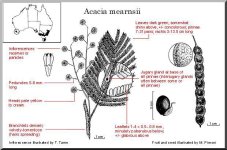
..another top rated nitrogen fixer is the australian Acacia mearnsii, naturalised in South Africa and the USA..As a result of declining fertility and degraded soil, crops often fail or yields are low and farmers struggle to feed their families. With the impact of global warming, farmers have "never been less prepared," asserts Peter Aagaard, director of the Conservation Farming Unit (CFU), which is based in Zambia but has an increasing following in Malawi.
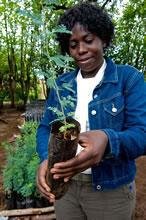
The solution, according to the CFU, lies in minimising soil disturbance, while boosting fertility through planting of the nitrogen-fixing acacia tree, Faidherbia albida.
below, Bergamot and then Ana Tree...
Attachments
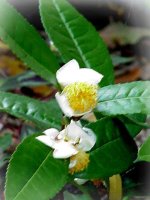
..brucine sulphate is the salt (made with sulphuric acid) ..as the freebase it extracts, to my knowledge, at a lower pH window/range than, for instance, dmt..though i haven't personally done this..the probable lethal dose in humans is 1gram orally, the 30mg claim coming from a less reliable source..
..but, there is nothing to say that there isn't something else in that brand..
ps. staying tuned pirateb0b..
..but, there is nothing to say that there isn't something else in that brand..
ps. staying tuned pirateb0b..
Sorry. I had the wrong bergamot flower picture. Check your images first unlike me.
I also heard on an A.B.C. Radio Science program about Citrus originating in Australia. There's some indigenous limes.
I assume from the blurb you attached that Oil of Bergamot could be ordered by the ton!
I thought I should add that the Winter Thorn seemed like it may have had a little 5meo. Was super strong. And almost blinding at one point. Like MHRB with a drop of Desert Toad. Good tho.
Nen, what do you think are the links between early Juda, Christianity and Acacias? Any?
I also heard on an A.B.C. Radio Science program about Citrus originating in Australia. There's some indigenous limes.
I assume from the blurb you attached that Oil of Bergamot could be ordered by the ton!
I thought I should add that the Winter Thorn seemed like it may have had a little 5meo. Was super strong. And almost blinding at one point. Like MHRB with a drop of Desert Toad. Good tho.
Nen, what do you think are the links between early Juda, Christianity and Acacias? Any?
..goodness! phyllode..and i meant 'plant' activist not plat activist, but now i think about it both are true
..and you are an intelligent fiend, with a whole string of questions i bet designed to tease and lure me out of sabbatical..
now, first, i'm not a christian..(yeah, more 'acacian' ha ha if you'll excuse me Acacian)
so lets platt this out..first one should check the index on page one of the thread..and get your head rapped around that..then all could underlay the thread Gnosticism>Spirituality and Mysticism>dmt-nexus.me..and ponder the Essenes
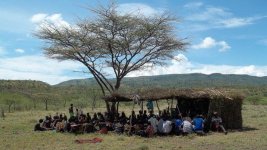
..below a 'Christian' Church below an acacia tree (i think she's called Anna)
..now bring home the hard data Nexians..!
i won't come back till you do…and i don't want to give away my book yet
..and you are an intelligent fiend, with a whole string of questions i bet designed to tease and lure me out of sabbatical..
now, first, i'm not a christian..(yeah, more 'acacian' ha ha if you'll excuse me Acacian)
so lets platt this out..first one should check the index on page one of the thread..and get your head rapped around that..then all could underlay the thread Gnosticism>Spirituality and Mysticism>dmt-nexus.me..and ponder the Essenes
..below a 'Christian' Church below an acacia tree (i think she's called Anna)
..now bring home the hard data Nexians..!
i won't come back till you do…and i don't want to give away my book yet
Attachments
zombicyckel
Armchair activist
What, one can use the oil? haha, if somebody ever tries I sure want a tek. that stuff is on sale everywhere.
Lets forget the bible and stick to important acacia info instead. No need to clutter up this straight forward thread No pun intended to your knowledge nen, as you I just suspect the guy is fishing for something.
Lets forget the bible and stick to important acacia info instead. No need to clutter up this straight forward thread
No pun intended to your knowledge nen, as you I just suspect the guy is fishing for something.^..you got it! ..like a fisherman with a net..
[EDIT: actually i know phyllode..yeah, phyllode's 'trouble'..but ok..you better write an intro essay so they don't think you're the fuzz phyllode..]
really i'd like to see some more solid test/assay results come through on the thread, rather than speculation..that said, i'll have a go at any question! perhaps if they smoked more tree in israel and palestine they'd find more light, and a common cause..churches and religion are institutions of power structure and dogma..however, i do feel we can trace many of the visionary experiences which inspired such dogma to entheogenic origins..Acacias are about a lot more than DMT..ecology for a start..many kinds of medicine..they have world-wide CULTURAL SIGNIFICANCE..this could help preserve them in the end..and for the n'th time - IMO Acacia is not the same as 'DMT'..(even in species where that's the main alkaloid) ..it's an experience with an ancient life-form's 'neurochemistry'..far, far older than ours..
.
[EDIT: actually i know phyllode..yeah, phyllode's 'trouble'
..but ok..you better write an intro essay so they don't think you're the fuzz phyllode..]really i'd like to see some more solid test/assay results come through on the thread, rather than speculation..that said, i'll have a go at any question! perhaps if they smoked more tree in israel and palestine they'd find more light, and a common cause..churches and religion are institutions of power structure and dogma..however, i do feel we can trace many of the visionary experiences which inspired such dogma to entheogenic origins..Acacias are about a lot more than DMT..ecology for a start..many kinds of medicine..they have world-wide CULTURAL SIGNIFICANCE..this could help preserve them in the end..and for the n'th time - IMO Acacia is not the same as 'DMT'..(even in species where that's the main alkaloid) ..it's an experience with an ancient life-form's 'neurochemistry'..far, far older than ours..
.

i always thought nen888 was phyllode ..
one thing that's missing from this thread that i'd love to see is people's experience with brewing.
also for those playing along at home i found the 'mearnsii' rootbark extraction i posted [negative] a while ago was a miss-id, the tree is actually a. filicifolia.
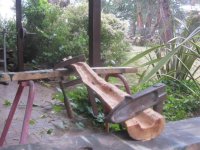
below is a split-and-bore method acacia wood didj i'm in the process of making, If you look into it you'll see a number of acacias such as melanoxylon and implexa are highly valued around the world for their beautiful acoustic properties ..
shine on crazy diamonds
one thing that's missing from this thread that i'd love to see is people's experience with brewing.
also for those playing along at home i found the 'mearnsii' rootbark extraction i posted [negative] a while ago was a miss-id, the tree is actually a. filicifolia.
below is a split-and-bore method acacia wood didj i'm in the process of making, If you look into it you'll see a number of acacias such as melanoxylon and implexa are highly valued around the world for their beautiful acoustic properties ..
shine on crazy diamonds
Attachments
Nice looking didj Seldom
Yeah people think me Nen over there. I'm an agent and confidant. The militant end. But I'm no Nen.
And I've now quit the Shaman Australis Corroboree, as I'm sick of arguing with people there. My mission was against some of the worse tree exploiters out there, who still throw their jism about on that site.
But I find the whole place a bit commercial orientated despite it's front as a place of learning.
Who runs it?
Hope I've offended the greedy, and not any of you Nexians.
I will try to follow the Attitude guidelines of this great place.
And, sorry Nen. The christian question was a tease, but you do hint at these things at points in the thread.
Respect.
Yeah people think me Nen over there. I'm an agent and confidant. The militant end. But I'm no Nen.
And I've now quit the Shaman Australis Corroboree, as I'm sick of arguing with people there. My mission was against some of the worse tree exploiters out there, who still throw their jism about on that site.
But I find the whole place a bit commercial orientated despite it's front as a place of learning.
Who runs it?
Hope I've offended the greedy, and not any of you Nexians.
I will try to follow the Attitude guidelines of this great place.
And, sorry Nen. The christian question was a tease, but you do hint at these things at points in the thread.
Respect.
I promise I won't clutter the Thread zombi .
Seldom wrote:
A long time ago Mr nen and myself went for a bushwalk.
We found broken glass and plastic on the way and collected it in garbage bags. Eventually we came to a very old Dear Mother Tree. Her bark was so thick and fibrous. I stood in awe and Love. And nen said "I could never touch the trunk of such an ancient mother seed tree. She could be up to 250 years old! This one's not as fast growing in the wild as people say."
We nurtured her babies. We never took more than a little seed from her.
A few months later I went on a lone walk on a high mountain. I saw beautiful and rare Father trees. I did not want to take from them either. Then a voice said: "Look to the ground!" I saw many fallen leaves, some still green, others naturally dried. I collected about 9 handfulls. It was dry weather, so I didn't make a fire. I used a portable gas cooker to simmer the brown leaves for about half a night. Then I simmered it down the next day. That night I drank some with three spoons of Peganum neat. I followed the nen-method of intuition not exact measurement. It gave me a forceful but good Purge after half an hour. And wrapped me in a carpet of diamonds for as long as i needed. It was so much more gentle and forgiving than any other form of this medicine I've encountered. Except maybe cold infusion MamaAya and Chacruna Blanco.
Just be sure to leave some leaf for the tree.
And some Australian trees are more intense and less forgiving whatever you do. Know thy tree. Know what you are doing. And dieta.
And give back to the mother.
phyllode
.Seldom wrote:
Seldom, will you play us some didge if I tell you a short story?one thing that's missing from this thread that i'd love to see is people's experience with brewing.
A long time ago Mr nen and myself went for a bushwalk.
We found broken glass and plastic on the way and collected it in garbage bags. Eventually we came to a very old Dear Mother Tree. Her bark was so thick and fibrous. I stood in awe and Love. And nen said "I could never touch the trunk of such an ancient mother seed tree. She could be up to 250 years old! This one's not as fast growing in the wild as people say."
We nurtured her babies. We never took more than a little seed from her.
A few months later I went on a lone walk on a high mountain. I saw beautiful and rare Father trees. I did not want to take from them either. Then a voice said: "Look to the ground!" I saw many fallen leaves, some still green, others naturally dried. I collected about 9 handfulls. It was dry weather, so I didn't make a fire. I used a portable gas cooker to simmer the brown leaves for about half a night. Then I simmered it down the next day. That night I drank some with three spoons of Peganum neat. I followed the nen-method of intuition not exact measurement. It gave me a forceful but good Purge after half an hour. And wrapped me in a carpet of diamonds for as long as i needed. It was so much more gentle and forgiving than any other form of this medicine I've encountered. Except maybe cold infusion MamaAya and Chacruna Blanco.
Just be sure to leave some leaf for the tree.
And some Australian trees are more intense and less forgiving whatever you do. Know thy tree. Know what you are doing. And dieta.
And give back to the mother.
phyllode

phyllode said:I promise I won't clutter the Thread zombi
Seldom wrote:Seldom, will you play us some didge if I tell you a short story?one thing that's missing from this thread that i'd love to see is people's experience with brewing.
A long time ago Mr nen and myself went for a bushwalk.
We found broken glass and plastic on the way and collected it in garbage bags. Eventually we came to a very old Dear Mother Tree. Her bark was so thick and fibrous. I stood in awe and Love. And nen said "I could never touch the trunk of such an ancient mother seed tree. She could be up to 250 years old! This one's not as fast growing in the wild as people say."
We nurtured her babies. We never took more than a little seed from her.
A few months later I went on a lone walk on a high mountain. I saw beautiful and rare Father trees. I did not want to take from them either. Then a voice said: "Look to the ground!" I saw many fallen leaves, some still green, others naturally dried. I collected about 9 handfulls. It was dry weather, so I didn't make a fire. I used a portable gas cooker to simmer the brown leaves for about half a night. Then I simmered it down the next day. That night I drank some with three spoons of Peganum neat. I followed the nen-method of intuition not exact measurement. It gave me a forceful but good Purge after half an hour. And wrapped me in a carpet of diamonds for as long as i needed. It was so much more gentle and forgiving than any other form of this medicine I've encountered. Except maybe cold infusion MamaAya and Chacruna Blanco.
Just be sure to leave some leaf for the tree.
And some Australian trees are more intense and less forgiving whatever you do. Know thy tree. Know what you are doing. And dieta.
And give back to the mother.
phyllode
which species of acacia did you use phyllode? gotta love the fallen leaves
Hi Phyllode , Re : Early Christianity , Judaism ,etc , and the significance of acacia in the ancient Biblical lands ; I also wondered about this - especially so after Jonathan Ott wrote of the " Placebo Sacrament " of modern Christianity . Obvious analogies can be inferred due to the presence of Peganum Harmala and acacias in the Middle East . This has more recently been explored by Luke A . Myers , in " Gnostic Visions " - ' Uncovering the Greatest Secret of the Ancient World ' ; [ iUniverse - www.iuniverse.com ; $ 32.95 ][ I got it through Booktopia [ Oz ] ] . Recommended , if interested in the subject ...:twisted:
a joke for fellow enthusiasts,,, how does a duck walk through a grove of acacia trees? it wattles
how does a fleeing acacia get tailed by hunters? it gets phyllode
Me A tree Antibody .
acacian wrote:
My usual ally of fallen leaves is floribunda. It's leaves can be bigger than it's bark. :?:
And Seldom, easy to mix up mearnsii with others. Bark the clue for me. I can add A. irrorata negative.
But a few have spoken of the powers of the Black Wattle over the years, like nen says.
Acacias and Confucious. Now that'd be interesting Nen. What do ya think? haha
Nen who's being quiet put me on to this really good Acacia-Mystic-Historic blog called:
(Essay) ‘Archetype or Patriarchetype? A Brief History of the Symbolic Meanings of Thorn Trees’ part 2 by Kelly A. Greer
Here are some excerpts. Sorry for the length quotes, but they're good ones.
and a some of the comments:
→
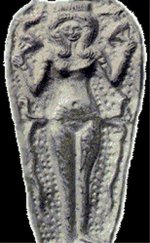
Ashera - snake goddess.
.acacian wrote:
You're favourite I'm told. You like chilly high mountains too.which species of acacia did you use phyllode? gotta love the fallen leaves
My usual ally of fallen leaves is floribunda. It's leaves can be bigger than it's bark. :?:
And Seldom, easy to mix up mearnsii with others. Bark the clue for me. I can add A. irrorata negative.
But a few have spoken of the powers of the Black Wattle over the years, like nen says.
Acacias and Confucious. Now that'd be interesting Nen. What do ya think? haha
Nen who's being quiet put me on to this really good Acacia-Mystic-Historic blog called:
(Essay) ‘Archetype or Patriarchetype? A Brief History of the Symbolic Meanings of Thorn Trees’ part 2 by Kelly A. Greer
Here are some excerpts. Sorry for the length quotes, but they're good ones.
(A Paper Presented at the S.W. Texas Popular Culture Conference, Albuquerque: New Mexico, February 11, 2006)In Egyptian myth the god Set tricked his brother, Osiris, into lying down in a sarcophagus. Set closed the lid and sent Osiris down the Nile River where he finally came to rest in an acacia. The tree grew around the coffin and eventually concealed it. The tree was noticed by a nearby queen for its lovely fragrance and was cut and shaped into a pillar (known as the “djed”) and placed in the palace. In her search for Osiris, Isis found and recovered the pillar and so conceived Horus.
In ancient inscriptions Osiris is referred to as “the solitary one in the acacia,” and as “the one in the tree.” Osiris came to rule over the dead; however, his soul was said to live on in the Benu, or Phoenix, which has been depicted sitting in the branches of a tree above the grave or coffin of Osiris.
Among the Swazi of southeast Africa, fetching the acacia is a yearly ritual celebrated by the whole tribe. According to strict taboo, only boys who have not engaged in sexual relations cut branches of the tree. The branches are then ceremoniously carried into the cattle byre, or kraal, the next day. The Tswana of southern Africa also engage in a similar ritual involving the hack-thorn, which is used to build and repair the fences of their kraal...
...The symbolic use of varieties of thorn trees is also found throughout Europe and the British Isles, which is well documented into modern times. Historically they have been used as boundary markers, hedgerows, fences, and enclosures.
Throughout Ireland and the British Isles, single thorn trees were planted on top of ancestral burial mounds, some the sites of public assemblies. In Europe thorn trees are associated with funerals and placed atop graves. Thorn trees are the centerpiece of much myth and folklore; for example, they are the home of fairies. These contexts reveal a few historic and more recent applications of meanings associated with the archetypal symbol of the thorn tree and suggest further reasons that among all trees the thorn tree carries special significance. We can find its rituals and archetypal associations in the folk traditions of Old May Day, a pagan holiday that, unlike most, was not synchretized by the patriarchal bias of the Church. The patriarchal appropriation of archetypal symbols is thus disputed as we carry the spirit home...
and a some of the comments:
→
Posted on September 26, 2012 by inannamago | 3 Comments
Early Judaic and Islamic-based religions commonly denounced goddess worship. They simultaneously synchretized some of the same elements and locations associated with the pre-existing female deities they sought to defeat. The elder deities and sacred symbols were overlaid by patriarchal, male-dominated religions and have been held up as archetypes. I argue that these patriarchal patterns are better called “patriarchetypes” because they merely mask the true archetypes.
“He Who Dwelt in the Bush”: Thorn Trees in the Mosaic Tradition
Most people are familiar with the biblical accounts of Moses, the burning bush, and the Ark of the Covenant. Some may be aware that the Ark was made specifically out of shittim or acacia wood. What many people may not know is that acacias are thorn trees and that the burning-bush is also said to have been a thorn-bush. This is significant because not only were both considered to be the dwelling places of the Hebrew God, but even more so because in the ancient Middle and Near East thorn trees were first associated with and represented female deities.
The theophany of the burning-bush is found in Exodus 3:1-5 and again in Deuteronomy 33:16, where God is called “the Lord” and is referred to as “he who dwelt in the bush.” These references raise, yet do not answer, the question as to what kind of bush it was. To find the answer, we must look outside scripture. In “On the Life of Moses,” Philo wrote that the burning-bush “was a bush or briar, a very thorny plant,” and in the writings of the Roman historian Josephus, we find that “a fire fed upon a thorn bush.”
Later in Exodus, at Mt. Sinai, Yahweh instructed Moses to use acacia wood, a type of thorn tree, for the construction of the Ark of the Covenant, the sacred table, the tabernacle, and the altar. Where did this wood come from? According to Exodus 35:24, the Hebrews had it with them; “….every man, with whom was found shittim wood for any work of the service, brought it.” No other scriptural explanation is given regarding the source of the acacia wood. Rabbinical literature, however, does explain that, on the way to Egypt, Jacob went to Beersheba to cut down and harvest the groves that were planted there by Abraham. This act was not without great purpose, as we find much later that it was taboo to cut trees still growing there because they were consecrated only for the Ark.
She Who Resides within the Tree: the Thorn Tree in Arabic Tradition
The history of the ritualistic use of thorn trees is indicative of their significance and raises questions regarding their symbolic meaning. Clues to the answers to these questions survived into much later times, as we find in pre-Islamic Arabia.
There are many biblical references to the abolition of goddess worship, and according to the Koran, the foundation of Mohammed’s teachings in the seventh century CE also depended on this abolition. During this time he ordered acacia trees to be destroyed along with the shrines of the goddesses Al-Uzza, Al-Lat, and Manat. Al-Uzza was the goddess of the Quraysh tribe and also a deity of the Ghatfan tribe, who worshipped her in the form of an acacia tree. The Ghatfan constructed a temple called “Boss” over this tree, built so that it made a sound whenever someone entered. Under the instruction of Mohammed, in 629 CE Khalid Ibn Walid, a loyal follower, destroyed the tree and the temple and killed the priestess.
The gum of acacia trees was highly valued for several reasons, including the belief that it was a clot of the tree’s menstrual blood. This indicates that the tree was considered to be a woman. Within Islamic tradition this parallel has multiple meanings, as, according to the Koran, God created man from a clot of blood (96: 1-2). At birth, the gum of the acacia, or haid, was used as an amulet, rubbed on the heads of newborn babies to keep them safe from the jinn. In similar ceremonies, the shaved heads of newborns were typically daubed with the blood of a sacrificial animal, such as a sheep.
Mohammed had ordered the destruction of temples and acacia trees of the goddesses, yet he himself stood beneath such thorny branches as followers swore to him the “oaths of the tree.”
Ashera - snake goddess.
Attachments
..your onto it phyllode! and Major Tom..ha,ha..
pirateb0b..aspects to meditate upon: - Filtration thoroughness - Re-X - NMT or Tryptamine, if present along with DMT will add to the experience, however more of the basic extract would be required for stronger effects...
Seldom, you saucer full of secrets, may the force be with you..and yes it's easy to mistake other acacias for
A. mearnsii..i have have seen material from central victoria which does contain entheogenic tryptamines, just not tested or assayed yet..the bark texture was near-black and deeply furrowed..material collected was from larger branch bark..it is ridiculously common in that part of australia, as well as parts of Africa and the USA..
take care all..
is this my last post...? the trees are calling..
.
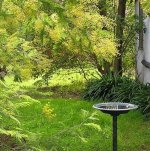
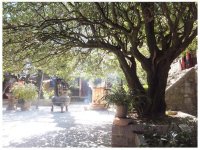
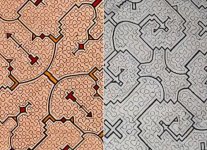
ps. some 'see you in while' images to do with interesting info of the last 3 pages.. enjoy
the 2nd is an acacia in a Taoist monastery in Yunnan..the 2nd last is Shipibo art from the Amazon..
and Major Tom..ha,ha..pirateb0b..aspects to meditate upon: - Filtration thoroughness - Re-X - NMT or Tryptamine, if present along with DMT will add to the experience, however more of the basic extract would be required for stronger effects...
Seldom, you saucer full of secrets, may the force be with you..and yes it's easy to mistake other acacias for
A. mearnsii..i have have seen material from central victoria which does contain entheogenic tryptamines, just not tested or assayed yet..the bark texture was near-black and deeply furrowed..material collected was from larger branch bark..it is ridiculously common in that part of australia, as well as parts of Africa and the USA..
take care all..
is this my last post...? the trees are calling..
.
ps. some 'see you in while' images to do with interesting info of the last 3 pages..
enjoythe 2nd is an acacia in a Taoist monastery in Yunnan..the 2nd last is Shipibo art from the Amazon..
Attachments


Similar threads

- Replies
- 0
- Views
- 526
- Replies
- 6
- Views
- 2K

- Replies
- 4
- Views
- 474

- Replies
- 2
- Views
- 383

- Replies
- 149
- Views
- 16K
