• Members of the previous forum can retrieve their temporary password here, (login and check your PM).

Ultrasonic ROA

Icon

Titanium Teammate
Donator
Just thinking about how none of us are technically "vaping" DMT. I believe the consensus is it's more of an aerosol of tiny packets of liquid molecules suspended in air.

From my growing days I remember a little about humidifiers, and how different sizes of water droplets can have a big effect. IIRC the smaller the droplet the more stable the humidity and less likely to condense on leaves yet easier to uptake in the stomata. Ultrasonic humidifiers were something I was looking into because they supposedly produce smaller droplets. I wonder if similar mechanisms could be adapted to vaping. Perhaps finer aerosols would be more effective.

I don't really understand the science but some misting devices have an "electrostatic" mode, that I think is to help the mist cling to things. Maybe that could also be used to some sort of vaping advantage, at least for aerosols of salts.

I guess if there was a practical benefit the nicotine industry would have done it by now.

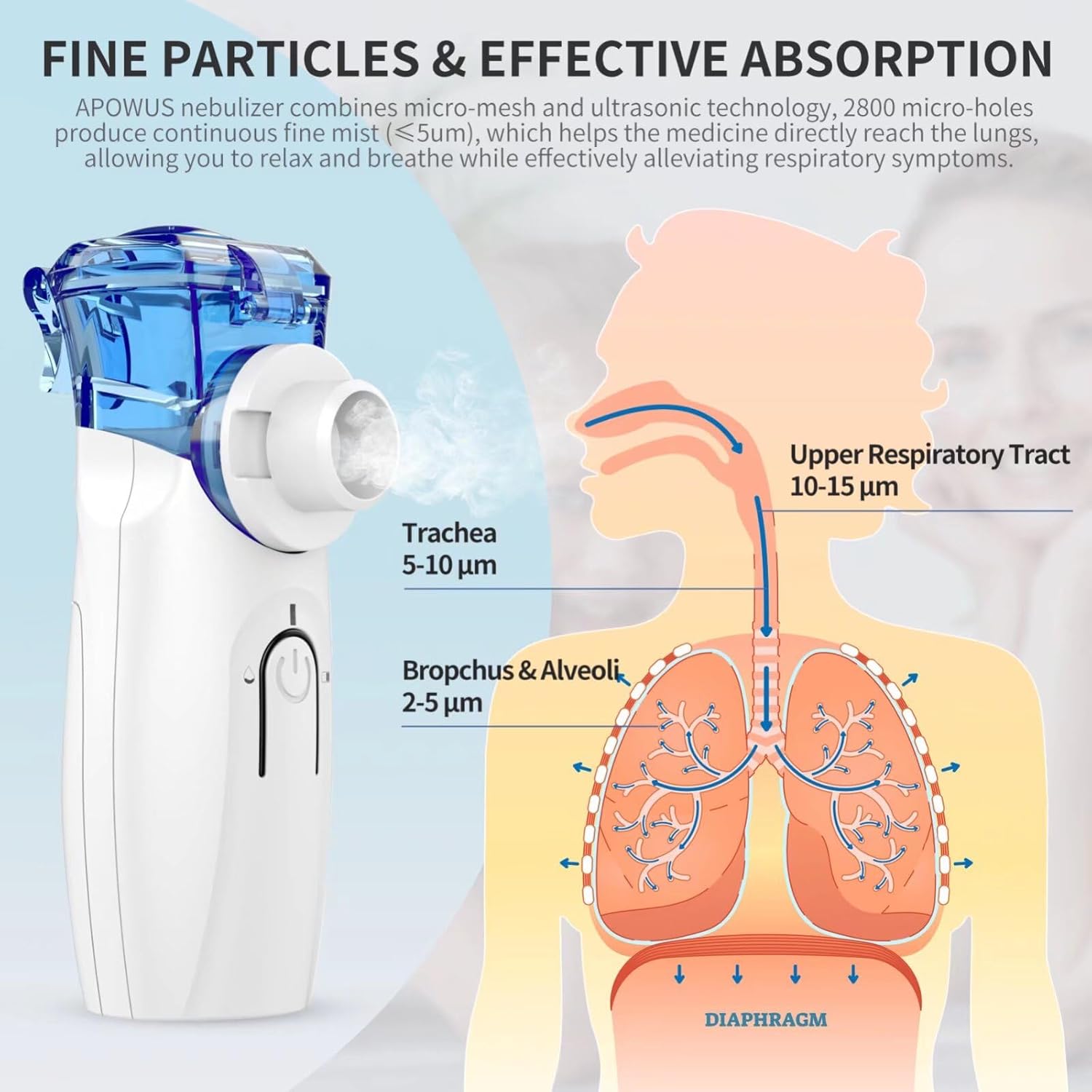
Found something called a "portable nebulizer". I want one!
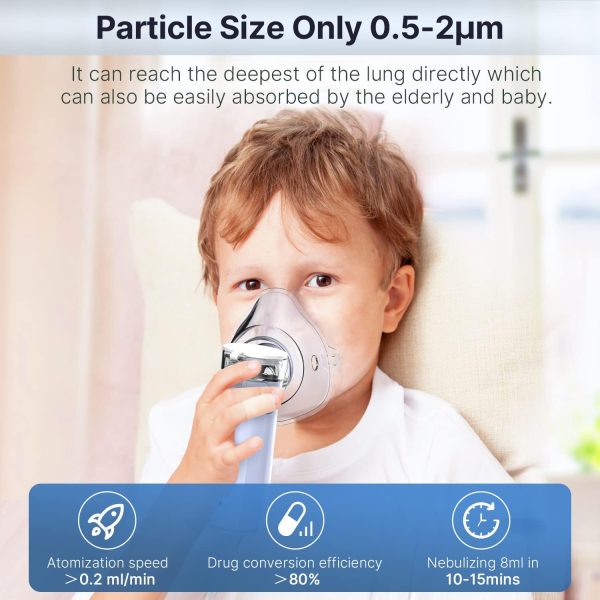
716j7PjhQwL._AC_SL1500_-600x600.jpg

71n7NyhXnyL._AC_SL1500_.jpg
 
Last edited:
I don't really understand the science but some misting devices have an "electrostatic" mode, that I think is to help the mist cling to things. Maybe that could also be used to some sort of vaping advantage, at least for aerosols of salts.
I would imagine that the electric charge would help prevent the particles from recombining into bigger ones.
 
This study on nicotine e-cigs was pretty insightful:

The physical and chemical properties of the vapor produced by EC's factors on the atomizer type, wattage, battery discharge level, the e-liquid recipe, inhalation rate, and more. Lower power vapes produced a finer distribution of particles averaging around 1 micron, with a lower concentration of nicotine per droplet. (It was vaporizing the juice faster than the nicotine suspended in the juice). Higher power produced larger droplets with a more complete profile of the e-liquid.

I also read somewhere that the finest vapors under 2 micron are actually ineffective at delivery because the smaller droplets are increasingly subjected to Brownian motion that prohibits their condensation and sedimentation in the lungs. So most of the fine droplets and real vapor get exhaled.

This must be related to why holding in the hits increases absorption. It could make a huge difference if you have fine droplets that need an extra 5-10 seconds to condense in the lungs. There's probably a droplet size sweet spot to be determined. Density of the vapors plays a role in condensation too; thicker clouds of fine particles could condense more than thin clouds. Big hits could be like a snowball effect of increased bioavailability.

I would imagine that the electric charge would help prevent the particles from recombining into bigger ones.
Anything that could stabilize the vapor at the peak absorption size could be helpful.
 
Last edited:
I don't really understand the science but some misting devices have an "electrostatic" mode, that I think is to help the mist cling to things. Maybe that could also be used to some sort of vaping advantage, at least for aerosols of salts.
I would imagine that the electric charge would help prevent the particles from recombining into bigger ones.
I was already thinking of electrospray methods before reading these bits. You could look into this technique more deeply as it already has various technical applications, from paint spraying to electrospray ionisation in mass spectrometry.

Large droplets with too high a charge would indeed tend to break up into smaller ones until the repulsive electrostatic forces become balanced by surface tension. The charge would also assist in absorption as long as it were able to dissipate once meeting the lung tissue.

The possibility of using nebulisers as a ROA is yet another of my latent interests - the electrostatic aspect makes for an interesting addition to the overall potential efficacy of the device.

Would you happen to know if they operate in positive ion mode or negative? I could envisage positive ions leading to more issues with DMT polymerisation, since it's more of an oxidising state, althoudh that's (barely) an educated guess.
 
Back
Top Bottom