

poporoherbs
Established member
Hello, I'm Javat. I had some trouble recovering my old account (I've been a member since 2015), but during this time I managed to identify and document several Colombian plants that are used as analogues, substitutes, and allies in Yagé/Ayahuasca ceremonies. I hope you find this information useful.
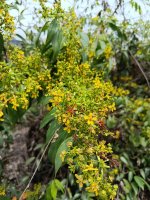
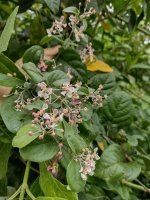
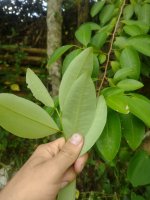
The first photo is of Tetrapterys sp
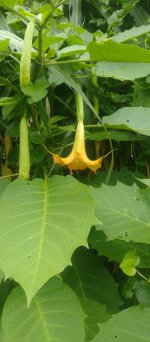
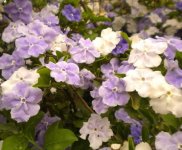
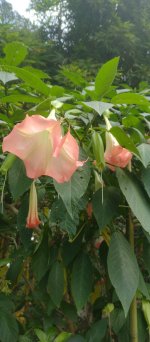
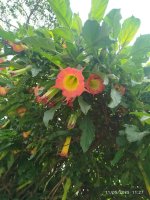
I have some experience with Brunfelsia grandiflora, Solandra maxima, and Brugmansia suaveolens, sanguinea, insignis, and candida, which are some of the Solanaceae used to alleviate nausea during psychedelic trips.
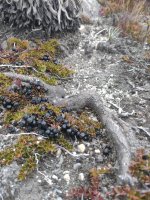
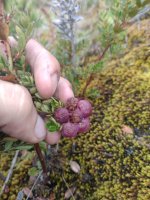
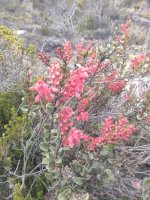
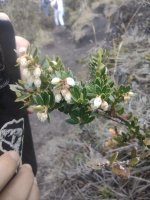
In Yagé ceremonies, a group of unusual plants are also used as substitutes for ayahuasca, such as Fittonia, Gaultheria, and Pernettya. Of all of them, I have only consumed Pernettya; it produces relaxation and intoxication and grows in the cold climates of the Andes.
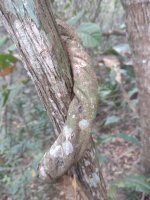
Banisteriopsis muricata, acapulcensis.
Diplopterys pubipetala, Passiflora, Piper auritum, Piper tuberculatum, Diplopterys (formerly Bowenia) or Diplopterys acapulcensis, Psychotria nervosa, tomentosa, carthagenensis.
In Colombia there are plants typical of warm and temperate climates; in the northern Andes Anadenanthera peregrina and macrocarpa also grow.
The first photo is of Tetrapterys sp
I have some experience with Brunfelsia grandiflora, Solandra maxima, and Brugmansia suaveolens, sanguinea, insignis, and candida, which are some of the Solanaceae used to alleviate nausea during psychedelic trips.
In Yagé ceremonies, a group of unusual plants are also used as substitutes for ayahuasca, such as Fittonia, Gaultheria, and Pernettya. Of all of them, I have only consumed Pernettya; it produces relaxation and intoxication and grows in the cold climates of the Andes.
Banisteriopsis muricata, acapulcensis.
Diplopterys pubipetala, Passiflora, Piper auritum, Piper tuberculatum, Diplopterys (formerly Bowenia) or Diplopterys acapulcensis, Psychotria nervosa, tomentosa, carthagenensis.
In Colombia there are plants typical of warm and temperate climates; in the northern Andes Anadenanthera peregrina and macrocarpa also grow.
Attachments
-
 FB_IMG_1787628602695.jpg224.8 KB · Views: 3
 -
 FB_IMG_1787628707042.jpg137.2 KB · Views: 3
 -
 FB_IMG_1787628681200.jpg149.5 KB · Views: 3
 -
 FB_IMG_1787628602695.jpg224.8 KB · Views: 3
 -
 FB_IMG_1787628485811.jpg212.4 KB · Views: 3
 -
 FB_IMG_1787628468166.jpg66.8 KB · Views: 3
 -
 FB_IMG_1787628477054.jpg43.8 KB · Views: 3
 -
 FB_IMG_1787628431510.jpg158 KB · Views: 3
 -
 FB_IMG_1787628418403.jpg235.7 KB · Views: 3
 -
 FB_IMG_1787628383860.jpg362.8 KB · Views: 3
 -
 FB_IMG_1787628379492.jpg194.3 KB · Views: 3
 -
 FB_IMG_1787628323533.jpg311.5 KB · Views: 3
 -
 FB_IMG_1787628373629.jpg109.4 KB · Views: 3
 -
 FB_IMG_1787628293040.jpg119.2 KB · Views: 3
 -
 FB_IMG_1787628300030.jpg25.8 KB · Views: 3
 -
 FB_IMG_1787628267698.jpg147 KB · Views: 3
Last edited:


