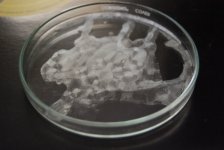
Anyone have experience using any type of cooking oils as nonpolar solvents?
Morning glory seeds are the entheogen of interest; a simple polar/nonpolar.
Main questions:
Are certain cooking oils more or less polar than others?
Is there a certain polarity that would be best for the nonpolar stage?
Random chemist: "Detergent is both polar and non-polar. It breaks the oil up into tiny droplets and forms something called an emulsion. This is how soap works."
There's a lot of talk about soap-like glycosides in the seeds. Although there's a lot of debate on whether cyanogenic glycosides are in the seeds, the soap-like substance that forms from a simple CWE is definitely real. Ideas?
Another random bit of info: Polar Content
"vegetable oil is naturally non-polar in nature, but as the oil degrades through oxidation, polymerisation and hydrolysis the polar content increases"
Morning glory seeds are the entheogen of interest; a simple polar/nonpolar.
Main questions:
Are certain cooking oils more or less polar than others?
Is there a certain polarity that would be best for the nonpolar stage?
Random chemist: "Detergent is both polar and non-polar. It breaks the oil up into tiny droplets and forms something called an emulsion. This is how soap works."
There's a lot of talk about soap-like glycosides in the seeds. Although there's a lot of debate on whether cyanogenic glycosides are in the seeds, the soap-like substance that forms from a simple CWE is definitely real. Ideas?
Another random bit of info: Polar Content
"vegetable oil is naturally non-polar in nature, but as the oil degrades through oxidation, polymerisation and hydrolysis the polar content increases"