entheogenic-gnosis
Esteemed member
BGC20-761, a novel tryptamine analog, enhances memory consolidation and reverses scopolamine-induced memory deficit in social and visuospatial memory tasks through a 5-HT6 receptor-mediated mechanism.
Abstract
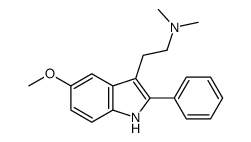
Inhibition of 5-HT(6) receptors has been shown to improve memory consolidation, thus we tested whether a novel tryptamine analog with high affinity for 5-HT(6) receptors, BGC20-761 (5-methoxy-2-phenyl-N,N-dimethyltryptamine, PMDT), can enhance long-term memory. BGC20-761 (10 mg/kg i.p.) alone had no effect on social recognition in young rats, however, at doses of 5 mg/kg and 10 mg/kg i.p, BGC20-761 dose-dependently reversed a deficit of social recognition induced by scopolamine (0.4 mg/kg i.p.), an anticholinergic drug that impairs memory. BGC20-761 (10 mg/kg i.p.), scopolamine (0.2 mg/kg i.p.) or BGC20-761 + scopolamine had no effects on novel object discrimination in young rats (2 months). In mature rats (6 months), recognition of the novel object was improved following administration of BGC20-761. Scopolamine had no effect in object recognition. However, the addition of scopolamine disrupted the memory-enhancing effect of BGC20-761. Based on the high affinity of BGC20-761 for 5-HT(6) receptors, these cognitive enhancing effects are most likely mediated by 5-HT(6) receptor inhibition. The difference in effects of BGC20-761 in young vs. mature rats may reflect the status of memory consolidation in these different age ranges

BGC20-761, a novel tryptamine analog, enhances memory consolidation and reverses scopolamine-induced memory deficit in social and visuospatial memory tasks through a 5-HT6 receptor-mediated mechanism - PubMed
Inhibition of 5-HT(6) receptors has been shown to improve memory consolidation, thus we tested whether a novel tryptamine analog with high affinity for 5-HT(6) receptors, BGC20-761 (5-methoxy-2-phenyl-N,N-dimethyltryptamine, PMDT), can enhance long-term memory. BGC20-761 (10 mg/kg i.p.) alone...www.ncbi.nlm.nih.gov
this is all fascinating, it also introduces a new six member ring which substitutions can be added to, giving the potential for a homologous series.
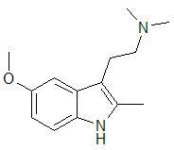
It makes me question if 2-methyl-N,N-dimethyltryptamine and 2-methyl-N,N-Diethyltryptamine May be hiding similar pharmocology and nootropic function, or perhaps if one were to examine 5-methoxy-2-methyl-N,N-Dimethyltryptamine for similar nootropic function they would find something....
From the structure activity point of view, it seems that the methyl group on the indolic 2-position again allows oral activity of something that without it, would not be. Here the parent compound is DMT, and the other examples were 2-Me-DET and 5-MeO-TMT. But of these, 2-Me-DMT seems to be the most free of "negative" side-effects, except for the sound distortion. And for the sexual stimulation, to the occasional shaker manqué amongst us who would considered that also as a negative.
Shulgin;TIHKAL
In order for a substituted tryptamine to attain orally activity a few things must be in place, first we will start with dialkyl chains off the amine nitrogen:
So any alkyl chain longer than methyl off the amine nitrogen will give the tryptamine oral activity, and it seems only one alkyl chain needs to be extended, as we see with N-methyl-N-ethyl-tryptamine, N1 has a methyl grouping, but apparently the ethyl chain off N2 is enough to prevent enzymatic deamination by mono amine oxidase enzymes.Apparently the MAO systems do not chomp up the dialkylamines higher than methyl. Certainly the dipropyl and the diisopropyl are active by mouth, and so is the diethyl shulgin;TIHKAL
Next we will go to substitutions to the four position:
These position 4 substitutions also result in orally activity, and often involve a prodrug with an active metabolite. Psilocybin is 4-phosphorloxy-DMT, it is metabolized in vivo into the active compound 4-hydroxy-DMT, also called psilocin. The same goes for some of the synthetics, 4-acetoxy-DMT becomes 4-hydroxy-DMT in vivo, 4-acetoxy-DET also is metabolized to 4-hydroxy-DET.
There are some Dimethyltryptamine homologues which are pharmocologically active, and are active orally by placing bulky substitutions to position 5, these are the "triptan" compounds, the 1,2,4-Triazole group placed off the 5 position of the dimethyltryptamine moiety from Rizatriptan is an example of this. The Tristan compounds produce effects via serotonin, 5-HT1B and 5-HT1D receptors.
And then there are orally active alkyl tryptamine compounds which are two substituted, such as the compound which is the topic of this thread, which pharmocologically acts by 5-HT(6) receptor inhibition, though this compound is also 5 substituted by a methoxy group.
I'm uncertain of 2-methyl-DMT or 2-ethyl-DET' s exact pharmacology, but here is what is said in TIHKAL referenced by Wikipedia:
2,alpha-DMT, or 2,α-dimethyltryptamine, is a tryptamine and a lesser-known psychedelic drug. It is the 2,a-dimethyl analog of DMT. 2,α-DMT was first synthesized by Alexander Shulgin. In his book TiHKAL (Tryptamines I Have Known and Loved), Shulgin lists the dosage as 300-500 mg, and the duration as 7-10 hours.[1] 2,α-DMT causes mydriasis and paresthesia. It also produces a calm, drunk-like feeling. Very little data exists about the pharmacological properties, metabolism, and toxicity of 2,α-DMT. -Wikipedia
So, the 5-methoxy-DMT skeleton with a whole new benzene ring on position 2, coupled with potential memory enhancing abilities has piqued my interest 5-methoxy-2-phenyl-N,N-dimethyltryptamine, I apologize for going "all over the place" while reviewing orally active substituted tryptamines...
-eg