I tried both with salt and without. Unfortunately, there are already salts present from the neutralization when re-acidifying the mother liquor.
Here is the follow-up:
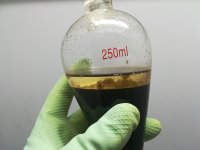
The emulsion occured again with the same vigor. Now I know it's something in the cactus. I have a strong feeling this is caused by powder from my own dried cactus:
I transfered the pulls + emulsion into an Erlenmeyer flask, added copious amount of calcium chloride and swirled. The emulsion broke down immediately and brown sludge settled on bottom.
I then vacuum-filtered everything. The sludge did not come through even on full vacuum. However, something interesting happened. You can see a hard calcium chloride cake with the sludge on top, which resembles a melted chocolate. This oily stuff is probably what causes all the trouble:
There were virtually no alkaloids in the filtered xylene but at least the layers separated easily and cleanly even after vigorous shaking.
Lessons learned:
- keep concentration low, use up to 200 g cactus powder per 1L alcohol or water, not more; do more runs if processing more material
- use more acid (won't hurt and possibly breaks down stuff)
- be careful about the base, use dilute base and use just enough to reach pH 8-10 and add it slowly with stirring
- use xylene instead of toluene
- do not wash solvent with water





 ... I will post the results then.


