

-
Members of the previous forum can retrieve their temporary password here, (login and check your PM).
You are using an out of date browser. It may not display this or other websites correctly.
You should upgrade or use an alternative browser.
You should upgrade or use an alternative browser.
DIY Thin Layer Chromatography
- Thread starter benzyme
- Start date
Migrated topic.


Aha! Far out, thanks endlessness! :d
Here's something on TLC and Van Urks with a mention of gramine.
If anyone ever gets a grass extract there are a few ideas we have come up with in chat, that should really be tried out(no column involved).

That is somewhat overstated.burnt said:While I'd certainly encourage do it yourself TLC just one note. Silica dust is toxic. It will get in your body and stay there. Its kind of like breathing asbestos. So just make sure to wear mask when making your own TLC plates or cutting up TLC plates. Also work in an area you can easily clean etc usual lab stuff.
Asbestos causes a type of cancer, crystalline silica dust can cause silicosis (essentially lesions), amorphous silica (which is what Silica gel is) dust may not clear out of the lungs but is otherwise not toxic.
Of course wearing a mask is always a good idea, but if you grind your silica gel wet you shouldn't raise any dust and wearing a mask when cutting up the occasional TLC plate is likely overkill.
OTOH, the blue or green bits of silica gel are another story, they most likely contain cobalt(II) chloride and that stuff is toxic (maybe even carcinogenic).
I only mention this because I've run into some pretty irrational fear of silica gel over the years.
Mydriasis - that is an awesome reference, more than Sister had hoped for. Thank you! 8)
tryptographer
tryptamine photographer
This is a great thread, thanks Benzyme and all others!
Wow, loads of high quality information to digest and hopefully put into practice - there goes my free time
Wow, loads of high quality information to digest and hopefully put into practice - there goes my free time

The best solvent system that I've run has been IPA:NH4OH:H2O (9:1:1 - 91%:10%:100%), for acidic conditions try: IPA:AcOH:H2O (9:1:1 - 91%:30%:100%) All easily aquired solvents. I've run 10+ solvent systems from both the literature and suggested from other ppl that use harder to get solvents (n-Butanol, etc.) but these have worked the best for me.
As for Visualization, Xanthydrol has been the best of the 3 I've used, the other 2 are Ehlrich's and vanillin. All of them work better when heated. A small toaster oven is perfect for this, and can easily be had at a thrift store. Vanillin can be extracted from imitation vanilla extract. There are videos on you tube on how to this. Look at the solubility of vanillin, and you can probably find a suitable extraction solvent other than diethyl ether (what the you tube video I saw suggests).
As for re-agent sprayers, look at the local home improvement stores for the paint sprayers with the little aerosol can that screws onto the glass jar to hold paint. These are the same things that are sold at Chromatographic supply places and are probably much cheaper. After use, spray water through them to clear out any chemicals, especially acids and they can be use again. If you don't, they become one time use products and very expensive. It would also be totally feasible to use an air brush for this, tho much more expensive.
Vanillin Reagent:
1> 15g Vanillin : 250ml EtOH : 2.5ml H2SO4
2> 6% Vanillin : 1% H2SO4 : in EtOH
Heat to ~ 120 for 5 Minutes. (typically used for essential oils)
Xanthydrol:
100mg Xanthydrol : 94ml EtOH : 5ml HCl
Some of the Phalaris literature uses Phosphoric Acid instead of HCl, I can dig it up if anyone wants...
DMT - PURPLE
5-MEO - Blue
Gramine - Pink
Also, Marquis reagent might be useful as there is lots of info on color reactions with various compounds:
1>37% Formaldehyde : H2SO4 (conc.) [1:15]
2>Mix 10ml conc. H2SO4 with 8-10 drops of ~ 40% formaldehyde solution
These should be made up fresh and don't necessarily need heat.
As for Visualization, Xanthydrol has been the best of the 3 I've used, the other 2 are Ehlrich's and vanillin. All of them work better when heated. A small toaster oven is perfect for this, and can easily be had at a thrift store. Vanillin can be extracted from imitation vanilla extract. There are videos on you tube on how to this. Look at the solubility of vanillin, and you can probably find a suitable extraction solvent other than diethyl ether (what the you tube video I saw suggests).
As for re-agent sprayers, look at the local home improvement stores for the paint sprayers with the little aerosol can that screws onto the glass jar to hold paint. These are the same things that are sold at Chromatographic supply places and are probably much cheaper. After use, spray water through them to clear out any chemicals, especially acids and they can be use again. If you don't, they become one time use products and very expensive. It would also be totally feasible to use an air brush for this, tho much more expensive.
Vanillin Reagent:
1> 15g Vanillin : 250ml EtOH : 2.5ml H2SO4
2> 6% Vanillin : 1% H2SO4 : in EtOH
Heat to ~ 120 for 5 Minutes. (typically used for essential oils)
Xanthydrol:
100mg Xanthydrol : 94ml EtOH : 5ml HCl
Some of the Phalaris literature uses Phosphoric Acid instead of HCl, I can dig it up if anyone wants...
DMT - PURPLE
5-MEO - Blue
Gramine - Pink
Also, Marquis reagent might be useful as there is lots of info on color reactions with various compounds:
1>37% Formaldehyde : H2SO4 (conc.) [1:15]
2>Mix 10ml conc. H2SO4 with 8-10 drops of ~ 40% formaldehyde solution
These should be made up fresh and don't necessarily need heat.

..excellent info. again thanks Dozuki... (& benzyme and all)

Parshvik Chintan
Esteemed member
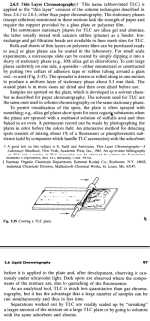
whew! i can finally comprehend TLC (seriously i was beginning to feel dense).
awesome thread.
thanks benz for the pdf, and everyone else for contributing.
awesome thread.
thanks benz for the pdf, and everyone else for contributing.

What's up with your images being unavailable bud
it's roughly 60/40 ether/heptane

These were posted on the old forum.. there's been a few issues of previous forum images not loading.What's up with your images being unavailable bud
Ahh well,These were posted on the old forum.. there's been a few issues of previous forum images not loading.
Did you get round to doing any at home TLC on your babies? Any methods or tips you care to share dude?
Was playing around over the weekend before my plates get here with some paper, heaps of fun honestly.
On another topic I'm having issues with extraction, I can evaporate acetate to obtain NMT/DMT and oils but as soon as I base it seems to be reluctant to show up in the solvent. By no means am I at an end but yeah....that's where I'm currently at. Fun fun fun

No tests of late I'm afraid been flat out.. when things quieten down I'll hopefully get into it 
Ahh yep, fair enough.No tests of late I'm afraid been flat out.. when things quieten down I'll hopefully get into it
My fifth plate with no instructions, gee I was proud of myself

Attachments
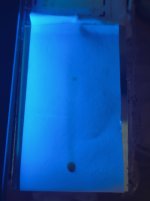
What's going on there? The bottom spot is that caffeine?
Bottom spot is the subject sample, I left me pencil in the other side of the house before hand so I marked the edges of the mirror it's tied to.What's going on there? The bottom spot is that caffeine?




Most of the difficulty is down to third-party-hosted links having changed or expired, which amounts to an unfortunate and mostly irretrievable loss of data. Back up your photos!These were posted on the old forum.. there's been a few issues of previous forum images not loading.
That looks like quite a large blob! What did you use for spotting (i.e. putting the sample on the paper)?Bottom spot is the subject sample, I left me pencil in the other side of the house before hand so I marked the edges of the mirror it's tied to.
Once the spots have been identified, paper can be used preparatively - make a stripe of the sample across most of the width at the usual starting height of a fresh sheet and develop as per the ID run. When complete, you can cut out the appropriate strips at the desired Rf values and recover the compounds of interest from them.
I used a glass capillary tube, crude ethanol extract. Needs to be smaller I'm guessing? I spot and let dry 3 times under a lamp. I didn't want to run the plate and risk the concentration being too low hence the 3 times.That looks like quite a large blob! What did you use for spotting (i.e. putting the sample on the paper)?
Once the spots have been identified, paper can be used preparatively - make a stripe of the sample across most of the width at the usual starting height of a fresh sheet and develop as per the ID run. When complete, you can cut out the appropriate strips at the desired Rf values and recover the compounds of interest from them.
Similar threads
- Replies
- 7
- Views
- 744
- Replies
- 22
- Views
- 3K


- Replies
- 8
- Views
- 762

- Replies
- 0
- Views
- 411