• Members of the previous forum can retrieve their temporary password here, (login and check your PM).

Lespedamine / Lespedeza bicolor

Migrated topic.

PsilocybeChild

Rising Star
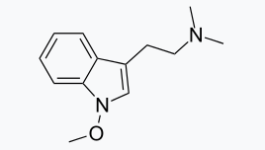
Lespedamine is an indole alkaloid and substituted tryptamine present in the plant Lespedeza bicolor.[1] The alkaloid bears a close structural resemblance to the psychedelic alkaloid dimethyltryptamine and was speculated to have psychoactivity by Alexander Shulgin. No reports on lespedamine's biological activity have been published.
IUPAC name 2-(1-Methoxy-1H-indol-3-yl)-N,N-dimethylethanamine

Lespedamine - Wikipedia


And from another web page stating it's posted material from Jonathan Ott's Ayahuasca Analogues:
* Lespedeza bicolor var. japonica [DMT,5MD,l,rb]
5-METHOXY-N-METHYLTRYPTAMINE Bark, BUFOTENINE Plant,
BUFOTENINE-OXIDE Fruit, N,N-DIMETHYLTRYPTAMINE Fruit,
N,N-DIMETHYLTRYPTAMINE-OXIDE Fruit, N-METHYLTRYPTAMINE Bark,
HOMOORIENTINE Leaf, LEUCOANTHOCYANIN Plant,
LEUCOPELARGONIDOL Plant, ORIENTIN Leaf, SAPONARETIN Leaf,
VITERINE Leaf

Ayahuasca Analogues


Plant and tryptamine were previously mentioned in this thread:
dmt-nexus.me: Lespedea bicolor Seeds

Always interested in new natural tryptamines. Can anyone add any info?
 

Attachments

  • Screenshot+from+2020-05-05+15-44-01.png
    Screenshot+from+2020-05-05+15-44-01.png
    6.5 KB · Views: 1
I have a little plant I've been cultivating since last year.
Took some leaves from my young plant and boiled them up. Tried a couple grams with some harmalas, but no tryptamine effects in particular. I may not have taken enough harmalas... so that test was inconclusive.

The brew had very little tryptamine smell though, it had a 'green' scent, but somehow seemed immature.

I have been less excited about this plant as it is reported to contain bufotenin according to Some Simple Tryptamines. On the other hand, it would be a perfect cold-region plant if a cultivar could be developed, or if it was found to be very low in bufo.

Wyrm is said to have had success with 30 grams of red, autumn foliage in a brew. I believe they are a member here, I'm sure we'd all love to have some more details on that!
 
Did you feel any sedative effects?

Lespedeza bicolor

user Hoodo:
Some years back I sent K Trout the rootbark of Japanese Les. Bi. for study and he noted that nothing new in particular was observed from his analysis.

It took me many hours to harvest the plants and then another three hours or so to carve off the root's bark so that there would be enough for him and some locals to run some tests. Overall, harvesting the rootbark was slow and arduous.

Aquaintances here in Japan who attempted to see if synergy with meclobemide would occur proved unsuccessful with 30-50 grams per person, of this particular rootbark that was powdered and then steeped in sub-boiling water for 30 minutes. Instead of any notable dmt activity, only the sedative effects of the lespedemine (sp?) were strongly apparent. There was little difference between ingesting 30-50 grams of tea with or without a MAOI. The predominate effect of lespedemine is fairly boring not euphoric and sedative, it induces drowsiness. The drowsiness lasted much too long, well through the next day, even after a fitful sleep after the first day. The sedation even seemed to be slightly noticeable on the third day. I can not see any reason to do any more research with this plant unless you are looking for a sedative. The DMT must be in very small amounts.

DMT is said to be most prevalent in the root's bark in early spring, just after winter when the plant has just awoken from dormancy. Why? The roots have likely stored up chemicals probably to deter burrowing rodents or insects during dormancy, (snowy winter here) or it is also possible that the chemicals are stored up upcoming components of spring's new leaves, stems and defence.
 
Having a couple bunk trips on a plant doesn’t mean the plant is not worth pursuing.
Has anyone run TLC tests or extracted the Lespedeza?
The plant in literature which is said to have DMT is L. Bicolor subsp. Japonica
If you have access to an abundance of these plants growing we need monthly extraction tests to verify
what time of year Lespedeza truly provides the magic spices.
 
I agree this plant needs much more testing. I would like to stress that my preliminary test was extremely cursory, the first dipping of the toe into the pool, but no more. Nothing big came out to bite me, but that says very little. EDIT2: No drowsiness noted. Leaves were boiled, which is suspected to convert lespedamine to dmt & formaldehyde.[1]

In Some Simple Tryptamines EDIT: Under section DMT
Lespedeza bicolor “Bush clover”
Positive tlc assays in seeds, seed pods, stem-bark and roots. co-tlc by Appleseed

Seeds/seed-pods showed same alkaloids as stem-bark but darker and with 3-7 additional bands. (Seeds & pods harvested summer 1994) August stem-bark showed light band.
[Successful bioassay of 30 gm of red fall leaves reported by Wyrm; pers. comm.]

Roots harvested in December showed a positive for DMT and lighter for two other bands. tlc by Appleseed 1994-1995
Some of these results used Ehrlichs spray and there may be confusion with 5-MeO-DMT in seeds and seeds/seed-pods.

Lespedeza bicolor Turcaninow var japonica Nakai
DMT in plant. Goto et al. 1958
Major alkaloid in leaf and one of the main alkaloids in the root bark. Root bark showed higher concentration than leaves. Morimoto & Matsumoto 1966
In leaf. Morimoto & Oshio 1965

Also L. capitata may be worth looking into

Lespedeza capitata Rätsch 1998 lists as containing DMT; citing Kindscher 1992.

I'll be doing more tests as my plant grows up. I don't have the funds or resources to do TLC, but I'm interested to use the old method (starting from minuscule doses and gradually raising).
 
Also, in regards to the bufotenin content, it may be negligible.
From reports it seems bufotenin and 5-meo-dmt are orally active, but more potent, and potentially more dangerous, when used with an MAOI.

L. bicolor and apparently L. capitata seem to be used as medicinal teas and forage for animals, indicating relative safety.

From PFAF, regarding L. bicolor
Young leaves and stems - cooked[105, 177, 179, 183]. Flowers - cooked[177, 183]. Seed - cooked[105, 177, 179]. Occasionally boiled and eaten with rice[183]. The leaves are used as a tea substitute[177, 183, 266]

Also from PFAF, regarding L. capitata
The plant contains several biologically active compounds. Pharmaceutical preparations are manufactured from them[222]. An extract of the plant is of disputed utility in chronic kidney disease[222]. Experimentally, it has demonstrated antitumor activity against Walker-256 carcinosarcoma and is also reportedly effective in lowering blood cholesterol levels[222]. It is also believed to reduce blood levels of nitrogen compounds in persons with high nitrogen levels in their urine[222]. The root has been used as an antidote to poisoning[257]. The stems have been used in moxibustion in the treatment of neuralgia and rheumatism[222, 257].

From Prairie Moon nursery, regarding L. capitata
The plant is especially high in protein making it a favorite choice of many kinds of mammalian wildlife including deer, rabbits, and muskrat. It can also be used in pastures as livestock forage. The seeds are eaten by gamebirds and songbirds, including the Mourning Dove, Bobwhite, Turkey, and Junco.

L. bicolor is listed as a forage many times rather circumspectly if you look at google scholar.
Here's one such article Comparing nitrate reductase activity for five drought-resistance forages in Ningxia
Also, I don't have access to this Chinese journal, but this is interesting: Effects of Spaceflight on Characteristics of Lespedeza Bicolor
 
One of my Lespedezas lost a branch from some small animal gnawing it off a few weeks ago, which I set aside to dry for testing.

I was inspired by Benzyme's post about tryptamines fluorescing under 365nm UV light, so I ordered a small flashlight.
Unfortunately I received a 395nm light... ah well, might as well try it... and it works!
First I tested an old Acacia confusa veggie oil extraction, a faint blue fluorescence much weaker than harmalas but quite visible even inside near a window at daytime.

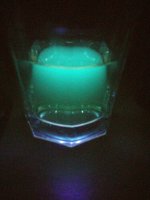
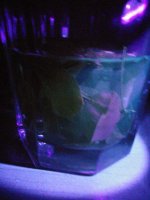
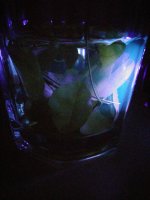
So now I just got around to testing the Lespedeza branch, and it also fluoresces!
Promising to say the least. The leaves are so light though that I imagine you would need a large bush to get anything near the supposed 30 grams active dose.

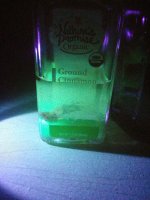
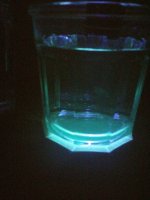
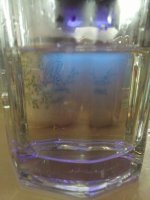
First pic is the confusa extract, followed by a tap water control, followed by various pics of the L. bicolor tea.
 

Attachments

  • IMG_20200703_120905.jpg
    IMG_20200703_120905.jpg
    7.5 MB · Views: 0
  • h20_control.jpg
    h20_control.jpg
    7.9 MB · Views: 2
  • IMG_20200703_120830.jpg
    IMG_20200703_120830.jpg
    8 MB · Views: 0
  • IMG_20200703_120312.jpg
    IMG_20200703_120312.jpg
    6.9 MB · Views: 0
  • IMG_20200703_120338.jpg
    IMG_20200703_120338.jpg
    5.9 MB · Views: 0
  • IMG_20200703_120652.jpg
    IMG_20200703_120652.jpg
    4.9 MB · Views: 0
While absence of fluorescence would obviously be a bad sign in the search for actives, it's worth bearing in mind that there is a large number of fluorescent biomolecules, including caffeic acid and its derivatives which are fairly ubiquitous. This is where TLC is your friend.

Is your specimen var. japonica? Is the plain, vanilla L. bicolor likely to be of equal interest?
 
That's a good point downwardsfromzero, I may have to try TLC sometime. I don't have any reference DMT freebase, only as acetate tincture, I'd have to look into the effectiveness of that.
Seeing as L. bicolor is referenced to be eaten as food/tea, I may try a simple bioassay once I have enough material.

The seeds were sold to me as simply L. bicolor, no further info.
 
One of my Lespedezas lost a branch from some small animal gnawing it off a few weeks ago, which I set aside to dry for testing.

I was inspired by Benzyme's post about tryptamines fluorescing under 365nm UV light, so I ordered a small flashlight.
Unfortunately I received a 395nm light... ah well, might as well try it... and it works!
First I tested an old Acacia confusa veggie oil extraction, a faint blue fluorescence much weaker than harmalas but quite visible even inside near a window at daytime.

So now I just got around to testing the Lespedeza branch, and it also fluoresces!
Promising to say the least. The leaves are so light though that I imagine you would need a large bush to get anything near the supposed 30 grams active dose.

First pic is the confusa extract, followed by a tap water control, followed by various pics of the L. bicolor tea.
While absence of fluorescence would obviously be a bad sign in the search for actives, it's worth bearing in mind that there is a large number of fluorescent biomolecules, including caffeic acid and its derivatives which are fairly ubiquitous. This is where TLC is your friend.

Is your specimen var. japonica? Is the plain, vanilla L. bicolor likely to be of equal interest?
Reviewing this once more, it's also worth pointing out that some nominally clear, colourless glass fluoresces green or blue (like in @kerelsk's picture, https://forum.dmt-nexus.me/attachments/h20_control-jpg.88796/ ), which can be slightly annoying when looking for signs of green or blue fluorescence. It's the one downside of a load of cheap borosilicate measuring jugs I've purchased.
 
Unfortunately I grew the Lespedesza at my now ex-girlfriend's parent's house.

I had done burn tests- burning twigs and leaves to see if I could smell dmt. Inconclusive as it mostly smelled like smoke, maybe some dmt smell, maybe not.

I hope somebody attempts an extraction. I've had a really difficult time successfully extracting anything at home. Likely because of my insistence on limonene as a non-polar solvent and not following teks, or makeshift glassware... plus I've been doing my undergrad degree after finishing some years in the school of hard knocks lol.

The plant itself is absolutely beautiful, and not unruly. Unlike Passiflora incarnata (very adventitious). I'd advocate it's growth more if it were a native to my area! Great landscaping plant, somewhat pendulous branches, summer flowers, and hardy.


Reviewing this once more, it's also worth pointing out that some nominally clear, colourless glass fluoresces green or blue (like in @kerelsk's picture, https://forum.dmt-nexus.me/attachments/h20_control-jpg.88796/ ), which can be slightly annoying when looking for signs of green or blue fluorescence. It's the one downside of a load of cheap borosilicate measuring jugs I've purchased.

Good to keep in mind! As one can see the jar does fluoresce, which I hadn't noticed.
 
I bought two accessions of Lespedeza bicolor seeds from different sellers, with the goal of studying its alkaloid content. L. bicolor is a member of the Fabaceae (legume family), but it's not a Mimosoid like Mimosa or Acacia. I've found little published on its biosynthetic pathways, and don't know to what extent those are shared vs. independently evolved.

Germination is reported to be difficult. A summary from the US Forest Service reports best germination after soaking in water for 3 minutes at 70 C. I tried three treatments: the hot water, nicking the seed coat with nail clippers (with no hot water), and no treatment. I sowed into 50/50 coir/perlite saturated with tap water (pH ~ 7.5, hard), about 1/4" deep.

My results were rather bad. One accession didn't germinate at all. For the other, 2/16 germinated with hot water, 0/8 with the nick, and 2/8 with no treatment. This nonetheless gave me four plants. I irrigated with typical hydroponic solution. After three months, I took about 150 mg of fresh leaf from each, and homogenized by bead beating in a 15 mL centrifuge tube with 5 mL household vinegar and 10 1/4" ball bearings, by shaking with a reciprocating saw for 1.5 min. The mixture from each tube was then filtered through an 0.45 um syringe filter and injected without further dilution to my HPLC, using the method discussed in earlier comments.

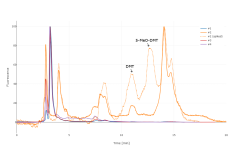
Looking at the chromatogram by fluorescence, we see big variation:
lb-chrom.png

Only #2 shows any promise, with a small peak near the expected retention time for DMT. To confirm that retention times didn't shift due to matrix effects, I also ran a sample of #2 spiked with a Phalaris extract known to contain DMT and 5-MeO-DMT. Those eluted as expected, providing reasonable confidence that it's really DMT.

The concentration is very low, around 3 ug per g fresh weight. I'm very confident that the other samples didn't contain DMT. I'm very confident that none of the plants contained 5-MeO-DMT. All other peaks are unidentified. (Would any chemists care to guess where 1-MeO-DMT aka lespedamine would elute, and thus whether that might be the big peak at 14.1 min? This is a phenyl-hexyl column.) The many constituents may present a high risk of false positives by less selective methods like the TLC reported by Trout et al. Enough positive bioassays are reported that I guess something's there though, from either better genetics or an active constituent other than DMT.
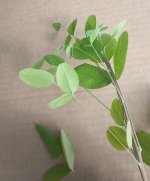
lb-plant.jpg

I've planted two individuals outdoors, #2 and the fastest-growing one. I plan to retest, to see how that profile changes over time. (The fastest is 3x as tall as the shortest now; I guess the variation isn't limited to the alkaloids.) My results here are mostly negative, but the large observed variation makes it likely that better genetics exist, whether in my seeds or elsewhere in the species. I believe Lespedeza bicolor is a research topic for now, not an easy practical source; at least, extraction from leaves of a plant grown from random seeds seems unlikely to yield useful amounts of DMT.

 
Any ideas what the other large peaks, both faster- and slower-moving, were that sample 2 exhibited? If you're pulling lespedamine, would you have any way of identifying it?
I wish I'd separated the alkaloids before injecting, since that might have removed many of the unidentified peaks. The chromatogram for Phalaris is uncluttered so I got lazy; but this one is not. My two selected plants are growing outdoors, and I'll extract into ethyl acetate when I resample.

The best reference on lespedamine seems to be the 1965 paper by its discoverers, unfortunately in German but available from Sci-Hub. Lespedamine seems to have been the primary alkaloid in their plant, since they yielded 4.305 g purified lespedamine from 8.48 g crude alkaloids. This understates the abundance, since their paper chromatography implies fraction 7 contained lespedamine too (but also contained other stuff and was thus discarded). I wonder if that implies positive experience reports from L. bicolor were in fact from lespedamine, since mine sure didn't contain much DMT; though the big variation makes it easy to imagine other genetics would contain more, and I haven't yet explored seasonal and other environmental variation.

I could compare the UV spectrum on my analytical samples, or if I were able to extract and purify a larger amount then I could take a boiling point (it's reported to be a liquid at room temperature) or a melting point of a salt. My DMT-positive plant is probably too small to yield enough for that now, but perhaps I'll try when it gets bigger. My other selection is a decent-size bush already, pretty flowers but probably inactive.
 
Back
Top Bottom