• Members of the previous forum can retrieve their temporary password here, (login and check your PM).

Minimum Polymer

Migrated topic.
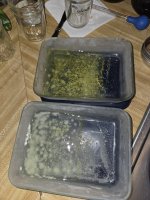
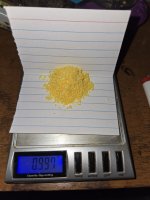
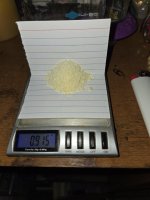
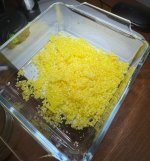
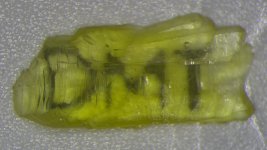
Here's a fun one. I did both of these extractions in tandem. There are only a few differences. The size of the burner the pots for the acid bath and basic bath, the size of the pots, and which one was pulled first.

If I'm not mistaken, the yellower one, was on the smaller burner, in the smaller pot, and was pulled first.

I'll do it again, but intentionally keep track in case this happens again.

20250101_082541.jpg
 
Thanks for everyone contributing to this amazing thread! With the basic understanding of the process explained here and elsewhere I'm planning to do some cleanups for what I have gathered from my extractions over the years. It's pretty hard to get MHRB to Finland because of customs, so I may as well try to recover what I have trapped in solution/goo. Please, do correct me if I'm attempting something rather stupid here. I do not have a proper pH measure but some aquarium store bought kit that can read a scale of 4-8,5pH.

Naphta cleaning
1. I want to attempt to clean/desaturate my used light naphta(Primus camping fuel) by taking ~200ml of it and adding ~50ml of citric acid solution of pH4 for backsalting the possible DMT trapped in the NP. (Any recommendations for particular acid here?)
2. I then separate the aqueous layer from the NP and put the aqueous solution to a warm water bath for several hours to break up the polymer bonding.
3. I add ~20ml unused, warmed NP to the solution.
4. Then I add ~33% NAOH solution little by little while mixing and decanting, keeping the container in the warm water bath of 50C'. After this, when the aqueous layer turns milky, I shake heavily. This should give off a noticeable emulsion of which I treat by adding more NAOH solution and shaking, adding, repeating, until the emulsion is gone.
(No need for salt as it's considered aggressive measure here, right?)
5. I do 3-4 warm, unused ~20ml NP pulls, combine and heat them to boiling temperature before freezing for 18hrs.
---
Goo crystallizing
6. I may end up with goo similar to of which I have also collected from earlier batches along the years. To get crystals from all of this I do a mini A/B.
7. I dissolve ~1g of goo/wax/oil to some ~50ml of citric acid/vinegar/HCl + water solution at pH4. (Will this be too concentrated?)
8. I put this into the pressure cooker at 15psi for a few hours. Let it cool and depressurize and then remove to a water bath to keep it at 50C'. (Is the PC overkill here?)
9. I then add ~20ml of unused NP that's also preheated to 50C' and shake vigorously.
10. Then I add ~33% NAOH solution little by little while mixing and decanting. After this, when the aqueous layer turns milky, I shake heavily. This should give off a noticeable emulsion of which I treat by adding more NAOH solution and shaking, till the emulsion is gone. No salt added.
11. After this I heat the solution at a warm water bath to 50C' and also add unused NP that's 50C'.
12. I do 3-4 pulls with unused ~20ml NP, combine them and heat them to boiling temperature before freezing for 18hrs.
---
Batch recovering
13. I also have a 2,5l batch that I believe has trapped over one gram of pure FB DMT. I did Max Ion tek to this but the results were something more like 0,5%. It's also possible that the MHRB was old and there really ain't nothing in it but I might as well give it a minimum polymer push and see what comes out.
14. And so I take the overly salted, high pH soup, filter the plant matter out and divide the remaining liquid in to two separate portions.
15. I lower the pH back to 4 and put the container to a warm water bath for several hours.
16. I then add ~50ml of unused, warmed naptha.
17. I then add NAOH little by little, until no emulsion is formed.
18. I do the pulls as usual, heat the combined pulls, freeze and scrape.
19. If nothing comes of from this, I clean my toilet pipes with the remaining base liquids.
---
Any comment and advice is highly appreciated <3
 
Last edited:
Thanks for everyone contributing to this amazing thread! With the basic understanding of the process explained here and elsewhere I'm planning to do some cleanups for what I have gathered from my extractions over the years. It's pretty hard to get MHRB to Finland because of customs, so I may as well try to recover what I have trapped in solution/goo. Please, do correct me if I'm attempting something rather stupid here. I do not have a proper pH measure but some aquarium store bought kit that can read a scale of 4-8,5pH.

Naphta cleaning
1. I want to attempt to clean/desaturate my used light naphta(Primus camping fuel) by taking ~200ml of it and adding ~50ml of citric acid solution of pH4 for backsalting the possible DMT trapped in the NP. (Any recommendations for particular acid here?)
2. I then separate the aqueous layer from the NP and put the aqueous solution to a warm water bath for several hours to break up the polymer bonding.
3. I add ~20ml unused, warmed NP to the solution.
4. Then I add ~33% NAOH solution little by little while mixing and decanting, keeping the container in the warm water bath of 50C'. After this, when the aqueous layer turns milky, I shake heavily. This should give off a noticeable emulsion of which I treat by adding more NAOH solution and shaking, adding, repeating, until the emulsion is gone.
(No need for salt as it's considered aggressive measure here, right?)
5. I do 3-4 warm, unused ~20ml NP pulls, combine and heat them to boiling temperature before freezing for 18hrs.
---
Goo crystallizing
6. I may end up with goo similar to of which I have also collected from earlier batches along the years. To get crystals from all of this I do a mini A/B.
7. I dissolve ~1g of goo/wax/oil to some ~50ml of citric acid/vinegar/HCl + water solution at pH4. (Will this be too concentrated?)
8. I put this into the pressure cooker at 15psi for a few hours. Let it cool and depressurize and then remove to a water bath to keep it at 50C'. (Is the PC overkill here?)
9. I then add ~20ml of unused NP that's also preheated to 50C' and shake vigorously.
10. Then I add ~33% NAOH solution little by little while mixing and decanting. After this, when the aqueous layer turns milky, I shake heavily. This should give off a noticeable emulsion of which I treat by adding more NAOH solution and shaking, till the emulsion is gone. No salt added.
11. After this I heat the solution at a warm water bath to 50C' and also add unused NP that's 50C'.
12. I do 3-4 pulls with unused ~20ml NP, combine them and heat them to boiling temperature before freezing for 18hrs.
---
Batch recovering
13. I also have a 2,5l batch that I believe has trapped over one gram of pure FB DMT. I did Max Ion tek to this but the results were something more like 0,5%. It's also possible that the MHRB was old and there really ain't nothing in it but I might as well give it a minimum polymer push and see what comes out.
14. And so I take the overly salted, high pH soup, filter the plant matter out and divide the remaining liquid in to two separate portions.
15. I lower the pH back to 4 and put the container to a warm water bath for several hours.
16. I then add ~50ml of unused, warmed naptha.
17. I then add NAOH little by little, until no emulsion is formed.
18. I do the pulls as usual, heat the combined pulls, freeze and scrape.
19. If nothing comes of from this, I clean my toilet pipes with the remaining base liquids.
---
Any comment and advice is highly appreciated <3

I just want you to know that I see this. I am very busy, and want to reply but will have to wait, but just want you to know it's noticed.

@Transform You busy right now? :LOL:

One love
 
I just want you to know that I see this. I am very busy, and want to reply but will have to wait, but just want you to know it's noticed.

@Transform You busy right now? :LOL:

One love
Yeah I saw this post and also looked at the clock. Sunny morning tomorrow and I've loads to do.

Main thing I'd say is 14. - fitering alkaline sludge would be a total pain and not to bother. Ditto with dropping the pH and raising it back up again. Just do some warm pulls and pull them straight back into acid for further purification (mini A/B). Failing that, try pulls with xylene, toluene or limonene to stand abetter chance of recovering something from that 'legacy' batch. Mini A/B applies for getting the goods out there too.

Other than that, the rest of the summary seems to fly. There's no real sense in PC'ing goo though (step 8). PC is intended to increase yield during acid cooks on bark.

Step 1 - save the acid washes and combine with one of the other mini A/B processes. Vinegar is probably as good an acid as most of the others.

Step 5 - boiling your naphtha/ Primus fuel only ought to be done most gently. If you're intending to reduce the volume of your naphtha, use air flow in preference to strong heat. Bear in mind that *slooooow* cooling produces bigger crystals, and these tend to be easier to recover should they form unattached to the precipitation dish.

Oversaturation can also contribute to goo formation, so don't evaporate down too much.

Hope this helps!
 
One more thing about evaporating naphtha - this preferentially leaves the heavier molecules behind, changing the solvent properties slightly. IME, longer-chain hydrocarbons are slightly better at dissolving DMT - compare the difference between solubility in hexane and heptane, for example.

I'm still not convinced you need bother acidifying the 'legacy' base soup. You may risk causing sodium salts to crystallise out after fresh addition of base, which could in turn lead to emulsion problems. Maybe just reduce the pH a little with a tiny amount of HCl instead.
 
Highly appreciated! Thank you. Should I pull from the 'legacy' batch so that both, the base soup and NP are both warm (50C') or should there be a chill base soup and warm NP?
EDIT: I misunderstood so I removed my earlier post a minute ago. Sorry bout this.
 
Highly appreciated! Thank you. Should I pull from the 'legacy' batch so that both, the base soup and NP are both warm (50C') or should there be a chill base soup and warm NP?
EDIT: I misunderstood so I removed my earlier post a minute ago. Sorry bout this.
Warm soup - otherwise it will chill the warm naphtha on contact. Compare their heat capacity values to understand why. Water can absorb a lot more heat per degree of warming than most other liquids - hence its popularity as a heat transfer agent. Note that this will tend to lead to a more highly-coloured product, but you appear to be planning a mini A/B anyhow, so that gets taken care of.
 
I just noticed your question about reading pH strips with the deep purple solution. Add a drop of it to a small amount of distilled water, then dip the corner of a scrap of pH paper into that. This would still give you a fair indication of the pH range, if you can account for the dilution effects through reasonably accurate estimation of the dilution factor (e.g., 1 drop soup into 10 drops water would, very roughly, move the pH one step in the direction of neutral, 'more or less').
 
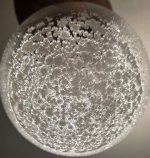
First batch was a success, but the snow globes are mostly floaties and hard to collect. I ended up using a coffee filter but it really does not help because most of the crystals are melting back to the solution while draining. I separated the NP to smaller dishes and put them back in to the freezer to figure out what to do next...? All of the procedures I planned on doing gave off milky, condensed pulls. By the visual inspection there's a lot of DMT to be gained from these leftouts and without this minimal polymer approach it would not have been possible. I'll post some pictures when I'm able to collect it all properly as crystals.
 
I guess I was saving this thread for last, after reading most of the other threads here, and anywhere, about DMT liquid-solid phase chemistry. Not that you need to read the entire nexus to understand this thread, but it did help to have already read every link to various researches. Was fully with everyone on their logic and reasoning. MindLusion's post #137 is like, the rabbit at the end of the rabbit hole, as far as what I've been specifically researching on the Nexus. I'll sleep better tonight. Big thanks and props to everyone for the creative thinking.

Keep the NaOH, free base is what polymerizes. To try max the goo, I would concentrate the DMT in water, add NaCl to 25% or so (double the max ion Tek), and let that base sit in the fridge for a few days. Then pull with hot Naphtha. It should be a lot of goo. You may even see some goo floating on the water before the pull in this extreme situation.
I can also confirm, like Jees before me, that milky white freebase precipitate can suddenly coagulate into an amber oil layer above the aqueous (when freebasing too fast or without NPS present). So this is not polymer DMT then? Just a liquid phase of monomer DMT, different than melted DMT?

Hi,
my zinc is grey as hell, yours seems white? Zinc oxide is white, is that what you have please? I believe zinc oxide is unable to cause a reduction as zinc does.
Nevertheless the color change is clear, it must have done something.
Aw man I wish IridiumAndLace's pictures were there still, but I'm glad you commented on them so I can still imagine what it looked like. I think MindLusion debunked zinc reduction if I understand correctly, but then what caused IridiumAndLace's solution and precipitate to lose color?

I've also seen FB DMT polymer oil quickly form and float in concentrated water solutions and very high NaCl concentrations.
Why do we use non-polar solvent at all if we could just oil-out the DMT? Is it just for crystals?

See, my experimental result presents another obstacle to the "pure DMT polymer" hypothesis. After I filtered off the zinc, when I went to basify my solution, I accidentally basified it too fast. Not only did this result in the zinc oxide abruptly crashing out of solution, it also caused the DMT to crash out so fast that it formed large globules of clear molten DMT floating between the water layer and the NPS layer. (I was doing this at around 80°C, well above the melting point of DMT.)

Had this molten DMT been tinted yellow or orange, I might well have described it as "DMT oil". Had it fallen out of the NPS in the freezer but failed to crystallize, I would certainly call it "goo". Neither was the case; it was clear and virtually colorless, dissolved rapidly in the NPS, and crystallized out cleaner than any of my previous extractions.
This is intriguing. I have never seen clear DMT oil crash out. Though I'm a little confused when you said it was floating between the water and NPS, then said it dissolved rapidly in the NPS.

Oligomers give larger droplet particle sizes.
Is that a general rule? (since you hadn't yet gotten your analytical instrument running at the time of your post) or has another source confirmed that for DMT oligomers?

Wouldn't that affect the bioavailability? In studies, certain sizes of aerosol droplets deposit in the lungs better. Maybe some oligomers have a higher affinity for deposition.

Just to clarify...we're talking about dmt polymers, which are multiple dmt molecules.. not polymorphs, which refers to a single dmt molecule's semi-folded orientation, about its alpha-carbon. Polymorphs of dmt include the example that pic, to waxy amorphous solid. DMT polymers do not readily crystallize.
That color is typical, even with synthetic.
For reference that post was in response to Void's gold DMT. Are you saying yellow DMT is a polymorph? That seems to be a common misconception, at least according to the only study on polymorphs that said both polymorphs were detected in every sample, regardless of the sample being white or yellow.

The data provided in this paper have shown that DMT can be recrystallized from the solvents hexane and acetonitrile to give crystals that are a mixture of two polymorphs. The fact that two clearly exist explains the variation in melting points reported previously in the literature. It seems possible that use of the latter solvent gives crystals with a greater amorphousness and a yellow coloration. This solvent dependency was independent of the source of DMT, whether it was extracted from natural products or synthesized in the laboratory. The XRPD data correlated with the fast scan DSC data (Figs. 2–5a at 100 °C min−1) and confirmed that all four samples studied contained at least two polymorphic forms of DMT with varying ratios of concentration, the proportion of which appears unrelated to sample color.

The study is not conclusive by any means, but I'd like to hear more reasons why pure, solid DMT can be yellow or white, and what factors go into that. It doesn't seem to be as simple as autoxidation locking the rotation into a yellow position. Or if it is, can you talk more about that and how to control it?

DMT polymers do not readily crystallize.
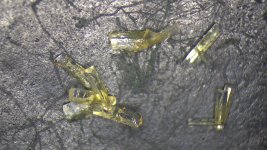
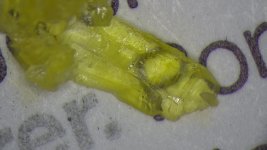
I'm trying to reconcile the deep yellow, solid, dry, scentless prisms I've gotten to. From a waxy stinky crude to now, I haven't been able to shake the color in solution or in solid. If polymers don't crystallize, and oxides oil out of NPS, I'm ruling both of those out.
IMG_0926.jpg

That paper doesn't have pictures, and I don't think it describes the solids beyond color, so I'm not sure if their yellow was waxy or crystalline, but they suggest it could be from greater amorphousness.

Does that just mean tiny amounts of DMT oiled out and got trapped in the crystal as it grew, tinting the color? Is this the same thing as an oil layer falling out of solution and coating a freeze precipitation dish prior to crystallization? The hexane evaporated clean off the rest of my crystal growing chamber, and the crystals popped off the glass like bouncy sand. There wasn't a uniform deposit of yellow oil, but the crystals are yellow nonetheless. The solution was yellow, and cleared as crystals grew out.

View attachment VID_0051.mp4
View attachment VID_0071.mp4
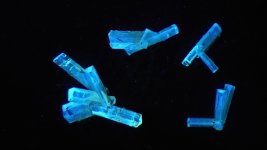
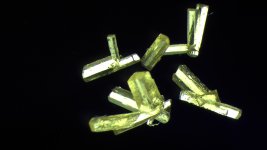
Notice how in my last video, the color appears darker depending on its orientation. Possible pleochroism?

IMG_0148.jpgIMG_0141.jpgIMG_0162.jpg
Btw, these melt at 66 °C, I believe you have had samples with that MP before. Did yours look like this? That would be simple if a 66 °C MP polymorph is just yellow. The only two polymorphs identified in the study melted at 57 °C (form I) and 45 °C (form II). So we need more info about this apparent 66 °C polymorph.

Concentration, temperature, the rate of cooling, etc..
Is the color of pure DMT all about the ratio that oiled out amorphously? But then what about IridiumAndLace's story about crashing out clear oil?

In summary, I think we have more to explore in regards to morphology. Besides color and oiliness, I want to understand what determines whether it crystallizes like a spiky ball of swords, or into these gems / diamonds / prisms.
 
Last edited:
4356_3b85cb1b-5f29-4bed-83f8-de5f9e323207_1000008082.jpg


This is my run from today. Freeze precipitation in heptane/ethyl acetate. I added sodium bicarb to extract, so the pH was probably around 10. I also purged with argon at every step. Heat and exposure to oxygen affect discoloration, which occurs at the 2 position of indole. Freeze precipitation limits intramolecular entropy, which affects how much rotation occurs at the alpha carbon. If the terminal amine folds closer to the indole nitrogen, the 2 position is less shielded from autooxidation. The 'oiling out' is a supersaturated solution of unresolved polymorphs; this is resolved by adding more solvent to decrease solubility.
 
Last edited:
Heat and exposure to oxygen affect discoloration, which occurs at the 2 position of indole. Freeze precipitation limits intramolecular entropy, which affects how much rotation occurs at the alpha carbon. If the terminal amine folds closer to the indole nitrogen, the 2 position is less shielded from autooxidation. The 'oiling out' is a supersaturated solution of unresolved polymorphs; this is resolved by adding more solvent to decrease solubility.
Does heat and oxygen exposure cause DMT in solution to autooxidise as well? Or is it only after the molecule gets locked into a vulnerable rotation?

I ask because my crystals were yellow from the first pull off MHRB. It's commonly reported that DMT pulls from rootbark get more yellow each time, especially when re-using the solvent. In my case, even the solvent was yellow by the third pull. I kept my extraction near 60 °C and did a dry tek, Q21Q21. The last pulls were done days after the addition of calcium hydroxide. I stirred the naphtha into the mud with a power drill. So there was plenty of heat and oxygen introduced while it was in the freebase stage waiting to be pulled out. I suppose it was probably an oil of freebase - could that autooxidise?

Is there any way to reverse autooxidation? To turn yellow back to colorless? Or separation techniques? Sometimes white and yellow separate on their own, but in my case of transparent yellow prisms, they seem to have co-crystallized or maybe all my molecules have been autooxidized.
IMG_0274.jpgIMG_0272.jpg

I think I read somewhere that it's possible to get nano-droplets of oil when crystallizing, vs total oiling out. Was wondering if maybe that could explain the coloration - nano layers of dmt oil pigmenting the defects in the lattice as it precipitates near the boundary of the metastable zone? But I guess then the color wouldn't persist in aqueous solutions and could be resolved with re-precipitating more slowly.
 
Last edited:
Does heat and oxygen exposure cause DMT in solution to autooxidise as well? Or is it only after the molecule gets locked into a crystal form with a vulnerable rotation?

I ask because my crystals were yellow from the first pull off MHRB. It's commonly reported that DMT pulls from rootbark get more yellow each time, especially when re-using the solvent. In my case, even the solvent was yellow by the third pull. I kept my extraction near 60 °C and did a dry tek, Q21Q21. The last pulls were done days after the addition of calcium hydroxide. I stirred the naphtha into the mud with a power drill. So there was plenty of heat and oxygen introduced while it was in the freebase stage waiting to be pulled out. I suppose it was probably an oil of freebase - could that autooxidise?

Is there any way to reverse autooxidation? To turn yellow back to colorless? Or separation techniques? Sometimes white and yellow separate on their own, but in my case of transparent yellow prisms, they seem to have co-crystallized or maybe all my molecules have been autooxidized.
View attachment 111803View attachment 111804
you can always re-recrystallize, and freeze precipitate. the cold inhibits autooxidation. Yes, a solvent exposed to ambient air, especially when heated, will expedite autooxidation. Dispensing a layer of nitrogen, or better yet, a heavier-than-air gas like argon or carbon dioxide, will protect the dmt in solution to some extent.
The lack of yellow/orange in crystals is more of an aesthetic preference, as mass spectral data will not show any difference between orange and white crystals that have been resolved by recrystallization.
 
So the autooxidation isn't permanent then? Sorry I'm still a bit confused on that.

A recrystallization below room temp under inert gas should clear it up? Or that's just best practice to avoid the irreversible autooxidation?
 
So the autooxidation isn't permanent then? Sorry I'm still a bit confused on that.

A recrystallization below room temp under inert gas should clear it up? Or that's just best practice to avoid the irreversible autooxidation?
it can be reversed by redissolving in solvent, and recrystallizing. The trick is solvent selection, low temp, and limited exposure to air.
I used to heat my nonpolar solvent like everyone else; then I found a way to get it to dissolve, even at low temps....ethyl acetate. What you do is add heptane or hexane, or even naphtha to your residue, then add ethyl acetate dropwise, and swirl it around, until the solvent becomes white. then decant that off, and freeze until the solvent becomes clear. Pour back into the residue, swirl again until it becomes white, decant. Repeat. The resulting crystals will be white, because you didn't heat the solvent.
 
Back
Top Bottom