• Members of the previous forum can retrieve their temporary password here, (login and check your PM).

~Phalaris = The Way Of The Future~

Migrated topic.
A little history on the 'Yugo Red' strain I grew...

Soil: Earthworm castings, spaghnum moss, pumice
April 2014 sprouted some seeds and grew them in a pot for two months before transplanting in the ground.
Used Kelp meal and Glacial Rock Dust to avoid shock to the plant.
Flowered from August-September last year, possibly since I sowed the seeds in the middle of spring.
This grass has been quite sturdy and not prone to a high amount of insect presence and low slug juice.

I cut it all back to the base last October and again this February.
Not necessarily a pre-determined experiment, simply felt as though I would need medicine that day.
This year the grass foliage tapers off at about 6'5" and the inflorescence stalks reach another two feet. The grass is about 8+ft currently(june 2015).
Before harvesting I stressed the plant without water for two weeks and began watering a few moments prior to clipping. I asked the plant to guide my hands to yield the due amount of lessons the grass wished to provide that day.
I find unmeasured doses often defy your physiological expectations.
A more fulfilling method for channeling the spirits.

Last year I harvested 216g and recovered less than 50mg of crude base that looked like my D-Limonene pulled Mimosa extracts though smelled like grass extract. Still have not bioassayed this portion. I do say that what you are able to pull is not everything that's actually in the plant.

Deeply appreciate your post fourthripley.
Personally, I have had alright visions for about 2 hours on 8g of baby brachystachys.
That grass was sprouted in July and harvested October 2013. Peganum Harmala was used with that one. A repeated attempt with about 16g fresh brachystachys harvested in late May of 2014 was barely noticeable; though a feeling of full-body orgasm ascended within my cells and quickly eroded an hour into it...so I ate some Azurescens :)

Of all the MAOI plants I've utilized, Passiflora and St. John's Wort seem to synergize best with Acacia and Psilocybe fungus.
Peganum Harmala is the go-to.
I don't care to order Caapi online so I'll wait til my plants seem ripe for relishing.
Elaeagnus has been the most medicinal and lingering in afterglow.
Hippophae-still am uncertain. Worked with its bark and foliage up to 50g though nothing to really note aside from its potential as an everyday remedy for insomnia and depression.

Aquatica I've grown has been active at 40g. 80g a bit more visual. 125g the supreme.
These were all consumed with a base 4g of Peganum Harmala seeds every time.
Orally active strains have always been wild. Validating my suspicions, I've worked with P. Arundinacea from zone 7b, 8b, and 9b within the last few years. Definitely something there by itself with about 30g fresh foliage.

Interesting points you provide, Jamie.
The tryptamine feel was definitely present. Obviously by reading the report y'all see it was no "blast-off". Fourthripley's onset of effects speaks true to this. Wonder if there's a reason they posted that report after mine. Helps me validate my own looming questions.
These bioassays I post are selected from meaningful explorations of healing. I've had better success with high amounts. I'm not about to suggest to friends that they explore the unknown especially with 200g of wild grass.
This is basically to state the healing abilities of this grass at sub-visionary levels.
With the unpleasant feeling you get I do not really know how to relate.
Of the beautiful friends I've shared this medicine with and my own countless experiences, no one has ever encountered nausea, paranoia, fear or uncomfortable body load.
And for hordenine content, I've consumed near 200g dried Trichocereus cactus and similar amounts of Phalaris with maoi. There is a body load encountered with San Pedro in my experience and not so much for Phalaris. It has to do with vibration and energy. You will know what I speak of. If hordenine is present, I enjoy its effects. This is my personal perspective. Smoking cannabis or herbs like Scutellaria Lateriflora or Turnera Diffusa may decrease possible nausea. Or brewing sage, rosemary, lemon balm, and mint with your swords of bluish green space spice stands. I usually enter the Phalaris jungle with full surrender to its power and ask that it provide me with nourishing attention to its wisdom.
I hardly explore other forums aside from this. This is the DMT nexus I'm aware. Exploration of Phalaris shows you DMT is not all the grass has to offer. Is it still viable to explore this plant as a source of healing medicinal value or should we stick to isolating DMT from it, since the title of the forum suggests? Maybe DMT even offers no medicinal value. If there were solely DMT or 5-MeO-DMT in there I doubt I would have grown as close to these guardians as I have. We are finding amazing possibilities for this grass.
I saw in a post of yours(Jamie) about tincturing Phalaris. These are exciting avenues as I know precisely that they are active as such in strengthening my physical flexibility with meditation and exercise(turns me into a ninja-samurai in the garden).
A strain like P. Coerulescens has never provided me with tryptamine effects. Though, it seems other alkaloids are present and potent medicines.


Again, thank you fourthripley, your experience report is helping with my own integration of this experience. Seemed as though my deep vision quest with Trichocereus Peruvianus a week ago and this Phalaris transcendence were interlinked and filled in so many gaps I could not even put into words if I sat alone in a forest for 5 years thinking about it.
Jamie, your work in Dragibus is fabulous. So appreciative of others working with this grass because aside from the internet, I barely know a soul who has an understanding that there is beneficial medicine all around them in abundance.

"oh dmt, let's order some mimosa bark"
:thumb_dow

Love y'all.
Keep grassin'
 
..ok people of the United Kingdom, there have certainly been some factors at work seemingly preventing me talking there..but they can't stop me showing you this>

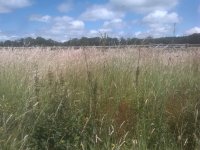
here (attached pic) is a whole field of Phalaris arundinacea in Somerset...it's everywhere..

even if people gripe that it may be a lower percentage of alkaloids, you can find it by the cart load here..

and if it's a strain that contains more beta-carbolines than tryptamines..how can that be a bad thing?
it's medicine..

(and please..if anyone raises the gamine concern again! it's well and truly covered here..and is no problem)

so..roll on, sweet medicine fields of England...Phalaris is the Way of the future...
 

Attachments

  • IMG_20150719_133023.jpg
    IMG_20150719_133023.jpg
    155.9 KB · Views: 0
Nice photo..
To see a breeze blow over these wild grasses is awsome!

The grass apears very alive ..[a living green and gold moving sea of life..! :)
 
..appreciate your comments thanks Starway6..
and big thanks to Chimp Z for the work with and reports of the various Phalaris species..

this thread is a bit convoluted and winding, so i'll reach back into it,
to comment on the recent discussion of Phalaris arundinacea (content, qualitative and quantitative)
~Phalaris = The Way Of The Future~ - Collaborative Research Project - Welcome to the DMT-Nexus nen888 wrote:
..of P. brachyastachys i do not have the data on how many strains exist..P. aquatica i've seen listings of 16 different cultivars..
but i'm fairly certain neither of these species is anything like as variable as P. arundinacea which is one of the most genetically varying plants on the planet..
Brodersen, Lavergne & Molofsky (2007) put the number of identified P. arundinacea genotypes at 210 ! Department of Plant Biology
also, Simons and Marten (1971) studied 18 genotypes and found "Alkaloid concentrations in the 18 clones ranged frown 0.18% to 1.21% of the dry matter and were similar between years."

also, regarding a staggers query on the last page..in terms of the acute form, from p.11 of the thread,
nen888 quoted:
• Scientists have defined and described the cause of polioencephalomalacia (PE)-like (nervous form) sudden death toxicity from phalaris.
• The analysis shows phalaris contains a compound that inhibits a ruminant’s ability to metabolise nitrogen, resulting in elevated ammonia levels in the bloodstream, which ultimately cause brain damage.
• Funding is required to identify the compound responsible for PE-like sudden death and to develop toxin-free phalaris varieties.
..so the danger here is in eating very large amounts of Phalaris along with high nitrogen containing crops, and does not apply to either extracts or the amount of grass a human would or could ingest..

(actually p.11 is a quite a good page, reading back)

but yeah, also 5meo-dmt with MAOIs is, from evidence, not a safe thing to do either..

great work dreamer042, jamie, fourthripley and Chimp Z towards the Phalaris future..
.
 
Chimp Z, you are a treasure and an inspiration. I've only just started to discover the path you know and walk so well, and I can't possibly thank you enough for taking the time to share.

At this point, do you strongly prefer brewing your grass as opposed to extracting and inhaling the freebase? If so could you shed some more light on why?

I first came to this site intent on understanding the science of MHRB extraction. MHRB holds a special place in my heart and grass tek seemed daunting with the necessity to defat excessively or use chemicals that are harder to acquire without announcing yourself to those who might choose to watch.

That said, the picture you've painted on what phalaris has shared with you is beautiful. Now I'm just trying to integrate my own experiences with what you've shared so I can better guide my own research.
 
"At this point, do you strongly prefer brewing your grass as opposed to extracting and inhaling the freebase? If so could you shed some more light on why?"

No, and there is a lot of info in this thread that does not align with my experience.

Please do not just start brewing up phalaris arundinacea, or any phalaris for that matter unless you have a certain amount of experience with these plants yourself. If you want to brew anything, make sure it is phalaris aquatica.

As much as people like to go on about how this is not just DMT etc..that is fine but I also do not think many of you will enjoy drinking a tea that is mostly just hordenine giving a stimulant effect lacking psychedelic qualities. Phalaris arundinacea needs to be extracted a certain way IME for the psychedelic qualities to be expressed without the stim effect taking over at a much lower dose than what is needed for psychedelic effects.
 
That's an interesting perspective I hadn't fully appreciated Jamie. Do you find that to be the case with known cultivars that have particular alkaloid profiles such as Yugo Red and Big Medicine or were you generalizing for wild Phalaris Arundicae?

My understanding was that Yugo Red and Big Medicine both have very clean alkaloid profiles without excess hordenine content, though now that I think on it I believe those were GC assays from proper extractions which might explain why the hordenine wasn't pulled in the quantities you're describing.

I have a lot of reading to do before I conduct any original research in this field, at this point I'm just trying to learn enough that I can structure an approach to my research once I'm ready. Thanks!
 
nen888 said:
..ok people of the United Kingdom, there have certainly been some factors at work seemingly preventing me talking there..but they can't stop me showing you this>

here (attached pic) is a whole field of Phalaris arundinacea in Somerset...it's everywhere..

Hi Nen
Just on holiday in other but similar part of the UK and likewise came across enough Phalaris arundinacea to fill about 10,000 dumper trucks. This afternoon I cut down a hefty amount and then spent 3 or 4 hours back at base just cutting off new growth leaves. I've ended up with a bit over a half kilo (a pound and a quarter) of leaf. I'll process it when I get home next week and see what I end up with. I've read a lot of stuff on here about only cutting it at dawn or dusk, which obviously I've screwed up on, and it's going to be sitting in a plastic bag for a week before I can try an extraction. Anyway will put results on here. Would be nice to think that I'd come across a field containing enough spice to keep the world going for the next 100 years :)
 
Hi guys,
great work.
I thought it might be advisable for people to take clones from wild arundinacea they are using for extractions and propogate these while saving some of the plant matter for analysis so we have the ability to save those high alkaloid phenotypes for further breeding.
There are plenty of eager to contribute people here - plenty to start a breeding program if the know-how was dispersed - I know we see AQ1 as a great strain but can we not do better. 1% is great but specific alkaloids can surely be promoted further when there are 210 genotypes and the content of those alkaloids get as high as 1.21%.
If we were to outline the procedure of cultivation, extraction, analysis in a manner understandable by the layman we can get some genuine reproduced results from across the globe with all strains covered in a speedy(er) time frame.
I love the efforts that have been made so far. What do people think about organizing either a breeding program or an accurate (and cost effective) analysis procedure to allow us to combine our findings on a level playing field?
 
Hi guys I have a few question regarding P. arudinacea - two years ago I collected a big jar of P. arundinacea seeds. Now I would like to sprout them till day 8 and then do an extraction, because according to a paper (it is called "NN-DMT production in Phalaris aquatica seedlings") tryptamine production peaks at 8th day in seedlings. I live in south east Europe and I have a reason to believe what I have is basically what is otherwise known as yugo red strain. Now my question is - how much seeds would be advised for this experiment? - considering the facts I am quite unexperienced with extractions and don't want to make a huge mess and waste seeds for nothing. Also what would be the best method - classic A/B or maybe method described in document "On processing phalaris"? Would it be unwise to kill the seedlings and then do extraction on dried material?

I also collected local P. aquatica seeds, but not enough for seedling extraction, I plan to grow and clone those. Those seeds are much smaller than arundinacea and they are a pain in the ass to collect. Plus the fact aquaticas are much rarer around here to begin with. But I have high hopes from arundinacea because I can collect a shitload of those, they basically dominate the local ecosystem. Those of you that are well experienced extractors and are willing to do this experiment can PM me and I'll hook you up with some seeds, but keep in mind I have limited amount of old seeds and fresh ones exhibit some seed dormancy (reduced germination rates).
 
it's not worth it unless you can literally plant a field of the stuff. Grow it to mature grass..the yields will be higher because of the bulk amounts of grass used will contain more overall than some tiny little seedlings.

Better yet..just harvest the grass in the wild and work with that. Do not expect an easy route to DMT. Phalaris requires a level of dedication beyond that of ayahuasca or plants high in DMT with clean profiles such as mimosa hostilis or acacia confusa. It's hard to get enough of the stuff to be drinking it day after day after day etc like one might do with ayahuasca, and the process requires a level of patience and time set aside etc which even with bulk amounts locally available sort of dismisses the idea that someone can just be giving lots(if any) of this stuff away to others. It is a personal process that personally I find opens up a space for a lot more contemplation and for myself, a deeper connection to this numinosity that tends to lurk in the background of the world.

Phalaris in this way will never be, IMO, the way of the future..unless someone starts doing it on mass in a warehouse style setup or something. 19 out of 20 DMT smokers will probly stop using DMT before they bother going through all that to get a couple doses of some mixed tryptamines. Some will find something in it, and for those few it will provide...but it is not going to just dump shards of crystal into the palm of your hand with very little work like some other things will.

I like this about it.
 
fat.flat.line said:
What do people think about organizing either a breeding program or an accurate (and cost effective) analysis procedure to allow us to combine our findings on a level playing field?
It certainly would be cool to see moar work on breeding and strain selection and I'm happy to support that in any way I can.

As far as analysis, the best bet for the home user currently is going to be TLC paired with reagent testing. This will at least give you a good general idea of what alkaloids are present in the extract. I would love to see moar people engaging in this kind of work as well.

We do have professional lab analysis available as well. Perhaps we could look into crowd sourcing funding to get extracts from different seasons and climates/locations analyzed in order to gain a moar clear picture of exactly how these things effect alkaloid production.

jamie said:
Grow it to mature grass..the yields will be higher because of the bulk amounts of grass used will contain more overall than some tiny little seedlings.
Unfortunately it doesn't seem to work just as simple as that. It appears maturity effects alkaloid levels, so working with fresh growth is going to be the best bet for tryptamine seekers. You don't just want to cut week old seedlings though, get a good healthy mature patch going and then just cut it back on a weekly basis.

This is something to keep in mind for those working with the wild grasses too, best results are likely to be obtained via harvesting early in the spring and/or cutting the grass and harvesting the regrowth, this creates some issues though because the best way to ID the grass is when it has flowered but that is when tryptamine levels appear to be at their lowest. It may be prudent to ID some patches in the fall and come back and harvest the fresh growth from them in the spring.

Some things to keep in mind for cultivation:
Tryptamine production spikes in new growth and regrowth at around a 7 days.
Ammonia based nitrogen fertilizers significantly increase tryptamine production.
Stressing via drought and/or shading has been reported to increase overall alkaloid concentration.

In the end Phalaris arundinacea alkaloid levels are just plain low. You'll never crack .1% alkaloids with any arund strain and generally you'll be lucky to yield half that. I also don't believe arundinacea is going to be the way of the future, it's too much effort for too little return. P. aquatica and P. brachystachys appear quite a bit moar promising for both the wildcrafter and the home cultivator however, due to their overall higher alkaloid levels.
 
Are the Big Medicine and Yugo Red alkaloid contents seriously below 0.1%? That's disheartening, though as I'm intending to grow my own plants sustainably there are still points in my perhaps misguided mind that make it attractive.

My thinking is that the regrowth rate and amount you can harvest without causing the plant lasting harm still make it attractive. I mean, if you have a mature MH plant how much RB can you realistically harvest a year without jeapordizing the plant's health?

I think people take for granted how slow MH and AC grow. Their alkaloid percentage seems to come at a price. If you have people destructively stripping out wild plants to harvest them entire, sure, you'll get a great yield, but that sort of practice is abhorrent in my book. I've witnessed a desirable cultivar of P.Arundicae grow several inches a day in ideal conditions. Even if a lot of raw material is necessary, it seems to me that the raw material is at least available to those willing to do the work.

I still plan on growing MH long term, but in the meantime I think having a section of a known cultivar of P.Arundicae growing in my garden is a must. I just wish I better understood the square footage necessary to produce a given dose and what harvest rates can actually produce significant alk percentage.

That is, if you harvested weekly throughout the year would the vast majority of those cuttings be too low in alkaloid content because of the time of year? There's still so much I don't know and need to learn...
 
SomeStray said:
That is, if you harvested weekly throughout the year would the vast majority of those cuttings be too low in alkaloid content because of the time of year? There's still so much I don't know and need to learn...
If you harvest weekly you'll be harvesting fresh young regrowth each time so you'll consistently be harvesting for peak tryptamine levels. A weeks growth really isn't all that much so you won't be getting much biomass per harvest.

I'm thinking there might be a middle ground here somewhere. Perhaps if you use the fertz and harvest after say 14 days or 21 days instead of 7 you can get several times the biomass while still maintaining reasonable tryptamine levels. That's another avenue of research worth exploring.
 
A few things I wanted to clear up;

1.Do we have any information on the partially chlorophyll-less strains (feesey, etc.)? I read somewhere within this thread (i think) that the actives are not held within the chlorophyll-less parts which therefore represent a large loss in yield (on an already low yield plant this is an issue if true).

2.On recent expeditions in search of strains, I've noticed an incredibly high flower to leaf ratio on wild strains - if planning a wild grow would a potential SWIM need to tend his flock more regularly than weekly just to prevent the over growth of flower shoots or can this also be tended with the weekly trim? Also would the plant need to be tended regularly to prevent the overgrowth of flowers or could a wild plant be trimmed of it's flowers to encourage vegetative growth?

3.If the plant puts most of the actives into the new growth what percentage of plant matter should be cut back and should the plant be cut cleanly back to the base of each shoot (meaning the next weeks trim would be on BRAND new plant growth) or just the tips?

I plan on moving some indoor PA plants to an outdoor space after the winter when they will be substantial enough to spread along way they hope. I'd had debated planting some well established growths in a river current after seeing wild PA apparently loving this vantage point but really don't know what substrate would withstand this form of re-pot (or if the plant could take it).

Are there any "bibles" on phalaris cultivation I should know about or should I trawl the lit. for relevant methods.
Also do we know if rhizome can withstand being frozen for long periods of time as this may be a great way to store and transport clone material.

I thought after reaching around page 11 of this thread that this plant would be fully understood by the end... how naive I was...

D_Juggz original post has a quote from the entheogen review from 2002 which states - "I have about a thousand TLC plates of my tests, each with its own unique and different alkaloid mixture. This could keep graduate students busy for years elucidating the unique healing properties of these mixtures" - which surely shows we shouldn't be drawing a line at "big medicine" and other preordained Alkaloid superheroes.
Is the image in D_Juggz post of the plant bed indicative of a space large enough for the cultivation outlined by dreamer042, of weekly cutting back, or would the pint jar D_Juggz filled take a full 12 months on that scale?
-Maybe D_Juggz answered my question...-
Also does his TEK - "From a weeks regrowth i was able to fill a pint-balljar with fresh leaf, and some vinegar+methylated spirits (ethyanol) and got this amount of DMT from the extaction." - really yield that clean and high volume of Alks? If so WOW!
 
fat.flat.line said:
A few things I wanted to clear up;

1.Do we have any information on the partially chlorophyll-less strains (feesey, etc.)? I read somewhere within this thread (i think) that the actives are not held within the chlorophyll-less parts which therefore represent a large loss in yield (on an already low yield plant this is an issue if true).

2.On recent expeditions in search of strains, I've noticed an incredibly high flower to leaf ratio on wild strains - if planning a wild grow would a potential SWIM need to tend his flock more regularly than weekly just to prevent the over growth of flower shoots or can this also be tended with the weekly trim? Also would the plant need to be tended regularly to prevent the overgrowth of flowers or could a wild plant be trimmed of it's flowers to encourage vegetative growth?

3.If the plant puts most of the actives into the new growth what percentage of plant matter should be cut back and should the plant be cut cleanly back to the base of each shoot (meaning the next weeks trim would be on BRAND new plant growth) or just the tips?

I plan on moving some indoor PA plants to an outdoor space after the winter when they will be substantial enough to spread along way they hope. I'd had debated planting some well established growths in a river current after seeing wild PA apparently loving this vantage point but really don't know what substrate would withstand this form of re-pot (or if the plant could take it).

Are there any "bibles" on phalaris cultivation I should know about or should I trawl the lit. for relevant methods.
Also do we know if rhizome can withstand being frozen for long periods of time as this may be a great way to store and transport clone material.

I thought after reaching around page 11 of this thread that this plant would be fully understood by the end... how naive I was...

D_Juggz original post has a quote from the entheogen review from 2002 which states - "I have about a thousand TLC plates of my tests, each with its own unique and different alkaloid mixture. This could keep graduate students busy for years elucidating the unique healing properties of these mixtures" - which surely shows we shouldn't be drawing a line at "big medicine" and other preordained Alkaloid superheroes.
Is the image in D_Juggz post of the plant bed indicative of a space large enough for the cultivation outlined by dreamer042, of weekly cutting back, or would the pint jar D_Juggz filled take a full 12 months on that scale?
-Maybe D_Juggz answered my question...-
Also does his TEK - "From a weeks regrowth i was able to fill a pint-balljar with fresh leaf, and some vinegar+methylated spirits (ethyanol) and got this amount of DMT from the extaction." - really yield that clean and high volume of Alks? If so WOW!
1. I don't really know anything about that. AFAIK all grasses are going to contain chlorophyll. Alkaloids are present in all parts of the grass (flowers, stalks, blades, roots, fresh green and brown/dead parts) The profile is a little different in different parts of the plants and we haven't identified exactly which alkaloids are present in each part, but there are alkaloids present in all parts.

2. Do be careful planting this stuff in the wild it's highly invasive and will choke out native species and change ecosystems. Cutting back the wild grass on a weekly or whatever scheduled basis should work the same as when cultivating it. Yes you should be able to cut the grass when it's flowering and harvest the fresh vegetative growth and still achieve peak tryptamine levels from the new growth.

3. When cutting I usually leave a good 4-6 inches of bottom growth, cutting it all the way down to soil level seems to prevent or at least stunt regrowth.

Again I would strongly advise against planting invasive species along waterways, if you grow it, grow it somewhere where you can contain it's growth. Or just harvest the wild stuff already growing there.

No bible, but erowid has some pretty good guides in their general information section.

That ER quote is from Johnny Appleseed and I'm not sure what ever happened to those plates. I'd love the opportunity to get hold of them though. We've tried contacting him previously but he's kinda left all that work behind and not really interested in discussing it these days from what I've been able to gather.

It should be noted that D Juggz was using Phalaris brachystachys which is much higher yielding than Phalaris arundinacea. A small patch of arundinacea like that will not yield anywhere close to that. I cannot stress enough that arundinacea is extremely low yielding and one would be much better off investing their time and effort into aquatica and brachystachys than in arundinacea.
 
fat.flat.line said:
A few things I wanted to clear up;

1.Do we have any information on the partially chlorophyll-less strains (feesey, etc.)? I read somewhere within this thread (i think) that the actives are not held within the chlorophyll-less parts which therefore represent a large loss in yield (on an already low yield plant this is an issue if true).

2.On recent expeditions in search of strains, I've noticed an incredibly high flower to leaf ratio on wild strains - if planning a wild grow would a potential SWIM need to tend his flock more regularly than weekly just to prevent the over growth of flower shoots or can this also be tended with the weekly trim? Also would the plant need to be tended regularly to prevent the overgrowth of flowers or could a wild plant be trimmed of it's flowers to encourage vegetative growth?

3.If the plant puts most of the actives into the new growth what percentage of plant matter should be cut back and should the plant be cut cleanly back to the base of each shoot (meaning the next weeks trim would be on BRAND new plant growth) or just the tips?

I plan on moving some indoor PA plants to an outdoor space after the winter when they will be substantial enough to spread along way they hope. I'd had debated planting some well established growths in a river current after seeing wild PA apparently loving this vantage point but really don't know what substrate would withstand this form of re-pot (or if the plant could take it).

Are there any "bibles" on phalaris cultivation I should know about or should I trawl the lit. for relevant methods.
Also do we know if rhizome can withstand being frozen for long periods of time as this may be a great way to store and transport clone material.

I thought after reaching around page 11 of this thread that this plant would be fully understood by the end... how naive I was...

D_Juggz original post has a quote from the entheogen review from 2002 which states - "I have about a thousand TLC plates of my tests, each with its own unique and different alkaloid mixture. This could keep graduate students busy for years elucidating the unique healing properties of these mixtures" - which surely shows we shouldn't be drawing a line at "big medicine" and other preordained Alkaloid superheroes.
Is the image in D_Juggz post of the plant bed indicative of a space large enough for the cultivation outlined by dreamer042, of weekly cutting back, or would the pint jar D_Juggz filled take a full 12 months on that scale?
-Maybe D_Juggz answered my question...-
Also does his TEK - "From a weeks regrowth i was able to fill a pint-balljar with fresh leaf, and some vinegar+methylated spirits (ethyanol) and got this amount of DMT from the extaction." - really yield that clean and high volume of Alks? If so WOW!

This is part of the problem..everyone is willing to ask..no one is willing to do. Not pointing fingers just pointing out the obvious. People have sat around asking these things for years..almost no one is out there doing any real work. That is the only way you will learn anything, because the info you want is not out there in print.

Weekly harvesting yeilds less at the end of the season IME, compared to waiting a few weeks between harvests. Regardless of what people say, this is my experience.
 
Thanks Dreamer042 and Jamie for your dedication to this thread.
I thought it prudent to ask the pro's (in my eyes) before rehashing some already done work.

Your point (Dreamer042), that I shouldn't introduce such a highly invasive species to a location in the wild, has been duly noted. It surprisingly hadn't crossed my mind just how far downstream it could spread, or the damage it may cause.

Jamie - do you have an alternate pruning schedule you would like me to try to assess the yield difference over the year.

Does anyone have advice on the low germination rate of PA seeds - I read that smoke activation is a great way of increasing rates - https://web.extension.illinois.edu/illinoissteward/openarticle.cfm?ArticleID=453 - but until butenolide becomes commercially available (there are plenty of TEKs for it through google search but palladium catalyzed reactions are a bit out of my league right now) I can only experiment - I thought maybe a small quantity of burned PA ashes mixed with the substrate could be an easy fix based on this evidence but might try setting up a smoke bubbler to try make the smoke activated H2O that article mentioned if ash tests prove a failure. The Traveler just mentioned rooting hormone in the chat so I will give this and Canna's rhizome mix a try also (seeing as I have both). 😁

I agree wholeheartedly with you Jamie that the only way to know is to experiment.

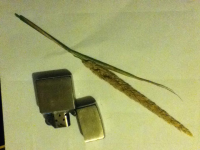
Also (not really related but interesting) I took the mature flower from a PA (var. Picta) that was growing in a local park - on close inspection around 5% of the seeds appear to be infected with a strain of claviceps (ergot). I had planned to collect some c. purpurea sclerotia from my local area and germinate them in a liquid culture so I think if I can ID the PA sclerotia as being sclerotia and not aborted seed heads I will germinate these alongside my claviceps purpurea strains.

I'm relying on my iphone camera for the time being but when i get a good zoom arranged I'll upload some better photos. If others want a great zoom feature check out

I know you can't see much in this photo - better ones to follow i hope - it's of the claviceps infested Picta flower.
 

Attachments

  • PACF.png
    PACF.png
    861.1 KB · Views: 0
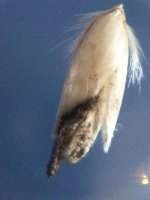
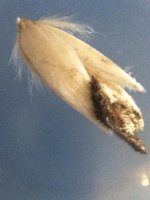
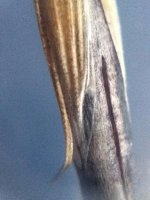
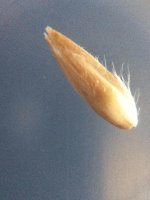
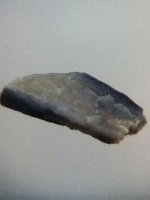
Ok. I set up the micro-camera I linked in my last post to get a few close ups of the parts of the arundinacea I found growing locally which looked as though they could have been claviceps sclerotia.
I think (you can judge for yourself) that the images show my possible sclerotia to be seed aborts which have either accumulated a coating of pollution (the plant was growing a pavements distance away from the road) or have some black fungal (possibly) growth on the outside. I am still leaning towards the fungal growth aspect as not all the plant was marked in this way just the aborts. The images of the C. Purpurea don't seem to show any link between the two spp. so I don't think it's a Claviceps infection.
Although this finding doesn't really effect this thread I thought I should update on this as it shows the need to grow in a clean environment and to clean your harvest before extraction if nothing else.
I have some sprouting of my var. Picta seeds so will be uploading some pics and deciding on a pruning schedule soon.
Also I found and ID'd some wild PA growing locally (a lot in fact) so I will take clones and see where they take me too. I have struggled to find Brachystachys vendors online and am struggling to find wild strains near me, any ideas on sourcing this and AQ1 clones would be great.
 

Attachments

  • P+Arundinacea+roadside+abort.jpg
    P+Arundinacea+roadside+abort.jpg
    56.7 KB · Views: 1
  • P+Arundinacea+roadside+abort+3.jpg
    P+Arundinacea+roadside+abort+3.jpg
    59.4 KB · Views: 1
  • C+Pururea.jpg
    C+Pururea.jpg
    70.3 KB · Views: 1
  • P+Arundinacea+purchased+seed.jpg
    P+Arundinacea+purchased+seed.jpg
    63 KB · Views: 1
  • C+Pururea+inner.jpg
    C+Pururea+inner.jpg
    61 KB · Views: 1
Back
Top Bottom