• Members of the previous forum can retrieve their temporary password here, (login and check your PM).

Pictorial Guide to Caapi Vine Alkaloid Extraction

Migrated topic.
I did this tek with a few tweaks and got some very strange results. I did a combination of Endless's Harmala Extraction Tek and this one. I used 112 gram of Caapi vine. The tweaks I made were as follows:
- powdered the vine
- filtered the boiled reduction with a cotton stuffed funnel to remove excess plant material
- used sodium carbonate (Na₂CO₃) as a base because its less toxic
- dissolved alkaloids with hot 1:3 vinegar/water
- rather than decanting, I used a coffee filter to speed up the separation of alkaloids from base solution, and then insolubles from the acid solution.
-i let base solutions settle in fridge overnight at each step, so at no point did it appear that there wasn't a sufficient amount of freebase forming.

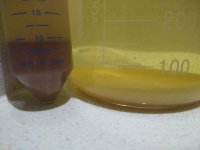
So throughout the process the alkaloids were crashing nicely. The biggest issue I had with this though was the carbon dioxide foam reaction that would form when basifying the acid. I would have to scoop out the foam until the solution was finally neutral and stopped reacting, and then i would add Na₂CO₃ until it was fully saturated and the color of the solution stopped changing (as it is done the Endless's Tek). The first time I did this step, I didn't save the foam and dumped it. The second time though I decided to keep it and shook it in a jar with water, added more Na₂CO₃ then let it settle in the fridge. To my surprise it did take a lot of alkaloids with it.

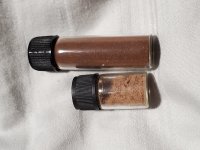
I finished the tek with the foam alkaloids separate from the main batch and the results were very different. The foam produced a lighter brown freebase like they did in this teks pictures, and confirmed its potency by vaporizing it. Unfortunately this only produced about 150mg of freebase. The main batch produced 2 grams of a darker brown and heavier freebase, even after washing until the water it was suspended in was clear. When I vaporized it there were very little effects, and it left behind a hard creosote like material and not a light ash like it shoukd have.

I don't know what the final product is that was produced from the main batch, but it was inferior compared to what was recovered from the foam reaction. I do not recommend using sodium carbonate for this tek, and I will be using lye next time hopefully with more consistent results.
 

Attachments

  • 20200514_231110.jpg
    20200514_231110.jpg
    2.3 MB · Views: 2
I would like to thank (a lot) Gibran for the time to develop this simple and effective tek.

I would also like to make a contribution in the tek.

After the acidification step (mid tek) and decanting the yellow-brown supernatant, basification should be done drop wise with slow mixing of the supernatant. When pH is low (up to 3-6), addition of base dropwise will cloud it but it will dissipate, this should be repeated with calm and patience as the pH of the whole solution must equilibrate before adding more. When you reach pH 7-8 the first magic happens as the clouds do not dissipate, the whole solution will cloud up and very quickly brown-darkbrown precipitates will form, pH checking will show pH between 6-8, don`t go higher than this right now, it`s very easy to overshoot without electronic pH meters. Stop shaking and let it fall to the bottom.

Near this threshold pKa for harmine, a lot of it will drop out, some harmaline certainly drops out as well but way less. After solution clarifies the supernatant will continue to be light yellowish, meaning harmine-harmaline still dissolved. Also, at this pH brown harmine may precipitate cleanly giving you yellow-brown needles, brown precipitates after washing turn yellowish. A good sign, beautiful sight, specially because the crystals size will help it fall to the bottom quickly.

The yellow solution can now be basified further to drop harmaline and the rest of harmine out. Just keep slow mixing and dropwise add base, don`t overshoot! This makes the precipitates drop out too fast and become a powder which do not fall to the bottom. If this happens, reacidify dropwise then rebasify. Harmaline will drop out as white precipitates, if your pH is not very high (pH 9-10), white needles will fall out (they have a smaller length than the previous). Stop shaking, wait for the full precipitation to occur. Decant supernatant (that will remain somewhat yellowish but not fluorescent, you can try recovering whatever is in it by adding more base and putting it in the fridge, not much will come out).

Follow up with final cleanup until pH is 7-8 and you`re good to go. I suggest washing the precipitates with water pH 7-8 (just prepare a bunch using small amount of base), not plain tap water or distilled, as it it too acidic and you may dissolve crystals.

My contribution here is simple: do gradual pH increases on the basification steps and you get cleaner and bigger crystals that will speed up decanting and you can separate harmine and harmaline in a very visual way, stupid easy to execute. It takes more patience but turns out it speeds up further steps. Do not overbasify!

If you add too much base at once, pH climbs too fast and alkaloids drop out instantly, resulting in a cloud that takes way too long to decant. Near the pKa, the alkaloids drop out slowly, sequentially adding themselves to precipitates making them larger.

Image shows unclean `harmine` to the left and `harmaline (+ harmine surely)` to the right. Further cleanup of harmine leads to yellow needles, takes little washes to get to it, since you didn`t add too much base at once. You can also wash once and readd acid (pH 4) to redissolve it, decant-filter brown gunk, then rebase it slowly to get the yellow crystals.
 

Attachments

  • handh.jpg
    handh.jpg
    3.8 MB · Views: 2
Nibs said:
I don't know what the final product is that was produced from the main batch, but it was inferior compared to what was recovered from the foam reaction. I do not recommend using sodium carbonate for this tek, and I will be using lye next time hopefully with more consistent results.

If the main batch you mean the dark brown, that is probably because the dark brown is just gunk that is grabbed into the crystalline-like matrices of your precipitates, the lightbrown-yellow-white stuff is purer and so pound for pound, more of the true magic sand of Morpheus. This means the initial base washes or filtering weren`t enough.

You`ll have to dose more of the brown stuff. Maybe the foam keeps out the gunk while the precipitates form within the emulsion, like a sieve, leaving them clean, not a bad thing in my opinion.

You can always grab the brown stuff and acidify, filter with a tighter mesh or decant or centrifuge out the brown gunk (since it already passed through filter, the brown stuff is way less dense, it might not decant), and rebase it. The `new` precipitates likely will grab less contaminants and turn out cleaner. You can also grab the brown stuff and wash it with something slightly acidic distilled water (pH 5-6), strong shakes, maybe readjust pH up to 8, then decant.

Be prepared to lose some mass due to the gunk and losing a bit of the magic. Overall, it is worthy to have cleaner stuff, specially for smoking. You are lucky you got part of it cleaner, sometimes all you get is dark brown. Maybe accumulate more of the brown stuff before to cleanup a bigger batch at once.
 
I started another thread where I observed how easy caapi alkaloid extraction is, so I thought I’d describe the process in a bit more detail here:

Preparation of the Brew

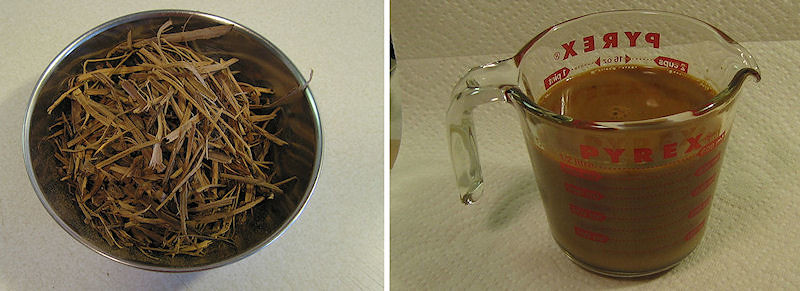
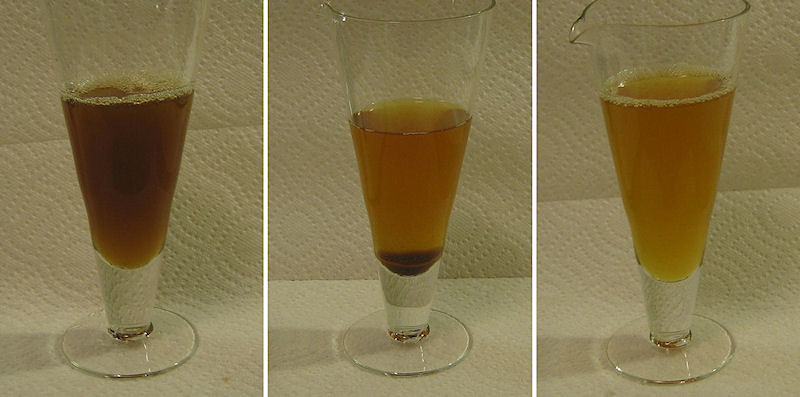
In the example shown, I started with 64g of shredded black caapi vine. 1g of fumaric acid was added to the vine. Other acidifying agents may be used, such as about 25ml of vinegar. (Some brews are made without addition of any acid.)

Add about 500ml water to the vine (enough to cover most of it), and gently boil for 30 minutes, covered. Pour off the resultant liquid through a strainer into a larger pot. Repeat this step three more times.

Boil the resultant brew (about one liter) and reduce to a volume of about 400ml. Cool to room temperature (if you want, add ice to speed cooling).

5169945868_4a92ebfbb4_b.jpg


Basification of the Brew

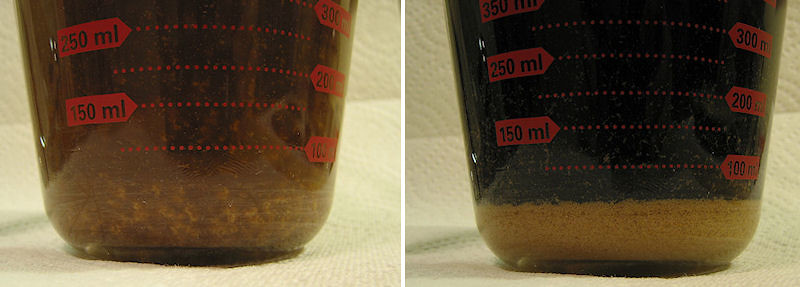
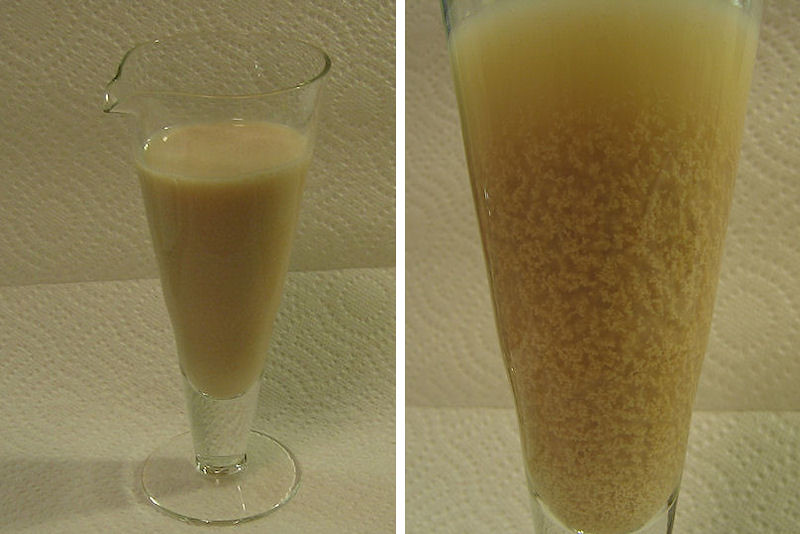
Dissolve 5g of NaOH in 50ml of water. Add this solution to the brew, and periodically stir for about 5 minutes. During this time, the alkaloids begin to aggregate and precipitate. Allow the alkaloids to settle and the solution to clarify.

5169352033_d9eb7cf680_b.jpg


Remove Soluble Impurities

Siphon off the clear dark-brown liquid and discard.

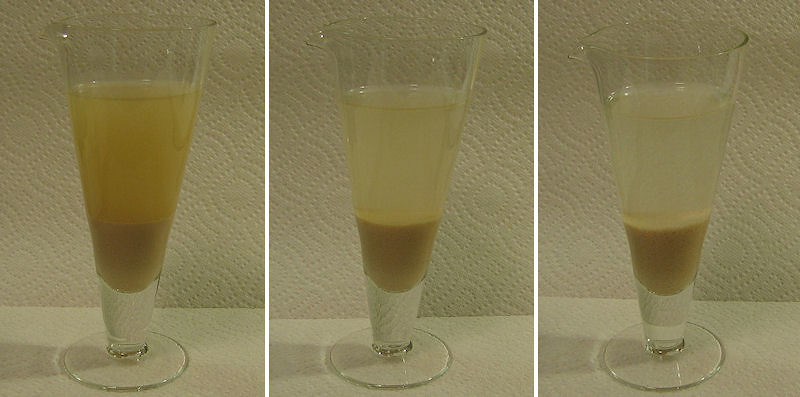
Add about 200ml water, stir, and allow precipitate to settle again. After 20-30 minutes, the precipitate will have settled, but the solution may still be somewhat cloudy. Rather than wait 12+ hours for everything to settle, siphon off the liquid and save it. Repeat this step two more times.

5169351901_be72471742_b.jpg


Acidify, Remove Insoluble Impurities

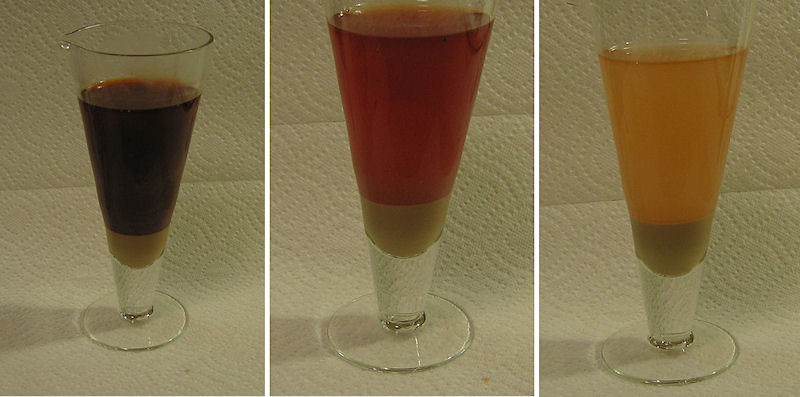
Add about 50ml vinegar to the precipitate. This will cause the freebase alkaloids to form water-soluble salts, leaving behind insoluble impurities. Dilute with about 150ml water.

Allow solution to settle. When the resultant yellow liquid is nearly crystal clear, remove and save it. Discard the brown sediment. This sediment is mostly bits of plant material.

5169953480_de2c8ecf52_b.jpg


Freebase the Alkaloid Salts

Add about 5g NaOH to 50ml water. While stirring the yellow alkaloid solution, slowly add NaOH solution. The freebase alkaloids will rapidly come out of solution. Add only enough NaOH to get the alkaloids to freebase – you’ll probably only need 20ml or so of the solution, depending on how much acid you used in the previous step.

5169352135_3d613f8fff_b.jpg


Remove Excess NaOH, Salts, Etc.

After most of the precipitate has settled, siphon off the cloudy liquid. Reserve this liquid for an overnight settling.

Add about 200ml water to the precipitate, stir, and allow to settle again. Remove and reserve liquid. Repeat this step one more time.

Before removing the liquid the third time, check its pH. It should be somewhere between 7 and 8. If the solution is still very alkaline, you haven’t removed enough NaOH and must do additional rinses. Repeat until pH is between 7 and 8.

A pH meter or pH test papers are highly recommended, but if you don’t have either, then do at least 4 rinses.

5169953594_01bf3cd062_b.jpg


Drying the Freebased Alkaloids

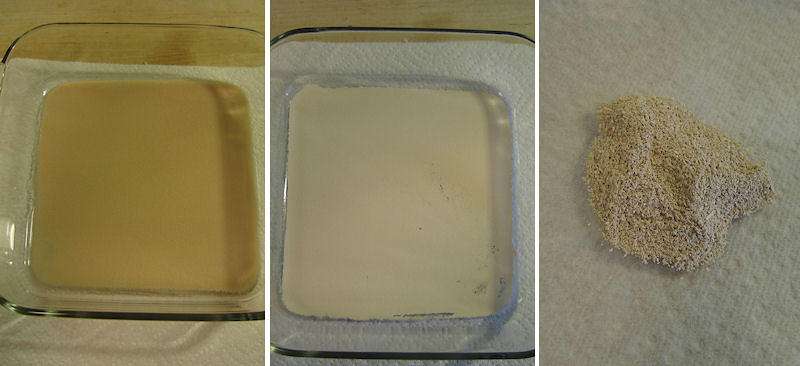
After removing as much water as possible from the freebased alkaloids, transfer the alkaloids to a baking dish or another suitable container with lots of surface area. Allow to dry – under a fan is best. When the alkaloids are dry, they will be noticeably lighter in color. Scrape up the dry alkaloids and store in a cool dark place.

5169953728_c7a9e2724c_b.jpg


Final Yield

Allow the “rinse” solutions that were collected and put aside to settle for 12 or more hours (in a refrigerator is good). You will be surprised by how much precipitate collects from what were only slightly cloudy solutions.

Siphon off the liquid and discard. Acidify the precipitate, allow to settle, etc. as described above.

From 64g of black caapi vine, the initial extraction yielded 1.068g alkaloids. The second extraction of the reserved liquids yielded another 0.258g. The total yield was 1.326g, or 2.07%
Is the final result known as free base?
 
Back
Top Bottom