• Members of the previous forum can retrieve their temporary password here, (login and check your PM).

Psilocybin extraction

Migrated topic.
yes

sonication is optional, but evap under reduced pressure helps resolve the product.
I guestimate psilocybin content of an anhydrous alcoholic extraction to be somewhere in the 40% area, the number is probably lower with EtOH containing water. The pictures from Crystals of The Gods is very misleading...once the product is separated from the alcohol, it is not crystalline at all.


I have yet to isolate psilocybin into pure crystals, it's very tricky. the molecule seems to bind water, proteins, and other biomolecules.
 
have u tried disolving it in something its soluble and adding something its not soluble that mixes with the first solvent ?
recently iv re-understood the meaning of purity via precip of a number of substances using this teq
 
yes

i've tried a number of different solvents, including dcm, xylene, acetone, and naptha.
not sure it will really matter.. the partial positive/partial negative character of psilocybin is a dead giveaway the molecule will bind some water molecules, even moisture in air. it would be very difficult to keep psilocybin in an anhydrous crystalline state.
 
Grind fungus to powder...

Place Powder into 1/2 pint Mason jar that is covered in Duck Tape to keep all light out...

Fill to top of jar(leave no air in jar) with ICE cold water that has been PH lowered to 2.0 with Food Grade Citric Acid or Ascorbic Acid(Vitamin C Tablets crushed)...Use 8 oz water per 3 1/2 Grams or less Powdered Fungus

Put lid on tight and shake well...put in dark in very cold refigerator for 24 hours(shake vigorously every few hours)..

Add 2 DECAF GREEN Tea Bags per 8 Oz liquid and let sit back in fridge for 1 Hour then filter liquid through Buchner (Vacum) funnel or Coffe Filters...

Eat 5 datura stramonium seeds...drink filtered liquid...enjoy!!!!

No Body Load..No Nausea!!!

Tea is the way to go...PH of 2.0 prevents oxidation and psilocin degradation and converts most psilocybin to psilocin...

IMHO this is wayyyy better than Alcohol extractions or eating fungi...
 
I was thinking also of ab and i found this article, its worth discussing
I couldn't upload article (An aqueous-organic extraction method for the isolation and identification of psilocin from hallucinogenic mushrooms) you can read full throught sci-hub.cc
Here are the pI, pKa1 = 1.3 (1st phosphate oxygen); pKa2 = 6.5 (2nd phosphate oxygen); pKa3 = 10.4 (tertiary amine) I.m thinking of a/b tek and asking maybe someone was trying it

Infundibulum said:
SWIM'd assume that doing a methanolic extract, evaporating it down and then washing the residue with DCM or chloroform would definitely remove some of the (lipid or otherwise) impurities.

Re to Burnt, the phosphate group is covalently bound to the psilocin (ester bond). This makes psilocybin a zwiterion that can form internal salts. Just like amino acids can do.

Now, since psilocybin is a zwiterion, it means that it can act both as a acid, a base, or an internal salt depending on the pH. The pH at which psilocybin is an internal salt (thus has no charge) is its the isoelectric point (called pI).

The above means that at a pH higher than the pI of psilocybin, psilocybin will have a negative charge and will be (at least in theory) form salts like sodium psilocybinate.

And at pH values lower than than pI value psilocybin will have a positive charge thus being able to form salts like, say psilocybin chloride.

So, it all depends on the pH and most importantly the pH inside the fungal material. Plus, can anyone find the pI of psilocybin? That might be of some help....
 

Attachments

polytrip said:
Would it be possible to fit active doses of psilocybin on blotterpaper of let's say, the size of a large stamp?

No. AFAIK, blotters can contain up to a miligram maybe slightly more. I'm not sure how potent is pure psilocybin but I'm assuming anything under 10mg won't even make you trip. Psilocybin pills could be a thing, though.

Our lord and savior Albert actually did that, and gave it to a shroom eater (don't quote me on that) and the shroom eater said it was indistinguashable from a mushroom experience.
 
Yeah, Hofmann gave synthetic psilocybin pills to Maria Sabina and she indeed said that the spirit of the mushroom was in the pills.


You could fit an active dose of psilocybin on a blotter - if it was a big piece 😉
 
Gelcap or tablet would be more sensible as it physically protects the active content (less exposure to moisture/oxygen/light/direct heat).

Also the common dose is 6-20 mg which is too much for a blotter unfortunately.

BTW I asked one researcher on why they administer psilocybin rather than psilocin. He said psilocybin is water soluble and more stable (does not degrade as readily and psilocin).

I am afraid the mushroom extract would be psilocin/psilocybin mix where the psilocin will degrade quickly due to presence of enzymes and air exposure. One would have to be very careful and cautious with the extraction.

I think the water content and presence of enzymes in the mushroom is a problem.

One person in my country does a study on psilocybin content in shrooms depending on how they were preserved (air dried, heat dehydrated, lyophilized).
 
I've probably mentioned in this thread already that a simple method has been suggested which exploits the good solubility of psilocybin in hot water and the phosphate group's ability to bind to calcium: precipitate the psilocybin from hot water using a calcium salt. Boiling will also degrade any unfavourable enzymes.

I tried this once although life happened before I got a chance to thoroughly investigate the result.

Powdered P. allenii ('cyanofriscosa') is so insanely potent that it's not worth the trouble of extracting 😉
 
downwardsfromzero said:
I've probably mentioned in this thread already that a simple method has been suggested which exploits the good solubility of psilocybin in hot water and the phosphate group's ability to bind to calcium: precipitate the psilocybin from hot water using a calcium salt. Boiling will also degrade any unfavourable enzymes.

I tried this once although life happened before I got a chance to thoroughly investigate the result.

Powdered P. allenii ('cyanofriscosa') is so insanely potent that it's not worth the trouble of extracting 😉

Any updates on the hunt for the Ca salt of psilocybin? Seems like it is worth pursuing further.

Here is how I see the situation (all this is speculation):

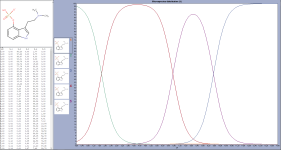
1) We would want psilocybin to have a -2 charge when adding Ca. This is because if it is at -1 charge, then only monocalcium is obtainable and it may remain soluble (otherwise precipitation of psilocybin should be simple). To get to the -2 charge we need a pH of 12 or above (see first image courtesy of Ulim).
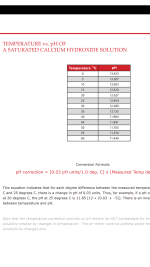
2) At very high pH there is the problem that insoluble Ca(OH)2 will form and precipitate instead/before our desired salt. Indeed, Ca(OH)2 becomes insoluble around pH 12 at room temperature (see second image). Process window is tiny and theoretical, not an ideal situation.
3) So the key here may be to find a window where Ca(OH)2 precipitation is not an issue, while at the same time having psilocybin in a -2 charge state. At room temperature this seems difficult, but fortunately Ca(OH)2 solubility increases with lower temps. Near freezing it remains soluble even at pH 13 (second image).

It looks like there may be a process window to precipitate the salt we want if we control the pH and temperature. Procedure would be something like this:

1) Perform basic hot water extract on mushrooms (pH ~ 8 ). Suggesting to keep extract slightly basic to avoid conversion into psilocin through enzymatic action, which could be an issue for cubensis based on the previous posts in this thread.
2) Bring temperature down to near freezing (O C). Allow to settle and filter.
3) SLOWLY and while keeping extract near freezing add small amounts of Ca(OH)2 keep track of pH and what precipitates. Once pH gets to ~13.5 we are done as Ca(OH)2 will no longer dissolve and become an unwanted precipitate itself. We are looking/hoping for a window where the phosphate psilocybin dicalcium salt precipitates first before Ca(OH)2 which is why we lowered the temperature.
4) Collect precipitate(s) and water wash until water comes out neutral. Note that different precipitates may form at different pH. Precipitates (if they form) should contain all kinds of biological phosphate salts, hopefully psilocybin is part of them, and it may be last one to crash out since other phosphate salts seem to crash out readily (see for example the beet sugar refinement process).

In a twist, Mg can also be added. It seems that Ca/Mg/Phosphate salts are very insoluble (see first attachment where apatites are discussed). CaCl2 may also be helpful.

Any thoughts? Obvious reason(s) this will not work? Has this already been tried without success? Is something like this already known/used? If no feedback I plan to try this later.

 

Attachments

  • 43198_6cf926d1-a3c3-4914-83fd-41c2c78c1b51_iuhzg.PNG
    43198_6cf926d1-a3c3-4914-83fd-41c2c78c1b51_iuhzg.PNG
    125 KB · Views: 1
  • Screenshot_20180225-113625.png
    Screenshot_20180225-113625.png
    261.1 KB · Views: 1
  • rey2011.pdf
    rey2011.pdf
    1.3 MB · Views: 0
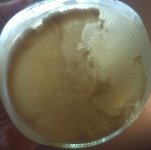
Update on the Calcium psilocybinante: Different gunk precipitates as the pH is raised with small lime additions. Seems like a continuum of gunk falling out. Gunk is probably mostly made of organic calcium salts as in the beet sugar industry. Even at the highest pH near freezing still get gunk. No signs of crystals. Below is a picture of the gunk at the highest pH I could get. One could try to collect and wash it with fresh water. I may try that later, on the highest pH precipitate (pictured).
 

Attachments

  • IMG_20180311_204254.jpg
    IMG_20180311_204254.jpg
    169.4 KB · Views: 0
Great that you've tried this. I wouldn't expect crystals from a crude preparation. My experiment consisted of passing a mushroom tea through a layer of calcium hydroxide on a filter disc.
 
Great work! I would try different solvents (namely chloroform and benzene, apart from acetone - I plan to try this since both solvents can be made: chloroform by reacting acetone with sodium hypochlorite and benzene by decarboxylation of sodium benzoate - though this is beyond reach of basic kitchen extractor, it is still quite doable with a basic lab equipment).

Some stuff may be still too concentrated in the extract, like urea, hence the multi-solvent washing.

Reading several papers on psilocin/psilocybin extraction, the only one where they got crystals used paper chromatography prior to crystallization.

It seems there is just too much junk around the actives.

The good news is the extracted material should be already extremely potent.
 
Ok, got a new proposal.

1) Extract in an ammonia solution. This should keep most of the psilocybin stable.

2) Filter well and reduce to a manageable volume.

3) Add 4x the volume of cold acetone. Put in freezer A LOT of gunk should precipitate out, based on the ongoing results from the Vitamin P thread (Vitamin c Psilocin extraction).

4) Decant and dry after precipitation is done. Some of the dry residue should be ammonium psilocybinate I think. Excess base should evaporate clean.

5) Perform dry acetone clean(s) on the residue.

6) Filter dry acetone solution and collect filtrate. Some % of it will be ammonium psilocybinate. A lot of mushroom material will be gone but possibly not all.

7) Redissolve in minimal water. Add CaCl2 until near saturation. Do salts precipitate? Are they active? Note that, among other things, NH4Cl may fall out (used in the food industry). Cold may help, and a dense CaCl2 solution should not freeze in a home freezer. We may want a slightly basic pH (~8 ) to make sure psilocybin has a negative charge, but can't be too large or Ca(OH)2 may precipitate. If this is an issue maybe NaCl could be used to try to saturate and crash the psilocybinate (guess this would be a basic manske?).

I think there is a small chance this may work. Worth a try sometime. At step 6 there may already me a reasonable product. The key may step 3) which turns out to be a known way to precipitate proteins and other junk. I've attached some notes on this technique (here we are letting gunk precipitate slowly in the freezer instead of centrifugating it out). Early tests indicate that in mushroom teas, the first co-solvent precipitation removes a significant amount of junk and subsequent repeats do not.

Maybe worth a try. Anyone see any issues/improvements?
 

Attachments

Back
Top Bottom