Loveall said:
Infundibulum said:
Have done the calcium bit, does not work
I need to get back to my notes and provide more details.
Many thanks for any info you can find Infundibulum. I'm a fan of your work here as I read back through the years


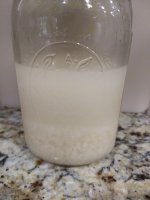
A few questions if you have the info: Did something precipitate (currently we are just getting goop)? Any cleanup before attempting the precipitation? What was the Ca source? What about the Ca concentration? pH? Temperature? And again, thank you.
Thanks

So the details are:
1. Got 5 grams of
P.semilanceatas , which have high amounts of psilocybin and traces of psilocin.
2. extracted them with boiling water, 3 x at room temperature.
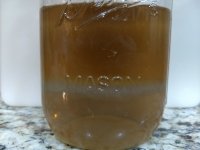
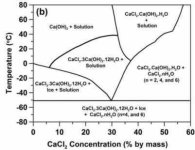
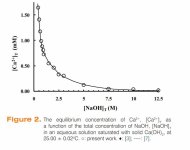
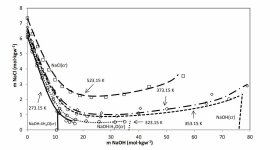
3. all aqueous extracts were combined and additional water saturated with calcium hydroxide was added to pH of 12.
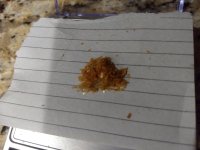
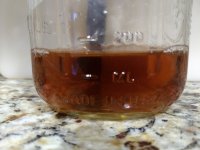
4. Dark precipitates formed which were left to settle. Supernatant was decanted, dark residue was dried.
5. More calcium hydroxide was added to the decanted supernatant (did not measure pH) and more dark precipitates which were collected as per step #4.
6. Bioassays:
-mushroom residue was mildly active, which was expected. Was not aiming on an exhaustive extraction anyway.
-dark residues were made into a lemon tea and ingested. Total lack of activity.
-Supernatant was newtralised , then drunk. ACtive, but not as active as one would expect frm the equivalent of 5 grams of semilanceatas (1% psilocybin)
My verdict is that the calcium precipitates is something else maybe some sort of saccharide, proteins or combination of each. On its own, the dark precipitate does not taste of anything. Any actives remained in the supernatant and my guess is that their ativity was diminished due to prolonged exposure to high pH. There is a study somewhere (maybe even I put it in this thread in the past?) that has to do with isoelectric focussing of psilocybin claiming something along the lines that psilocybin is not as stable at pH>12.
I would be more than happy to see those results repeated by others!