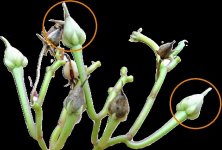
[Mod edit: merged from other thread into this one, the original post was the one below by the Ugx alt account]
this was intense and the lingering wasn't gone until around 49 hours later.
4-7 seeds, spread them onto some parchment-paper.
fold it to get four Iayers of paper between the seeds and hammer.
put it on something hard and crush them up well.
add a shot or two of water to the powder.
use a vessel with minimal trapped air and freeze.
thaw and filter, squeezing as much liquid from the pulp as possible.
raise ph to 11 with K2CO3, swirl every now and then about two hours.
this was intense and the lingering wasn't gone until around 49 hours later.
4-7 seeds, spread them onto some parchment-paper.
fold it to get four Iayers of paper between the seeds and hammer.
put it on something hard and crush them up well.
add a shot or two of water to the powder.
use a vessel with minimal trapped air and freeze.
thaw and filter, squeezing as much liquid from the pulp as possible.
raise ph to 11 with K2CO3, swirl every now and then about two hours.
Last edited by a moderator: