It seems unlikely that this 'LSI' is pharmacologically active. He needs to isolate a pure compound and perform professional molecular evaluation in order to prove its existence.
Not sure he's actually going to do that...

It seems unlikely that this 'LSI' is pharmacologically active. He needs to isolate a pure compound and perform professional molecular evaluation in order to prove its existence.
It doesn’t seem like the theory soma=ergot has much support behind it. I mean I don’t believe it personally.

Good find - I've added it to the science paper section:Fwiw I found this 2026 paper during my investigations of the Greek "kykeon" drink:
So the kykeon was just LSA?

 pmc.ncbi.nlm.nih.gov

This fact complicates the proposed synthesis even more complicated in my view.Btw LSA contains an amide group, not an amine. I've found a few old papers on amide/aldehyde adducts but nothing on LSA specifically.
This fact complicates the proposed synthesis even more complicated in my view.
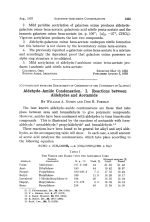
Very interesting indeed. I was not aware of amide - aldehyde condensations altough I had been suspicious it might be possible. This mechanism make sense in the context of morning glory seeds which contains lysergic acid amide. There is the question of water. This is probably a reaction that is affected by equilibrium of the reactants, is that correct? Having a lot of water in the solution probably prevents the formation of the desired condensed product. Also there is the question of the pharmacological profile of these speculative compounds. If this has already beed discussed I apologize.I copied this straight from the journal here. The user downwardsfromzero wrote a lot about this too. I've read all his posts on the topic.
This mechanism make sense in the context of morning glory seeds which contains lysergic acid amide. There is the question of water. This is probably a reaction that is affected by equilibrium of the reactants, is that correct? Having a lot of water in the solution...
Yes, this was a typo mistake. I meant the amide group.Btw LSA contains an amide group, not an amine. I've found a few old papers on amide/aldehyde adducts but nothing on LSA specifically.
Can you link this post from mister DFZ?Yes, we must seriously consider if the rxn is occurring in-vivo... which makes sense when you consider that 2 things which Kash always mentions (peppermint, lemon juice) contain aldehyde dehydrogenase inhibitors (ALDHIs).
Downwardsfromzero also wrote about this possibility (of an in-vivo rxn) in his brandy experiment post.
EDIT: It seems I was aware of it before but had since forgoten about it or have never been creative enough to think about them in a context like this. Fascinating!
Menthol or menthone, or both...have been shown to have the following biological activities: (i) an inhibitory action on liver and kidney aldehyde dehydrogenase activity
Pulegone is the major constituent of pennyroyal oil... Cytochrome P450-mediated oxidation of pulegone generates menthofuran... Herein, we describe the identification of several proteins that are the likely targets of menthofuran-derived reactive metabolites... ...
ALDH2 activity decreased by 88%
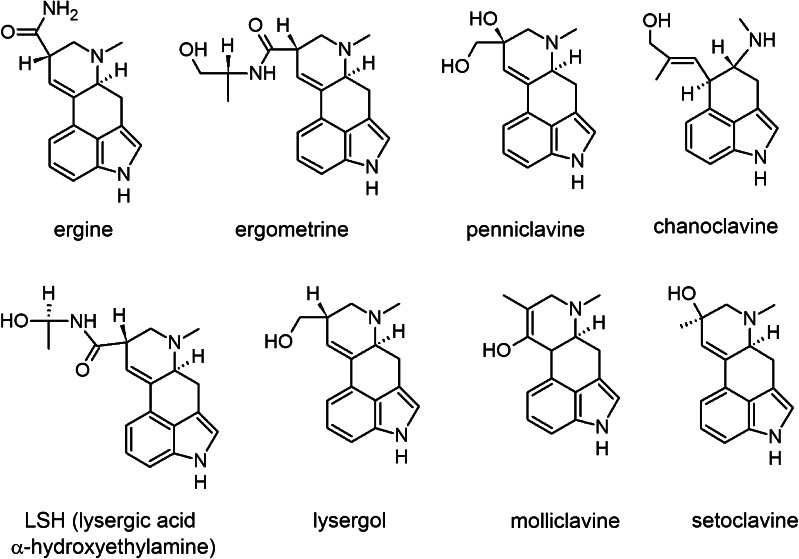
LSH doesn't hold any ground, either. Iso-LSA seems to be the psychoactive leader found in morning glory seeds
During preliminary experiments, six ergot alkaloids: ergine, ergometrine, LSH, penniclavine, chanoclavine, and lysergol or one of its isobars (setoclavine or elymoclavine), together with their diastereoisomers, were identified.
... The reason for such phenomenon may be that microwave energy delivered to the system induces rearrangement of labile LSH to LSA