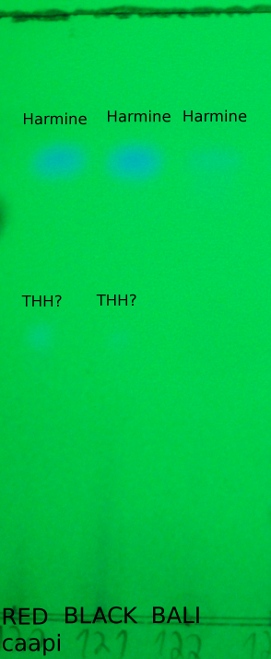
This thread will grow as more analysis is gathered.
Related Threads:
Harmala and other less known B carbolines - Ongoing research thread with pharmacology, plant sources, chemical and physical data, analysis info, etc on different beta carbolines
Why talking about different ayahuasca varieties (yellow/black/cielo/boa/tukunaka etc etc) is almost meaningless. Post with some ideas on the classification of ayahuasca varieties.
Poorly understood family of Ayahuasca vines (thread with plenty of info on different ayahuasca varieties, ayahuasca "colors" and unknown ayahuasca plants of the Banisteriopsis, Alicia and Tetrapterys genus, possible vendor misidentifications, etc)
Conversion of Harmine->Harmaline->THH by simple boiling (and storage?)
Literature:
Schwarz et al 2003 Activities of extract and constituents of Banisteriopsis caapi relevant to parkinsonism
Kawanishi et al 1982 Shihunine and Dihydroshihunine From Banisteriopsis caapi
Callaway 2005 Various alkaloid profiles in decoctions of Banisteriopsis caapi
Mckenna et al 1984. Monoamine oxidase inhibitors in South American hallucinogenic plants: Tryptamine and β-carboline constituents of Ayahuasca
Hashimoto & Hashimoto 1976 New alkaloids from Banisteriopsis caapi
Samoylenko et al 2010. Banisteriopsis caapi, a unique combination of MAO inhibitory and antioxidative constituents for the activities relevant to neurodegenerative disorders and Parkinson's disease
Hashimoto & Kawanishi 1975 New organic bases from amazonian Banisteriopsis caapi.
Chemical profile described so far in literature:
Harmine (Mean: 4.79 mg/g) (Santos et al 2020)
Harmaline (Mean: 0.451 mg/g) (Santos et al 2020)
THH (Mean: 2.18 mg/g) (Santos et al 2020)
Banistenoside A
Banistenoside B
Shihunine
Dihydroshihunine
Harmic acid methylester
Harmalinic acid
Harmic amide
Acetyl norharmine
Ketotetrahydronorharmine
Tetrahydronorharmine
β-d-fructofuranosyl-(2 → 5)-fructopyranose
Nexus Analysis:
(newer analysis from 2022-2024) Thanks to Kykeon Analytics
LC-MS
#5 Banisteriopsis muricata VINE (Peru - Red)
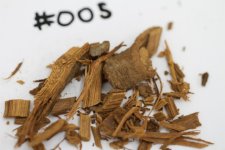
Harmine 0.094%
Tetrahydroharmine 0.0031%
#6 Banisteriopsis caapi VINE (Brazil - Yellow)
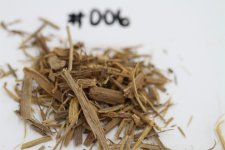
Harmine 0.06%
Tetrahydroharmine 0.0025%
#9 Banisteriopsis caapi VINE (Peru - Trueno)
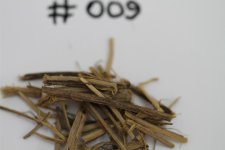
Traces harmine
#63 Banisteriopsis caapi VINE (Yellow)
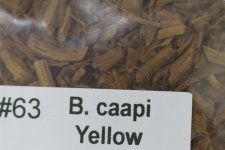
Harmine 0.22%
Tetrahydroharmine 0.024%
Harmaline traces
#64 Banisteriopsis caapi VINE (Red)
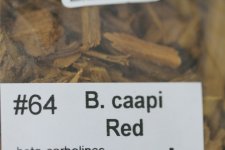
Harmine 0.48%
Tetrahydroharmine 0.056%
Harmaline traces
#65 Banisteriopsis muricata VINE
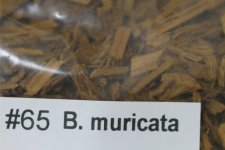
Harmine 0.2%
Tetrahydroharmine 0.05%
Harmaline traces
#66 Banisteriopsis spp. ? LEAF
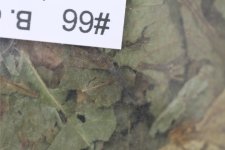
Harmine 0.09%
Tetrahydroharmine 0.03%
Harmaline traces
#68 Banisteriopsis caapi (Brazil - Tucunaca)
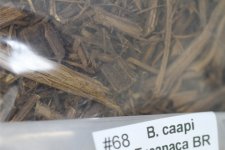
Harmine 0.007%
#69 Banisteriopsis caapi VINE (Ecuador)
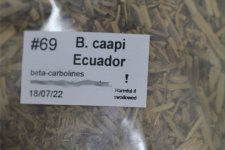
Harmine 0.3%
Tetrahydroharmine 0.12%
Harmaline traces
#70 Banisteriopsis caapi VINE (Peru - Huitoto)
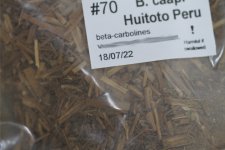
Harmine 0.19%
Tetrahydroharmine 0.13%
Harmaline Traces
#71 Banisteriopsis caapi VINE (Peru - Red Napo)
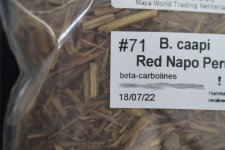
Harmine 0.21%
Tetrahydroharmine 0.06%
Harmaline traces
#72 Banisteriopsis caapi VINE (Peru - Red vine)
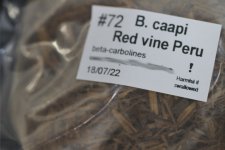
Harmine 0.36%
Tetrahydroharmine 0.05%
Harmaline traces
#73 Banisteriopsis caapi VINE (Peru - Black)
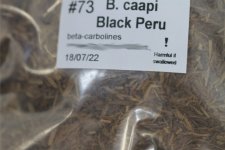
Harmine 0.25%
Tetrahydroharmine 0.05%
Harmaline traces
#74 Banisteriopsis caapi VINE (Peru - Shipibo)
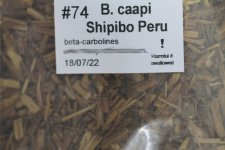
Harmine 0.34%
Tetrahydroharmine 0.23%
Harmaline traces
#75 Banisteriopsis caapi VINE (Brazil - Ourinho)
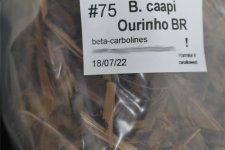
Harmine 0.12%
Tetrahydroharmine 0.01%
#76 Banisteriopsis caapi VINE (Peru - Cielo)
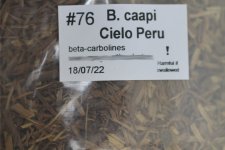
Harmine 0.49%
Tetrahydroharmine 0.08%
Harmaline traces
#77 Banisteriopsis caapi VINE (Brazil - Caupuri)
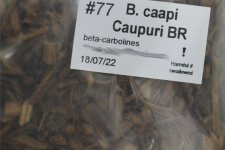
Harmine 0.14%
Tetrahydroharmine 0.14%
#78 Banisteriopsis caapi VINE (Peru - White)
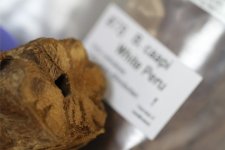
Harmine 0.11%
Tetrahydroharmine 0.009%
#79 Banisteriopsis caapi VINE (Yellow)
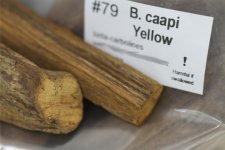
Harmine 0.23%
Tetrahydroharmine 0.02%
Harmaline traces
#80 Banisteriopsis caapi VINE (Colombia - Tigre)
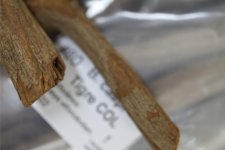
Harmine 0.065%
Tetrahydroharmine 0.04%
Harmaline traces
#81 Banisteriopsis caapi VINE (Peru - Cielo)
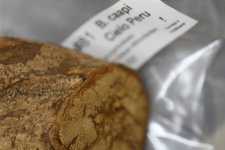
Harmine 0.13%
Tetrahydroharmine 0.02%
Harmaline traces
#82 Banisteriopsis caapi LEAF (Peru - Yellow)
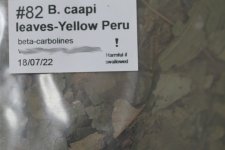
Harmine 0.03%
Tetrahydroharmine 0.02%
#168 Banisteriopsis caapi VINE (Colombia - Pilde)
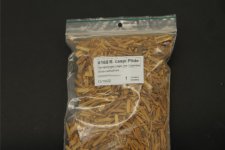
Harmine 0.03%
Tetrahydroharmine 0.005%
Harmaline traces
#169 Banisteriopsis caapi VINE (Ecuador - Mono)
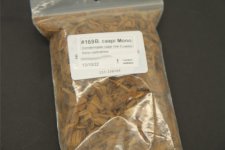
Harmine 0.05%
Tetrahydroharmine 0.01%
Harmaline traces
#170 Banisteriopsis muricata VINE (Ecuador)
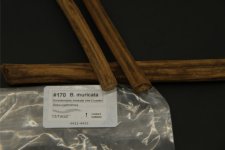
Harmine 0.24%
Tetrahydroharmine 0.18%
Harmaline traces
#171 - Banisteriopsis muricata LEAF (Ecuador)
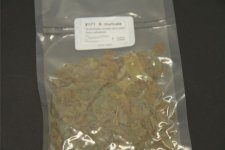
Harmine 0.02%
Tetrahydroharmine 0.01%
(older analysis from 2012-2020)
GC-MS
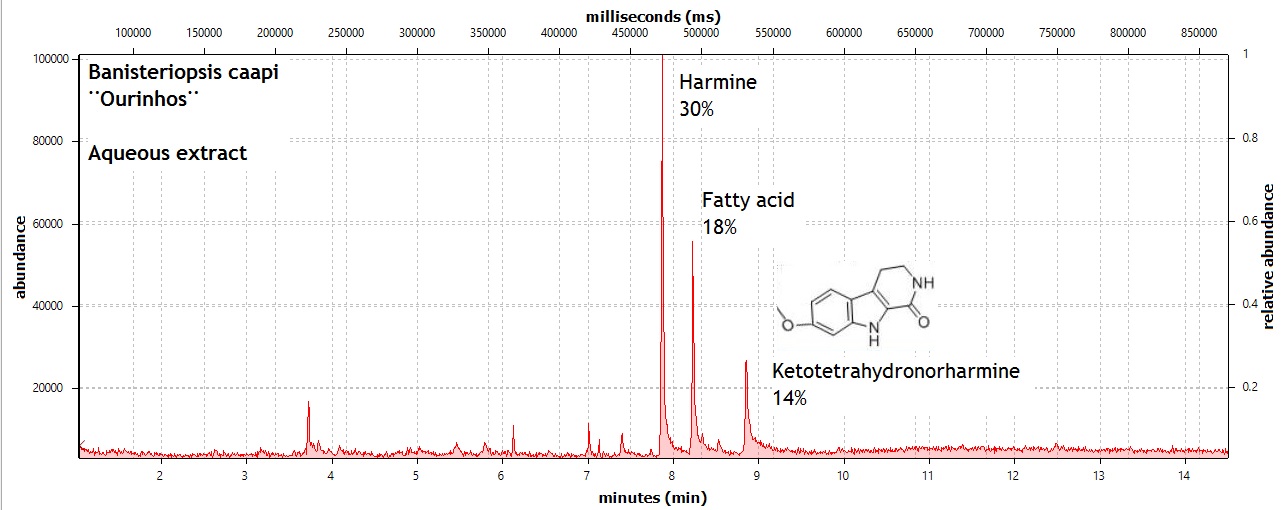
Other minor substances labelled in graphs still unidentified, work will be done in the future. Notice this is NOT quantitative analysis, just approx relative ratio of alkaloids in each plant, The total alkaloid yield has not yet been measured for most of these plants.
Yellow caapi (from k1w1b04ncaya)

Ourinhos caapi (From IC4ROS-DN4)
Red Ayahuasca (Banisteriopsis muricata by k1w1b04ncaya)
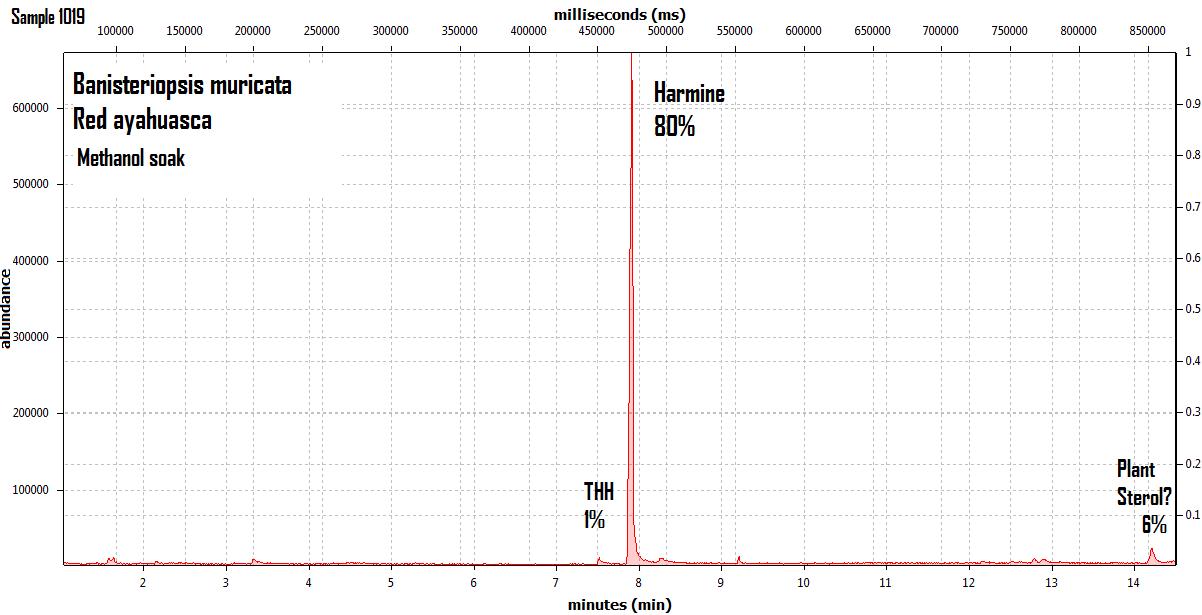
Red caapi (from M4Y4)
Methanol soak

Black caapi
NOTE: Some vendors have been selling what we identified as Alicia anisopetala as Black caapi/black ayahuasca. Note that A. anisopetala does NOT have harmala alkaloids as per my tests, pharmacology/toxicity is unknown. Please check this thread for more info.
(Tests of `black caapi` below are from M4Y4) (lets call this Black caapi #1)
Methanol soak
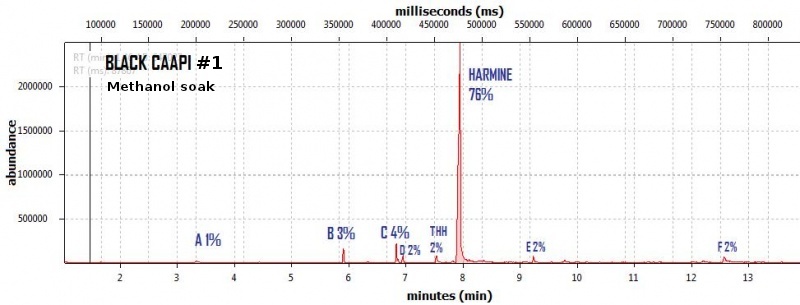
Black caapi #1
A/B extract from same plant material as black #1 above. Yield 0.5% white powder.
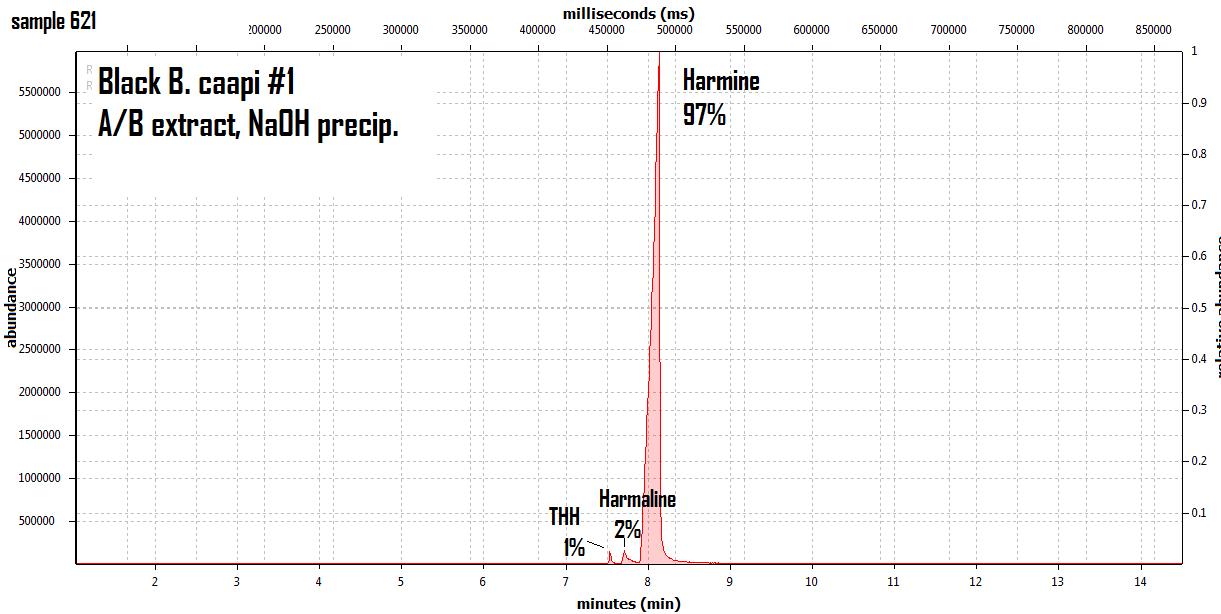
Black caapi #2
A/B extract, precipitation with NaOH. Yield 2.5%. From v3g3t4l1st4 botanicals.
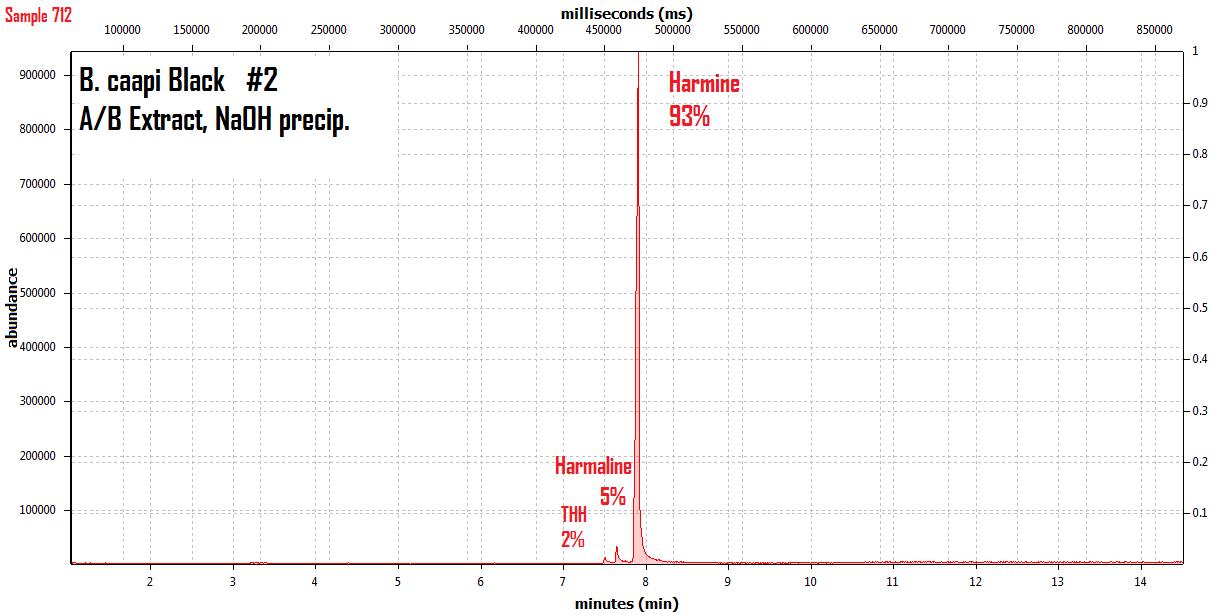
White caapi #1
Methanol soak (from MH---UK in nov 2011)
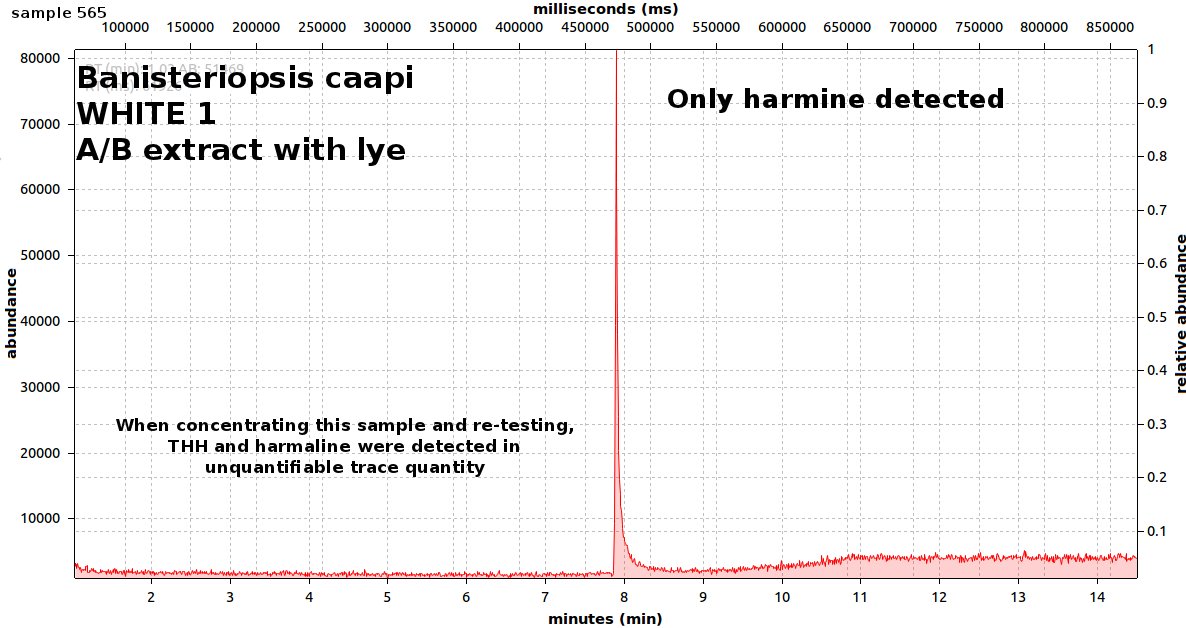
A/B extract, precipitation with NaOH.
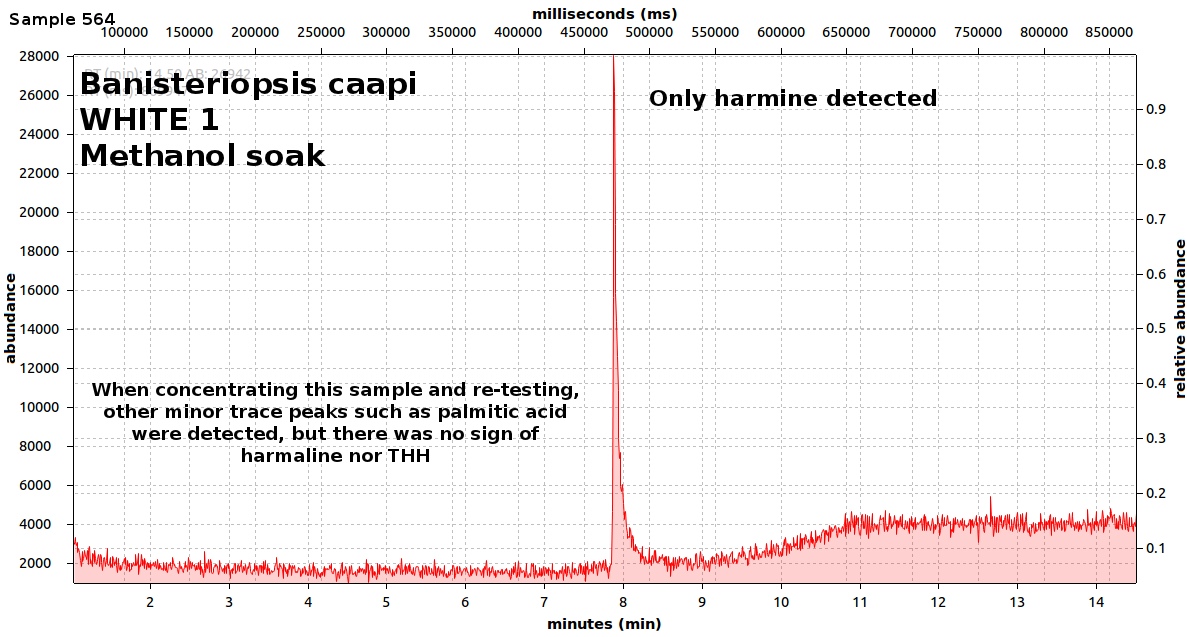
White caapi #1
A/B extract, precipitation with NaOH (from MH---UK in nov 2011)
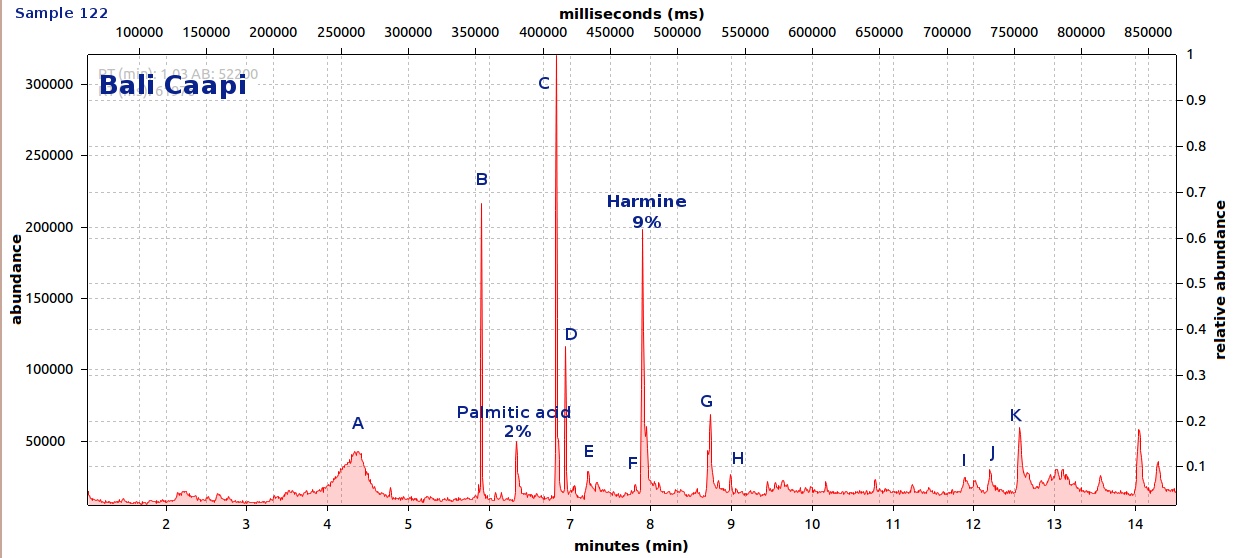
Bali caapi (from M4Y4)
Methanol soak
More caapi analysis to come in the future
As always, im attaching the .MS file which you can open with openchrom to see the mass spectra (feel free to pm me if you want to learn how, its easy). Relative quantification here is approx, and subject to revision, bear with me im just starting with analysis.
Here are the GC-MS details. In the future LC-MS analysis will also be done and info added below
Related Threads:
Harmala and other less known B carbolines - Ongoing research thread with pharmacology, plant sources, chemical and physical data, analysis info, etc on different beta carbolines
Why talking about different ayahuasca varieties (yellow/black/cielo/boa/tukunaka etc etc) is almost meaningless. Post with some ideas on the classification of ayahuasca varieties.
Poorly understood family of Ayahuasca vines (thread with plenty of info on different ayahuasca varieties, ayahuasca "colors" and unknown ayahuasca plants of the Banisteriopsis, Alicia and Tetrapterys genus, possible vendor misidentifications, etc)
Conversion of Harmine->Harmaline->THH by simple boiling (and storage?)
Literature:
Schwarz et al 2003 Activities of extract and constituents of Banisteriopsis caapi relevant to parkinsonism
Kawanishi et al 1982 Shihunine and Dihydroshihunine From Banisteriopsis caapi
Callaway 2005 Various alkaloid profiles in decoctions of Banisteriopsis caapi
Mckenna et al 1984. Monoamine oxidase inhibitors in South American hallucinogenic plants: Tryptamine and β-carboline constituents of Ayahuasca
Hashimoto & Hashimoto 1976 New alkaloids from Banisteriopsis caapi
Samoylenko et al 2010. Banisteriopsis caapi, a unique combination of MAO inhibitory and antioxidative constituents for the activities relevant to neurodegenerative disorders and Parkinson's disease
Hashimoto & Kawanishi 1975 New organic bases from amazonian Banisteriopsis caapi.
Chemical profile described so far in literature:
Harmine (Mean: 4.79 mg/g) (Santos et al 2020)
Harmaline (Mean: 0.451 mg/g) (Santos et al 2020)
THH (Mean: 2.18 mg/g) (Santos et al 2020)
Banistenoside A
Banistenoside B
Shihunine
Dihydroshihunine
Harmic acid methylester
Harmalinic acid
Harmic amide
Acetyl norharmine
Ketotetrahydronorharmine
Tetrahydronorharmine
β-d-fructofuranosyl-(2 → 5)-fructopyranose
Nexus Analysis:
(newer analysis from 2022-2024) Thanks to Kykeon Analytics
LC-MS
#5 Banisteriopsis muricata VINE (Peru - Red)
Harmine 0.094%
Tetrahydroharmine 0.0031%
#6 Banisteriopsis caapi VINE (Brazil - Yellow)
Harmine 0.06%
Tetrahydroharmine 0.0025%
#9 Banisteriopsis caapi VINE (Peru - Trueno)
Traces harmine
#63 Banisteriopsis caapi VINE (Yellow)
Harmine 0.22%
Tetrahydroharmine 0.024%
Harmaline traces
#64 Banisteriopsis caapi VINE (Red)
Harmine 0.48%
Tetrahydroharmine 0.056%
Harmaline traces
#65 Banisteriopsis muricata VINE
Harmine 0.2%
Tetrahydroharmine 0.05%
Harmaline traces
#66 Banisteriopsis spp. ? LEAF
Harmine 0.09%
Tetrahydroharmine 0.03%
Harmaline traces
#68 Banisteriopsis caapi (Brazil - Tucunaca)
Harmine 0.007%
#69 Banisteriopsis caapi VINE (Ecuador)
Harmine 0.3%
Tetrahydroharmine 0.12%
Harmaline traces
#70 Banisteriopsis caapi VINE (Peru - Huitoto)
Harmine 0.19%
Tetrahydroharmine 0.13%
Harmaline Traces
#71 Banisteriopsis caapi VINE (Peru - Red Napo)
Harmine 0.21%
Tetrahydroharmine 0.06%
Harmaline traces
#72 Banisteriopsis caapi VINE (Peru - Red vine)
Harmine 0.36%
Tetrahydroharmine 0.05%
Harmaline traces
#73 Banisteriopsis caapi VINE (Peru - Black)
Harmine 0.25%
Tetrahydroharmine 0.05%
Harmaline traces
#74 Banisteriopsis caapi VINE (Peru - Shipibo)
Harmine 0.34%
Tetrahydroharmine 0.23%
Harmaline traces
#75 Banisteriopsis caapi VINE (Brazil - Ourinho)
Harmine 0.12%
Tetrahydroharmine 0.01%
#76 Banisteriopsis caapi VINE (Peru - Cielo)
Harmine 0.49%
Tetrahydroharmine 0.08%
Harmaline traces
#77 Banisteriopsis caapi VINE (Brazil - Caupuri)
Harmine 0.14%
Tetrahydroharmine 0.14%
#78 Banisteriopsis caapi VINE (Peru - White)
Harmine 0.11%
Tetrahydroharmine 0.009%
#79 Banisteriopsis caapi VINE (Yellow)
Harmine 0.23%
Tetrahydroharmine 0.02%
Harmaline traces
#80 Banisteriopsis caapi VINE (Colombia - Tigre)
Harmine 0.065%
Tetrahydroharmine 0.04%
Harmaline traces
#81 Banisteriopsis caapi VINE (Peru - Cielo)
Harmine 0.13%
Tetrahydroharmine 0.02%
Harmaline traces
#82 Banisteriopsis caapi LEAF (Peru - Yellow)
Harmine 0.03%
Tetrahydroharmine 0.02%
#168 Banisteriopsis caapi VINE (Colombia - Pilde)
Harmine 0.03%
Tetrahydroharmine 0.005%
Harmaline traces
#169 Banisteriopsis caapi VINE (Ecuador - Mono)
Harmine 0.05%
Tetrahydroharmine 0.01%
Harmaline traces
#170 Banisteriopsis muricata VINE (Ecuador)
Harmine 0.24%
Tetrahydroharmine 0.18%
Harmaline traces
#171 - Banisteriopsis muricata LEAF (Ecuador)
Harmine 0.02%
Tetrahydroharmine 0.01%
(older analysis from 2012-2020)
GC-MS
Other minor substances labelled in graphs still unidentified, work will be done in the future. Notice this is NOT quantitative analysis, just approx relative ratio of alkaloids in each plant, The total alkaloid yield has not yet been measured for most of these plants.
Yellow caapi (from k1w1b04ncaya)
Ourinhos caapi (From IC4ROS-DN4)
Red Ayahuasca (Banisteriopsis muricata by k1w1b04ncaya)
Red caapi (from M4Y4)
Methanol soak
Black caapi
NOTE: Some vendors have been selling what we identified as Alicia anisopetala as Black caapi/black ayahuasca. Note that A. anisopetala does NOT have harmala alkaloids as per my tests, pharmacology/toxicity is unknown. Please check this thread for more info.
(Tests of `black caapi` below are from M4Y4) (lets call this Black caapi #1)
Methanol soak
Black caapi #1
A/B extract from same plant material as black #1 above. Yield 0.5% white powder.
Black caapi #2
A/B extract, precipitation with NaOH. Yield 2.5%. From v3g3t4l1st4 botanicals.
White caapi #1
Methanol soak (from MH---UK in nov 2011)
A/B extract, precipitation with NaOH.
White caapi #1
A/B extract, precipitation with NaOH (from MH---UK in nov 2011)
Bali caapi (from M4Y4)
Methanol soak
More caapi analysis to come in the future
As always, im attaching the .MS file which you can open with openchrom to see the mass spectra (feel free to pm me if you want to learn how, its easy). Relative quantification here is approx, and subject to revision, bear with me im just starting with analysis.
Here are the GC-MS details. In the future LC-MS analysis will also be done and info added below
GC-MS analysis was performed in an Agilent 5890 series II gas chromatograph coupled to an 5971A quadrupole mass spectrometer detector (Agilent). The gas chromatograph was fitted with an 6890 auto sampler injector. Samples were injected in split mode into a 12m × 0.2mm i.d., 0.33 µm film thickness 5% phenylmethylsilicone column (ULTRA-2, Agilent Technologies). The oven temperature was programmed at 90ºC during 2min and increased 20ºC/min to 300ºC. Finally was maintained at 300ºC over 4min with a total run time of 14.50min. Insert liners packed with silanized glasswool were used. The injector and the interface were operated at 280 ◦C. Helium was used as carrier gas at a flow rate of 0.48ml/min. The mass spectrometer was operated in electron impact ionization mode at 70 eV
Attachments
Last edited: