• Members of the previous forum can retrieve their temporary password here, (login and check your PM).

Research The nexian phalaris breeding programme

Research done by (or for) the DMT-Nexus community
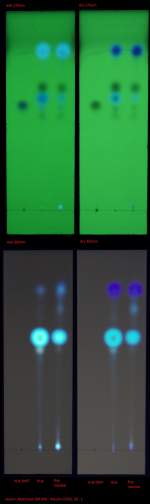
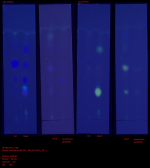
Today marks a notable milestone as we unveil the TLC results of the Tanit accession, a subject of considerable attention due to @Sidisheikh.mehriz's rigorous bioassay reports.

The Tanit sample is juxtaposed with samples from the U accession, a group we are diligently scrutinizing for promising specimens, given their recognized high yield.

Our findings validate our hypothesis of the Tanit accession being 5-MeO-DMT dominant. The distinct spot observed on the TLC plates serves as a benchmark for the yield requisite for personal use. Particularly noteworthy is the remarkably clean profile exhibited by the Tanit accession, as evidenced in the accompanying image.

View attachment 98104

It was surprising to find that the bioassay-validated Tanit accession is yielding considerably lower compared to several other specimens already identified for breeding. This disparity may arise from the relatively juvenile state of most other tested specimens, but it also suggests the potential for achieving significantly higher yields than those currently deemed necessary for extraction purposes.

At this point, it's crucial to discourage any attempts at bioassays with unknown accessions. Phalaris presents significant risks, especially given the high pharmacological potency of 5-MeO-DMT. Ingesting Phalaris without proper testing and expertise can lead to severe overdoses of various tryptamines and tyramines, potentially resulting in medical emergencies.

That being said, with a clean profile and safety validated through bioassays, we're thrilled to announce our readiness to distribute 5-MeO-DMT dominant Tanit seeds for the first time.

However, it's important to recognize that variations in environmental conditions may affect yield, and we have yet to assess the variability among individual Tanit plants. Understanding the precise environmental factors conducive to high yield will be the focus of our upcoming research endeavors, though this process is expected to take some time.

Initially, distribution will be restricted to esteemed members of the Nexus due to safety concerns. Clones will become available to the broader community without restrictions at a later date.
I've long waited for this moment thank you so much! 😁. Finally my guess was confirmed about Tanit's clean 5-meo-dmt profile. Yes I think this strain is ready for distribution as it proved to breed true from seeds. That U35 is a real beast! Very promising and rich collection of accessions you got there 😉

I second grasshoppers concern with bioassaying wild strains. Even if it's not toxic the chance of overdosing is still high without prior extraction and bioassay of said extract to screen alkaloids profile and yield before attempting an Ayahuasca. TLC is also a great plus to further consolidate the bioassay.
 
Addressing the variability in retardation presents an opportunity for enhancement. Exploring improved defatting methods holds promise in this regard.

However, a critical consideration arises: which solvents are optimal for selectively removing more polar constituents such as resins while preserving the integrity of alkaloid salts within the sample?

The utility of TLC is undeniable, offering rapid phenotyping at a super cost-efficient scale. Yet, for in-depth analyses of specific specimens, transitioning to HPLC appears prudent to unlock richer data insights.

Thus far, our analyses have predominantly focused on P. aquatica and P. arundinacea, yet we have not observed any 5-HO-DMT presence. This suggests that this compound may not be particularly abundant in these two species.
Regarding 5-OH-DMT, that would perhaps be more of an issue if working with, e.g., phragmites, from what I gather. Its presence in certain poacaeous plants is significant enough such that its inclusion in your TLC screening program didn't raise a single question for me with respect to its relevance to phalaris spp. in general. It's definitely worth including as a random phalaris accession could quite plausibly contain some of this alkaloid.

While we're here, here's an interesting snippet that came while looking into bufotenine a little:
 
Invasive species and neurotoxicity concerns

I would request that researchers and growers be aware that Phalaris aquatica, which in California is called Harding Grass, is an invasive species in California (and could become one elsewhere), and to refrain from any cultivation that will contribute to the further spread of the species outside of its native range, .
See Fun Fact Friday–“10 Terrible Weeds: #10 Harding Grass”
I assume that the researchers are aware that Phalaris aquatica contains neurotoxic alkaloids that are known to "cause both a sudden death syndrome and a staggers syndrome" in animals that grave upon it. The cardiac sudden death can occur 24 hours after first consumption of Phalaris aquatica.
I infer from this that great caution is called for when extracting and consuming alkaloids derived from this species.

Thank you, kindly, for your consideration of these issues.
Pinko
Well Hordenine and gramine are both insoluble in petrol and they ate the plant not smoked
 
Regarding 5-OH-DMT, that would perhaps be more of an issue if working with, e.g., phragmites, from what I gather. Its presence in certain poacaeous plants is significant enough such that its inclusion in your TLC screening program didn't raise a single question for me with respect to its relevance to phalaris spp. in general. It's definitely worth including as a random phalaris accession could quite plausibly contain some of this alkaloid.

While we're here, here's an interesting snippet that came while looking into bufotenine a little:
Thanks for sharing that fascinating paper.

The idea that 5-HO-DMT is present in Phalaris dates back to Culvenor et al.'s work in 1964. However, recent scientific discussions show a lack of studies detecting it with modern techniques. The latest report on the absence of 5-HO-DMT in Phalaris was by Read et al. in 2020.

If we detect 5-HO-DMT in our samples, we'll promptly share our findings with the Nexus. More importantly, we're on the lookout for Betacarboline-dominant specimens, as this could potentially make Phalaris orally active on its own.
 
Last edited:
Thanks for sharing that fascinating paper.

The idea that 5-HO-DMT is present in Phalaris dates back to Culvenor et al.'s work in 1964. However, recent scientific discussions show a lack of studies detecting it with modern techniques. The latest report on the absence of 5-HO-DMT in Phalaris was by Read et al. in 2020.

If we detect 5-HO-DMT in our samples, we'll promptly share our findings with the Nexus. More importantly, we're on the lookout for Betacarboline-dominant specimens, as this could potentially make Phalaris orally active on its own.
If I could like this post twice, I would!

Grasses are such an under-utilised potential source of betacarbolines, it's yet another item on my "clone myself" version of the never-ending to-do list: if we don't already have a list of betacarboline-positive grasses on the forum, there should be one. Transferring the entries for poaceae out of the Shulgins' TIHKaL betacarboline appendix would be a straightforward way to start.

Of course, the right strain of DMT + betacarboline positive phalaris would, dare I say it, be akin to the Philosophers' Stone. So glad you're working on this one!
 
Yes, bufotenine is an antiviral. I have come to appreciate it, as a component in the phragmites package. Dreamy and visionary, and supposedly smoothing out the DMT.
As with most Poaceae, there appears to be significant variation in Phragmites. So far, we have only investigated a few Phragmites samples and have not found any DMT derivatives in relevant concentrations. However, we did not test the underground parts of Phragmites, as our goal is to find sources of DMT that can be harvested above ground, avoiding the need to dig them up.
Can you provide some details on how 5-HO-DMT was identified in the Phragmites specimen and which part of the plant was tested?

If I could like this post twice, I would!

Grasses are such an under-utilised potential source of betacarbolines, it's yet another item on my "clone myself" version of the never-ending to-do list: if we don't already have a list of betacarboline-positive grasses on the forum, there should be one. Transferring the entries for poaceae out of the Shulgins' TIHKaL betacarboline appendix would be a straightforward way to start.

Of course, the right strain of DMT + betacarboline positive phalaris would, dare I say it, be akin to the Philosophers' Stone. So glad you're working on this one!
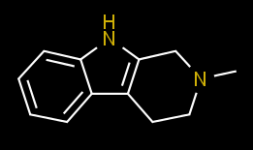
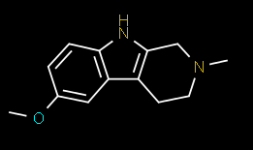
We are aware of two beta-carbolines that have been identified in Phalaris species:
  • 2-methyl-1,2,3,4-tetrahydro-ß-carboline (2-methyltryptoline) has been reported in both Phalaris arundinacea and Phalaris aquatica (Frahn et al., 1971; Gander et al., 1976).
    2.png

  • 6-methoxy-2-methyl-1,2,3,4-tetrahydro-ß-carboline was identified in Phalaris aquatica (Frahn et al., 1971)
    26.png

Interestingly, 2-methyl-1,2,3,4-tetrahydro-ß-carboline (2-methyltryptoline) is noted as the most potent beta-carboline in regards to MAO-A inhibition(Youdim, 1981).

Despite being structurally related to well-known beta-carbolines, the safety profiles of these compounds remain unknown. Additionally, beta-carbolines could potentiate the toxicity of tyramines, which are also present in various Phalaris species. It is also uncertain whether our current methodology can reliably detect the aforementioned beta-carbolines. We have not yet investigated this aspect.

Therefore, developing a one-component ayahuasca Phalaris clone, while potentially feasible, seems a distant goal at this time.


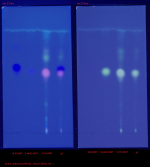
To add some data to this discussion, the TLC plate below shows extracts from Peganum harmala seeds, prepared just like the Phalaris samples. Under 365 nm UV light, the fluorescence of the harmala alkaloids is clearly visible. This photo hasn't been digitally processed; the strong fluorescence of the beta-carbolines is evident as is.

betacarb nexus.png
 
Last edited:
2-MeTHβC co-occurs with DMT in many plants, including Mimosa tenuiflora. It has been the subject of ongoing discussion regarding its safety profile, especially regarding its close resemblance to the neurotoxin MPTP, so it's quite helpful that you've posted the link regarding the MAOI properties. I've been attempting to collate information regarding 2-MeTHβC over the past couple of months, but, to tell the truth, I probably have too many projects on the go - as already alluded!

The 6-methoxy derivative is corresponds to 5-MeO-DMT in a similar manner, and, from what little I know, is even more of an unknown.

Thanks also for that great pic of the rue TLC - do you have any specific details about the roasting conditions, for the record?
 
Thank you for providing information on 2-Me-THBC. Given that THBCs with unknown safety profiles are commonly consumed and are not Phalaris specific, we'll continue the discussion in the 2-Me-THBC thread. We will further enforce testing for β-carbolines in our plants to address concerns about 2-Me-THBC toxicity, as ensuring safe, non-toxic plants is our highest priority.

The Peganum harmala seeds were roasted at a medium temperature until they turned a darker brown, but not black, and were occasionally shaken during the roasting process.
 
Last edited:
SPE (solid phase extraction) will be the answer. Specifically a strong cation exchange resin column. Can be bought as readily made cartridges or you can build the column yourself buying the resin beads.
I have a pack of ion-exchange beads lying around, but they were unlabelled so I'll have to add that to the list of experiments as well...
 
We have significantly refined our approach to analyzing Phalaris samples. Our new method is simpler yet more effective in identifying indole derivatives.

This technique leverages the relatively unknown but valuable intrinsic fluorescence of indoles. When exposed to narrow-band 275 nm UV light, these compounds emit a faint but distinct fluorescence in the visible spectrum. Although this fluorescence is barely visible to the naked eye, it can be detected with the appropriate equipment. Due to the faint nature of the fluorescence, a strong UV light source and extended camera exposure times are required to capture the effect accurately.

Our findings suggest that these fluorescent properties are especially effective for identifying tryptamine derivatives on TLC plates, eliminating the need for colorimetric reagents or the usual manganese-activated zinc silicate indicator.

Interestingly, the fluorescence behavior changes depending on the presence of the eluent on the TLC plate and appears to vary over time in some cases, a phenomenon we are currently investigating further.

Below is an image of a TLC plate with reference standards, showing the fluorescence described. No post-processing has been done; it is the plain image as captured by the camera.

2024.05.29.png

We plan to utilize this effect to enhance our testing strategy and will document it further. If this method proves useful, other analytical projects might also benefit from this discovery.
 
To validate the new method leveraging the intrinsic fluorescence of alkaloids, we applied it to identify alkaloids in well-characterized clones. The results aligned with previous findings obtained using fluorescent plates, suggesting the method's potential reliability. Additionally, we discovered previously unseen spots, highlighting the method's enhanced sensitivity. The corresponding plate is shown below.

2024.05.31_nex.png

We are just starting to get accustomed to observing the intrinsic fluorescence and are still discussing its implications. Those unassuming Phalaris plants reveal a rich alkaloid composition, and we are only beginning to uncover their secrets.
 
Last edited:
Following recent inquiries about Tanit seeds, we have added new instructions for cultivating Phalaris aquatica. Please read these guidelines before germinating your seeds, as Tanit seeds are currently in summer dormancy. The instructions can be found in the "Supplementary Material" section.

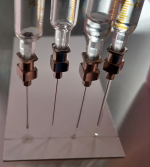
Our project is dictated by the plants' pace, and we currently have no samples available for testing. However, we have utilized this time to enhance our TLC methodology. We have transitioned to automated spotting for more consistent results, as shown below.
spotting temp2.png

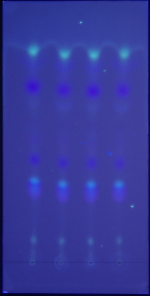
The image below shows the same sample spotted four times on one plate using automated spotting.
spotting temp3.png

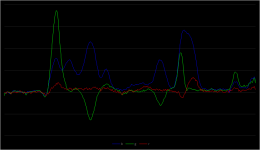
Additionally, we have implemented three-channel densitometry for quantifying TLC results. This densitometry is performed using a C++ script with OpenCV, and the resulting data is available in .csv format. An example of the densitometry findings is illustrated below.
1717926838099.png
 
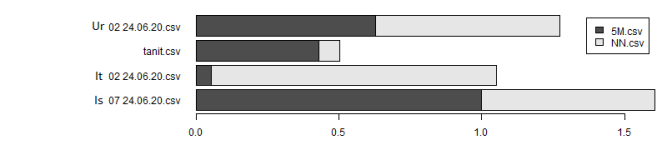
Using a custom-made script written in R, we have begun relative quantification of plant samples. This script allows us to analyze the densitometry profiles of TLC plates effectively. Quantification is achieved by calculating the integrals of the peaks. For substances with similar Rf values, filters are applied to enable separate quantification. Henceforth, all future samples will undergo this quantification process.

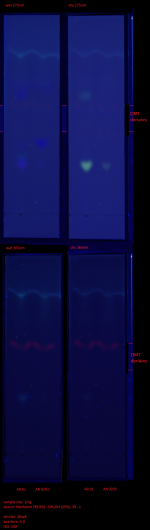
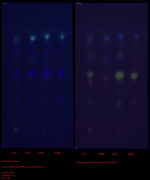
Below is an image of the TLC plate analyzed with our script:
2024.06.20.png

The results of this analysis are presented in the diagram below. N,N-DMT and 5-MeO-DMT measurements are relative, with the highest value set at 100%:
result.png

If you are interested in peer-reviewing the analysis script, it has been appended. Please note that it is a preliminary version, with some bugs and extensive comments.
 

Attachments

  • TLC Analyzer v0.4.zip
    187.3 KB · Views: 2
Last edited:
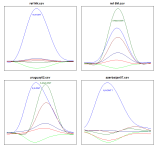
Today, we delve into the unique color profiles of the intrinsic fluorescence of DMT derivatives.

With our newly optimized script, we aim to push TLC to its limits, extracting the maximum information from our TLC plates.

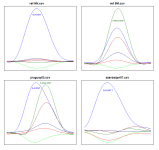
Displayed below are the complex color profiles of reference samples for N,N-DMT and 5-MeO-DMT. We also show the uruguay02 sample, which exhibits both N,N-DMT and 5-MeO-DMT color profiles.

Untitled.png

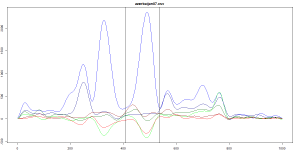
However, with new information comes new mysteries! We also present the azerbaijan07 sample. While its retention factor and fluorescent profile initially resemble N,N-DMT, a closer look reveals a suppression of the bright red curve below the baseline.

This phenomenon is unprecedented in any known DMT derivatives. It appears not to be N,N-DMT, but what could it be? Is it biologically active, an unknown toxin, or perhaps an entirely new psychedelic compound?

This journey is just beginning, and it promises to be a long and intriguing one.
 

Attachments

  • 1719331412707.png
    1719331412707.png
    39.7 KB · Views: 2
Last edited:
Today, we delve into the unique color profiles of the intrinsic fluorescence of DMT derivatives.

With our newly optimized script, we aim to push TLC to its limits, extracting the maximum information from our TLC plates.

Displayed below are the complex color profiles of reference samples for N,N-DMT and 5-MeO-DMT. We also show the uruguay02 sample, which exhibits both N,N-DMT and 5-MeO-DMT color profiles.

View attachment 99070

However, with new information comes new mysteries! We also present the azerbaijan07 sample. While its retention factor and fluorescent profile initially resemble N,N-DMT, a closer look reveals a suppression of the bright red curve below the baseline.

This phenomenon is unprecedented in any known DMT derivatives. It appears not to be N,N-DMT, but what could it be? Is it biologically active, an unknown toxin, or perhaps an entirely new psychedelic compound?

This journey is just beginning, and it promises to be a long and intriguing one.
Great stuff! A few questions though:
What does the x-axis denote? Rf perhaps?
What do each of the coloured lines pertain to? Emission frequency?
And are all the x-axes at the same scale? And the y-axis of the Azerbaijan accession looks to be expanded, perhaps?

A little bit of labelling would be quite helpful ;)

That Azerbaijan probably-not-DMT curve (the blue one) seems somewhat shifted to the left as well, although in absence of a scale this may be harder to spot. There's virtually zero structural information that can be gleaned from these plots so it will be a matter of separating off the spot of interest and sending it for further analysis if you don't have access to more precise spectroscopy like UV/vis, IR, MS and/or NMR.

One more thing I'd suggest is trying 2-D chromatography on the Azerbaijan one because that might not be a clean spot.
 
What does the x-axis denote? Rf perhaps?
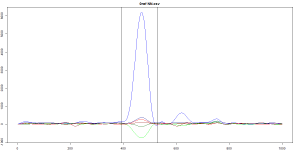
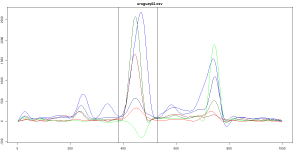
Yes, the x-axis represents the position of the substance on the TLC plate in pixels. It is scaled such that the spotting point is at pixel 1 and the solvent front is at pixel 1000, effectively corresponding to the retention factor (Rf) multiplied by 1000.

The y-axis represents color density, calculated as the sum of 8-bit unsigned integer color channel values above the baseline color.

What do each of the coloured lines pertain to? Emission frequency?

For each plate, two photos are taken: one while the eluent is present and another after drying, both under 275 nm UV light. Each pixel contains three color channels: red, green, and blue. In the densitometry results, this translates to six color channels: three from the wet plate and three from the dry plate. The brighter colors represent the red, green, and blue channels from the wet plate, while the darker colors represent these channels from the dry plate.

Depicted below are the complete densitometry results for the samples discussed above:
0ref NN.csv .png
uruguay02.csv .png
azerbaijan07.csv .png

Appropriate labeling will be added to the plots in future script developments. The current version is purely experimental, designed to explore different concepts for data evaluation.

The Rf values for the Phalaris samples were not entirely reliable due to contamination causing some retardation. It remains to be seen whether the new defatting regimen will resolve this issue. Future data will provide answers.

Conducting 2D TLC on the azerbaijan07 sample would require identifying a suitable eluent and would divert us from our primary goal of identifying and breeding known DMT derivatives. We may revisit the analysis of this unknown substance later in the project or leave it to others.
If someone is interested in a clone of the azerbaijan07 specimen, or raw data please contact us. Its readily available.

Laboratory analysis via LC/MS will be necessary later in this project for our most promising plants.
 
Last edited:
Keep up the good work!

I am unfortunately not really available these days to help more in tlc analyzing and so on, hope my time schedule will become a little bit more open the next months.

I still have the identification key for phalaris seeds, to share with you!

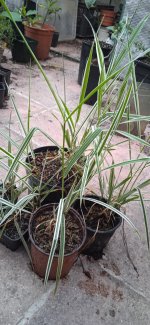
Arundinacae is growing strong these days!

IMG_20240625_212641.jpg
 
Last edited:
Yes, the x-axis represents the position of the substance on the TLC plate in pixels. It is scaled such that the spotting point is at pixel 1 and the solvent front is at pixel 1000, effectively corresponding to the retention factor (Rf) multiplied by 1000.

The y-axis represents color density, calculated as the sum of 8-bit unsigned integer color channel values above the baseline color.


For each plate, two photos are taken: one while the eluent is present and another after drying, both under 275 nm UV light. Each pixel contains three color channels: red, green, and blue. In the densitometry results, this translates to six color channels: three from the wet plate and three from the dry plate. The brighter colors represent the red, green, and blue channels from the wet plate, while the darker colors represent these channels from the dry plate.

Depicted below are the complete densitometry results for the samples discussed above:
View attachment 99075
View attachment 99078
View attachment 99077

Appropriate labeling will be added to the plots in future script developments. The current version is purely experimental, designed to explore different concepts for data evaluation.

The Rf values for the Phalaris samples were not entirely reliable due to contamination causing some retardation. It remains to be seen whether the new defatting regimen will resolve this issue. Future data will provide answers.

Conducting 2D TLC on the azerbaijan07 sample would require identifying a suitable eluent and would divert us from our primary goal of identifying and breeding known DMT derivatives. We may revisit the analysis of this unknown substance later in the project or leave it to others.
If someone is interested in a clone of the azerbaijan07 specimen, or raw data please contact us. Its readily available.

Laboratory analysis via LC/MS will be necessary later in this project for our most promising plants.
Thanks for the thorough clarification (y)
 
Back
Top Bottom