the white rabbit
Rising Star
endlessness said:The next sentence is true. The previous sentence is a lie.


endlessness said:The next sentence is true. The previous sentence is a lie.

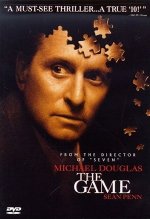
Mr.Peabody said:Ever hear of "The Game", where you are winning if you are not thinking about playing the game? So, to play the game you have to not play the game. By explaining the game, I am seriously losing the game right now, and so is everyone else reading this. My hope is that some of you are players already, and I have made you lose. I drag anyone down with me when I lose, and I lose a lot. :d
The game is almost like a computer virus, and I have now infected more of you! Hahahahah! All hail the game. :twisted:

 I love and hate The Game.:twisted:
 jbark said:Paradox of the Court: A law student agrees to pay his teacher after winning his first case. The teacher then sues the student (who has not yet won a case) for payment.
endlessness said:Zen koans often have that paradoxical nature too.
It seems facing paradoxes can lead us into jumping into a higher order where the paradox is resolved when the apparent opposites coalesce into a higher unity.
I think laughter is highly connected to this same aspect of existence, because through humor we put two opposing ideas together and this generates some kind of reaction in the body, as if it needs to release the tension formed from the opposing forces that are explicit or implicit in the joke or humor.

Damn you! I have been on a winning streak for months!!Mr.Peabody said:On a different topic,
Ever hear of "The Game", where you are winning if you are not thinking about playing the game? So, to play the game you have to not play the game. By explaining the game, I am seriously losing the game right now, and so is everyone else reading this. My hope is that some of you are players already, and I have made you lose. I drag anyone down with me when I lose, and I lose a lot. Very happy
The game is almost like a computer virus, and I have now infected more of you! Hahahahah! All hail the game. Twisted Evil


"Is God willing to prevent evil, but not able? Then he is not omnipotent. Is he able, but not willing? Then he is malevolent. Is he both able and willing? Then whence cometh evil? Is he neither able nor willing? Then why call him God?"- Epicurus
No statement can be true unless there is an objective reality. There is no objective reality.
Mr.Peabody said:"Is God willing to prevent evil, but not able? Then he is not omnipotent. Is he able, but not willing? Then he is malevolent. Is he both able and willing? Then whence cometh evil? Is he neither able nor willing? Then why call him God?"- Epicurus
What if there is no such thing as evil? With heat, there is only lesser and greater amounts of heat. There is no cold, just less heat. So too, there is no evil, only less goodness. Evil is just our perception of a lack of goodness, thus it is an illusion.
(Supposedly Einstein said something to this effect, just to give credit)
The first statement asserts that for there to be a "truth" there must be an objective reality, which is self evident when you think of it. The paradox is in the second clause: If this second is false then there is an objective reality, but no truth in the statement itself (irony). But if it is true, then there is no objective reality and no statement can be said to be truth, thus the first clause must be false. And, paradoxically, the second also must be false, since we have established that there is no truth without an objective reality. And, of course, if the second is false, the first must be true; and the loop goes on...
Use any name said:What do you pick up when you drop it?
What do you see when you don't look?
What are you when you aren't?
What do you know when you don't?
What do you show when you hide?
What travels up on its way down?
Do these count as paradoxes, or just redundant questions?
Use any name said:That which travels up on its way down.
That which you show when you hide.
That which you see when you don't look.
etc.