Hi All, I've not seen much talk about this mushroom species - Psilocybe ingeli - on the Nexus, so I thought I would provide this as a resource for any folk that may be interested. New on the scene, only scientifically described from South Africa in 2023, I feel this species of mushroom could be one of the most important to land in cultivator circles since Psilocybe cubensis did over half a century ago courtesy of the McKenna brothers. This is a highly potent species that isn't too challenging to grow once its fruiting conditions are dialled in, growing on a similar timeline to P. cubensis. It is so new on the scene that very few people have sampled it, but all who have so far hold this mushroom in very high regard, with people reporting it offers a smoother experience than P. cubensis, while standing out from this and other species psilonauts have sampled (a few accounts are shared below).
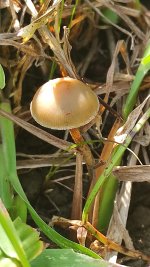
P. ingeli fruiting in the wild. Talan Moult.
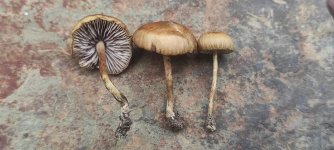
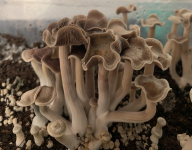
Fruiting cluster of P. ingeli.
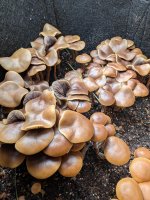
Outdoor-grown P. ingeli. PhenoDreamer.
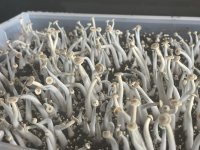
P. ingeli mushrooms expressing noodly form and underdeveloped caps due to insufficient fresh air exchange.
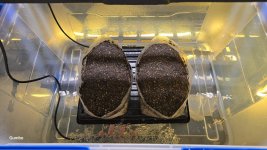
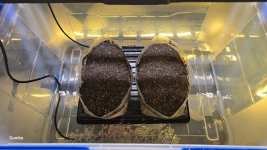
Diffuser tub setup with water, air hoses and long air stones. Gumbo Slinger.
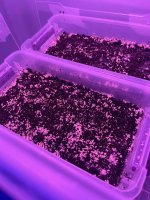
First pins appearing in fruiting trays of P. ingeli.
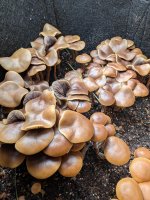
Mature fruiting P. ingeli mushrooms. Tyler Wagner.
The Discovery of Psilocybe ingeli
Psilocybe ingeli is a recently discovered species of Psilocybe mushroom, only scientifically described in 2023. It was first observed and collected in the field by citizen mycologist Talan Moult, who noticed two mushrooms growing through the grass while clearing a plot for his beehives. It was found in manure-enriched pastureland in late summer after the rainy season in the KwaZulu-Natal region of South Africa, in a habitat and location that it shares with P. natalensis. He suspected it to be a Psilocybe of some kind and noted a strong indigo blueing reaction when it was bruised. He collected samples and submitted them for genetic analysis, with DNA sequencing indicating it to be a new species to science.
These findings were published in the journal Mycologia, the result of a collaboration between citizen mycologists and academics from Stellenbosch University. The species is named after the Ingeli mountain range, where the type specimen was found.
Psilocybe ingeli is a recently discovered species of Psilocybe mushroom, only scientifically described in 2023. It was first observed and collected in the field by citizen mycologist Talan Moult, who noticed two mushrooms growing through the grass while clearing a plot for his beehives. It was found in manure-enriched pastureland in late summer after the rainy season in the KwaZulu-Natal region of South Africa, in a habitat and location that it shares with P. natalensis. He suspected it to be a Psilocybe of some kind and noted a strong indigo blueing reaction when it was bruised. He collected samples and submitted them for genetic analysis, with DNA sequencing indicating it to be a new species to science.
These findings were published in the journal Mycologia, the result of a collaboration between citizen mycologists and academics from Stellenbosch University. The species is named after the Ingeli mountain range, where the type specimen was found.
P. ingeli fruiting in the wild. Talan Moult.
The Potential of Psilocybe ingeli
Psilocybe ingeli is a species that should evoke interest among cultivators, given that it is highly potent, easy to cultivate, and grows quickly. Credit should be given to a cultivator with the alias PhenoDreamer for sourcing spores of this species from a collector in South Africa and then disseminating them to the wider community and sharing information regarding its cultivation. Another cultivator with the alias thebigfungus also deserves credit for generously sharing spores with members of the cultivator community.
Psilocybe ingeli has been described as “basically Zaps that fruit as fast as cubes and under similar low maintenance conditions” by chemist and researcher Julian Mattucci of Imperial Labs. Given the combination of its various qualities, P. ingeli could be a species of great importance to the psilonaut cultivator community, and beyond.
Being highly potent mushrooms, little fungal matter needs to be ingested to get to a certain dosage level, and this can appeal to some. Some people struggle more than others with body load issues when ingesting mushrooms, which may be experienced as a range of unpleasant physical sensations such as stomach ache, nausea, bloating, dizziness, feelings of being over-stimulated, temperature changes, or feelings of tension or of being weighed down. Such side effects have the potential to alter the overall tone of a trip. According to numerous testimonials, such side effects appear to be less pronounced or eliminated when consuming more potent species of mushroom than P. cubensis. Being a new species on the scene, very few people have sampled this mushroom so far, meaning trip reports are very thin on the ground. However, among those psilonauts that have sampled it, it tends to be held in very high regard (as other species in Section Zapotecorum such as P. zapotecorum and P. subtropicalis tend to be).
While very few trip reports currently exist for this species, in the few that do, people tend to report an experience that is smooth on the system with minimal body load, while stating them to stand out in comparison to other mushroom species they have sampled.
As one of the few trip reports published online attests to:
"What also stood out about this species was that it might be lighter on the system for people who are sensitive to side effects like headaches or nausea. … A large benefit of growing this species is being able to eat a smaller amount of fungal mass to comfortably trip.
They have done cubes and ochras but this one was a unique time for them. They told me that 0.3 grams of ingeli felt like roughly 1 gram of strong cubes (3x potency checks out?). 0.3g was not enough for a full on trip but more of a lighter but no longer sub-perceptual experience."
Another trip report from another psilonaut taking a deeper dive with the mushroom reported similar sentiments:
"I had 0.76g last year sometime in a tea, think it was the first proper dose taken in modern times…It was WILD. Great fun, filled with wonder, no anxiety and I felt rebooted after, felt on a high for weeks after! Fantastic mushrooms! Of the best and strongest I've eaten. … All together a very unexpected and awesome but completely wild experience! Quite different from a strong cube or ps. cyans trip. No hangover felt like some do on a strong pans trip. Very much recommended to eat these!"
Psilocybe ingeli is a species that should evoke interest among cultivators, given that it is highly potent, easy to cultivate, and grows quickly. Credit should be given to a cultivator with the alias PhenoDreamer for sourcing spores of this species from a collector in South Africa and then disseminating them to the wider community and sharing information regarding its cultivation. Another cultivator with the alias thebigfungus also deserves credit for generously sharing spores with members of the cultivator community.
Psilocybe ingeli has been described as “basically Zaps that fruit as fast as cubes and under similar low maintenance conditions” by chemist and researcher Julian Mattucci of Imperial Labs. Given the combination of its various qualities, P. ingeli could be a species of great importance to the psilonaut cultivator community, and beyond.
Being highly potent mushrooms, little fungal matter needs to be ingested to get to a certain dosage level, and this can appeal to some. Some people struggle more than others with body load issues when ingesting mushrooms, which may be experienced as a range of unpleasant physical sensations such as stomach ache, nausea, bloating, dizziness, feelings of being over-stimulated, temperature changes, or feelings of tension or of being weighed down. Such side effects have the potential to alter the overall tone of a trip. According to numerous testimonials, such side effects appear to be less pronounced or eliminated when consuming more potent species of mushroom than P. cubensis. Being a new species on the scene, very few people have sampled this mushroom so far, meaning trip reports are very thin on the ground. However, among those psilonauts that have sampled it, it tends to be held in very high regard (as other species in Section Zapotecorum such as P. zapotecorum and P. subtropicalis tend to be).
While very few trip reports currently exist for this species, in the few that do, people tend to report an experience that is smooth on the system with minimal body load, while stating them to stand out in comparison to other mushroom species they have sampled.
As one of the few trip reports published online attests to:
"What also stood out about this species was that it might be lighter on the system for people who are sensitive to side effects like headaches or nausea. … A large benefit of growing this species is being able to eat a smaller amount of fungal mass to comfortably trip.
They have done cubes and ochras but this one was a unique time for them. They told me that 0.3 grams of ingeli felt like roughly 1 gram of strong cubes (3x potency checks out?). 0.3g was not enough for a full on trip but more of a lighter but no longer sub-perceptual experience."
Another trip report from another psilonaut taking a deeper dive with the mushroom reported similar sentiments:
"I had 0.76g last year sometime in a tea, think it was the first proper dose taken in modern times…It was WILD. Great fun, filled with wonder, no anxiety and I felt rebooted after, felt on a high for weeks after! Fantastic mushrooms! Of the best and strongest I've eaten. … All together a very unexpected and awesome but completely wild experience! Quite different from a strong cube or ps. cyans trip. No hangover felt like some do on a strong pans trip. Very much recommended to eat these!"
The Potency of Psilocybe ingeli
Initial analyses of dried P. ingeli mushrooms have indicated total alkaloid levels ranging from 2.3% to 3.2% by dry weight. This places it among the most potent magic mushrooms known, in the same potency ballpark as other highly potent species such as Panaeolus cyanescens and P. zapotecorum. This makes it generally a far more potent species than P. cubensis, which typically ranges from 0.5-1% alkaloids. While some batches of P. cubensis may attain over 2% potency levels on occasion, this is the result of decades of strain selection work.
To put the potency of P. ingeli into context, most clinical studies involving psilocybin use a (high) dose of 25mg of the pure compound. This means that at its upper potency levels, just 1 gram of dried mushroom material could potentially harbour this dosage of psilocybin (or more), so newcomers to this mushroom should tread carefully when dosing (and perhaps not exceed a dosage of 0.5g of dried mushroom material for a first-time experience). A dose at or exceeding 1g of dried mushroom material is likely to result in a deep and immersive experience. 50mg (0.05 g) of dried mushroom material should be sufficient for a microdose with this particular species.
Like all psilocybin mushrooms, potency can vary widely, as can individual sensitivities. One way of accounting for potency variation among potent mushrooms like this is to powder the dried mushrooms from a given flush of a grow and encapsulate them, which should provide a more consistent form of dosing. If seeking to prolong their potency, these capsules can be stored under an inert gas like argon or carbon dioxide.
Initial analyses of dried P. ingeli mushrooms have indicated total alkaloid levels ranging from 2.3% to 3.2% by dry weight. This places it among the most potent magic mushrooms known, in the same potency ballpark as other highly potent species such as Panaeolus cyanescens and P. zapotecorum. This makes it generally a far more potent species than P. cubensis, which typically ranges from 0.5-1% alkaloids. While some batches of P. cubensis may attain over 2% potency levels on occasion, this is the result of decades of strain selection work.
To put the potency of P. ingeli into context, most clinical studies involving psilocybin use a (high) dose of 25mg of the pure compound. This means that at its upper potency levels, just 1 gram of dried mushroom material could potentially harbour this dosage of psilocybin (or more), so newcomers to this mushroom should tread carefully when dosing (and perhaps not exceed a dosage of 0.5g of dried mushroom material for a first-time experience). A dose at or exceeding 1g of dried mushroom material is likely to result in a deep and immersive experience. 50mg (0.05 g) of dried mushroom material should be sufficient for a microdose with this particular species.
Like all psilocybin mushrooms, potency can vary widely, as can individual sensitivities. One way of accounting for potency variation among potent mushrooms like this is to powder the dried mushrooms from a given flush of a grow and encapsulate them, which should provide a more consistent form of dosing. If seeking to prolong their potency, these capsules can be stored under an inert gas like argon or carbon dioxide.
Fruiting cluster of P. ingeli.
How to Identify Psilocybe ingeli
The mushrooms often exhibit an intense indigo or deep blue-black colouring reaction when cut or handled. Mature caps resemble small wavy caps (Psilocybe cyanescens) mushrooms in both shape and colouration.
Cap: 1–3 cm wide, caramel brown when moist, fading to light grey when dry, slightly bluing around the cap margin with handling. The cap is convex to hemispheric, umbonate (possessing a raised area in the centre of the cap) in profile, with a straight margin, occasionally slightly incurved. It has a smooth surface with visible gill lines beneath running about half of the way up the cap (translucent-striate). It has a translucent jelly skin covering present when the mushrooms are young and moist, which can be peeled away with care (a separable gelatinous pellicle).
Stem: 3–7 cm long, 0.2–0.6 cm thick. Caramel-brown with white scales and a fine dusting (pruinose). Base with white mycelium and bruises blue when damaged.
Gills: Light grey when young, dark brown at maturity with whitish edges, and sinuate (smoothly notched before the attachment to the stem).
Spore Print: Dark purple-brown.
The mushrooms often exhibit an intense indigo or deep blue-black colouring reaction when cut or handled. Mature caps resemble small wavy caps (Psilocybe cyanescens) mushrooms in both shape and colouration.
Cap: 1–3 cm wide, caramel brown when moist, fading to light grey when dry, slightly bluing around the cap margin with handling. The cap is convex to hemispheric, umbonate (possessing a raised area in the centre of the cap) in profile, with a straight margin, occasionally slightly incurved. It has a smooth surface with visible gill lines beneath running about half of the way up the cap (translucent-striate). It has a translucent jelly skin covering present when the mushrooms are young and moist, which can be peeled away with care (a separable gelatinous pellicle).
Stem: 3–7 cm long, 0.2–0.6 cm thick. Caramel-brown with white scales and a fine dusting (pruinose). Base with white mycelium and bruises blue when damaged.
Gills: Light grey when young, dark brown at maturity with whitish edges, and sinuate (smoothly notched before the attachment to the stem).
Spore Print: Dark purple-brown.
Outdoor-grown P. ingeli. PhenoDreamer.
Cultivation of Psilocybe ingeli
P. ingeli is a member of Section Zapotecorum, which includes related species held in high shamanic esteem by Indigenous groups in Mexico such as P. zapotecorum and P. subtropicalis. However, these species take a while to grow, shifting into slow motion when fruiting (if using P. cubensis as a reference), and they can be more challenging species to cultivate than P. ingeli. P. ingeli is a fast fruiter compared to these species, fruiting on a similar timeframe to P. cubensis, with the added bonus that it is easier to take spore prints from than these other Section Zapotecorum species can be. P. ingeli appears to be the fastest and easiest to cultivate species of Section Zapotecorum currently known.
P. ingeli will grow and fruit readily at normal room temperature, but will also fruit at higher temperatures (although it may be best not to exceed temperatures of 82°F/27.5°C).
P. ingeli appreciates high humidity and a little more fresh air exchange than P. cubensis does during fruiting to grow to its full potential, and it is important that the substrate does not dry out during this time. These conditions can easily be achieved with a diffuser tub fruiting chamber setup. The mushrooms can still grow with less fresh air exchange but they will take on a more noodly form with underdeveloped caps. A moist environment can also be achieved by spraying with a fine mister or by using a dialled fogger (on a timer) in other fruiting chamber setups.
P. ingeli is a member of Section Zapotecorum, which includes related species held in high shamanic esteem by Indigenous groups in Mexico such as P. zapotecorum and P. subtropicalis. However, these species take a while to grow, shifting into slow motion when fruiting (if using P. cubensis as a reference), and they can be more challenging species to cultivate than P. ingeli. P. ingeli is a fast fruiter compared to these species, fruiting on a similar timeframe to P. cubensis, with the added bonus that it is easier to take spore prints from than these other Section Zapotecorum species can be. P. ingeli appears to be the fastest and easiest to cultivate species of Section Zapotecorum currently known.
P. ingeli will grow and fruit readily at normal room temperature, but will also fruit at higher temperatures (although it may be best not to exceed temperatures of 82°F/27.5°C).
P. ingeli appreciates high humidity and a little more fresh air exchange than P. cubensis does during fruiting to grow to its full potential, and it is important that the substrate does not dry out during this time. These conditions can easily be achieved with a diffuser tub fruiting chamber setup. The mushrooms can still grow with less fresh air exchange but they will take on a more noodly form with underdeveloped caps. A moist environment can also be achieved by spraying with a fine mister or by using a dialled fogger (on a timer) in other fruiting chamber setups.
P. ingeli mushrooms expressing noodly form and underdeveloped caps due to insufficient fresh air exchange.
To summarise, the growing process starts with spores or a tissue culture, which is then used to inoculate grains, which, when colonised, are then used to inoculate a bulk substrate, which is then fruited once colonised.
TL;DR: P. ingeli favours high humidity levels and a saturated substrate during fruiting, in addition to higher levels of fresh air exchange than P. cubensis to ensure healthy fruiting. These conditions can easily be dialled in using a diffuser tub or dreamer tub fruiting chamber setup. Coco coir makes a good bulk substrate ingredient. Applying a casing layer is necessary during fruiting, rather than optional (as when fruiting P. cubensis or P. ochraceocentrata). It is crucial that high humidity levels are maintained and that the substrate does not dry out during fruiting, otherwise mushrooms will abort, even in an advanced stage of fruiting.
Step 1: Preparing and Inoculating the Substrate
Spores can be germinated on agar. P. ingeli mycelium will take on a tomentose (cottony) rather than rhizomorphic (root-like) form on agar. This can potentially be used to inoculate grains directly or to inoculate liquid culture to allow for future inoculations.
A variety of different grains can be used (e.g. brown rice, whole oats, non-hulled millet, etc). These grains will require hydration and sterilisation in a pressure cooker prior to inoculation. Once the grain jars are colonised by mycelium, they are ready for spawning on bulk substrate.
Step 2: Spawning to Bulk
For the bulk substrate, coconut coir alone is a suitable medium for P. ingeli, as is a coir/vermiculite mix (or the classic CVG mix, a blend of coir, vermiculite and gypsum), with some growers having also added dung to their bulk substrate. Coir and vermiculite are both relatively inert (not tending to attract other bacteria or fungi) and hold both water and air, which benefits the mycelium. These bulk substrate ingredients can be prepared for use by pasteurising with the bucket tek, with the appropriate quantity of water used relative to the quantity of substrate.
The bulk substrate should be hydrated at field capacity, where it is fully saturated with water, but without excess moisture. To test this, the bulk substrate should feel saturated with water to the touch, but when squeezed, it should not produce too much runoff.
The colonised grain spawn can then be mixed with the hydrated and pasteurised bulk substrate and added to fruiting trays, which are then placed in the fruiting chamber.
Step 3: Fruiting
Once the bulk substrate is fully colonised, a casing layer (of a quarter-inch depth) should be applied. Jiffy seed starter mix has been used successfully when pasteurised and pH buffered with lime. A mix of peat with coco coir and vermiculite and a little lime can also be used.
This species appreciates a saturated substrate and a highly humid environment during fruiting, following casing (coupled with high levels of fresh air exchange), and maintaining this is important to keep pins from aborting, as drying of the substrate may cause this even during an advanced stage of fruiting. The pins seem fine with light misting to supplement moisture levels.
P. ingeli will benefit from being fruited in a “diffuser tub” fruiting chamber, which will help facilitate optimal levels of fresh air exchange and the higher humidity levels this species needs to thrive.
A variation on the classic monotub design for fruiting, diffuser tubs make use of the same large clear plastic tubs, but use a different setup configuration to enhance humidity and fresh air exchange. Diffuser tub setups have been used to successfully fruit a range of species.
Another viable automated fruiting chamber option well suited to fruiting P. ingeli is the “dreamer tub”.
TL;DR: P. ingeli favours high humidity levels and a saturated substrate during fruiting, in addition to higher levels of fresh air exchange than P. cubensis to ensure healthy fruiting. These conditions can easily be dialled in using a diffuser tub or dreamer tub fruiting chamber setup. Coco coir makes a good bulk substrate ingredient. Applying a casing layer is necessary during fruiting, rather than optional (as when fruiting P. cubensis or P. ochraceocentrata). It is crucial that high humidity levels are maintained and that the substrate does not dry out during fruiting, otherwise mushrooms will abort, even in an advanced stage of fruiting.
Step 1: Preparing and Inoculating the Substrate
Spores can be germinated on agar. P. ingeli mycelium will take on a tomentose (cottony) rather than rhizomorphic (root-like) form on agar. This can potentially be used to inoculate grains directly or to inoculate liquid culture to allow for future inoculations.
A variety of different grains can be used (e.g. brown rice, whole oats, non-hulled millet, etc). These grains will require hydration and sterilisation in a pressure cooker prior to inoculation. Once the grain jars are colonised by mycelium, they are ready for spawning on bulk substrate.
Step 2: Spawning to Bulk
For the bulk substrate, coconut coir alone is a suitable medium for P. ingeli, as is a coir/vermiculite mix (or the classic CVG mix, a blend of coir, vermiculite and gypsum), with some growers having also added dung to their bulk substrate. Coir and vermiculite are both relatively inert (not tending to attract other bacteria or fungi) and hold both water and air, which benefits the mycelium. These bulk substrate ingredients can be prepared for use by pasteurising with the bucket tek, with the appropriate quantity of water used relative to the quantity of substrate.
The bulk substrate should be hydrated at field capacity, where it is fully saturated with water, but without excess moisture. To test this, the bulk substrate should feel saturated with water to the touch, but when squeezed, it should not produce too much runoff.
The colonised grain spawn can then be mixed with the hydrated and pasteurised bulk substrate and added to fruiting trays, which are then placed in the fruiting chamber.
Step 3: Fruiting
Once the bulk substrate is fully colonised, a casing layer (of a quarter-inch depth) should be applied. Jiffy seed starter mix has been used successfully when pasteurised and pH buffered with lime. A mix of peat with coco coir and vermiculite and a little lime can also be used.
This species appreciates a saturated substrate and a highly humid environment during fruiting, following casing (coupled with high levels of fresh air exchange), and maintaining this is important to keep pins from aborting, as drying of the substrate may cause this even during an advanced stage of fruiting. The pins seem fine with light misting to supplement moisture levels.
P. ingeli will benefit from being fruited in a “diffuser tub” fruiting chamber, which will help facilitate optimal levels of fresh air exchange and the higher humidity levels this species needs to thrive.
A variation on the classic monotub design for fruiting, diffuser tubs make use of the same large clear plastic tubs, but use a different setup configuration to enhance humidity and fresh air exchange. Diffuser tub setups have been used to successfully fruit a range of species.
Another viable automated fruiting chamber option well suited to fruiting P. ingeli is the “dreamer tub”.
Diffuser tub setup with water, air hoses and long air stones. Gumbo Slinger.
In a diffuser tub setup, an inch of water is added to the base of the tub, into which run two aquarium air hoses, onto which are fitted long air stones which are submerged. The fruiting trays sit on a wire rack or object that places them above the water.
For a live demonstration of this diffuser tub setup, click here. Change the water a minimum of once a week to keep it fresh (water will absorb carbon dioxide produced by the fruiting culture, converting it to carbonic acid).
Alternatively, the base of the tub is lined with two or more inches of wet perlite (which will support high humidity), with a jar or two of water placed onto this, into which an aquarium air pump hose fitted with an air stone runs. The jars should have a lid with a hole drilled into it to allow air hose access, and smaller holes drilled in the rest of the lid (salt shaker style) to help reduce splashing and oversaturation of your fruiting trays.
In addition to ensuring ample levels of fresh air exchange and humidity, the water in both types of diffuser tub setup will also filter the incoming air.
Several holes can potentially be drilled into the sides of the diffuser tub over which adhesive synthetic filter discs can be placed to facilitate more passive air exchange.
For a live demonstration of this diffuser tub setup, click here. Change the water a minimum of once a week to keep it fresh (water will absorb carbon dioxide produced by the fruiting culture, converting it to carbonic acid).
Alternatively, the base of the tub is lined with two or more inches of wet perlite (which will support high humidity), with a jar or two of water placed onto this, into which an aquarium air pump hose fitted with an air stone runs. The jars should have a lid with a hole drilled into it to allow air hose access, and smaller holes drilled in the rest of the lid (salt shaker style) to help reduce splashing and oversaturation of your fruiting trays.
In addition to ensuring ample levels of fresh air exchange and humidity, the water in both types of diffuser tub setup will also filter the incoming air.
Several holes can potentially be drilled into the sides of the diffuser tub over which adhesive synthetic filter discs can be placed to facilitate more passive air exchange.
First pins appearing in fruiting trays of P. ingeli.
Some growers report great success fruiting P. ingeli outside. This will depend on your locale, as it needs high humidity levels to thrive, but some cultivators have found the species easy to work with outside, requiring less care while producing bountiful flushes of healthy mushrooms.
Growers can expect the first pins to appear in around two weeks once the colonised bulk substrate is placed into fruiting conditions. The mushrooms are quite slow to mature once they appear, relative to some other species, a trait of Section Zapotecorum (although they are the fastest fruiting species of this group known). The caps develop a wavy, upturned profile as they mature, as they get ready to drop spores. A good amount of fresh air exchange is needed for them to open up their caps.
Growers can expect the first pins to appear in around two weeks once the colonised bulk substrate is placed into fruiting conditions. The mushrooms are quite slow to mature once they appear, relative to some other species, a trait of Section Zapotecorum (although they are the fastest fruiting species of this group known). The caps develop a wavy, upturned profile as they mature, as they get ready to drop spores. A good amount of fresh air exchange is needed for them to open up their caps.
Mature fruiting P. ingeli mushrooms. Tyler Wagner.
Once the caps take on this form, the stem can be cut just under the cap, which is then placed onto some aluminium foil (with the underside of the cap resting on the foil). A glass or tub sprayed with a fine mist of water is then placed over the cap to provide a humid environment to help facilitate the dropping of spores. Leave for 24 hours, and you should have a spore print to store or share with others.
It’s worth reflecting on why you want to take mushrooms. Your motivations, the dosage, the setting, and your mindset – all of these factors will profoundly shape the experience.
A Promising Time for Psilonauts
The arrival of P. ingeli on the scene showcases the vital contribution of knowledgeable citizen mycologists and cultivators with regard to the discovery and dissemination of such species. Akin to a mycelial network, the interwoven web of the internet is also playing a role in helping facilitate the sharing of knowledge and spores. P. ingeli is likely to be one of a number of promising species to appear in cultivator circles in the coming years, as the scene continues to diversify and expand beyond a focus on P. cubensis. Much as natural ecosystems thrive on diversity, a greater richness of fungal species in the cultivator community may yield unforeseen benefits.
Further reading:
[[MOD: link removed]] Search for "Spores of Promise: The Psilonautic Potential of Psilocybe ingeli" online.
TL;DR:
Psilocybe ingeli: South Africa’s New Heavy-Hitter Mushroom | Tripsitter
References
https://www.reddit.com/r/Psilocybe_ingeli/
Stamets, P. (2025) Psilocybin Mushrooms in Their Natural Habitats: A Guide to the History, Identification, and Use of Psychoactive Fungi. Random House Inc.
van der Merwe B., Rockefeller A., Kilian A., Clark C., Sethathi M., Moult T., Jacobs K. (2024) A description of two novel Psilocybe species from southern Africa and some notes on African traditional hallucinogenic mushroom use. Mycologia 116(5): 821–834. https://doi.org/10.1080/00275514.2024.2363137
It’s worth reflecting on why you want to take mushrooms. Your motivations, the dosage, the setting, and your mindset – all of these factors will profoundly shape the experience.
A Promising Time for Psilonauts
The arrival of P. ingeli on the scene showcases the vital contribution of knowledgeable citizen mycologists and cultivators with regard to the discovery and dissemination of such species. Akin to a mycelial network, the interwoven web of the internet is also playing a role in helping facilitate the sharing of knowledge and spores. P. ingeli is likely to be one of a number of promising species to appear in cultivator circles in the coming years, as the scene continues to diversify and expand beyond a focus on P. cubensis. Much as natural ecosystems thrive on diversity, a greater richness of fungal species in the cultivator community may yield unforeseen benefits.
Further reading:
[[MOD: link removed]] Search for "Spores of Promise: The Psilonautic Potential of Psilocybe ingeli" online.
TL;DR:
Psilocybe ingeli: South Africa’s New Heavy-Hitter Mushroom | Tripsitter
References
https://www.reddit.com/r/Psilocybe_ingeli/
Stamets, P. (2025) Psilocybin Mushrooms in Their Natural Habitats: A Guide to the History, Identification, and Use of Psychoactive Fungi. Random House Inc.
van der Merwe B., Rockefeller A., Kilian A., Clark C., Sethathi M., Moult T., Jacobs K. (2024) A description of two novel Psilocybe species from southern Africa and some notes on African traditional hallucinogenic mushroom use. Mycologia 116(5): 821–834. https://doi.org/10.1080/00275514.2024.2363137
Attachments
Last edited: