Presence of DMT in Acacia species
The genus Acacia is the largest group of vascular plants in Australia, with over 1,000 species currently recognized (comprising
about 1,350 taxa once subspecies and varieties are included).
The presence of DMT in Acacia species was first recognized in 1965 when the bark of Acacia maidenii was found to contain
DMT. Two years later, in 1967, the leaves of Acacia phlebophylla were found to yield about 0.3% of DMT.
In 1990, CSIRO published the results of some joint work of the CSIRO Division of Organic Chemistry (later Division of
Applied Organic Chemistry) and the Australian universities investigating Australian (and PNG) plants for new medicinal drugs.
In this book, 16 Acacia species are listed as containing appreciable alkaloid content up to 1.3%. The alkaloids present were not
identified because testing did not reveal medicinal value. Those species were A. aneura, A. angusta, A. argentea (now A.
leptostachya), A. complanata, A. drummondii, A. harpophylla, A. holosericea, A. kettlewelliae, A. leptocarpa, A. longissima, A.
maidenii, A. neriifolia, A. obtusifolia, A. oxycedrus, A. podalyriifolia and A. polystachya. Alkaloid was found in leaf and, in
some, bark. In all, 125 Acacia species were tested qualitatively, some being positive for alkaloid, others negative.
In more recent years, DMT has been reported as occurring in a number of commonly cultivated Acacia species, including the
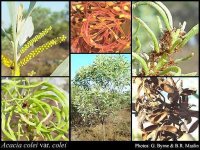
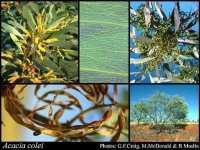
following: A. baileyana (Cootamundra Wattle), A. colei, A. complanata, A. longifolia, A. melanoxylon (Blackwood), A. podalyriifolia,
A. provincialis (formerly A. retinodes) and A. victoriae. Note that DMT has also been reported in a number of
non-Australian species of Acacia, but we have not referred to them in this submission.
We are aware of one report that “unpublished research has already established the presence of DMT in over 150 wattle species”.
We are unable to comment as to the validity of this statement.
We have, however, been advised by Dr C C J Culvenor (formerly Chief Research Scientist, CSIRO Division of Organic
Chemistry) that, in his understanding, very few Australian species of Acacia would have been analysed for the presence of DMT,
but if analyses were carried out, he would expect many additional species would test positive for DMT.
We believe that there is strong evidence that DMT is found in many species of Acacia, and if the proposals in the Government
Discussion Paper are adopted in legislation, then these species will all be classified as Controlled Plants. We believe that it would
be totally unworkable and inappropriate for legislation to proceed in the form proposed in the Discussion Paper, for the reasons
set out below.
Reasons for Objecting to Proposals
(a) Acacias are very commonly and popularly grown as garden plants in Australia, in both public and private gardens. The
effect of the Government proposal will be to restrict the ability of people to grow these favoured plants in their own
gardens.
(b) As well as popular garden plants, Acacias are extremely common in native vegetation and are frequently planted or
occur naturally on roadsides and are used in native revegetation programs. Acacias also serve an important ecological
function in natural and planted vegetation as nitrogen fixing legumes that increase soil fertility (hence they are common
in primary vegetation regrowth in disturbed ecosystems).Acacia Study Group Newsletter No. 112 Page 10
(c) Some of the Acacia species that will be impacted by the proposal are rare species. For example A. phlebophylla is a rare
species known only from a limited area near Mt Buffalo in Victoria (and is listed under the Victorian Flora and Fauna
Guarantee Act). The ongoing cultivation of this, and other similar rare species, is important as a means of assisting the
future survival of these species. The Government proposals therefore threaten these conservation efforts, and impact
detrimentally on the nation’s biodiversity. It is also noted that if the cultivation of these plants is prohibited, then the
remaining wild populations may well be placed under additional threat from individuals who may be seeking material
for the manufacture of drugs.
(d) The proposals are unwieldy and too generalized. There is little hope that people will know which species contain DMT
– and a consequence of this is that people will unknowingly be committing criminal offences. Whilst we are aware that
Government spokespeople have denied that backyard plants will be banned or their growers prosecuted, we believe that
it is unacceptable to ask people to rely on this reassurance – if in fact they are effectively committing a criminal offence.
The proposals are also unwieldy in that a number of species would be virtually impossible for non-experts to distinguish,
especially when not in pod or flower.
(e) We believe that the proposals are also unlikely to achieve what the Government may be hoping to achieve. Some of the
species that are reported as containing DMT are very common, and in some cases have become weed species in parts of
Australia. For example, this would apply to Acacia baileyana and A. longifolia. It would be a simple matter for a
person to obtain plant material from these weed infested areas – and hence the banning of garden plants would seem to
be futile. We believe this proposal will draw unnecessary attention to the presence of DMT in many common plants and
could in fact promote the spread of such information and increase the likelihood of inappropriate human use of such
alkaloids.
(f) It is noted that some of the species reported as containing DMT are also very significant species for a variety of reasons.
Acacia seed as a source of human food has been a subject of increasing interest and research in recent years. Acacia
victoriae is the most important species in the Australian bush food industry, whilst Acacia colei is showing promise as a
source of human food in semi arid regions of the Sahel, West Africa. Acacia victoriae is also important as chemicals
extracted from this plant have been shown to have anti-cancer properties, and current research may lead to these anticancer agents
being used in future for the treatment of human skin cancer and other malignancies of the gut and glands.
Rather than banning these plants in Australia, we should appreciate and value their unique qualities, and take action to
protect and promote them.
(g) The wattle is Australia’s national flower, and is proudly celebrated as part of our cultural heritage by Australians on
Wattle Day and on other festive and sporting occasions. It also features on our coat of arms. The absurdity of the
Government proposals, even in banning some species, is very evident when considered in the context of this national
heritage.
In conclusion, many Australians grow Acacia species for many reasons, and the costs of these proposals will far outweigh the
perceived benefits. The Government proposals will limit the ability of Australians to continue to enjoy nature as they have in the
past, and in some cases will render them subject to criminal proceedings. We believe that this is a totally unacceptable outcome.