..thanks
Entropymancer..good to see you! :d ..and yeah,
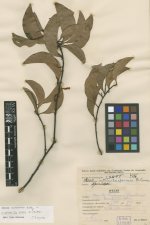
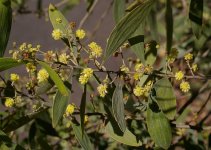
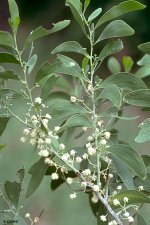
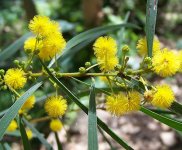
A. simsii is like the direct cousin or sister of A. confusa..
on
Seldom's excellent point, see next post..
 Major Tom
 wrote:
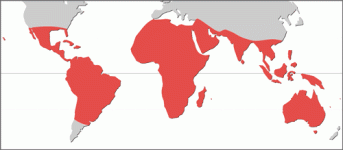
Looking at the Acacia distribution map [ # 919 ] makes me suspect that Acacias / Mimosas are very , very ancient genus - maybe existing and evolving before and after Gondwandaland broke up and the continents drifted apart ?
..Leguminosae were widespread and differentiated into 3 subfamilies by the end of the Cretaceous period (65 million years ago) ..the genus Acacia was widespread by 40-50 million years ago, but whether the ancestors of the genus were from Africa or South- or Central America has been debated [Guniet 1981; Pedley 1986; Knud Tybrik 1990
http://www.worldwidewattle.com/socgroups/igsm/20/45-53.pdf]
..the ancient ancestor of Phyllodinous acacias (now considered 'Acacia stricto sensu' with bi-pinnate species recently placed in Vachellia, Senegalia and Faidherbia ) is from Australia..circa 20-30 million years ago..a relatively new development in plant evolutionary terms..
The earliest occurrences [known of Acacia pollen] are from the southern hemisphere: Eocene (Cameroon, Africa), Oligocene (Puerto Rico), Miocene (Australia, Mexico, Central & South America) and Pliocene (New Zealand, now extinct) (Muller, 1981). Acacia appears to have diversified and expanded into the Northern Hemisphere from the Miocene onward as global climate cooled and became drier (Tsudy and Scott, 1969; Traverse, 1988 ).
Davis 2001 Uni. of Arizona
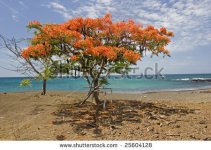
..i find the finding of the forthcoming Pacific Phyllodinous paper, that early humans carried these special acacias around quite exciting..although, i threw in the photo of the Galapagos Island acacia to add to further mystery, and mention also that Acacia melanoxylon seeds are recorded as still viable after 20 years in sea water! ..see Long-Term Viability of Acacia Seed p.18..but, if one discovered the great-great ma of confusa/simsii/whatever etc. then i'm sure, if forced to migrate, one would carry some seed..
but, given phyllode species seem to have evolved in australia, which way did the migrations go..?
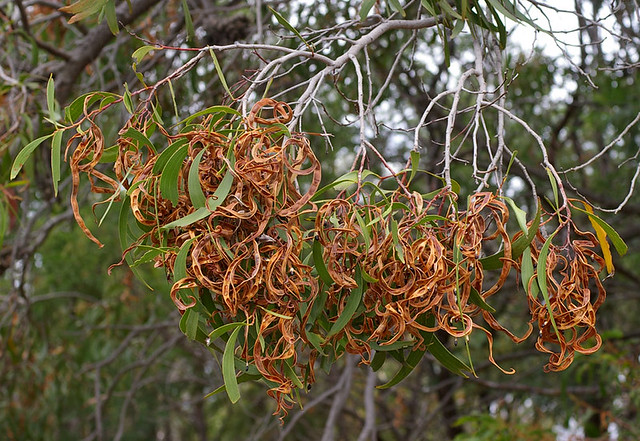
below, New Guinea's only endemic acacia,
A. peregrinates, named in 2000
Acacia peregrina M.W. McDonald & Maslin, Austral. Syst. Bot. 13: 67, fig. 22 (2000), nom. illeg., non A. peregrina (L.) Willd. (1806)...1) habit; 2) pods..
and
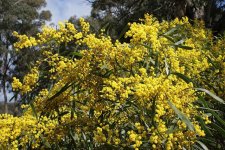
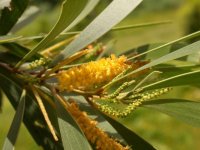
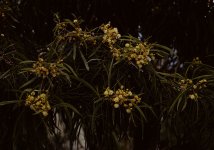
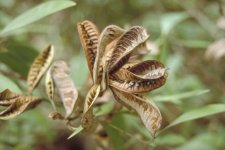
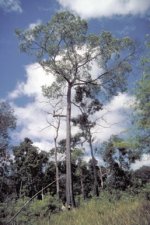
Acacia kaoaiensis, very rare, once considered sub-species of A. koa, now given it's own status..Hawaiians please conserve and regen this sacred species..



 ^..hey thanks guys..both beautiful answers, or reflections..
 and pirateb0b, you may be right, or half right about precipitates, however high yielding optimum extractions by the CSIRO (incl.phyllodes) were done around pH 9.5-11..with sulphuric acid, an pure ammonium as the basifier..see the acacia extraction workspace OP..

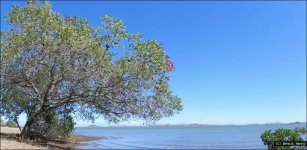
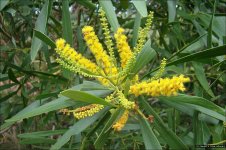
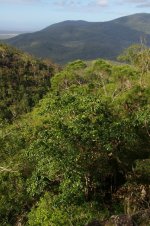
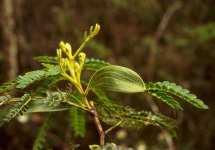



 oh... and how's that break from the computer going nen? :roll: