• Members of the previous forum can retrieve their temporary password here, (login and check your PM).

Trying to improve Acacia information

Migrated topic.
chocobeastie wrote
As for the "other" black wattle, it seems that Mearnsii or something like it has tryptamines. But ID is a bitch, and there seems to be so many variants and sub-species. I got 1.2% out of one tree once. It was a beautiful smoke too!
..thanks:d , this is great information..yes, differentiating between A. mearnsii, A. decurrens & 4 or 5 similar looking species is tricky..!
..with regards to A. dallichiana, it may be that the active variety is a hybrid with either A. phlebophylla or A. alpinia, and may even contain genetic material from A. floribunda..a hybrid turning into a new sub-species..the active variety of A. maidenii has interbred with A. obtusifolia (which itself has been known to get together with A. longifolia)..i think it's important for people to collect seed of these sub-forms in order to breed varieties optimal for human interaction..

rahlii wrote
Sinful speed your tree is Adenanthera pavonina.
..thanks rahlii:) , always appreciate a plant-ID-type-person in here..!
that is very interesting if this species is growing in the P.I., i will study adenanthera identification...
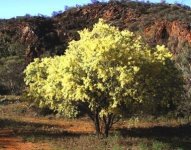
 
..for an example of the more exotic end of multi-alkaloid acacias, and possibly unusual occurrence of alkaloids, Acacia elata (Aus)
[i have been in the past made aware of the following:]
- extracts of a single tree bio-assayed in 2004 were found to contain
dmt, 5meo-dmt, nmt, formyltryptamine? & betacarbolines [see p.3 this thread]
(there is a little confusion as to the identity of the formyltryptamine..attempts at chromatography yielded an apparent conjugate bewteen tryptamines..only one GCMS was performed..the carbolines were not conclusively ID'd & were multiple.. )
Note: this may be a single freak tree, as there are cases of some species having alkaloids in one specimen and not others..what causes this is unknown

two experienced subjects bioassayed the extract and considered it strong and 'hard hitting'..

another sample of the species yielded only an orange oily wax with mild psychoactivity (nmt?)
another sample was devoid of any alkaloids

regardless of whether it has stable content, an absolutely gorgeous cold-tolerant ornamental tree to grow...
.
 
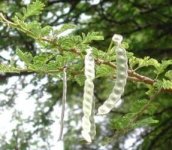
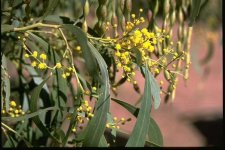
..here's some images of Acacia victoriae, australian native and grown internationally..found by Trout & friends to contain 5meoDMT,
a multiple bio-assay report c.2003 from South Australia suggested it contained more DMT than 5meo..said to be a 'powerful and enlightening' smoke..
..the seeds are edible and sold in the bush-food industry, they are very high in protein (some wattle seeds higher than some meats)
...
 

Attachments

  • wild+victoriae2.JPG
    wild+victoriae2.JPG
    33.9 KB · Views: 0
  • acacia_victoriae+flowering_.JPG
    acacia_victoriae+flowering_.JPG
    20.2 KB · Views: 0
  • acacia+victoriae_1.JPG
    acacia+victoriae_1.JPG
    23.5 KB · Views: 0
..now that i finally have a copy of Garden Of Eden (2009) by Snu Voogenbreinder, i can add some more confirmed tryptamine acacias to the thread,
thanks Snu:) ..

firstly, from Asia we have Acacia caesia, native to Southern China, Taiwan, the Philippines, Vietnam, Laos, Cambodia,
Thailand, Myanmar, Nepal, Bhutan, Bangladesh, India (widespread) and Sri Lanka. The bark yielded DMT-N-Oxide & Tryptamine [Ghosal 1972].

from Africa & the Middle East is Acacia nubica..small amounts of DMT were found in the leaves of a Sudan tree(only 1 test) by Khalil & Elkheir 1975.
 

Attachments

  • A+caesia1.jpg
    A+caesia1.jpg
    14.9 KB · Views: 0
  • A+caesia2.jpg
    A+caesia2.jpg
    11.5 KB · Views: 0
  • acacianubica.jpg
    acacianubica.jpg
    18.3 KB · Views: 0
  • acacia_nubica_e009.jpg
    acacia_nubica_e009.jpg
    56.9 KB · Views: 0
..& from Australia we have:

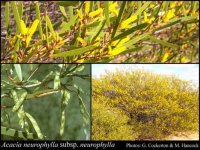
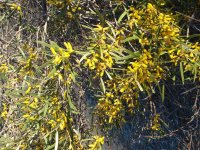
Acacia neurophylla native southern states,
hybridizes with A. acuminata..found to contain DMT (bark), harman & norharman (leaves) [S.Voogenbreinder citing 'Jeremy 2007']

Acacia difformis native NSW, Vic.
a single test found small amounts of DMT & 5meoDMT [S.Voogenbreinder citing Trout]

i'll update the lists soon (makes 29 confirmed spp. in Australia, 42 suspected all up)

Garden Of Eden (The Shamanic Use Of Psychoactive Flora and Fauna and the Study of Consciousness) by S. Voogenbreinder is self published, avavilable a few places on the net..it is the most comprehensive reference of psychoactive plants and animals i have seen to date, more extensive and up to date (at 2009) than Ott's Pharmacopeia or Ratsch's encyclopedia..

here's Acacias neurophyyla & difformis...
 

Attachments

  • acacdiff900lq.jpg
    acacdiff900lq.jpg
    7.6 KB · Views: 1
  • Acacia_difformis_1.jpg
    Acacia_difformis_1.jpg
    39.8 KB · Views: 1
  • Aneurophyyla+spp+neurophyyla1.jpg
    Aneurophyyla+spp+neurophyyla1.jpg
    53.5 KB · Views: 1
  • Acacia+neurophylla1.jpg
    Acacia+neurophylla1.jpg
    546.2 KB · Views: 0
nen888 said:
Garden Of Eden (The Shamanic Use Of Psychoactive Flora and Fauna and the Study of Consciousness) by S. Voogenbreinder is self published, avavilable a few places on the net..it is the most comprehensive reference of psychoactive plants and animals i have seen to date, more extensive and up to date (at 2009) than Ott's Pharmacopeia or Ratsch's encyclopedia.

Absolutely. This is hands-down the best book on psychoactive plants that I've come across. Snu doesn't go into quite as much detail as Ott on some topics, but he covers nearly every plant of possible interest, while Ott maintained a narrower focus. Compared to Rätsch's Encyclopedia, Snu's book stands head and shoulders above it. He covers many more plants, and in much greater detail than Rätsch... and isn't prone to Rätsch's unfortunate tendency to be lax with factual accuracy and citations.

I can't praise the book highly enough. It's hard to believe that there are still copies available, since only 500 were printed and it was released two years ago. To anyone looking for the absolute best reference on psychoactive plants, I'd recommend snapping up a copy before they're all gone.

And nen: This is good work you're doing on developing more information on Acacia trees. I have no doubt that there are plenty of pharmacological mysteries in the genus just waiting to be unraveled.
 
Can anyone guide me if the caesia is the same as Leucaena leucocephala? can't find any info anywhere.

Thanks. Been looking into this tree before and I doubted its alkaloids.
 
Uncle has attempted on several occassions to extract from Queensland Silver Wattle (Acacia Podalyriifolia) (using acid/base and stb teks) with no success... he would like to know if anyone else has been successful with this species?
 
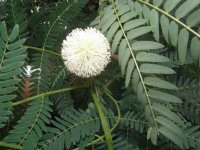
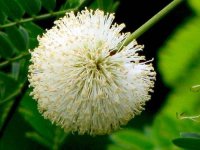
dehingoli, Leucaena leucocephala (which looks like it should be re-classified mimosa to me) is native to Central America..it contains the alkaloid Mimosine or leucenol, β-3-hydroxy-4 pyridone..i can find no records of it growing in Asia..
..it does look very similar to Acacia caesia, which i am still searching for asian distribution records..appears to be endangered in it's originally native China..
..the difference between the two seems to come down to leaves and pods, though they may have a long time ago been the same species...

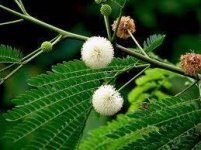
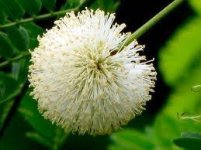
here's Leucaena leucocephala and Acacia caesia flowers (respectively):
 

Attachments

  • leucaena-leucocephala%5B1%5D.jpg
    leucaena-leucocephala%5B1%5D.jpg
    121.8 KB · Views: 0
  • acaesia+flower057ce2%5B2%5D.jpg
    acaesia+flower057ce2%5B2%5D.jpg
    33.2 KB · Views: 0
nen888,

Sorry if you have covered this already but what are your thoughts on alkaloid content and an acacia's age? I have heard about the seasonal variability of course, but not much regarding age.
 
komet (hi!) wrote:
what are your thoughts on alkaloid content and an acacia's age? I have heard about the seasonal variability of course, but not much regarding age.
..i'm reluctant to say this but older age probably results in higher alkaloid content..remember (wild-harvesters) that a 1ft in diameter A. obtusifolia or maidenii can be over 100years old (wild growth rates very slow)..i always recommend large branch bark (usually same content as trunk, not so harmful to the tree as trunk bark)
certainly, seedlings or plants younger than 3 years are lower in alkaloids than mature trees..

dehingoli, the more i examine pictures of leaves, the difference between Leucaena leucocephala & Acacia caesia becomes clearer...
 
..please note that i have updated the Australian Tryptamine (& psychoactive) Acacias List on p.5 of this thread..
it has some updated info.
..there are now 34 confirmed aussie species and 11 strong suspects (with more expected)

..it was pointed out to me by Mulga that in the '90s the CSIRO screened 158 random species of australian acacia for the presence of alkaloids..46% were positive..with this statistic we should expect up to 450 aussie species to turn up!
..to date the majority of acacia alkaloids found have been tryptamines, followed by phenethylamines, with a handful of unknown or obscure ones..

..for the main special interests of the nexus, the most recommended is still A. acuminata (just 'spice'), followed by A. floribunda (some other alkaloids), and A. maidenii (Narrow Leaf variety - some nmt) ..a few of the other spp. on the p.5 list are good & tested, but are highly variable, rare, or harder to grow.. (goto post #82)

.
 
.. (a few minor bugs fixed in the new Update of p.5(this thread) post#82 Australian acacia list)

..to add a bit more to komet's age question, the highest amount of alkaloids i have ever detected in acacia phyllode (0.7%) was in a 6-7 year old A. maidenii x grown from seed in 'garden' conditions..i have almost never touched the bark of very old wild trees for ethical reasons..a possible few extra percentage points content is not, to me, worth the damage..

..in the list i give the estimated number of A. phlebophylla mature adult trees as 15,000...this was based on a botanical survey (which found 2 additional populations to the then known 1) done prior to serious bushfires a few years back..numbers may have been reduced to 5-7000..i have it on good word, however, that many young seedlings are growing (germinated by the fire) and, without further catastrophe, should reach the above figure 'general range of endemic-ness' over the next decade..

..the species (like P. virdids) is a fairly pure source of dmt (with 0.3% in the leaves, around 98% pure), and makes a very good standard for alkaloid testing (only a leaf required for this)

but it needs to have it's growing method worked out more (& obviously it would be better to leave it to grow in the wild, it is a protected species) ..it would be a good hobby experiment for horticulturalists
..a decade ago it was said to be very difficult to grow outside it's native (alpine) habitat, and micro-rhyzobial associates were theorized to be required..however, i have now seen at least half a dozen seed grown trees, large & healthy, in cultivation..also, a 10 year old 'semi-bonsai' in a concrete tub (fat, but only 4ft tall) ..it has also been successfully grown in tissue culture (cloning of cutting material)
..it may be particularly suited to alpine cold conditions..

respect all trees...
.
 

Attachments

  • Acacia+phlebophylla+AVK+140+copy.jpg
    Acacia+phlebophylla+AVK+140+copy.jpg
    104.3 KB · Views: 1
  • cultivated+phlebo+w+juvinile+leaves-.jpg
    cultivated+phlebo+w+juvinile+leaves-.jpg
    9.9 KB · Views: 1
..............................................................................................................................................................................>
..one or two notable female researchers of the acacia light have found that the recently naturally fallen leaves (incl. brown phyllodes) of prefered species (e.g. phlebophylla, floribunda etc. ) still contain good amounts of alkaloids (if there hasn't been heavy rainfall), and are even preferred in pharmahuasca beverages to fresh leaves..
this is surely the most plant-friendly method of wild (or cultivated) collection:wink: thanks ladies...
>..............................................................................................................................................................................


note African Tryptamine Acacias (will update) on p.3, South & Central American Acacias list on p.4, & Asian Acacias p.5


Regarding some findings of low yields of alkaloids:
..Roveli (1967) and 'JG 92' found that, at certain times the tryptamines would become trapped in the gums, tars, or saponins in basic solution, and would not extract into non-polar solvent, despite being present in large amounts..in both cases, and as confirmed by first hand observation, the solution's PH was carefully manipulated up & down, and it was found that at usually slighly lower PH the alkaloids would extract..
..acacias have in general more complex chemistry than mimosas, and some low-yield reports could be due to these factors...


..lastly, for South East Queenslanders (& New South Welshmen),
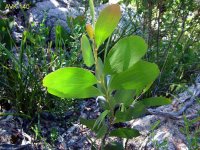
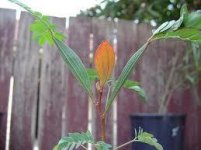
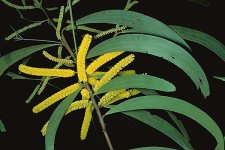
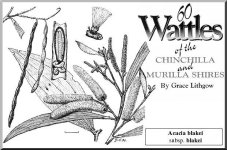
here is Acacia blakei, not abundant but reasonably widespread in it's habitat..reported to me by another researcher to contain usable quantities of mainly dmt..needs to be grown & studied more...
 

Attachments

  • acacia-blakei.jpg
    acacia-blakei.jpg
    42.8 KB · Views: 2
  • blakei_subsp_blakei_.jpg
    blakei_subsp_blakei_.jpg
    63.2 KB · Views: 2
Back
Top Bottom