• Members of the previous forum can retrieve their temporary password here, (login and check your PM).

Trying to improve Acacia information

Migrated topic.
Acacia Cyclops is indeed promising seen as theres hectares of it growing along the coast down south in Cape Town
..groovy PrimalWisdom:) ,

here is a list of African & middle-eastern Tryptamine Acacias (which will hopefully grow over the next few years..)

A. albida (Ana Tree, Winter Thorn) DMT leaf, bark [2][1]; DMT-like bioassays in Israel [dmt-nexus]
A. giraffae (synon.A. haematoxylon x erioloba) DMT in leaf [5]
A. horrida (Cape Gum, 'Dev-Babul' ) [4]
A. karoo (Sweet Thorn) tryptamines [4]
A. laeta DMT, in the leaf[6]
A. mellifera DMT, in the leaf[4][1]; alkaloid +ve 2 tests [14]; triterpinoids.
A. nilotica (Gum Arabic Tree) DMT, in the leaf[2][4][1] tentative DMT,5meoDMT[10], tryptamine and 'harmane derivatives'[11]
A. nilotica subsp. adstringens reported DMT [4][12]
A. nubica DMT in leaf [9]; synon. with A. oerfota (A. nubica subsp oerfota) - NMT [4]
A. polyacantha DMT in leaf [4][8][9]
A. senegal DMT in bark & leaf [9][2][1][6], NMT, other tryptamines [4] DMT in plant[7]
A. seyal (Red Acacia, holy 'shittim wood' ) DMT [2][1]
A. sieberiana DMT, in the leaf.[6] Ether extracts about 1-7% of the dried leaf mass.[3]
A. tortilis (Umbrella Thorn, also implicated in the Ark of the Covenant) DMT leaf, bark [2]; alkaloid positive [13]
A. xanthophloea ('Fever Tree' ) oral ceremonial & medicinal use (incl. anti-malarial); alkaloids [15]


so that's 14 so far..References:
[1]wiki.magiskamolekyler.org (Swedish)
[2]TIKHAL, Shulgin & Shulgin
[3]Wattle Seed Workshop Proceedings 12 March 2002, Canberra March 2003 RIRDC Publication No 03/024, RIRDC Project No WS012-06
[4]Pharmacuetical Excipients.com =Posted by Niazi in acacia blog
[5] (internal uni. chemistry paper viewed by Nen 1995)
[6]Shaman Australis (either claimed in a thread, or referenced to here elsewhere)
[7] Dr. Duke's Phytochemical and Ethnobotanical Databases
[8] Poland herbarium
[9] Khalil & Elkheir 1975.
[10] Heffter 1996, Trout 1997
[11] Oliver-Bever "Medicinal Plants In Tropical West Africa 1986
[12] Trout 2004
[13] Kubmarawa et al 2007
[14] Lalitha et al. 2010; Rukunga et al 2004.
[15] Nundkumar et al. 2002

..Interestingly, Acacia cyclops is native to Western Australia! Many Australian acacias were planted all over africa (for tannin & timber) and are now naturalized...
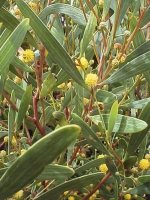
 
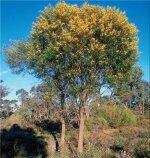
..here's Acacia cyclops (Red-eyed Wattle) (native to W.Australia & S.Australia, weed elsewhere in the world) great work PrimalWisdom!
(50mg's or so) of white crystals that smelled like DMT out of around 100grams of bark
 

Attachments

  • Acacia+cyclops.jpg
    Acacia+cyclops.jpg
    32.4 KB · Views: 0
  • Lge_AcaciaCyclops.jpg
    Lge_AcaciaCyclops.jpg
    252.9 KB · Views: 0
..hi, being trying to convince net-skeptical friends to join the nexus..have explained to them that i'm really trying to work with nexians to
keep this the most up to date Acacia forum around..

Reference update: Rovelli(1967) found strain of A. longifolia with just Histamine (presumably one of the inactive strains). [thanks Snu:wink: ]Histamine, in the amounts
present in longifolia does not seem to display toxicity..K. Trout (in Best of Entheogen Review 1992-2000) thinks DMT in longifolia a misunderstanding
of a 1952 paper by White et al, but it has now been shown most of White's findings of Tryptamine in acacias is infact DMT (e.g. A. acuminata)..
Snu says C. Ratsch doesn't actually say A. mangium is psychoactive, so only 1 activity report so far..

A formally tested American(!) species that skipped my attention:
Acacia angustissima (Prairie acacia, White ball acacia) (native to USA, Mexico)
β-methyl-phenethylamine, NMT and DMT in leaf

[Refs: Glasby, John Stephen (1991). Dictionary of Plants Containing Secondary Metabolites. CRC Press. pp. 2. ISBN 0850664233. &
'Nutritive value assessment of the tropical shrub legume Acacia angustissima: anti-nutritional compounds and in vitro digestibility. 'Personal Authors: McSweeney, C. S., Krause, D. O., Palmer, B., Gough, J., Conlan, L. L., Hegarty, M. P. Author Affiliation: CSIRO Livestock Industries, Long Pocket Laboratories, 120 Meiers Road, Indooroopilly, Qld 4068, Australia. Document Title: Animal Feed Science and Technology, 2005 (Vol. 121) (No. 1/2) 175-190]

The root is used in the drink 'pulque' in Mexico.The indigenous Tzotzil and Tzeltal Maya people of Mexico use A. angustissima to treat digestive tract problems. They also use it to treat toothache, rheumatoid arthritis and cuts of the skin. Experiments have shown that A. angustissima mildly inhibits the growth of Escherichia coli and Staphylococcus aureus.(see Wikipedia for references)

here is Acacia angustissima
 

Attachments

  • Acacia_angustissima_06.jpg
    Acacia_angustissima_06.jpg
    136.7 KB · Views: 0
  • Acacia_angustissima_plant.jpg
    Acacia_angustissima_plant.jpg
    79.4 KB · Views: 0
  • IPA-White-Ball-Acacia-Pods.jpg
    IPA-White-Ball-Acacia-Pods.jpg
    12.5 KB · Views: 0
..cool!:) would like sandy well drained mix (but not too dry), and nitrogenous fertilizers (which will probably aid in content as well as growth rate),
while drought tolerant as adults, many acacias are very sensitive to root drying while seedlings..
..to germinate either place in saucepan water & bring to boil over 5-7minutes, or slightly damage outer seed coat with file or scissors (not breaking internal 'germ'),
then sprout for week or two in soft moist medium...
 

Attachments

  • Acacia+acuminata+in+wild.jpg
    Acacia+acuminata+in+wild.jpg
    43.6 KB · Views: 0
..quick update for wattleheads..as reported to me - a roadside collection approx. 80grams of Acacia falcata phyllodes, after happening to drive by some last week..
a very quick STB napatha extraction with friend yeilded approx. 20mg of an alkaloid that is probably either DMT or 5meoDMT (from smell i suspect the latter)..
there hasn't been a chance for a follow up/test..should be bio-assayed within week (depending on what a few reagents show)...
so I await that report
 
that photo looks similar to my maidenii, but i have never tested it
should do one day though

came across someones extract of floribunda and the product had spice smell mixed with the smell of floribunda flowers, i think they extracted leaves and flowers

interesting i thought

bring on more acacia info :)
 
i know there is much talk on floribunda but am curious to see and hear peoples experiences with this plant, how much plant material, pics of spice, effects etc.

anyone working with this plant?
 
hebrew writes
i know there is much talk on floribunda but am curious to see and hear peoples experiences with this plant, how much plant material, pics of spice, effects etc.
..me too..i have not personally worked with this plant..floral oils have been known to appear in obtusifolia and longissima extracts and are not harmful..(BTW the indole smelling alkaloid from Acacia falcata is yet to be bio-assayed...)

..up to now i've confined the aussie tryptamine species to those with 'rod' or 'spike' type flowers, but tryptamines have been found in 'ball' flower species..(note also yatiqiri's tree developments)..


..in 2005 it was noted that a large, old planted specimen of Acacia elata (Mountain Cedar Wattle) was beginning to die (probably due to age, or that a drain had been redirected towards it's roots)..
branches and bark were collected and extracted with methanol/acetic acid/NaOH/dichloromethane..
approximately 0.3% of crude alkaloid content was found and bio-assayed..GCMS determined it to contain DMT,5meoDMT,NMT,formyltryptamine & betacarbolines..there has also been a negative result from the species ..the instigating test subject says: "..while the subjective effects of the extract could be said to be more of a 'punch in the face' than other wattles, with respectful and conscious usage i think this species is appropriately named..."

..i am still awaiting follow-ups on other specimens..
whether this is a rouge one off (as can happen in some species) or widespread in the species remains to be seen
so here is Acacia elata...
 

Attachments

  • acacia+elata.jpg
    acacia+elata.jpg
    69 KB · Views: 0
  • AelataJPG+(2).jpg
    AelataJPG+(2).jpg
    44.7 KB · Views: 0
..hey wattleheads, forgot to mention i have had a second report (from W.Australia) of tryptamines in Acacia cyclops..no bioassay yet but is
looking like a good species..

..for those wanting to test whether their local strain of A. longifolia is active, you could try the 'leaf-burning test'..pick a fresh phyllode, ignite with
a lighter, inhale smoke..if there is an acridness or biting sensation about smoke it's probably an active plant..

..lastly, i'm really hoping people like chocobeastle and the often mentioned underground researcher who has 'found 20 new species' will come
forward soon with some information so we can all share in this together (& acknowledge the valuable work they have done)..

(ps. i still haven't covered asian and south american acacias in this thread yet, the fun is endless...)
 
UPDATE ON MY ACACIA EXPLOITS

Hey gang

So work has gotten pretty hectic recently which means I have little to no time to work on testing out new acacias.

That been said I did another 2 teks on Acacia Cyclops – I had tried the bark before, and gave the leaves and some roots (too much of a mission stripping the root bark off tbh)

100grams of fresh leaves yielded a yellow oil (I got lazy during defatting) that smelt like DMT but not as strongly as the crystals from the bark.
200 grams of the roots yielded nothing special, bit of oily residue, but absolutely no DMT smell.
It seems the bark might be worth another tek with a larger quantity, I’ll get to that pretty soon I hope.

I hope to tek some bark from a Persian Silk tree – Albizia Julibrissin (or something very similar, this one has yellow flowers) and will report.

Hopefully this weekend leaves me with loads of free time to gather some more raw materials, and report back with any results.

Keep up the good work chaps!
 
rootbark is usually not worth it with acacia's. intresting to hear about cyclops
keep up the good work, what tek you using? STB or A/B
 
Hey Hebrew

I used an STB on my original bark tek. But did a long acid soak (3 days) with the leaves and roots before doing a 2hr boil of both in some acidic water.
I then just add the acidic water and plant matter to a basified solution. Then just do pulls as normal. I do 3 -5 naptha pulls, then switch to xylene for 3 pulls and finally 1-2 toluene pulls (all pulled over a few days) – my theory is that this will get anything worthwhile out of the raw materials.

I have yet to smoke the 50mgs from my original bark tek of the Cyclops, but will try some this weekend. I have washed and re-x’d it like 3 times so I assume whatever is left is just DMT ( I lost 20mgs during washing and re-xing so its actually 30mgs now), its pure white and smells exactly like MHRB DMT with a slight planty scent.

Anyway yeah I hope to have some decent results by next weekend with a few more species.
I just wish I had loads more time.
 
PrimalWisdom

yeah time is always limited ay.

nice work
i would work with the phyllodes again in a different time of the year and see what you get, the oil may still be active??
 
..yeah, keep up the good work PrimalWisdom..!

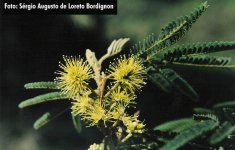
..yatiqiri's photo is not unlike Mimosa scabrella as you suggest hebrew, but again i think the flowers are different..
thanks for the 2 New Mimosa article http://www.springerlink.com/content/w113128673r5g353/ BTW, i gotta work out how to get
full access..Mimosa is a good starting point for IDing the plant..

..something about yatiqiri's photo looks very Calliandra like to me, but yellow is a very rare colour in calliandras (some of which contain
alkaloids of possible interest, one sp. is an ayahuasaca additive somewhere)..
..the density of the flowers in the photo, however, hints at acacia..

..a really interesting tree..any botanists with South American knowledge out there?

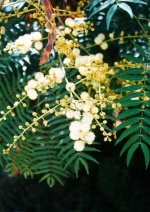
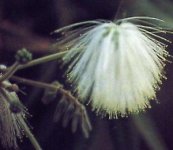
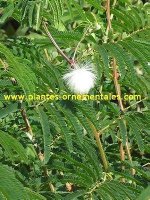
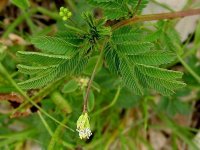
here are some calliandras with white>yellow flowers...
 

Attachments

  • calliandra_portoricensis.jpg
    calliandra_portoricensis.jpg
    13.1 KB · Views: 0
  • c-portoricensis.jpg
    c-portoricensis.jpg
    47.9 KB · Views: 0
  • 90f6be.jpg
    90f6be.jpg
    79.7 KB · Views: 0
Back
Top Bottom