Snu's book is the most academically comprehensive and accurate of all of the ethnobotanicl publications currently available ; and the range of species discussed is indeed vast . " Garden of Eden " is one of my most treasured possessions [ and most used book ] . Perhaps people place more importance on colour photos than content ? I will also be buying any second edition that appears in future . I do not understand why it is not sold out long ago . Perhaps self-publishing , and lack of advertising is hindering sales - maybe many folk don't know of its existence ? If for example , Snu published thru Innr Traditions / Park Street Press , I believe many 1000's of copies would sell - it really is that good . As for the price of " G of E " , it is indeed an under-valued bargain , imho ...

-
Members of the previous forum can retrieve their temporary password here, (login and check your PM).
You are using an out of date browser. It may not display this or other websites correctly.
You should upgrade or use an alternative browser.
You should upgrade or use an alternative browser.
Trying to improve Acacia information
- Thread starter nen888
- Start date
Migrated topic.


^..absolutely! and Entropymancer also recommended Garden of Eden in the thread a while ago..
i have been prodding snu to do an electronic-medium version (as well as hardcopy) so that it could reach a larger audience, and be more affordable..i.e. more people pay less..everyone's happy!..the way music has gone on the net..sure, many many pirate it (some have to for financial reasons), and deal with lower resolution..but there are still many who don't find a a few dollars on their card a problem for quality....i'm saying..,hardcore as this is, (and i'm actually pretty oldfashioned at heart) that the printed book, like the developing-room photograph, has had it's heyday..it's increasingly becoming a curiosity for a minority..! if you think that's heavy, read some Marshall McLuhan! maybe something that's printed out by the reader is more the model now?..and, as an aside, part of the time involved and cost/resources in putting together an acacia book is photo rights/sourcing..any photographers out there who want to get involved in creating new images please PM me..but, yeah, like Published Peer Review Academic Journals, photo use is expensive in the information age!
be well, all..and feel free to disagree with me, correct any mistakes, and show me a thing or two..:d
i have been prodding snu to do an electronic-medium version (as well as hardcopy) so that it could reach a larger audience, and be more affordable..i.e. more people pay less..everyone's happy!..the way music has gone on the net..sure, many many pirate it (some have to for financial reasons), and deal with lower resolution..but there are still many who don't find a a few dollars on their card a problem for quality....i'm saying..,hardcore as this is, (and i'm actually pretty oldfashioned at heart) that the printed book, like the developing-room photograph, has had it's heyday..it's increasingly becoming a curiosity for a minority..! if you think that's heavy, read some Marshall McLuhan!
maybe something that's printed out by the reader is more the model now?..and, as an aside, part of the time involved and cost/resources in putting together an acacia book is photo rights/sourcing..any photographers out there who want to get involved in creating new images please PM me..but, yeah, like Published Peer Review Academic Journals, photo use is expensive in the information age!be well, all..and feel free to disagree with me, correct any mistakes, and show me a thing or two..:d

Wow, so much to think about! And feel! Nen, your lecture tour sounds like a cross between a right interesting laugh and the climax of a Tarantino movie! :lol:
That Galapagos Acacia is a tantalising mystery indeed. Didn't the Chinese sail the globe a couple of 1000 years ago?
I'm glad they're having a rest in the middle-east this week. There's more hope. It seems Acacia is about to become the fashion for middle-eastern women! See photo below from 'acacia' fashion label, without any intent to promote them. Nice name though. Can you all agree on that, at least!?
صمغ عربى ...acacia
That Galapagos Acacia is a tantalising mystery indeed. Didn't the Chinese sail the globe a couple of 1000 years ago?
I'm glad they're having a rest in the middle-east this week. There's more hope. It seems Acacia is about to become the fashion for middle-eastern women! See photo below from 'acacia' fashion label, without any intent to promote them. Nice name though. Can you all agree on that, at least!?
صمغ عربى ...acacia
Attachments



^ a good question, i havn't done enough looking about to know for sure, my guess came from a few papers i first found posted at https://mycotopia.net/forums/botanicals/64781-invasive-fungi-acacia-species.html:
J Chem Ecol. 2004 Feb;30(2):409-23.
Analysis of anal secretions from phlaeothripine thrips.
Suzuki T, Haga K, Tsutsumi T, Matsuyama S.
Source
Institute of Applied Biochemistry, University of Tsukuba, Tsukuba, Ibaraki 305-8572, Japan. tksuzuki@agbi.tsukuba.ac.jp
Abstract
The anal secretions of 16 phlaeothripine thrips species (Thysanoptera: Phlaeothripidae) were studied, including a reinvestigation of three species previously reported. A total of 37 components were detected, including hydrocarbons, acetates, terpenes, carboxylic acids, a quinone, an aromatic compound, and a pyranone compound. The secretions of all species were composed of some of these components, with Xylaplothrips inquilinus possessing as many as 11 components. Of these components, (Z)-9-octadecene, (Z)-9-nonadecene, nonadecadiene, octanoic acid, decanoic acid, geranial, neral, alpha-pinene, beta-pinene, caryophyllene, 2-hydroxy-6-methylbenzaldehyde, and two unidentified monoterpenes [UK-I (M+136) and UK-II (M+168)] were detected for the first time. The chemicals were species-specific; four Liothrips species and three Holothrips species could be distinguished from each other and their congeners by the GC profiles of the ether extracts of their anal secretions. The anal secretions of gall-inducing thrips commonly contained terpenes. of which citral (a mixture of geranial and neral) and beta-acaridial repelled ants or had antifungal activity. The findings suggest that these terpenes play a defensive role and prevent galls from fungal infestation. 3-Butanoyl-4-hydroxy-6-methyl-2H-pyran-2-one, found from three Holothrips spp., caused paralysis in ants. Chemical analysis of anal secretion components is a useful method for the classification of tubuliferan species that are difficult to distinguish on the basis of morphological characters.
^..thanks Seldom!..now there's an area of research i hadn't previously contemplated..anal secretions and
acacias! ..polmos, p.42 is all i know..at this stage..
..and acacian..thanks for your support! my break from computer..yeah, well..still part social-mammal..haha..the plants are working on me..!
..and phyllode..looking good!
..so at last, and thank you wira who actually emailed it to me months ago and it got lost in the inbox,
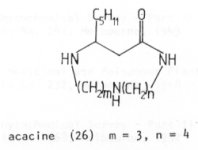
the proposed structure of Acacine, the novel Spermidine alkaloid from Acacia myrtifolia..(please remember this is a completely unknown alkaloid of unknown toxicity..)
and below that A. myrtifolia..has varying small and larger phyllode forms..Aus., found Qld, NSW, Vic & WA..
..now there's an area of research i hadn't previously contemplated..anal secretions and acacias! ..polmos, p.42 is all i know..at this stage..
..and acacian..thanks for your support! my break from computer..yeah, well..still part social-mammal..haha..the plants are working on me..!
..and phyllode..looking good!
..so at last, and thank you wira who actually emailed it to me months ago and it got lost in the inbox,
the proposed structure of Acacine, the novel Spermidine alkaloid from Acacia myrtifolia..(please remember this is a completely unknown alkaloid of unknown toxicity..)
and below that A. myrtifolia..has varying small and larger phyllode forms..Aus., found Qld, NSW, Vic & WA..
Attachments
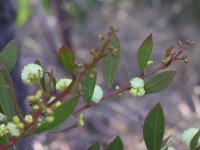
..island holiday imminent! one more pic of A. simsii for good measure..
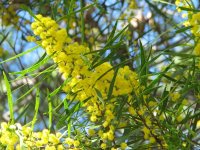
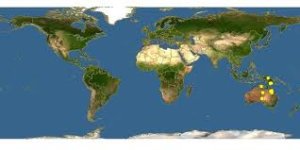
proposed common-name: "the Lost Thoughful Tree'..got a good feeling, along with the genetic evidence, about this one..available from good nurseries..distribution map below..thoughtful discoveries everyone!
proposed common-name: "the Lost Thoughful Tree'..got a good feeling, along with the genetic evidence, about this one..available from good nurseries..distribution map below..thoughtful discoveries everyone!
Attachments


^..glad you having a good time! marzbar329..speaking of 'god'..{see next post}
accidental double post synchronicity, so i'll post the kind of emails i get.. (this one from phyllode)
first pdf to the first accurate translation..
..speaking of 'god'..{see next post}accidental double post synchronicity, so i'll post the kind of emails i get..
(this one from phyllode)first pdf to the first accurate translation..
..to which i'll add Άπειρο είναι ένα παιδί στην αναπαραγωγή and i'm not sure that phyllodess is israeliעמוק אוהבי עץ שיטה הרשו לי לדבר כי משה רבנו לא היה שונה אתה ולא אני אנחנו כל אחד (ש"ע) אלוהים; האל; אליל , אללה, מריה (ש"ע) אלה, אלילה; אישה יפהפיה (סלנג) והחוטא, רופא ולכן לא תרצח ולא לדבר בשמי, אני לא שם, לא ארון החולמים הם לי
الصغيرة فتية صغار الفتيات لا تختلف كثيرا, لذلك الرجل والمراة سواء فى الحكمة من خلق الله متساوية القوة والصوت ضوء من الله الثناء
Attachments



^..glad you having a good time! marzbar329..speaking of 'god'..
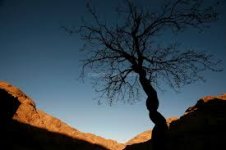
one more photo-tour..entitled Back to the Burning Bush..
now, i'm not particularly interested in whether or what 'god' said to Moses..i'm gnostic/animist..'god' can talk to me if 'god' chooses, i don't need a middle man..
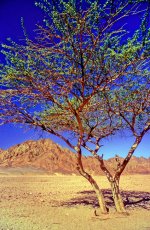
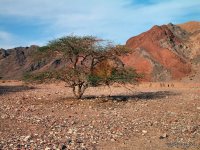
..but, for historical interest, and after checking with some Israeli botanists, the acacia tree on Mt. Sinai is
Acacia tortillis sub. sp. raddiana, also pictured on p.16 and a couple of pages back..
it does have a more reddish, firey appearance about it compared with other sub species of A. tortillis, which is found throughout africa.. it was of very important medicinal and spiritual importance to the Bedouin, pre-Islam to today..
because of it's importance there are conservation programmes underway in the Sinai to protect and regen this tree, which is becoming rarer due to human and grazing activity..
and yes, as mentioned before, several bioassays have been done on this sub species, indicating tryptamines..
last point, while Peganum harmala is usually thrown in to 'explain' the entheogenic-biblical-acacia theories, we can see now from this thread that a number of acacias are orally active on their own, particularly the leaves..see the index..
..Trees speak to everyone with the heart to hear..some are always burning on the inside with a fire that will not die..
@
below..i) A. raddiana near Eilat, Mt. Sinai. ii) The Acacia on Mt. Sinai. iii) The patriarch meets his master.
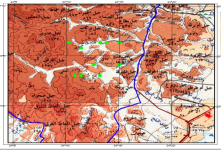
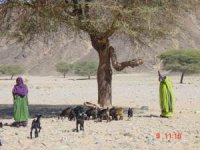
iv) Two Bedouin women shaking a tree of Acacia raddiana to feed their goats leaves and nutritive legumes of acacia. v) map showing acacia raddiana conservation areas in sinai. vi) burning bush again in the Sinai
..& vii) the eye of god in raddiana branch mt. sinai....
..speaking of 'god'..one more photo-tour..entitled Back to the Burning Bush..
now, i'm not particularly interested in whether or what 'god' said to Moses..i'm gnostic/animist..'god' can talk to me if 'god' chooses, i don't need a middle man..
..but, for historical interest, and after checking with some Israeli botanists, the acacia tree on Mt. Sinai is
Acacia tortillis sub. sp. raddiana, also pictured on p.16 and a couple of pages back..
it does have a more reddish, firey appearance about it compared with other sub species of A. tortillis, which is found throughout africa.. it was of very important medicinal and spiritual importance to the Bedouin, pre-Islam to today..
because of it's importance there are conservation programmes underway in the Sinai to protect and regen this tree, which is becoming rarer due to human and grazing activity..
and yes, as mentioned before, several bioassays have been done on this sub species, indicating tryptamines..
last point, while Peganum harmala is usually thrown in to 'explain' the entheogenic-biblical-acacia theories, we can see now from this thread that a number of acacias are orally active on their own, particularly the leaves..see the index..
..Trees speak to everyone with the heart to hear..some are always burning on the inside with a fire that will not die..
@
below..i) A. raddiana near Eilat, Mt. Sinai. ii) The Acacia on Mt. Sinai. iii) The patriarch meets his master.
iv) Two Bedouin women shaking a tree of Acacia raddiana to feed their goats leaves and nutritive legumes of acacia. v) map showing acacia raddiana conservation areas in sinai. vi) burning bush again in the Sinai
..& vii) the eye of god in raddiana branch mt. sinai....
Attachments
-
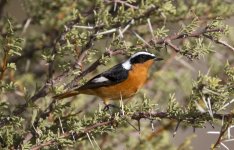 Phoenicurus_moussieri_1.jpg97.7 KB · Views: 0
 -
 acacia+mt+sinai.jpg342.5 KB · Views: 0
 -
 acacia+conservation+in+sinai+map.png1,011.8 KB · Views: 0
 -
 Two+Bedouin+women+shaking+a+tree+of+acacia+raddiana+to+feed+their+goats+leaves+and+nutritive+l...JPG17.2 KB · Views: 0
 -
 mosesandburningbush.jpg39.6 KB · Views: 0
 -
 Mt+Sinai+Acacia.jpg39.8 KB · Views: 0
 -
 Acacia+tree+near+Eilat%2C+tb022704005%5B5%5D.jpg413 KB · Views: 0

I thought I'd missed the cue with snu's garden of eden..I read that they stopped printing copies somewhere.. thats awesome he has copies left! I want me a copy of that book...I noticed a really interesting book by Maria Hitchcock who's from Armidale actually at the botanical gardens a few weeks ago.. all about the acacia species of new england.. Seldom might be a good investment. Just mentioned it to mum... she hinted that I might have an acacian christmas present this year.. :twisted:
Myrtifolia is a cool little thing.. see them a bit around warrendyte. Does the flower colour vary a bit with this species a bit? Also do you know what the method of extraction was that found the alkaloid?
"the lost thoughtful tree" .. and so it will now be known! I like the look of this one too.. it reminds me of a cross between confusa and floribunda..do you know what the phyllodes feel like?
Nen, do you know if Benny Shannon is aware of the orally active species?
Ok, so after I finish with the mearnsii and floribunda phyllodes I have, I think I might start focussing on Longifolia more and the differen't genetic variants. I think a visit back to that site with the longifolias that penetrated into my mushroom trip might be in order... maybe that meant something. Could you describe some of the traits to look for in the active species?
..and phyllode .. what a babe
Myrtifolia is a cool little thing.. see them a bit around warrendyte. Does the flower colour vary a bit with this species a bit? Also do you know what the method of extraction was that found the alkaloid?
"the lost thoughtful tree" .. and so it will now be known! I like the look of this one too.. it reminds me of a cross between confusa and floribunda..do you know what the phyllodes feel like?
Nen, do you know if Benny Shannon is aware of the orally active species?
Ok, so after I finish with the mearnsii and floribunda phyllodes I have, I think I might start focussing on Longifolia more and the differen't genetic variants. I think a visit back to that site with the longifolias that penetrated into my mushroom trip might be in order... maybe that meant something. Could you describe some of the traits to look for in the active species?
..and phyllode .. what a babe
:lol:phyllode said:Nen, your lecture tour sounds like a cross between a right interesting laugh and the climax of a Tarantino movie! :lol:
صمغ عربى ...acacia
almost 50 pages now nen.. congrats buddy! what an epic piece of threadness
^hey acacian..the active A. longifolias tend to be a) more tree like/less prostrate. b) phyllodes like obtusifolia. c) paler-yellow end of the colour spectrum. d) tendency to reddish stems. e) the phyllodes will have a bitterness/astringency compared with non-active forms..photo here p23..they don't have many alks (at least in phyllodes) during flowering..see below..
..and i have no idea if Benny Shannon knows about orally active acacias..basically, the DMT-Nexus is where this information first appeared between 2010-2011, with acacias confusa, mucronata, acuminata & nilotica..
so, he probably doesn't..but i agree with phyllode that his paper was rushed and poorly researched, even though an inspiration to a few..no discussion on entheogenic acacias and moses that i have read anywhere resembles well researched..! btw..several christian web-sites now have pictures of our favourite biblical entheogenic acacias..so the acacia-awareness is growing..
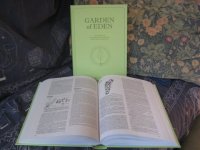
..Garden of Eden still has a few copies left..it really is the encyclopedia to date on etheogenic plants and animals..available from Garden of Eden ..photo below..
yeah..there is something still about the object (as well as the info.) ..
back to longifolia and obtusifolia..i am about to challenge some senior botanists on this..
1) a population in victoria of A.obtusifolia is recorded as propogating by suckering.. No NSW or Qld population will do this, suggesting the victorian form is a disjunct and unique sub-form..a species recorded as Acacia longifolia f. elongata Benth., London J. Bot. 1: 373 (1842); A. longifolia var. obtusifolia (A.Cunn.) Benth. ex Seem., is now considered to be obtusifolia, but i think actually this constitutes a sub-species of A. obtusifolia..
2) the type-form of A. obtusifolia has cream-very pale yellow flowers and a very distinct vein pattern of the phyllodes..it is quite distinct from yellow flowered forms elsewhere (see p11) ..
3) yellow-flowered forms being classed as A. obtusifolia share as much in common with A. longifolia..
i call for an botanical revision of this species, which i feel is long-overdue..!
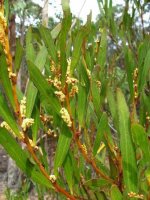
images: 1) "Garden Of Eden" [Voogelbreinder 2009]. & 2) the 'active' A. longifolia (which looks similar to obtusifolia)
..the active A. longifolias tend to be a) more tree like/less prostrate. b) phyllodes like obtusifolia. c) paler-yellow end of the colour spectrum. d) tendency to reddish stems. e) the phyllodes will have a bitterness/astringency compared with non-active forms..photo here p23..they don't have many alks (at least in phyllodes) during flowering..see below....and i have no idea if Benny Shannon knows about orally active acacias..basically, the DMT-Nexus is where this information first appeared between 2010-2011, with acacias confusa, mucronata, acuminata & nilotica..
so, he probably doesn't..but i agree with phyllode that his paper was rushed and poorly researched, even though an inspiration to a few..no discussion on entheogenic acacias and moses that i have read anywhere resembles well researched..! btw..several christian web-sites now have pictures of our favourite biblical entheogenic acacias..so the acacia-awareness is growing..
..Garden of Eden still has a few copies left..it really is the encyclopedia to date on etheogenic plants and animals..available from Garden of Eden ..photo below..
yeah..there is something still about the object (as well as the info.) ..
back to longifolia and obtusifolia..i am about to challenge some senior botanists on this..
1) a population in victoria of A.obtusifolia is recorded as propogating by suckering.. No NSW or Qld population will do this, suggesting the victorian form is a disjunct and unique sub-form..a species recorded as Acacia longifolia f. elongata Benth., London J. Bot. 1: 373 (1842); A. longifolia var. obtusifolia (A.Cunn.) Benth. ex Seem., is now considered to be obtusifolia, but i think actually this constitutes a sub-species of A. obtusifolia..
2) the type-form of A. obtusifolia has cream-very pale yellow flowers and a very distinct vein pattern of the phyllodes..it is quite distinct from yellow flowered forms elsewhere (see p11) ..
3) yellow-flowered forms being classed as A. obtusifolia share as much in common with A. longifolia..
i call for an botanical revision of this species, which i feel is long-overdue..!
images: 1) "Garden Of Eden" [Voogelbreinder 2009]. & 2) the 'active' A. longifolia (which looks similar to obtusifolia)
Attachments
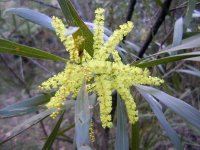
here's a more tree-like longifolia that I found ages ago.. i originally suspected it to be obtusifolia, though upon revisiting later it looked a lot like longifolia.. unless it could be one of the pointy tip strains you speak of. it has quite red stems, fairly light and more obtusifolia style phyllodes.. could this be a viable candidate do you think nen?
i've noticed the urban trees often have that style of trunk to the wild ones with longifolia and floribunda. like a very light brown with very smooth grey areas. Do you think this could have something to do with soil ph in the more urban areas?


i've noticed the urban trees often have that style of trunk to the wild ones with longifolia and floribunda. like a very light brown with very smooth grey areas. Do you think this could have something to do with soil ph in the more urban areas?
^..could well be acacian! if it's going into flower now, then it shares genes with A. obtusifolia..true longifolia flowers in june (winter aus) ..the twigs look good..as it's flowering, test twig as well..and then try 3 months later if low alks..
wish you fun experimentation..
.
wish you fun experimentation..
.
well, funnily enough that photo was taken in july, so it won't be flowering now. I might prune a few branches and do a stem and twig extraction. after of course i process this meanrsii material. I really want to do it accurately and weigh it, though its not the easiest material to separate. i'm almost half tempted to just blend it chuck it in the pot and get it going.. but that wouldn't be good for research
^..yeah, i was surprised if it was flowering now..
..i was going to nut this out with a couple of senior botanists first (incl. the one who identified A. provincials and Paraserianthes lophantha early in the thread via wira for us)
but here's my proposals on re-defining A. obtusifolia (A. Cunn. 1825)
and relatives..note Alex Cunningham who named obtusifolia believed variety ii) below was different
________________________________________________________________________________________________________________
(1) flowers white/cream>pale yellow 2-3.5cm; phyllodes with many fine longitudinal veins visible, leathery, with blunt or obtuse tips, straight,1.0-1.5cm width, sometimes 2-3 main veins visible, but not prominent as in ii); pods straight to slightly convex; reproduces from seed, suckering unknown.
__i) = Acacia obtusifolia (A. Cunn) Isoform
__ii) flowers pale yellow>yellow 3.5-4.5cm; phyllodes with 2-3 prominent longitudinal veins, plus many fine ones, some phyllodes apex point, some slightly falcate; pods convex
= Acacia obtusifolia sub. sp. longifolia. (synon. Acacia longifolia f. elongata Benth., London J. Bot. 1: 373 (1842); A. longifolia var. obtusifolia (A.Cunn.) Benth. ex Seem)
(2) flowers yellow; phyllodes 0.5-1.2cm width often with apex tip, thinner texture than (1); subtropical range
__iii) = Acacia obtusifolia sub. sp. suugest nom. 'intertexta' (synon. Acacia intertexta Sieber ex DC )
*- flowers yellow, more sparse than (1), time winter; phyllodes often apex tip, 2-3 prominent nerves, pods straight>slightly convex
= Acacia longifolia subtype (contains tryptamines)
**-flowers yellow, time april or sept.; phyllodes 2-3 main veins, though not prominent, with many fine, thinner texture than (1), falcate, with apex or point; pods convex>coiled/twisted
= Acacia miadenii X obtusifolia (natural occurrence in wild)
(3) almost never sets seed, reproduces from suckering; single disjunct victorian population
__iv) = Acacia obtusifolia un-determined Victorian var. this may be very rare and in need of careful study, this population..
_______________________________________________________________________________________________________________
..i want to add that a factor usually overlooked by systematic botanists is phenotype..if different sub-species breed true to seed from parent and have distinct phytochemical profiles, then surely this is as key a distinguishing factor as minute anatomical details..?..while there is seasonal variation, general profile 'fingerprints' breed true from seed in the case of these 4 proposed sub-types..the subtropical (tested by Mulga, mainly dmt) has the lowest % content, and is not abundant..the victorian outcrop, if unique, could be endangered..]
.
so, this very giving and loving tree has been much talked about and exploited without the appropriate study in terms of both type, range or alkaloidal variation..the first extract bioassay was in jan 1993..phytochemical evidence also suggests distinct sub-types..[pers. obs.; Trout]
..ave, blunt tree..
.ps. on Paraserianthes lophantha, (see index and ID thread) now shown to be the closet relative of acacia..a world weed..no known chemical information..
below, a photo of a tree being sold as A. obtusifolia by a well known plant supplier..it is certainly not True obtusifolia! ..no doubt also good though..looks like longifolia in the family..
thank you to the trees..respect
..i was going to nut this out with a couple of senior botanists first (incl. the one who identified A. provincials and Paraserianthes lophantha early in the thread via wira for us)
but here's my proposals on re-defining A. obtusifolia (A. Cunn. 1825)
and relatives..note Alex Cunningham who named obtusifolia believed variety ii) below was different
________________________________________________________________________________________________________________
(1) flowers white/cream>pale yellow 2-3.5cm; phyllodes with many fine longitudinal veins visible, leathery, with blunt or obtuse tips, straight,1.0-1.5cm width, sometimes 2-3 main veins visible, but not prominent as in ii); pods straight to slightly convex; reproduces from seed, suckering unknown.
__i) = Acacia obtusifolia (A. Cunn) Isoform
__ii) flowers pale yellow>yellow 3.5-4.5cm; phyllodes with 2-3 prominent longitudinal veins, plus many fine ones, some phyllodes apex point, some slightly falcate; pods convex
= Acacia obtusifolia sub. sp. longifolia. (synon. Acacia longifolia f. elongata Benth., London J. Bot. 1: 373 (1842); A. longifolia var. obtusifolia (A.Cunn.) Benth. ex Seem)
(2) flowers yellow; phyllodes 0.5-1.2cm width often with apex tip, thinner texture than (1); subtropical range
__iii) = Acacia obtusifolia sub. sp. suugest nom. 'intertexta' (synon. Acacia intertexta Sieber ex DC )
*- flowers yellow, more sparse than (1), time winter; phyllodes often apex tip, 2-3 prominent nerves, pods straight>slightly convex
= Acacia longifolia subtype (contains tryptamines)
**-flowers yellow, time april or sept.; phyllodes 2-3 main veins, though not prominent, with many fine, thinner texture than (1), falcate, with apex or point; pods convex>coiled/twisted
= Acacia miadenii X obtusifolia (natural occurrence in wild)
(3) almost never sets seed, reproduces from suckering; single disjunct victorian population
__iv) = Acacia obtusifolia un-determined Victorian var. this may be very rare and in need of careful study, this population..
_______________________________________________________________________________________________________________
..i want to add that a factor usually overlooked by systematic botanists is phenotype..if different sub-species breed true to seed from parent and have distinct phytochemical profiles, then surely this is as key a distinguishing factor as minute anatomical details..?..while there is seasonal variation, general profile 'fingerprints' breed true from seed in the case of these 4 proposed sub-types..the subtropical (tested by Mulga, mainly dmt) has the lowest % content, and is not abundant..the victorian outcrop, if unique, could be endangered..]
.
so, this very giving and loving tree has been much talked about and exploited without the appropriate study in terms of both type, range or alkaloidal variation..the first extract bioassay was in jan 1993..phytochemical evidence also suggests distinct sub-types..[pers. obs.; Trout]
..ave, blunt tree..
.ps. on Paraserianthes lophantha, (see index and ID thread) now shown to be the closet relative of acacia..a world weed..no known chemical information..
below, a photo of a tree being sold as A. obtusifolia by a well known plant supplier..it is certainly not True obtusifolia! ..no doubt also good though..looks like longifolia in the family..
thank you to the trees..respect
Attachments
ps. i have been trying to get any lose ends tied up before going quieter..now, i can't think of anything that was bugging me, for now.. when i mentioned a pdf 'best of' this thread being re-arranged, as an example, all entries/images for a particular species or subject will be organised together (incl. good questions/commentary etc)
..and, i'm sure i'll find a little something extra to throw in.. ..see you all about..and keep it flowing..!
when i mentioned a pdf 'best of' this thread being re-arranged, as an example, all entries/images for a particular species or subject will be organised together (incl. good questions/commentary etc)..and, i'm sure i'll find a little something extra to throw in..
..see you all about..and keep it flowing..!Acacian wrote:
 ha ha. Keep up the good work Acacian! Now is probably a good time for Longifolia.
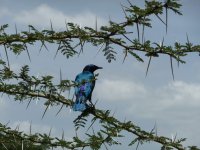
And here's an image info present for all and Nen, thanks for the Raddiana clarification.
it's from Kenya. And looks like Tortillis again.
Yes, attractive to men, women and plants alike! :lol:..and phyllode .. what a babe
ha ha. Keep up the good work Acacian! Now is probably a good time for Longifolia.And here's an image info present for all and Nen, thanks for the Raddiana clarification.
it's from Kenya. And looks like Tortillis again.
Attachments
Similar threads

- Replies
- 0
- Views
- 526
- Replies
- 6
- Views
- 2K

- Replies
- 4
- Views
- 474

- Replies
- 2
- Views
- 383

- Replies
- 149
- Views
- 16K
