Burmese-Myanmar transcript names:
{king-pwun:hkyiñ} - {king-pwun:} - -
Hindi :
• {yhi.ka-ka-I} -- Nagathein in Hindi-Myanmar
Sanskrit :
UKT: Nagathein could have spelled the Hindi name {rhi-ka-ka-I} (which Burmese-Myanmar literates would read "shi-ka-ka-i"), in which case, we could safely say that the plant is the same as mentioned by
http://labshelf.com/shikakai-fruit.html : " "
shikakai" (or Shikai) which literally translates as 'fruit for the hair' " .
English common name used in Myanmar :
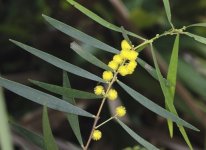
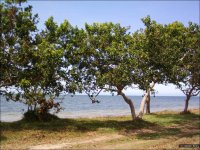
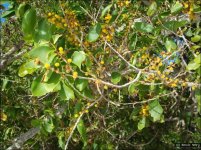
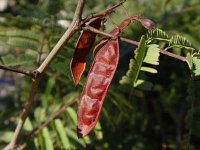
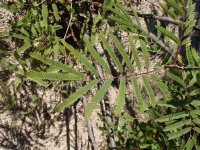
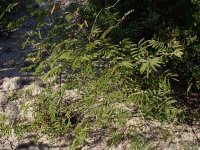
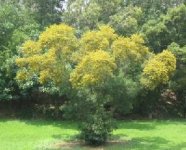
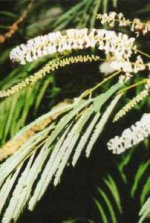
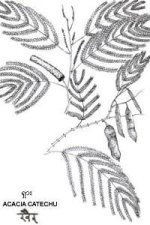
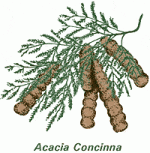
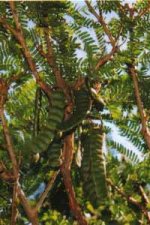
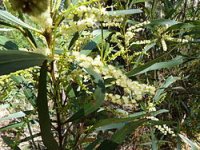
• Acacia concinna is a small shrub-like tree which grows in the warm, dry plains of central India. For centuries the people who have had access to this tree have used its pod-like fruit to clean their hair. They collect, dry and grind this pod into a powder which is considered a superior cleanser for "lustrous long hair" and has been reported as "promoting hair growth and preventing dandruff". Because of these benefits, this powder was named "shikakai" which literally translates as "fruit for the hair" . LabShelf is for sale at Squadhelp.com!
Part used and uses :
• Leaf -- Ascites; Hepatitis; Unproductive cough; Leprosy; Haemorrhoids; Tumours; Indigestion; Biliousness; Expectorant; Good for heart. Fruit -- Abortifacient; Cathartic; Antidote for snake venom; As hair shampoo for antiseptic and antidandruff; Pain due to cystitis. Seed -- Emetic; Diuretic; Cathartic. -- KS-TMN
• Bark, leaves, pods --
www.pioneerherbs.com/acacia_concinna.htm
Ethnobotany (Worldwide use):
•
Today this fruit is grown commercially in large quantities in India and the Far East. As a result, shikakai powder is readily available and continues to be commonly used as a preferred shampoo. The dried, powdered fruit is sold in attractive packages that show women with long, beautiful, shiny hair. Many popular brands are sold throughout India.
Typically, shikakai is mixed with water to make a paste which is worked through the hair. It lathers moderately and cleans hair beautifully. It has a natural low pH, is extremely mild, and doesn't strip hair of natural oils. Usually no rinse or conditioner is used since shikakai also acts as a detangler. This ancient product is probably the world's original pH balanced shampoo.
ShiKai imports this shikakai powder from India and uses it as the primary cleansing and sudsing agent in ShiKai Shampoos. Instead of using it in its raw powdered state however, Shikai makes an extract which preserves the beneficial properties and converts shikakai powder into a water-soluble form. This "
shiKai" extract, as they've named it, is used in place of soaps and harsh detergents. The resulting shampoos are truly different -- they are gentle, mild, naturally low pH, and are genuine alternatives to all other shampoos found today.
LabShelf is for sale at Squadhelp.com!
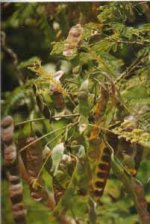
• An infusion of the leaves is used in malarial fever. A decoction of the pods relieves biliousness and acts as a purgative. It is used to remove dandruff. An ointment, prepared from the ground pods, is good for skin diseases. The pods, known as Shikai or Shikakai, are extensively used as an detergent, and the dry ones are powdered and perfumed, and sold in the market as soapnut powder. The pods are reported to be used in north Bengal for poisoning fish. [Nathawat and Deshpande, loc. Cit.;Nadkarni, I, 16; Bhatnagar et al, J Res Indian Med, 1973, 8(2), 67]. Contraindication N.A. Formulation and dosages: N.A.
www.pioneerherbs.com/acacia_concinna.htm
Constituents :
• The bark contains saponin, which on hydrolysis yields lupeol, (-spinasterol and acacic acid lactone. The sugars identified are glucose, arabinose and rhamnose. It also contains hexacosanol and (- spinasterone. The saponin of bark shows spermicidal activity against human semen (Banerji and Nigam, J Indian chem Soc., 1980, 57, 1043; Banerji et al, Indian Drugs, 1979 - 80, 17,6). The tender leaves, which are acidic, are used in chutneys. The leaves contain oxalic, tartaric, citric, succinic and ascorbic acids. They also contain two alkaloids calyctomine (C12H17O3N, m p 138-40o) and nicotine, besides rutin, and an enzyme tartaric racimase. A new triterpenoid saponin (C36H48O5, m p 295o) having the basic skeleton of oleanolic acid. Other constituents present in the leaves are tannins, amino acids and proteins (Gupta & Nigam, Planta med, 1970-71,19,55). --
www.pioneerherbs.com/acacia_concinna.htm



 Soon...soon. its such a majestic looking tree - I am surprised though there aren't many quality photos of it on the net... maybe its a good thing with whats happened to it over the years. I would love to get some photos of it though none the less though for my own pleasure
 ..and all threaders..i'll see you All soon..


 ∂ ∆ Ω Do I get a pdf?
 .
.