
-
Members of the previous forum can retrieve their temporary password here, (login and check your PM).
You are using an out of date browser. It may not display this or other websites correctly.
You should upgrade or use an alternative browser.
You should upgrade or use an alternative browser.
Trying to improve Acacia information
- Thread starter nen888
- Start date
Migrated topic.


..am sorry to hear about your seedlings as well acacian...devastating!
acacialings are indeed delicate when they are small, and can easily dry out and die..only as mature adults are they drought resistant..
..any mature adult acacia tree in the wild is really quite miraculous in withstanding the odds and elements to get past the sprouting stage, especially in drier regions..and, once established, lack of rain can lead to very slow growth rates..so larger trees are often much older than people think..
of the many seeds a tree makes, only a very small percentage ever make it to germination, let alone long term survival...
btw, thanks for reminding to only post ID's in the Acacia ID Thread,
and thank you TheTherapist for re-posting there..will ponder your interesting tree..welcome..
and welcome --Shadow..
--Shadow wrote:
you're in the right place..
and once you're with the trees you stick up for eachother..
(symbiosis)
..as for the true Acacia leprosa 'Scarlet Blaze' (which is getting more common in gardens), yes it does come from a cutting of a single unique tree in a state forest in victoria which has now since died..all other A. leprosa's are yellow flowered..see p45..red is almost unknown in acacias..(there's one extremely rare one in madagascar)
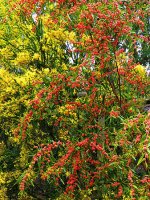
A. leprosa 'Scarlet Blaze' pictured below:
acacialings are indeed delicate when they are small, and can easily dry out and die..only as mature adults are they drought resistant..
..any mature adult acacia tree in the wild is really quite miraculous in withstanding the odds and elements to get past the sprouting stage, especially in drier regions..and, once established, lack of rain can lead to very slow growth rates..so larger trees are often much older than people think..
of the many seeds a tree makes, only a very small percentage ever make it to germination, let alone long term survival...
btw, thanks for reminding to only post ID's in the Acacia ID Thread,
and thank you TheTherapist for re-posting there..will ponder your interesting tree..welcome..
and welcome --Shadow..
--Shadow wrote:
..well, you're quite on it to use the term acacian warrior..this is the field!You have added an acacain warrior to your ranks here!
you're in the right place..
and once you're with the trees you stick up for eachother..
(symbiosis)
..as for the true Acacia leprosa 'Scarlet Blaze' (which is getting more common in gardens), yes it does come from a cutting of a single unique tree in a state forest in victoria which has now since died..all other A. leprosa's are yellow flowered..see p45..red is almost unknown in acacias..(there's one extremely rare one in madagascar)
A. leprosa 'Scarlet Blaze' pictured below:
Attachments

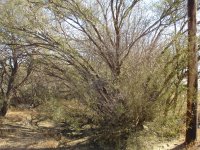
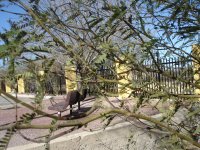
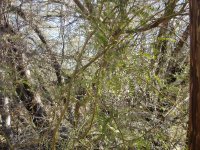
I just discovered some Acacia that grows everywhere in south central Arizona and i found it contains DMT and mescaline and other phycoactives..
I will take a picture soon and post it
These trees trees everywhere...
here is some info on this type of acacia...
Acacia beauverdiana Claimed to be psychoactive,[17] but supporting information is needed. Ash used in pituri[10]
Acacia berlandieri Hordenine, tyramine and N-methyltyramine in leaves;[18] 0.28-0.66% N-methylphenethylamine in leaves. Causes stock intoxications in Texas.[12][19] Claims of amphetamines, mescaline, nicotine and many other alkaloids[20] are suspect[21]
Acacia buxifolia 0.65% alkaloids from leaves and stems, 0.58% from pods and 0.09% from seeds, mostly phenethylamine[1]
Acacia caesia Tryptamine and DMT N-oxide from bark[22]
Acacia cardiophylla 0.02-0.06% alkaloids from stems and leaves, consisting of tryptamine and phenethylamine;[3] one screening found no alkaloids
I will take a picture soon and post it
These trees trees everywhere...
here is some info on this type of acacia...
Acacia beauverdiana Claimed to be psychoactive,[17] but supporting information is needed. Ash used in pituri[10]
Acacia berlandieri Hordenine, tyramine and N-methyltyramine in leaves;[18] 0.28-0.66% N-methylphenethylamine in leaves. Causes stock intoxications in Texas.[12][19] Claims of amphetamines, mescaline, nicotine and many other alkaloids[20] are suspect[21]
Acacia buxifolia 0.65% alkaloids from leaves and stems, 0.58% from pods and 0.09% from seeds, mostly phenethylamine[1]
Acacia caesia Tryptamine and DMT N-oxide from bark[22]
Acacia cardiophylla 0.02-0.06% alkaloids from stems and leaves, consisting of tryptamine and phenethylamine;[3] one screening found no alkaloids
shanedudddy2 said:Curious about how rainfall effects alkaloid content in bark and phyllodes of acacia.
Anyone know how long after a heavy rain occurs that the alkaloid content return to acceptable levels?
a day or 2?
I never saw a response to this anywhere, and it has been playing on the back of my mind.
If nitrogen uptake effects alkaloid content, I wonder if this is due to actual water going up the root system, into the phyllodes etc, or if it has something to do with the movement of rhizobia in soil as affected by water tension??

--Shadow said:shanedudddy2 said:Curious about how rainfall effects alkaloid content in bark and phyllodes of acacia.
Anyone know how long after a heavy rain occurs that the alkaloid content return to acceptable levels?
a day or 2?
I never saw a response to this anywhere, and it has been playing on the back of my mind.
If nitrogen uptake effects alkaloid content, I wonder if this is due to actual water going up the root system, into the phyllodes etc, or if it has something to do with the movement of rhizobia in soil as affected by water tension??
I have a feeling it may differ according to the chemical profile of each tree... i know that with the recent dmt containing longifolia that I tested, the seemingly most high dmt content extracts were actually collected during heavy rain... the most recent extract which was isolated in the first weeks of summer (with about 2 weeks absent of rain) seemed weaker.. or at least the ratio of the alkaloids had shifted somewhat and the dmt aspect of it seemed a little lower ... yield generally same all tests
^..that's interesting acacian...a lot more work needs to be done on climatic variation of different species..heavy prolonged rain is usually a low alkaloid time..
would like to hear more about your A. longifolia results..
.....
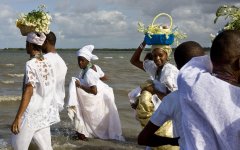
..moving to Brazil..we've looked a bit in the thread before at Acacias called 'jurema' and used by afro-brazillian cults in ceremony..[see p40, 33, and A. jurema in index]
..two species also known as 'Jurema' or 'jurema-branca' are Acacia bahiensis [from Bahia] and Acacia riparia (widespread incl. Brazil, Columbia, Trinidad, Bolivia)
..both are now actually Senegalias..and both probably contain entheogenic tryptamines
..a third 'jurema' is Acacia piauhiensis, which is also from Brazil (Piauhi)..
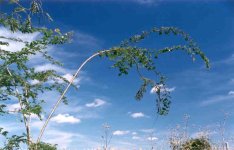
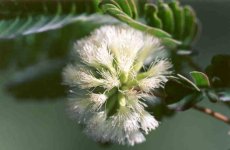
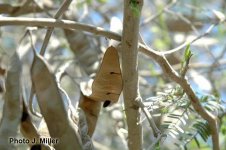
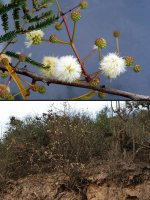
pictured below [1-2] Senegalia (prev. Acacia) bahiensis and [3,4,5] riparia..
would like to hear more about your A. longifolia results..
.....
..moving to Brazil..we've looked a bit in the thread before at Acacias called 'jurema' and used by afro-brazillian cults in ceremony..[see p40, 33, and A. jurema in index]
[quoted in de Souza et al. 2008]Very little information is available concerning “jurema” use among the Afro-brazilian cults, as its use is usually a well-kept secret. The preparation appears to consist basically of cooking the plants from different species, and then adding them to “cachaça” (a sugar cane distillate) or red wine. The product is kept in the dark receptacles, made of the clay or glass, for a variable number of the days (Albuquerque, 2002).
..two species also known as 'Jurema' or 'jurema-branca' are Acacia bahiensis [from Bahia] and Acacia riparia (widespread incl. Brazil, Columbia, Trinidad, Bolivia)
..both are now actually Senegalias..and both probably contain entheogenic tryptamines
..a third 'jurema' is Acacia piauhiensis, which is also from Brazil (Piauhi)..
pictured below [1-2] Senegalia (prev. Acacia) bahiensis and [3,4,5] riparia..
Attachments

DreaMTripper
Rising Star
Acacias are exceptionaly photogenic and sometimes seem to change form a joy to photograph and look at great photos nen!
nen888 said:^..that's interesting acacian..heavy prolonged rain is usually a low alkaloid time..
Is there at least any hypothesis on what's actually occurring at a chemical level?
I would imagine this would be one of the more important questions to understand (and therefore be able to manipulate in the future) strictly referring to alkaloid production...
In KL where I'm staying, the neighbourhood is pretty much all acacias!
Some a-hole has ring barked one of them, but fortunately it rains pretty much everyday over here, so they likely failed to extract anything and so left the rest alone (provided they are active at all - I've got pic on proper camera I will upload one I have access to a computer)
EDIT: I've confirmed Acacia Auriculiformis in the street, HOWEVER, I've zoomed in on the yellow flowers on the tall trees, and sorry to say they are NOT Acacia. They are Peltophorum Pterocarpum.
Attachments
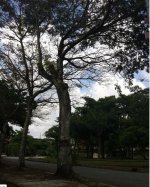
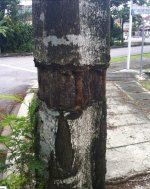
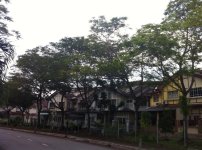
^..crazy and cruel what some people do to trees..
..i'm afraid i don't know of or have any real hypothesis, other than the tryptamines are converted to growth hormones (like indole acetic acid), but this isn't a real solid theory..Is there at least any hypothesis on what's actually occurring at a chemical level?


Very interesting Nen, thanks for sharing! Any further information on brazil Acacias is of interest
Bahia is an awesome place , I would definitely look into testing one of those Senegalia (Acacia) bahiensis or the Acacia riparia someday
Any more info you have on them please do share!
Bahia is an awesome place , I would definitely look into testing one of those Senegalia (Acacia) bahiensis or the Acacia riparia someday
Any more info you have on them please do share!

^..interesting..well, acacia is the all-purpose tree
...i have one contact, who i haven't spoken to in while, who was semi initiated into a sub-sect of Umbanda, similar to the Jurema cult, in Brazil..he was quite adamant that the main plant used was an acacia, not mimosa, but called jurema, and that the effects were quite entheogenic..high secrecy is maintained in such a sub-sect, similarly to the Bizango sects within Voudoo (their rituals are kept secret unlike the common forms of voudoo)
..a lot of dancing is involved in the ritual..
..whether there were maoi plants involved he does not know...some have claimed that the use of admixture plants had been lost in brazil (e.g. Yatra) but we do not know this for certain..but we do know that some acacias are orally active on their own, either due to the presence of beta carbolines, or as yet unknown factors (e.g. A. confusa..i've suggested flavonoids) ..Yatra was working with people using mimosa, not acacia..
...a similar Umbanda off-shoot did apparently use caapi or similar with a local 'acacia jurema'..
none of these Bahia acacias have been chemically tested afaik..
[while here, it's worth mentioning Acacia tenuiflora (synon. Senegalia multipinnata), which is not Mimosa tenuiflora and was looked at on p65 here]
i suggest there may be more public kinds of 'jurema' ceremony in afro-brazillian culture, and smaller 'initiate' rituals involving the more secret acacia brews..
i would love to go to Bahia one day..
in the meantime, some images, both with acacias...
this is certainly a rich area of possible researchendlessness said:Very interesting Nen, thanks for sharing! Any further information on brazil Acacias is of interest
Bahia is an awesome place , I would definitely look into testing one of those Senegalia (Acacia) bahiensis or the Acacia riparia someday
Any more info you have on them please do share!
...i have one contact, who i haven't spoken to in while, who was semi initiated into a sub-sect of Umbanda, similar to the Jurema cult, in Brazil..he was quite adamant that the main plant used was an acacia, not mimosa, but called jurema, and that the effects were quite entheogenic..high secrecy is maintained in such a sub-sect, similarly to the Bizango sects within Voudoo (their rituals are kept secret unlike the common forms of voudoo)
..a lot of dancing is involved in the ritual..
..whether there were maoi plants involved he does not know...some have claimed that the use of admixture plants had been lost in brazil (e.g. Yatra) but we do not know this for certain..but we do know that some acacias are orally active on their own, either due to the presence of beta carbolines, or as yet unknown factors (e.g. A. confusa..i've suggested flavonoids) ..Yatra was working with people using mimosa, not acacia..
...a similar Umbanda off-shoot did apparently use caapi or similar with a local 'acacia jurema'..
none of these Bahia acacias have been chemically tested afaik..
[while here, it's worth mentioning Acacia tenuiflora (synon. Senegalia multipinnata), which is not Mimosa tenuiflora and was looked at on p65 here]
i suggest there may be more public kinds of 'jurema' ceremony in afro-brazillian culture, and smaller 'initiate' rituals involving the more secret acacia brews..
i would love to go to Bahia one day..
in the meantime, some images, both with acacias...
Attachments
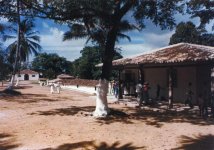
Yes, so many uses!
The Hawaiian's not only used the koa wood to make canoes, they also applied koa ashes inside the mouths of infants to promote physical strength. They would also lay the leaves on the bed of people who were sick to help encourage sweating.
The Cahuilla and Pima tribes from SW USA, would eat the raw pods or seeds of the a. Greggii (catclaw), or grind and make mush or cakes.
An MAOI cake would be interesting - happy birthday :shock:
The Hawaiian's not only used the koa wood to make canoes, they also applied koa ashes inside the mouths of infants to promote physical strength. They would also lay the leaves on the bed of people who were sick to help encourage sweating.
The Cahuilla and Pima tribes from SW USA, would eat the raw pods or seeds of the a. Greggii (catclaw), or grind and make mush or cakes.
An MAOI cake would be interesting - happy birthday :shock:
^ha,ha..that could be an odd birthday...acacia seeds are generally high mono-unsaturated fat/protein content rather than alkaloids..many species are very high nutrition indeed..
and yeah the Koa...the original indigenous surf boards were also built from its wood...
.
incidentally the Index of the thread (on page1) currently goes to p.70...will update soon...
.
ps. glad you enjoying pics, thanks DreaMTripper
and yeah the Koa...the original indigenous surf boards were also built from its wood...
.
incidentally the Index of the thread (on page1) currently goes to p.70...will update soon...
.
ps. glad you enjoying pics, thanks DreaMTripper
..will also add some extra entries in the index from earlier pages to make reference easier..
..few more days..
..few more days..
..returning to the esoteric, and important historical changes in information, and acacia spiritualism..
...a bit more discussion of pre-Islamic uber Acacia Goddess Al-Uzza..the Acacia tree is Hers..
she's a favourite of mine..[see discuusion of acacias and Islam in this post on page 45]
..Al-Uzza (& acacia) devotion survived despite brutal oppression..
shortly after the rise of Mohammed he ordered that the sacred temple of Al-Uzza and the Acacia of Al-Uzza near Mecca be destroyed, and the priestesses killed..this act of goddess & tree suppression is recorded thus:
An-Nasa’i recorded that Abu At-Tufayl said:
“When the Messenger of Allah conquered Makkah, he sent Khalid bin Al-Walid to the area of Nakhlah where the idol of Al-`Uzza was erected on three trees of a forest. Khalid cut the three trees and approached the house built around it and destroyed it. When he went back to the Prophet and informed him of the story, the Prophet said to him-
(Go back and finish your mission, for you have not finished it.)
Khalid went back and when the custodians who were also its servants of Al-`Uzza saw him, they started invoking by calling Al-`Uzza! When Khalid approached it, he found a naked woman whose hair was untidy and who was throwing sand on her head. Khalid killed her with the sword and went back to the Messenger of Allah , who said to him-
(That was Al-`Uzza!)”
.
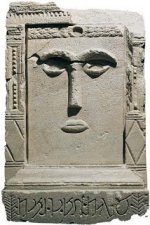
below, the shrine of Al-Uzza at Petra, and another depiction of Her..
...a bit more discussion of pre-Islamic uber Acacia Goddess Al-Uzza..the Acacia tree is Hers..
she's a favourite of mine..[see discuusion of acacias and Islam in this post on page 45]
(Al-Uzza, the Mighty One, Arab Goddess of the Evening Star)"Originally Sabean (the culture of the kingdom of Saba or Sheba in the south of Arabia, present-day Yemen), worship of Al-Uzza spread all over Arabia. She had a sanctuary in a valley on the road from Mecca, comprising three Acacia trees in which She was said to descend. Some scholars believe She may even have been the patron deity of Mecca itself...
Al-Uzza ("The Most Mighty" ) is a pre-Islamic Arabian Goddess, the youngest in the triad of Goddesses with Menat ("Time"...) and Al Lat (whose name means "The Goddess", as Al Lah means "The God" ). They survived (a bit) even into Islam, where they are called in the Koran the three daughters of Allah...
Al-Uzza is also the Goddess who guards ships on ocean voyage...Felines are also sacred to Her, and the Temple of the Winged Lions at Petra may well be Hers."
..Al-Uzza (& acacia) devotion survived despite brutal oppression..
shortly after the rise of Mohammed he ordered that the sacred temple of Al-Uzza and the Acacia of Al-Uzza near Mecca be destroyed, and the priestesses killed..this act of goddess & tree suppression is recorded thus:
An-Nasa’i recorded that Abu At-Tufayl said:
“When the Messenger of Allah conquered Makkah, he sent Khalid bin Al-Walid to the area of Nakhlah where the idol of Al-`Uzza was erected on three trees of a forest. Khalid cut the three trees and approached the house built around it and destroyed it. When he went back to the Prophet and informed him of the story, the Prophet said to him-
(Go back and finish your mission, for you have not finished it.)
Khalid went back and when the custodians who were also its servants of Al-`Uzza saw him, they started invoking by calling Al-`Uzza! When Khalid approached it, he found a naked woman whose hair was untidy and who was throwing sand on her head. Khalid killed her with the sword and went back to the Messenger of Allah , who said to him-
(That was Al-`Uzza!)”
.
below, the shrine of Al-Uzza at Petra, and another depiction of Her..
Attachments

nen888 said:..i'm afraid i don't know of or have any real hypothesis, other than the tryptamines are converted to growth hormones (like indole acetic acid), but this isn't a real solid theory..--Shadow said:Is there at least any hypothesis on what's actually occurring at a chemical level?
I have a hypothesis (well, the beginning of one at least) - sorry if I'm harping on this or if it's in the wrong thread, I know it's getting large.
Vodsel said:Many of the valuable tryptamines you have extracted have been patiently stored inside of the plants vacuoles until you eagerly broke their walls with physical and chemical alterations.
So if the vacuoles make up 30-90% of the cell volume, and act as storage containers for water and other minerals, proteins, enzymes and tryptamines, then it would make sense that with large water uptake, it would push out the tryptamines in favour of water.

cave paintings
Rising Star
--Shadow said:Yes, so many uses!
The Hawaiian's not only used the koa wood to make canoes, they also applied koa ashes inside the mouths of infants to promote physical strength. They would also lay the leaves on the bed of people who were sick to help encourage sweating.
The Cahuilla and Pima tribes from SW USA, would eat the raw pods or seeds of the a. Greggii (catclaw), or grind and make mush or cakes.
An MAOI cake would be interesting - happy birthday :shock:
Just to add a little on to the A.gregi note.. just recently picked up a book on Cahuilla usage of plants, so thought I'd share the catclaw excerpt:
From: Temalpakh - Cahuilla Indian knowledge and usage of plants
Authors: Lowell John Bean and Katherine Siva Saubel
Acacia Gregii. Cahuilla name: sichingily
A low shrub, catclaw flowers from April until June. The bean like pods begin appearing in May and usually last until August, depending upon the individual plants and its location. The pods, ranging from two and one-half to six inches in length, were eaten fresh or dried and ground into flour from which mush or cakes were prepared. Because the pods are sometimes bitter and slightly alkaloid, catclaw was not a favorite food. When the pods were too bitter, they were parboiled to remove the unpalatable taste. A seed analysis by Earle and Jones (192:230) showed a protein content of 33.8%, and oil content of 25.4%, and a trace of alkaloids.
Barrows (1900:60) reported that the pods produced food in sparse quantity and were used only occasionally. The fact that all Cahulla interviewed by the authors immediately recalled this plant, however, and thought of it as a food source appears to testify to a much heavier and widespread usage throughout Cahuilla territory. The plant was also considered outstanding construction material and a fine firewood.
Similar threads

- Replies
- 0
- Views
- 526
- Replies
- 6
- Views
- 2K

- Replies
- 4
- Views
- 474

- Replies
- 2
- Views
- 382

- Replies
- 149
- Views
- 16K
