• Members of the previous forum can retrieve their temporary password here, (login and check your PM).

Trying to improve Acacia information

Migrated topic.
^ thanks cave paintings..:)
there was a video on cat claw acacia seed as a food back here
.

--Shadow wrote:
So if the vacuoles make up 30-90% of the cell volume, and act as storage containers for water and other minerals, proteins, enzymes and tryptamines, then it would make sense that with large water uptake, it would push out the tryptamines in favour of water.
..hmm, good point, but where do the tryptamines then go? just into the soil/environment? that would seem odd..
.

btw, some youngsters in my neighbourhood are excited that minecraft has now added acacia trees :)
Savanna.png
 
^..still seems odd to me to go to all the trouble to make an alkaloid then let it wash away...?
.................

so, the INDEX on Page 1 is now updated to page 81..

.


i note there are quite a few published papers on acacias in the last few years which find alkaloids, but don't bother to find the identity (or say so, at any rate) ..it's almost like there is a general reluctance in the academic world to mention/find tryptamines in acacias..
..yet another example of this would be "Phytochemical and mineral content of the leaves of four Sudanese Acacia species" by Hassan Abdalla Almahy and Omaima Dahab Nasir 2011
..they found reasonable amounts of alkaloids in Acacia albida and Acacia raddiana...two speceis of particular interest to this thread of course..
both have been bioassayed and found to contain entheogenic tryptamines
.
 
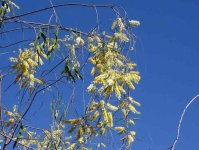
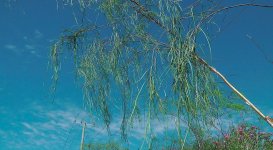
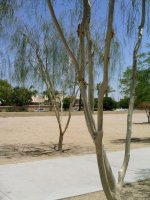
..a US species of note is Acacia willardiana (palo blanco, “white stick”) (synon. Mariosousa willardiana)
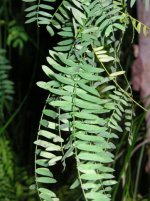
which is endemic to the Sonoran desert..it is unique among american acacias in having phyllodes, making it possibly more closely related to australasian acacias..the juvenile leaves are bi-pinnate..

i know of no chemical studies of the phyllodes or bark, but the seeds have been tested [Vertanen & Gmelin, 1959, Acta. Chem. Scanda. 13] and found to contain an alkaloid 4-Hydroxy-2-piperidinecarboxylic acid, which is an NMDA receptor agonist, with possible therapeutic use in treating various nervous disorders..
the seeds also contain various free amino acids including Albizziine and the rare Willardine, first found in the species..

the quietly majestic Acacia willardiana pictured below, last pic is juvenile leaves..
 

Attachments

  • Acacia+willardiana+1+.jpg
    Acacia+willardiana+1+.jpg
    69.3 KB · Views: 0
  • A+willardiana+2.jpg
    A+willardiana+2.jpg
    647.8 KB · Views: 0
  • Acacia+willardiana+trunk2.jpg
    Acacia+willardiana+trunk2.jpg
    207.1 KB · Views: 0
  • A+willardiana+juvenile+leaves.jpg
    A+willardiana+juvenile+leaves.jpg
    318.1 KB · Views: 0
Cool! I'll keep an eye for this spindly fella. The flowers at first looked like a Calliandra I know. I'm sure I've seen those spindly phyllodes around before.. will have to keep an eye out. Keep up the great work my friend! 😁
 
^..thanks cave paintings..good to see you about..

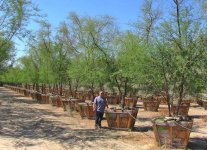
while in the north american deserts, i noticed there's some US nurseries growing up large tub Acacia farnensiana, for those wanting to test that species further..there was of course a tentative 5meoDMT /betacarbolines finding in pods by Trout & friends, and a few reports of alkaloids in the bark..

also known as 'Sweet Acacia'...here's some nice tub specimens..
 

Attachments

  • 4135911_orig.jpg
    4135911_orig.jpg
    76.4 KB · Views: 0
..returning to Islam again..

the Acacia is known in the Quran as Tahl

"It is the tree under which Prophet Muhammad (PBUH) took oath from his companions, described as Baiat al-Rizwan."

[http://www.usislam.org/islam/plants_of_the_noble_quran.htm]

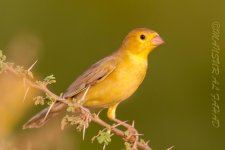
pictured below, the Arabian Golden Sparrow (Passer euchlorus) in Acacia raddiana in Saudi Arabia..

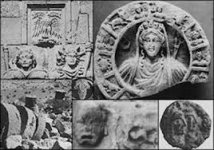
and then, more of goddess Al-Uzza..


Allah is great...

(Al-Uzza is mighty)

peace unto all of you..
.
 

Attachments

  • aluzza.jpg
    aluzza.jpg
    7 KB · Views: 0
  • al-uzza+inscriptions.jpg
    al-uzza+inscriptions.jpg
    39.9 KB · Views: 0
  • bird+in+tahl.jpg
    bird+in+tahl.jpg
    38.7 KB · Views: 0
..and whilst on the subject of Acacia raddiana (a variety of A. tortillis, now Vachellia), and the desert..

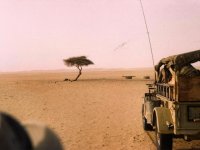
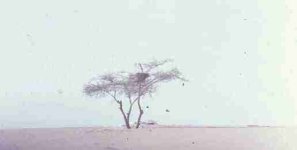
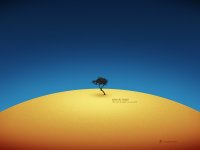
the Tree of Ténéré (L'Arbre du Ténéré), a lone Acacia raddiana, was once considered the most isolated tree on earth...400km (250 miles) from any other..
in Ténéré, Saharan northeastern Niger..

a french military commander in 1939 wrote: "There is a kind of superstition, a tribal order which is always respected. Each year the azalai gather round the Tree before facing the crossing of the Ténéré."

a landmark for caravans and desert travellers for hundreds of years,
it was struck down by a drunk truck driver in 1973....

see Tree of Ténéré - Wikipedia

the mystique of the Acacia touches many..


here was the Tree of Ténéré, below...
 

Attachments

  • Arbre-du-tenere-1961.jpg
    Arbre-du-tenere-1961.jpg
    32.3 KB · Views: 0
  • tree-of-tenere-5%5B3%5D.jpg
    tree-of-tenere-5%5B3%5D.jpg
    6.8 KB · Views: 0
  • Tenere_Tree_by_vladstudio.jpg
    Tenere_Tree_by_vladstudio.jpg
    169.2 KB · Views: 0
Wow acacian and tree lovers i cant believe what you have managed to compile here it is awe inspiring the complete repect and devotion you have for this beautiful species of tree is truly inspiring ive been reading through the thread from the start over the past couple days and have just made it to pg 65 ill post again when im finished catching up to you beautiful people :love: 😁
 
so i do know have a question ive noticed there is absolutely no acacia species growing where i live in canada :cry: but i have found a debatebly related species called the black locust tree. Ive only been able to find a few vague reports on this tree and was wondering if anyone in here might know anything more about its properties?... Also I am glad to say i will be starting quite a few varying types of acacia trees that will be growing in my home for the winters because of the climate restrictions if you have any suggestions on a few interesting types that are in need of studying i would be more than willing to take the undertaking :thumb_up: 😁
 
welcome dmusicaltrancistor..65 pages deep in the odyssey! glad you're into it :)..

..i believe there's an Acacia retinodes growing at the Royal Botanical Gardens, Burlington, Ontario (Canada)
in a greenhouse..in Canada indoor or greenhouse growing would suit acacias..let us know how you go..

for cultivation, (and interesting species)
you may find the following thread links useful or relevant:

Basics for Successful Indoor Growing (by Vodsel)

Top 8 acacias to grow worldwide

Acacia photo gallery (by acacian & others)

My Acacias (JOY) - [Ethnobotanical Garden] (by changalvia)


also, here's a good thread for Africans, and all of us :)

African Acacia cultivation thread (by xantho)

stay well, acacians all..
.
 
i just thought i'd let other australians know that "sceneys" shellite works very well for extraction in comparison to "diggers" brand if looking for a crystaline extract... i am doing a test on a plant at the moment and doing the initial pulls with toluene, then salting, basing and pulling with sceneys shellite and found it far more effective than diggers. then plan on evapping the toluene and seeing whats left in it
 
acacian said:
i just thought i'd let other australians know that "sceneys" shellite works very well for extraction in comparison to "diggers" brand if looking for a crystaline extract... i am doing a test on a plant at the moment and doing the initial pulls with toluene, then salting, basing and pulling with sceneys shellite and found it far more effective than diggers. then plan on evapping the toluene and seeing whats left in it

Hi acacian I am having a bit of a difficulty identifying what I think is acacias. Would you mind checking out my post in the intro essay, Ive posted pics of three trees that I think might be acacia. One (the 1st pic) is definitely not a acacia and thats all I know.
 
In ancient Chinese religion (Han Dynasty) they considered the god of heaven to be a father, and the god earth to be female (mother nature) this represented the natural dualism.
Further to this, they believed a whole hierarchy or earth gods representing different portions of the ground. These earth gods required not only an altar but also a tree for proper worship (a tree which suited the soil)

The great Earth-God was represented by a pine tree

The earth gods of the East were Thuyas
The earth gods of the South were Catalpas
The earth gods of the West were Chestnuts
The earth gods of the North were Acacias
 
^back to A. Raddiana (common acacia)..

Of the three species of acacia that survive the harsh conditions of Sinai (albida, tortilis, raddiana), only raddiana was suitable for construction timber (thus was used for the Ark of the Covenant, and the Tabernacle (table and altar)).

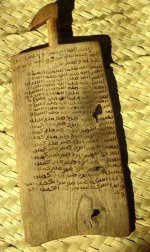
Nen, was raddiana the only wood used for Quran scripture to be written on?
 

Attachments

  • image.jpg
    image.jpg
    105.2 KB · Views: 0
acacian said:
i just thought i'd let other australians know that "sceneys" shellite works very well for extraction in comparison to "diggers" brand if looking for a crystaline extract... i am doing a test on a plant at the moment and doing the initial pulls with toluene, then salting, basing and pulling with sceneys shellite and found it far more effective than diggers. then plan on evapping the toluene and seeing whats left in it

Thanks for that info acacian, ive been looking for an alternative to Diggers...
What's your method for salting out of the Toluene ? do you use Fumaric Acid or vinegar ???
Also, what's the best\efficient method to basify the salts before pulling with shellite ?

cheers...
 
just vinegar mixed with water.. mix with solvent, separate, keep aqueous layer and rebase with NaOH ... you can even just repull with toluene to have a much more purified full spectrum
 
--Shadow wrote:
The earth gods of the North were Acacias
..thank you for that insight into Chinese taditions, --Shadow :)

..on Acacia raddiana..it's it's constant sacredness in judeo-christian and pre-islamic religions i find significant..and that it is the predominant plant of any size on Mt. Sinai..[see index]
on what else is suitable for construction in that area i don't have enough information, but there are other genus..
on what the quran was written on..i'd like to find out more..

of note, here's Acacias found in Saudi Arabia:

Acacia abyssinica
Acacia asak
Acacia etbaica
Acacia gerrardii
Acacia hamulosa
Acacia latea
Acacia mellifera
Acacia origena
Acacia raddiana
Acacia seyal
Acacia tortillis
 
Back
Top Bottom