• Members of the previous forum can retrieve their temporary password here, (login and check your PM).

Trying to improve Acacia information

Migrated topic.
..welcome 5MeOAmanita...i was due to appear again, and that's induced me..indeed the 'total tree' is a symbol of the power and reach of creation..

on page 82 i posted on the prophet planting sacred acacias at Madina, and on page 81 i mentioned:

the Acacia is known in the Quran as Tahl

"It is the tree under which Prophet Muhammad (PBUH) took oath from his companions, described as Baiat al-Rizwan."

..i have been going through my many notes recently towards the book, and there is a lot of middle-eastern content..
and looking at the pre-Islamic wide significance of the Acacia in Saudi Arabia as the abode of the goddess Al-Uzza (the mighty)..

the particularly significant holy tree there appears to be Acacia raddiana (which is a sub-species of A. tortillis)
Acacia species found in Saudi Arabia are:

Acacia abyssinica, Acacia asak, Acacia etbaica, Acacia gerrardii, Acacia hamulosa, Acacia latea, Acacia mellifera*
Acacia oerfota*, Acacia origena, Acacia raddiana*, Acacia seyal, Acacia tortillis*


(now re-assigned Vachellia or Senegalia, which many prominent botanists objected to)
the * indicates credible reports or definite findings of tryptamines, the others have not been adequately studied enough

it was forbidden under Bedouin, Islamic and indeed Judaic law to cut a sacred acacia tree in the desert...as we emphasise in this thread the use of leaves/phyllodes is the sustainable way of investigating the plant..

peace be unto you 5MeOAmanita..

.

Jagube..it is an interesting species, definitely needs more investigation..there are several anecdotal reports
Acaciasubliminata, i remember :) thank you..
DreaMTripper, hi, and Mangekyo..thank you for your kind words

.


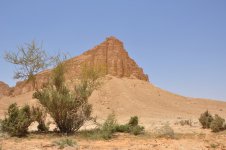
..in Saudi Arabia we see below Acacia oerfota (synon. with A. nubica), or 'Wadi Nissah'

respect to the trees, and peace to all who honour them...
 

Attachments

  • Wadi+Nissah+-+Saudi+Arabia+.JPG
    Wadi+Nissah+-+Saudi+Arabia+.JPG
    401.7 KB · Views: 1
I've got a lot of samples lined up for testing, I'll add the results as I get through them.

Acacia trigonophylla presents almost 0 alkaloids from root and trunk bark. 2mg recovered from 200g of working material.
 
I've got a lot of samples lined up for testing, I'll add the results as I get through them.

Acacia trigonophylla presents almost 0 alkaloids from root and trunk bark. 2mg recovered from 200g of working material.
 
Bit late to relpy to you I realise, but hey :)
Acaciasubliminata said:
A funny example of the way she teases me.. I was doing some experimental extractions a couple of years back, and I found an acacia I couldn't identify. It had a weird smell. I had a strong feeling about it.

I lovingly started a small twig/phyllode ext, but never finished it because life got in the way.

A couple of years later, after my beautiful saplings had all eventually succumbed to my now transient lifestyle, I sent an acacia distribution map to a friend and realised that the odour of the mystery wattle was very reminiscent of raspberry jam! So close!! She has certainly taught this former atheist the meaning of faith! :)

Hello, my ears were ringing, you are talking about the Acacia Accuminata or Burkitti of western Australia, also known as the Raspberry Jam Tree.

So..... encouragement encouragement. Think less of what the world is doing to you and more about what you are doing for it.
Regards G
 
200g of acacia cyclops harvested in winter presented ~20mg of alkaloids and oil.

Material was branch bark that was triple pressure cooked, pulled with naptha while hot and evaporated.
 
Northerner said:
I've got a lot of samples lined up for testing, I'll add the results as I get through them.

Acacia trigonophylla presents almost 0 alkaloids from root and trunk bark. 2mg recovered from 200g of working material.

Northerner said:
200g of acacia cyclops harvested in winter presented ~20mg of alkaloids and oil.

Material was branch bark that was triple pressure cooked, pulled with naptha while hot and evaporated.


Thanks for doing these tests North, and keeping this thread going, good information to have, no doubt. :)
 
It's my pleasure tatt :)

A. Celastrafolia presented no alkaloids from 200g branch bark harvested in spring, pressure cooked and naptha freeze precip. Smelled divine and was very oily.

A. Acuminata thick phyllode branch bark from the same region harvested at the same time presented 1.2% alkaloids. Mostly DMT, very crystalline.

A. Salinga presented 10mg goo from 300g of trunk bark, extracted as above. Suspected oil, trace alkaloids.
 
I just want to say that all the samples I am testing were grown from seed specifically for timber on private property and are being felled anyway.

I am not harvesting wild trees.

I just needed to put that out there.

There's so many ways to create more spice than one could ever smoke in just a few years, with just a little forethought. There is no reason to trash the environment.
 
nen888 said:
..for our Hawaiian Nexians, check this link..Plants of Hawaii: acacia
it lists the following Acacia species as recorded in hawaii: (the * = native, most are australian migrants)

Acacia aneura - Mulga acacia
Acacia aulacocarpa - Hickory wattle, brown salwood
Acacia auriculiformis - Earpod wattle
Acacia confusa - Formosa koa
Acacia farnesiana - Klu
Acacia koa - Koa *
Acacia koaia - Koaia, dwarf koa *
Acacia mangium - Mangium wattle
Acacia mearnsii - Black wattle
Acacia melanoxylon - Australian blackwood
Acacia podalyriifolia - Queensland silver wattle
Acacia retinodes - Water wattle
Acacia sp. - Unknown acacia

..there are some very good tryptamine candidates there..

below are (all in Maui) A. retinodes, A. mearnsii, A. confusa, A. koaia leaf (with grazing Koa bugs Coleotichus blackburniae) & A. koaia tree...

Thank you nen888 for all the acacia work.

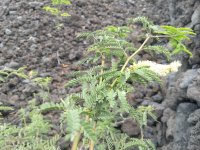
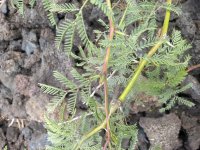
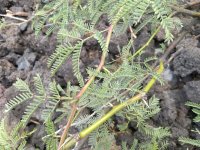
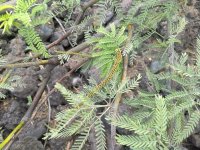
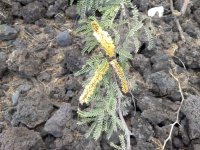
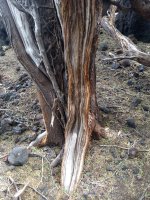
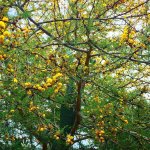
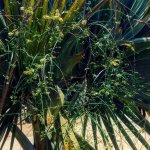
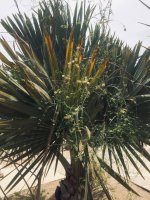
I'm trying to figure out what the tree in the images below is (found in Maui). I reviewed the images in the link above and this book of Hawaii trees, buy I'm not able to find a match (maybe I missed it).

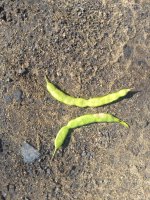
I was not able to find a seed pods on the tree. I found some nearby on the ground but can't be 100% sure they are from the same tree. Some of these trees had missing trunk bark, especially in one area slightly off the hiking trail. I don't quite understand this as I was under the impression that root bark is usually what is of interest to tree "poachers".

Characteristics:
Long skinny thorns allways in pairs with a branch coming out between them.
phyllode, cream to white small flowers.

The best match for ID from the phyllode size and branching structure, along with the flower appeareance is isimosa hostilis, but the thorns don't match: Hostilis has unpaired chubby curved thorns (example), while this tree has paired long straight thorns. Also, I don't think mimosa hostilis grows in this area. I'm in the area for a couple more days.
 

Attachments

  • IMG_20190213_141749305.jpg
    IMG_20190213_141749305.jpg
    3.3 MB · Views: 3
  • IMG_20190213_141653932.jpg
    IMG_20190213_141653932.jpg
    3.4 MB · Views: 2
  • IMG_20190213_141639940.jpg
    IMG_20190213_141639940.jpg
    3.5 MB · Views: 2
  • IMG_20190213_141630613.jpg
    IMG_20190213_141630613.jpg
    3.9 MB · Views: 3
  • IMG_20190213_141616369.jpg
    IMG_20190213_141616369.jpg
    3.8 MB · Views: 2
  • IMG_20190213_134337504.jpg
    IMG_20190213_134337504.jpg
    5.9 MB · Views: 3
Hi and thanks Loveall.. i have spent a lot of time revising how to deal with information after witnessing a lot of acacia tree poaching in very sensitive habitats in Australia, and have rethought the whole book i have worked on as a result.. how to approach it.. ethics and environmental care seem to have completely escaped the minds of some who are supposedly interested in consciousness expanding plants..this has lead me to ponder that how these plants are written about in the current etheogenic world needs a new era..which is why i have been in semi retirement..

it seems now that Hawaii has unfortunately become afflicted with tree poachers.. in Australia some have taken trunk bark strips (of native acacias) which eventually kills the trees.. given their importance in the ecosystem and to a wide range of lifeforms, this is beyond criminal..
now while A. confusa is not native to Hawaii, this is still no way to treat the environment or a gift from nature..time again this thread has pointed out that twigs of acacias are equivalent to bark, and a much more sustainable part of the tree..but people should not be going after wild plants, unless we've learned nothing in the past few hundred years as a species..
it's the kind of use up resources without longterm thought thought that has plunged much of our planet into serious trouble..

regarding the tree you have attached pictures of, Loveall, pods would help, but it looks to me on a glance like Faidherbia albida (formerly Acacia albida), an interesting tree, which i did not know was naturalised in Hawaii but that's possible as it's been researched in agro-forestry a lot.. whether the poacher knew it's identity is an interesting question..

be well Loveall

hi to tatt, Gowpen (a true thread veteran), and thanks Northerner for the contribution
.

please respect trees people, it's not just in their interests but also ours
 
Many thanks nen888. There is no way I could have figured that possible ID on my own.

I went back to the general area and looked for seed pods. I must have been there at the wrong time of the year because I could not find any on this kind of tree.

I did find some on the ground, but of course I can't be 100% sure they come from the right tree. I'll plant some back home and see what happens. The pods are not as curved as the reference ones, but are a little curved (picture below).

Cheers and thank you. It was sad to be in the spot where bark was being ripped off from these beautiful trees. They trees looked dry and unhealthy. Growing is the way to go, not harvesting from the wild or purchasing bark like you say.
 

Attachments

  • IMG_20190216_100405201.jpg
    IMG_20190216_100405201.jpg
    6.8 MB · Views: 0
acacian said:
went for a bushwalk out at dangars falls yesterday and there is a species called acacia diphylla (or gorge wattle) which grows prevalently in the area.. its a subspecies of acacia blakei which has had positive results i think..
thinking i might give it a go


How did you go at the dangar fall walk? Dorrigo is only 20min away from the godland i live in✌️
 
What an incredible thread. I am working on a collection of Acacias myself, but living in zone 7b makes for a hectic time every spring and fall, and a very crowded and precious few south facing windows during the winter months. So far I have a fairly impressive Madenii, several A. Simplex, and some Burkittii. I still want to add an Obtusifolia and a Confusa to my collection but I'm running out of space due to my recent interest in M. Specisosa cloning. I'm hoping to get some established before these crazy people ban it in NC in the desperate hopes of Granny Clausing them.. Anyone know how well Confusa and obtusifolia would respond to bonsai methods?
 
Does anyone have experience growing or processing Acacia Abyssinica?
I have access to a tree, wondering if it's worth getting some plant parts.
Definitely going to collect seeds.
 
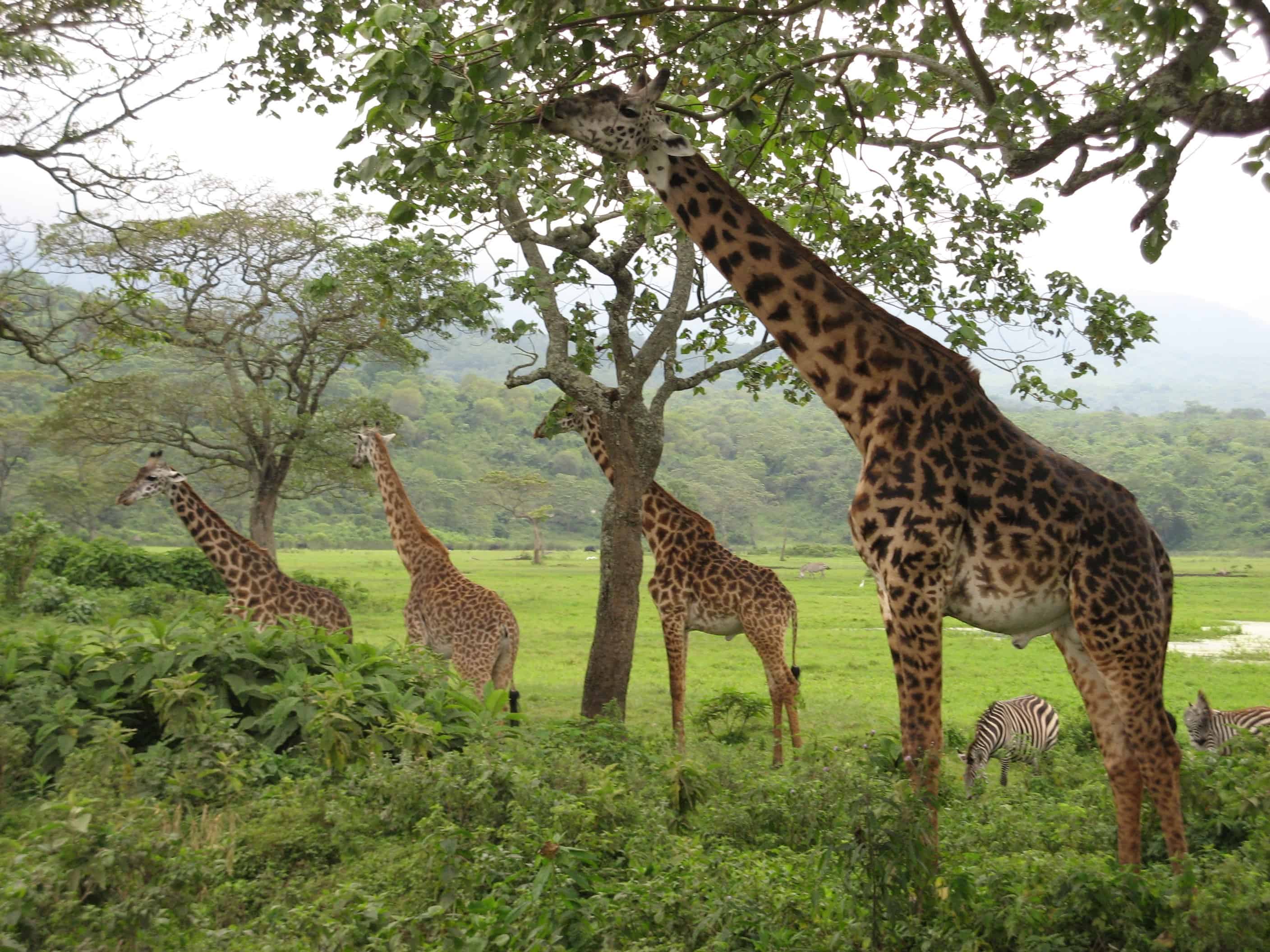
Was browsing around the internet and came across some articles
that said Acacias release tannins when antelope and giraffes eat their foliage.
The trees send signals to other trees so the animals won't continue eating.
What came to mind is if animal activity on Acacias can interfere with alkaloids?

(1)"Van Hoven made his discovery when asked to investigate the sudden death
of some 3000 South African antelope, called kudu, on game ranches in the
Transvaal. He noticed that giraffe, roaming freely, browsed only on one
acacia tree in ten, avoiding those trees which were downwind. Kudu, which
are fenced in on the game ranches, have little other than acacia leaves
to eat during the winter months. So the antelope continue to browse until
the tannin from the leaves sets off a lethal metabolic chain reaction in
their bodies."
(2)"A zoologist from South Africa, Wouter Van Hoven found that acacia trees also have another chemical defense system, whereby they release a chemical called ethylene. This chemical can travel up to 45m, ‘warning’ other acacias in the vicinity. Within 15 minutes all the neighbouring trees increase the tannin levels in their leaves, making the area pretty unappetizing to tree-browsing animals.
In order to ensure enough food, giraffes tend to eat downwind from trees, in the hope that the trees do not alarm each other. They also usually browse only for a short time before moving on to the next tree."


Acacias that might do this though only 2 were specifically mentioned in articles below:
Acacia Galpinii, A. Tortillis, A. Drepanolobium, A. Xanthophloea, A. Sieberiana(woodii)


(1)"Antelopes"
"Giraffes"
"Shaman-Australis: "Acacia Trees Can Kill"
"Acacia tree kills antelope"
"Acacia release ethylene gas as trigger warning"
"Acacia alarm system"
(2) Mentions Acacia Tortilis and Acacia Drepanolobium


(The picture is one I took of a 15 foot tall Acacia Xanthophloea at a park near me)
 

Attachments

  • 7D589CEB-02C3-4A36-9D28-714CD4E73F0B.jpg
    7D589CEB-02C3-4A36-9D28-714CD4E73F0B.jpg
    867.6 KB · Views: 1
Palo Blanco-Mariosousa willardiana(formerly Acacia Willardiana)
grows near me. I have been interested in smoking its phyllodes and eventually
making an extract from the tree.

Upon researching Acacia Willardiana I came across phycotoxins which
are said to be in the seeds;
"Phycotoxins are potent organic compounds produced by dinoflagellates, other flagellated phytoplankton, and cyanobacteria that inhabit marine, brackish, or freshwater bodies or soils."

In the article they mention "willardine" or 5-flourowillardine.
[wiki]
"5-Fluorowillardiine is a selective agonist for the AMPA receptor,[1][2][3] with only limited effects at the kainate receptor.[4] It is an excitotoxic neurotoxin when used in vivo and so is rarely used in intact animals, but it is widely used to selectively stimulate AMPA receptors in vitro.[5][6][7]
The name is unusual as it has two successive i's. This is not a typo.
5-Fluorowillardiine exists as two distinct isomers:
(2R) or D
(2S) or L "

Is this something to worry about in the rest of the plant?
Can stuff like this be boiled out?

(Attached are pictures I took of an Acacia Willardiana I met/There's more nearby)
 

Attachments

  • A99943C0-5FFF-4EE7-A108-8E2CF9C9AD79+(1).jpg
    A99943C0-5FFF-4EE7-A108-8E2CF9C9AD79+(1).jpg
    555.9 KB · Views: 0
  • IMG_0839.jpg
    IMG_0839.jpg
    1.7 MB · Views: 0
..firstly, that's great to hear, twitchy, about those species growing in your area, thanks ..there have been a few cases of A. confusa bonsai, and some acacias in the wild, growing in very rocky with little soil conditions, are natural bonsais or 'semi-bonsais'..specimens which are only a couple of feet tall can be actually quite old in such conditions as their roots never get through the narrow soil layer above the rock..

second up...Chimp Z...hi, and that's great information...in the true spirit of the thread..thanks :) ! nice photos too..
i really enjoy hearing about giraffe and other herbivore dynamics with acacias...and root signalling between acacias..it really starts to show how involved in the whole environment the trees are, which is part of why they are so culturally important in history...

regarding Acacia (Mariosousa) willardiana, it is a species i've always thought interesting...but i'd urge extreme caution this stage..
now while it's more often a case that compounds in acacia seeds and pods are not the same as in phyllodes, leaves or bark, we don't in this case know for sure...we don't have the phytochemical data on this species, and we have very little toxicological data on 5-flourowillardine..no LD50, or clinical trials, or ethnobotanical medicinal info (which might have once existed)..it's not at all clear just how toxic it is..an AMPA agonist may have some interesting future in neuroplasticity research, and many aspects of brain function, but could also lead to seizures or be extremely toxic...it is interesting to note, though, that another AMPA agonist (a weak agonist) is Ibotenic acid, found in Amanita muscaria mushrooms..
i don't know that 5-flourowillardine would degrade on pyrolisis or acidolysis (as do cyanogenic glycosides)..i would urge you to get the plant material tested by GCMS, which is now increasingly accessible for free or low cost through the nexus, and other places, before any bioassay..this is one recent positive advancement of the past few years in such underground research..if you can do this please let us know, as the 'white stick' is indeed an intriguing species, as are a number of the lesser known north and central american acacias (mariosousas, vachellias etc..i still don't accept the renaming, due to the historio-cultural significance of 'acacia')
keep up the interesting research Chimp Z
 
..while i’m here..i’ve been sitting on the following info for a couple of months, but it’s probably about time to put it out there..with regards to high tryptamine content Australian acacias..

in 2005 Dr Karl Kruszelnicki stated, on ABC national radio, that Acacia colei contained 1.8-2 % DMT in the bark..then one or two very sketchy underground net reports said they had found nothing and the species fell out of notoriety..recently a more reliable source has confirmed this content finding, also confirmed by nexian and thread contributor Seldom (thanks Seldom) ...there was no reason to doubt as reliable a source as Dr Kruszelnicki, and i think this highlights 1) the problem with assessing whether underground net reports have correctly identified the source plant species, and 2) that as a result of simplistic methodology or seasonal variation in other components in a plant, it can be the case that an extraction on an alkaloid containing acacia can fail to extract any or most of the alkaloids..this has been discussed in the thread, and noted by a few researchers..some low percentage findings of alkaloids in phyllodes are in this category, particularly due to material not being dry..and of course general seasonal variation in content can occur..it needs to also be stressed, as always, that when we see a reference to an acacia species bark content, this is in fact the same content in the small twigs and branches of the plant..the trunk and root bark should never be touched or damaged as this will seriously stress and kill the tree

Acacia colei is very common across northern areas of Australia, in Western Australia, the Northern Territory and western Queensland, and is easily grown..it has two subspecies: var. colei (more common) and var. ileocarpa..
A. colei is a hexaploid believed to have evolved as an allopolyploid from A. neurocarpa (diploid) and A. cowleana (tetraploid), showing the many interesting interelations that can occur between acacias, and their complex genetics..

this information on it’s confirmed tryptamine content is put forward in the interests of less common and under threat species, as A. colei is both common, and easily cultivatable..

please respect trees and plants in the wild, as this is in everyone’s and the environment’s interests..
as this thread documents, there has already been serious damage to acacia trees and habitats by the ignorant, greedy and selfishly destructive..

may the wild trees live quietly in peace..

.


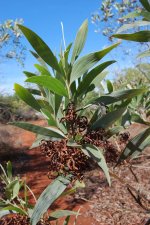
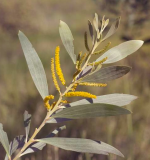
A. colei var. colei below:
 

Attachments

  • acacia_colei.jpg
    acacia_colei.jpg
    438.6 KB · Views: 2
  • Acacia+colei+var+colei.png
    Acacia+colei+var+colei.png
    378.8 KB · Views: 2
Wow! That's big news about colei. Thanks nen.

Do we know if Colei will tolerate conditions in the southern states of Australia?
Do we know what the phyllode content is like?

I always dismissed dr Karl's comments as I'll informed......
 
hi leratiomyces..phyllode content of A. colei was reported at 0.2-06% alkaloids..
as far as cultivation in different regions goes, it is commonly grown in warmer to tropical regions, but in it's southern desert natural range probably doesn't experience temperatures below about 7°C..

for Australian species with tryptamine/alkaloid content to grow in colder climates (i.e. below 7° down to about minus 3), candidates include A. floribunda, A. phlebophylla (rare and harder to obtain seed), A. implexa, A mucronata, and the still somewhat mysterious A. retinodes (which is grown in Germany)..A retinodes has as yet un-retested claims of dmt/nmt, but also nicotine, which needs to be looked at, an would make oral ingestion dangerous..the very closely related A. provincialis (which is believed to be a hybrid of A. retinodes and A. cyanophylla (saligna), or in fact A. retiondes var retinodes) may contain a completely unknown psychoactive alkaloid (based on a report a few years ago from a speciemen naturalised in Bolivia)..it's also worth noting that A. baileyana (with some reports of alternating beta-carbolie and tryptamine content) grows in the UK..

ps, Chimp Z..i personally have not grown A. (Vachellia) abyssinica, but this would be a really interesting one to cultivate..good luck with that..another interesting one..

.
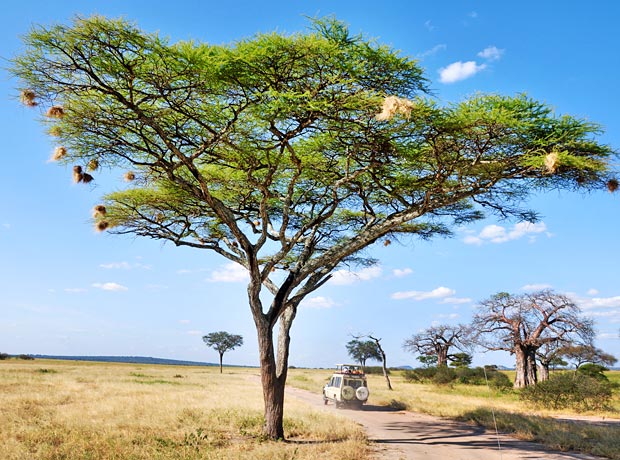
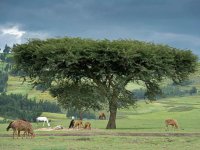
below, A. abyssinica
 

Attachments

  • Acacia-abyssinica.jpg
    Acacia-abyssinica.jpg
    135.4 KB · Views: 1
Back
Top Bottom