• Members of the previous forum can retrieve their temporary password here, (login and check your PM).

very thick aqueous solution

iownme

Established member
hi all.
new to this.
i followed the chris cantaleno video on youtube.
i used 50g powdered bark and half of all his ingredients , as he used 100g bark powder.
all went well until i put the naptha onto the "aqueous solution"
i swirled the container the same way he did but the product and the naptha did not mix at all, is this likely to affect the end result and if so what could i do differently?
 
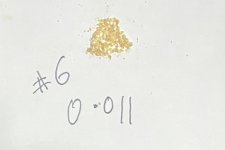
the final pull has been done and dried and here are the final results you have all waited for.

remember this was using 50g mhrb and utilized the chris cantelmo method from "the youtube video"

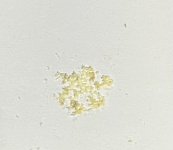
#1. 0.287
#2. 0.111
#3. 0.048
#4. 0.050

total 0.496

View attachment 104442
Samples 2 and 4 look like they could have base contamination. I'm sure you'd love to have a go at recrystallisation ("re-x") so this would be the perfect opportunity.
 
I'm sure you'd love to have a go at recrystallisation
thankyou.
so i read up on that and the different colors which can be obtained.

for now i will put 2 and 4 away and will either...
a. re-x at a later date, i have enough good product to get started
or
b. when i am experienced i may try using it as is to test what the differences are between it and pure.

if it is contaminated and one still smokes it, what is the ramification?
is it just a harsh smoke or a risk of actual bad health
 
If it's contaminated with base it's quite unhealthy (caustic to the lungs), definitely not recommended.
thankyou.
as there are "other" colors of product i imagine without a million dollar machine there is no way to tell if its contamination until i do the re-x ?

i will put them aside until i want to further experiment with the re-x
 
It would be nice, and more generally rather useful, but also not indespensible for that one small task.
i see they can be quite inexpensive at around $50 for entry level.
i imagine a specific heat range is desired to separate the bad from the good, thats why i would like to go the "set it and forget it" route.
im not sure i want to heat naptha on the stove with a thermometer 😂

when you say "more generally rather useful" might you expand on that? what else might it be able to improve?

it might have been a nice way to make a cuppa tea 30 years back when i drank tea😂
 
Also a great test jig for seeing how prone glass taps are to being bunged up by plant matter
just for fun i did try one more pull.
#7 gave nothing.
i feel complete.
Have you tried warming the soup up a bit before pulling? Like 40-50C in a water bath? There might yet be more :) Watch for possible pressure build up as you add the NPS though, you might need to burp the lid briefly after a swirl .. watch out for soup spray if so!
 
Have you tried warming the soup up a bit before pulling? Like 40-50C in a water bath?
well if you insist on telling me of other functions for a hotplate stirrer i must test your theory😂.
does one do that with every pull or just the last 1 or 2 ?

This allows the easy - or easier - separation of immiscible liquids.
so my soup and naptha would be in the funnel instead of the glass jar i used?.

i'll look up a pic so i can envisage
 
so my soup and naptha would be in the funnel instead of the glass jar i used?.

i'll look up a pic so i can envisage
Base soup is one of the things I wouldn't advise putting in a sep funnel. It tends to be too viscous to pass through the stopcock easily, and its caustic nature can slowly etch the glass, something especially to be avoided in the case of glass stopcocks.

The sep funnel would be of more use when washing naphtha or other NPS with vinegar (to recover DMT) or sodium carbonate solution (to clean up base contamination of pulls). It's also handy if you ever end up using heavier-than-water solvents like DCM or chloroform.
 
well if you insist on telling me of other functions for a hotplate stirrer i must test your theory😂.
does one do that with every pull or just the last 1 or 2 ?
Or just a saucepan full of water to put your soup jar in .... put a bit of something like dishcloth on the bottom of the pan to stop the jar bottom getting thermal shock though.

If you have a sous vide, then even better as the temperature control is good on those.

Speaking of extraction jars, a mason jar will often weaken at the bottom and it has been known for them to just drop out and dump caustic soup everywhere, so if you're using one try an upgrade to a proper borosilicate Erlinmeyer ( conical ) flask
 
Or just a saucepan full of water to put your soup jar in .... put a bit of something like dishcloth on the bottom of the pan to stop the jar bottom getting thermal shock though.

If you have a sous vide, then even better as the temperature control is good on those.

Speaking of extraction jars, a mason jar will often weaken at the bottom and it has been known for them to just drop out and dump caustic soup everywhere, so if you're using one try an upgrade to a proper borosilicate Erlinmeyer ( conical ) flask
Yes, I've popped the bottom out of a fairly large (~1gal) sweet jar by putting it into a slighty-too-warm waterbath. Fortunately, the large saucepan I was using had plenty of room for everythin, and I could proceed with a diluted extraction. The only problem was the increased surface area when attempting to recover naphtha.
 
try an upgrade to a proper borosilicate Erlinmeyer ( conical ) flask
i have just looked these up and the beaker appears easier to use than the conical.
what is the reason for choosing conical?
(i am sure there is one lol)

also, with the sous vide, do you recommend one which circulates or not (i imagine not but just checkin')
 
Conical flasks make for a thicker layer of NPS due to the narrowing neck so it's easier to pipette off... providing the flask is fairly full. Also much easier to swirl and mix without spilling. I prefer the ones with ground glass stoppers.

Borosilicate "Media bottles" are also favoured as extraction vessels... the main thing is to avoid ordinary soda glass if you can.

The sous vide suggestion is just possible re-appropriation of existing kitchen ware as a precision temperature control water bath for your extraction vessel, do not use to heat your soup directly! As such, circulating is likely better as it keeps water bath temperature more even. Slow cookers are also good for that job, but a pan of water on the stove is fine too.
 
Back
Top Bottom