
• Members of the previous forum can retrieve their temporary password here, (login and check your PM).

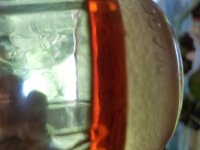
What are these layers? Sodium carb, water, freebase alkaloids?

Migrated topic.

dogsoldier

It's not what we do, it's how we do it.
Merits
1,105
Pic attached. I had acetates, mixed them with sodium carbonate, dried & crumbled, then pulled with acetone 4 or 5 times. Then I thought the mix was spent, so I poured some water into the dish to rinse it, and a bunch of reddish solution and fine, thread-like whisps appeared. So I poured it all into a jar, and it separated into 2 layers. Bottom is translucent with some sodium carbonate settled. Top is reddish. What is in these layers? Can I evaporate either layer for a final product? If so, can I just add it to the acetone/leaf which I am currently evaporating? Thanks!
 

Attachments

  • 20190627_100142.jpg
    20190627_100142.jpg
    2.5 MB · Views: 0
What has happened with this?

The obvious choice is to separate the layers. The top one may well be organic solvent since a concentrated solution of sodium carbonate definitely forms two phases with isopropanol and this may be the case for acetone as well. A quick experiment with acetone, water and sodium carbonate would demonstrate this phase-separation effect should it occur (minus the reddish coloration, in all likelihood).

Don't get too excited if the top layer provides a significant amount of solids on evaporation as much of it is likely to be sodium acetate and sodium carbonate. You can extract the (thoroughly dried) solids again with more acetone to see if there's a bit more alkaloid to be recovered.


I do wonder about the condensation products that acetone may produce under basic conditions, however - and also whether acetate anions would catalyse this process. A mini A/B would be necessary to get any DMT away from the resulting contaminants, so any kind of work recovering most probably negligible amounts of alkaloid from your extraction waste would best be appreciated for its instructional value above all else.

The red coloration of the top layer is perhaps a tad misleading as the pigments in question are very intensely coloured and as such should not be trusted to indicate the presence of any worthwhile amount of remaining alkaloids. Rather, proceed if you like tinkering and want to see what you might be able to recover. Sending a sample of any red gunk recovered for analysis would also be instructive for the community.
 
Back
Top Bottom