BundleflowerPower
Esteemed member
Hey everybody. This plant is native to my area and grows prolifically at former Native American sites, where it usually co-occurs along side massive numbers of Callicarpa America aka the American Beautyberry bush and a handful of passiflora species, as well as other medicinal plants which I'm not yet familiar with.
To prepare a simple yaupon tea, I roast the leaves and stems in the oven at 275 F for one hour, then boil for 30 min or so.
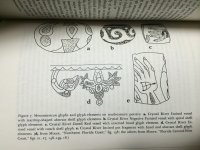
Lately I've become interested in Black Drink. I've been reading a book called, "Black Drink, a Native American tea." I'm about half way through. Each chapter is written by a different researcher. A botanist, taxonomists, ethnobotanist, and so on. It contains more info on the subject than I thought existed. For instance, Ilex Vomatoria is not closely related to other N. American holly. It closer to Yerba Mate and other carribean and South American hollies. In other words, it's a fully tropical species growing in N America, usually near human habitation. Also, southeastern Indians had contact with Meso-America. Meso-American images have been found on containers and cups used to drink Black Drink, at a site near Natchez MS.
Last night I drank an ayahuasca analog brew of desmanthus, rue and passiflora, along with a small amount of Callicarpa Americana, and got to thinking about black drink. Perhaps what we know about black drink is only half of the story. Perhaps Black Drink was a compound brew like ayahuasca and Yaupon played the same role as the Vine.
Caffiene has mao inhibiting properties. "Caffeine has been used as a scaffold for the design of inhibitors of monoamine oxidase (MAO) A and B. Substitution at the C8 position with a variety of moieties yields structures with high MAO inhibition potencies."

 www.ncbi.nlm.nih.gov
Perhaps admixtures are key to understanding Black Drink. Perhaps such admixtures contained tryptamines. Southeastern Indians used this brew for pretty much all of the same reasons that shamans in Amazonia use ayahuasca. A decoction containing caffiene only could not account for divination, entering trances, communicating with ancestors and so on. According to the book they used admixtures and scientists basically have zero knowledge of what they were.
I'd like to hear your thoughts on this
To prepare a simple yaupon tea, I roast the leaves and stems in the oven at 275 F for one hour, then boil for 30 min or so.
Lately I've become interested in Black Drink. I've been reading a book called, "Black Drink, a Native American tea." I'm about half way through. Each chapter is written by a different researcher. A botanist, taxonomists, ethnobotanist, and so on. It contains more info on the subject than I thought existed. For instance, Ilex Vomatoria is not closely related to other N. American holly. It closer to Yerba Mate and other carribean and South American hollies. In other words, it's a fully tropical species growing in N America, usually near human habitation. Also, southeastern Indians had contact with Meso-America. Meso-American images have been found on containers and cups used to drink Black Drink, at a site near Natchez MS.
Last night I drank an ayahuasca analog brew of desmanthus, rue and passiflora, along with a small amount of Callicarpa Americana, and got to thinking about black drink. Perhaps what we know about black drink is only half of the story. Perhaps Black Drink was a compound brew like ayahuasca and Yaupon played the same role as the Vine.
Caffiene has mao inhibiting properties. "Caffeine has been used as a scaffold for the design of inhibitors of monoamine oxidase (MAO) A and B. Substitution at the C8 position with a variety of moieties yields structures with high MAO inhibition potencies."
The interactions of caffeine with monoamine oxidase - PubMed
Although structural modifications of caffeine lead to highly potent MAO inhibitors, caffeine is a weak inhibitor of MAO-A and MAO-B. At plasma concentrations (approximately 1-10 μM) achieved by normal human consumption, the MAO inhibitory potencies of caffeine are unlikely to be of...
www.ncbi.nlm.nih.gov
Perhaps admixtures are key to understanding Black Drink. Perhaps such admixtures contained tryptamines. Southeastern Indians used this brew for pretty much all of the same reasons that shamans in Amazonia use ayahuasca. A decoction containing caffiene only could not account for divination, entering trances, communicating with ancestors and so on. According to the book they used admixtures and scientists basically have zero knowledge of what they were.
I'd like to hear your thoughts on this