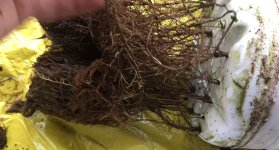
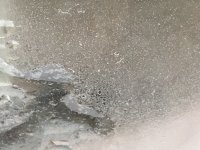
This was done to test the viability of growing caapi in a hydroponic setup for the specific purpose of using the roots rather than the stem material. I decided to try a kratky setup kinda like I have already rather adding airstone since such a pain to extract this.
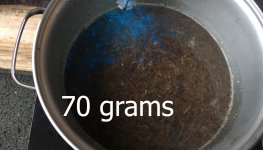
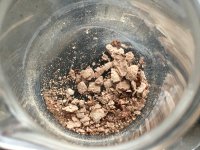
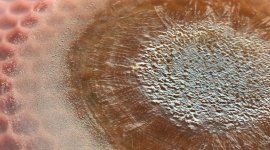
Removed 70g fresh caapi roots from a semi-hydroponic setup. After done it ended up being around 8.5g dried so rounded up to 10g making it around 2% yield. After a couple of A/B and different solvents like dry ethanol and isopropanol yielded approximately 200mg of the cloudy brown amorphous precipitate. I attempted to make it hcl via mansake with zero success and also tried precipitating via citric water but it didn't yield the red crystals Ive gotten from caapi stem tea. The color of the acid pulls was originally that blue you get from harmine.
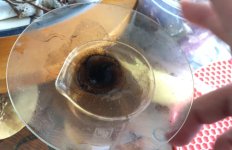
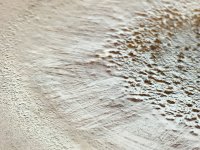
The last photo is the first precipitate after filtering and reducing the vinegar pulls from the roots to 200ml. Added lye and leads to this brown cloudy precipitate.
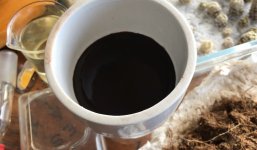
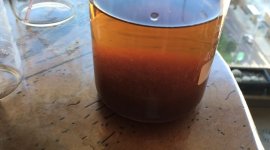
First photo is after another round of A/B remains a cloudy brown precipitate even after more careful filtering before pH alkaline.
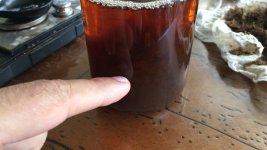
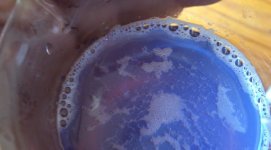
2-3 shows the color of the precipitate when acidic. it is a dark blue color which I had in my other harmala thread. The same brown precipitate I've had from caapi stem.
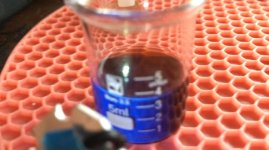
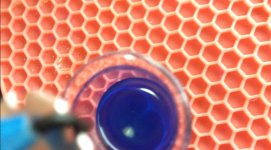
4-5 shows the nice dark blue color of the acidic alkaloid in isopropanol 99 a very dark blue VERY nice color.
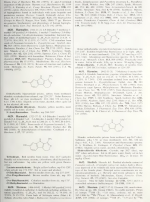
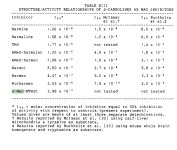
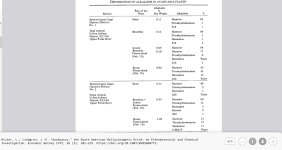
6 is an image from paper showing yields of caapi roots being higher than stem and leaf.
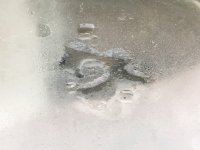
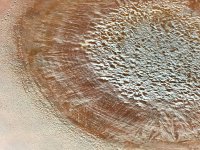
7-8-9 is attempt at making hcl crystals from ethanol and 20% hcl it is VERY hydroscopic and turns to a goo once scraped.
Removed 70g fresh caapi roots from a semi-hydroponic setup. After done it ended up being around 8.5g dried so rounded up to 10g making it around 2% yield. After a couple of A/B and different solvents like dry ethanol and isopropanol yielded approximately 200mg of the cloudy brown amorphous precipitate. I attempted to make it hcl via mansake with zero success and also tried precipitating via citric water but it didn't yield the red crystals Ive gotten from caapi stem tea. The color of the acid pulls was originally that blue you get from harmine.
The last photo is the first precipitate after filtering and reducing the vinegar pulls from the roots to 200ml. Added lye and leads to this brown cloudy precipitate.
First photo is after another round of A/B remains a cloudy brown precipitate even after more careful filtering before pH alkaline.
2-3 shows the color of the precipitate when acidic. it is a dark blue color which I had in my other harmala thread. The same brown precipitate I've had from caapi stem.
4-5 shows the nice dark blue color of the acidic alkaloid in isopropanol 99 a very dark blue VERY nice color.
6 is an image from paper showing yields of caapi roots being higher than stem and leaf.
7-8-9 is attempt at making hcl crystals from ethanol and 20% hcl it is VERY hydroscopic and turns to a goo once scraped.
Attachments
-
 2alkaline.jpg52.1 KB · Views: 3
 -
 precipitate.jpg58.7 KB · Views: 3
 -
 IMG_4027.JPG1.9 MB · Views: 3
 -
 IMG_4026.JPG1.4 MB · Views: 2
 -
 harman or jut root alkalkdoi.jpg122.3 KB · Views: 3
 -
 caapi root.jpg109.9 KB · Views: 5
 -
 blueiqoprop.jpg63.4 KB · Views: 4
 -
 blue iqoprop after cleaning.jpg67 KB · Views: 1
 -
 blue agron.jpg50.8 KB · Views: 1
 -
 alcohlacid blue.jpg31.5 KB · Views: 2
Last edited: