• Members of the previous forum can retrieve their temporary password here, (login and check your PM).

TEK Converting CBD to THC using only Zeolite and heat.

This topic contain a TEK
Migrated topic.
Did you read the bit about needing temperatures of 150C?

You're not going to get that in boiling water.

To add a bit more info: You cannot heat a liquid or solution above it's boiling point in an open vessel, once you reach that point then any energy goes into converting the liquid into vapour and the temperature stays at the boling point.
 
Last edited:
And so i realized that a problem for some was the filtration of the very fine zeolite particles, i had something in mind regarding this but i never actually tried it.
today i did an experiment and the results were positive, and you will probably find it familiar too, since we simply use a non polar solvent.
it appears as if zeolite prefers to be in water instead of hexane if it has the choice (probably other NPS's too but i only tried with hexane)
so as you already imagine, the process is as follows:
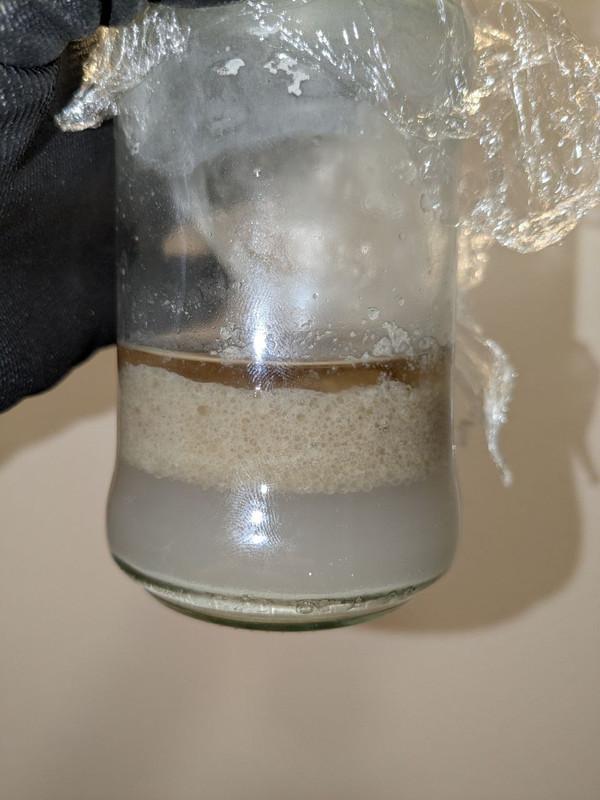
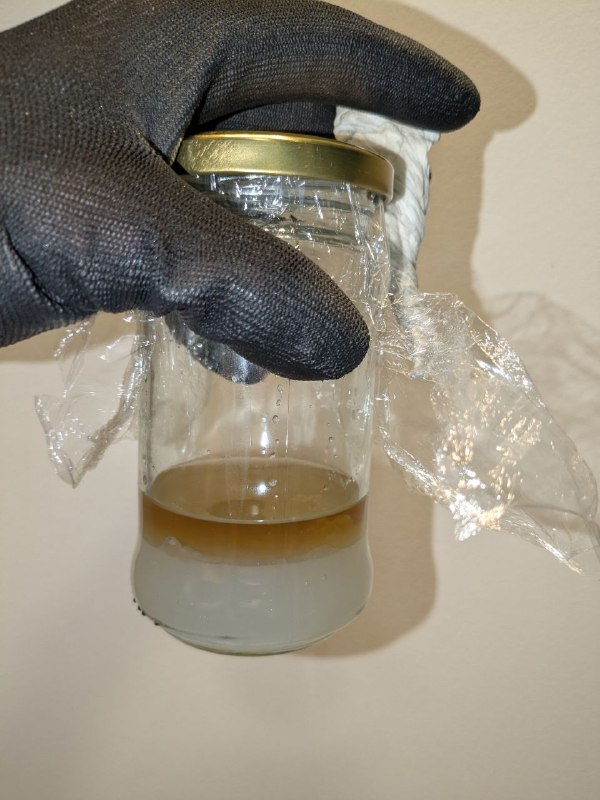
once you get your zeolite/cannabinoid mixture out of the oven, simply use hexane instead of ethanol to dissolve your cannabinoids, when everything is dissolved add an equal amount of water in the mixture, the hexane and water layers will separate almost immediately and the zeolite particles will move to the bottom water layer, the upper hexane layer should appear completely transparent and free of particles, and just like in DMT extractions, use a syringe or pipete to pull the upper hexane layer that contains the cannabinoids in a clean container and use heat to evaporate the hexane. (of course if you own a separating funnel it becomes much easier for you)

View attachment 97322


notes:
1. some oxygen bubbles will be trapped between the water/hexane layers but they will go away after a few minutes.
2. hexane is highly flammable and produces vapors really fast so be careful with it.
I tried this with only water and hexane and zeolite, and it worked really great.
but with the actual zeolite/cbd reacted mixture, I got something really weird:
hz.jpg


I've to admit that I did shake it because it seemed at first that half of the zeolite was at the bottom of the hexane layer. Then it looks like there's now a bunch of bubbles that won't go away. I'll let it sit all night and see tomorrow

also, the reduced hexane layer on the "top" is yellow, not transparent, is it worrisome ?
 
I tried this with only water and hexane and zeolite, and it worked really great.
but with the actual zeolite/cbd reacted mixture, I got something really weird:
hz.jpg


I've to admit that I did shake it because it seemed at first that half of the zeolite was at the bottom of the hexane layer. Then it looks like there's now a bunch of bubbles that won't go away. I'll let it sit all night and see tomorrow

also, the reduced hexane layer on the "top" is yellow, not transparent, is it worrisome ?
update:
I just filtered the mess thru a simple kitchen paper towel and it seems to have fixed the absolute mess:

wulo.png


you can see at the top of the water layer there's still some weird bubbles, it seems they'll never pop, they don't move at all

my zeolite is 20um, how much was yours?
 
Last edited:
Hi, I'm back after running some tests. This time the results are acting weird. Long story short:


I've made about five batches over the past few weeks. Unfortunately, the results after baking are very different from what I was getting before. The substance turns grey after baking, rather than brown like it used to.


It also seems significantly less potent. I've tried adjusting a few things, like baking temperature and time, but even when I prepared two identical batches, the final results (in terms of color and smell) were noticeably different.


Interestingly, I once achieved a very strong result when I made a sample at my friend's place, but the next batch in his oven turned out weak and odd. Once, I managed to make a really, really strong vape liquid—just two puffs and you were completely gone. Now, I can go through an entire cartridge and not feel even close to that effect. It's definitely not a tolerance issue, because I still have some of that old liquid—and it still hits like hell.


After dissolving in alcohol, the solution is now just light yellow, instead of the orange/brownish/pink color I used to get.


What do you think could be going wrong? Could zeolite lose its isomerization ability over time?


The strongest result I got produced a pink solution in ethanol, so I assume it was properly cooked—maybe indicating that Δ9-THC started converting to Δ8-THC (if I’m not mistaken, Δ9 is the first step in the isomerization process).
 
Hi, I'm back after running some tests. This time the results are acting weird. Long story short:


I've made about five batches over the past few weeks. Unfortunately, the results after baking are very different from what I was getting before. The substance turns grey after baking, rather than brown like it used to.


It also seems significantly less potent. I've tried adjusting a few things, like baking temperature and time, but even when I prepared two identical batches, the final results (in terms of color and smell) were noticeably different.


Interestingly, I once achieved a very strong result when I made a sample at my friend's place, but the next batch in his oven turned out weak and odd. Once, I managed to make a really, really strong vape liquid—just two puffs and you were completely gone. Now, I can go through an entire cartridge and not feel even close to that effect. It's definitely not a tolerance issue, because I still have some of that old liquid—and it still hits like hell.


After dissolving in alcohol, the solution is now just light yellow, instead of the orange/brownish/pink color I used to get.


What do you think could be going wrong? Could zeolite lose its isomerization ability over time?


The strongest result I got produced a pink solution in ethanol, so I assume it was properly cooked—maybe indicating that Δ9-THC started converting to Δ8-THC (if I’m not mistaken, Δ9 is the first step in the isomerization process).
well you need to post your very exact way of doing it
also, humidity will affect it. zeolite absorbs humidity
changing oven will affect it, ovens aren't really precise for temperature
 
well you need to post your very exact way of doing it
also, humidity will affect it. zeolite absorbs humidity
changing oven will affect it, ovens aren't really precise for temperature
I weigh out zeolite and CBD in a 1:1 ratio. In a container, I break the CBD chunks into a fine powder and mix it thoroughly with the zeolite. Then I spread the mixture as a thin layer on baking paper, wrap it several times with aluminum foil, fold the edges, press out the air, and place it in a preheated oven.


I’ve experimented with different temperatures, ranging from 105°C to 150°C. Attempts starting at 140°C to 150°C tend to yield similar results. Baking time ranges from 15 to 25 minutes.


Both the CBD and zeolite appear dry and have never been exposed to moisture. I’ve also purchased new batches of CBD, but the results remain the same across different samples.


Previously, using the same materials, I was getting noticeably stronger results.
You can also refer to some of my earlier posts for more details and results from these experiments, if that helps.
 
The Method described uses no dangerous or illegal ingredients, and is Safer or at least as safe as a DMT extraction, this is for educational purposes only.

CBD isomerization to THC using zeolite clinoptilolite

pros: easy, no dangerous chemicals used.
cons: only around 50% of the CBD converts, so you will have a mixture of around 50% CBD & 50% THC.

ingredients:
1.CBD crystals 99%. (CBD is legal in most EU countries and the USA)
2.Zeolite clinoptilolite in powder form. (its categorized as a G.R.A.S substance by the United States Food and Drug Administration and is considered edible.)
3.ethanol (optional)

equipment:
1.Oven
2.aluminum foil
3.scale


how it works:
Zeolite is an aluminum silicon that has negatively charged anions, when CBD is heated at 105°C (221°F) to 150°C(302°F) the anions attract the CBD molecules causing them to rotate.
Usually for this to occur, dangerous acids or metal salts have to be used, But in this method we only use zeolite.

method: weight 1 gram of CBD crystals and 1 gram of zeolite clinoptilolite powder, mix them until they become a homogenous powder, now take a big piece of aluminum foil at least the size of 2 A4's,
put your powder in the center and start folding very tightly, you can make it a small ball to apply even more force, the reason we need it tight is to minimize the contact with oxygen as much as we can because oxygen (and water) interferes with the isomerization causing a lot of Δ8-THC to be produced and while Δ8-THC is found naturally in the cannabis plant and is psychoactive (although slightly less psychoactive than Δ9-THC) many people like their conversions to contain mostly Δ9-THC, after we make sure our aluminum foil is packed tightly we warm our oven for 10 minutes to 150°C (302°F), aluminum foil can safely be used in the oven up to 200°C (392°F).
once the oven starts to get close to 105°C (221°F), put your aluminum-packed powder in and set a timer to 15 minutes, once the 15 minutes pass take it out of the oven let it aside to cool, once it gets in a comfortable to touch temperature, carefully open it, you will find a black powder inside and you will think you burned it, but this is normal, the conversion should be complete.

edit: in case you decide to use the flame in Jar method to minimize oxygen in your reaction, remember that glass is very bad at conducting heat, so you will need to adjust the timeframe accordingly in order to allow the container to catch up the target temperature, in other words extent the duration of applied heat or start applying heat on the container before you start the timer, you will probably have to experiment and find what works best for you as far as heat goes, since different ovens and equipment (jars etc.) will produce variable outcomes.


!UNDER ANY CIRCUMSTANCES DO NOT SMOKE ZEOLITE! , however zeolite is edible.

how to get the THC/CBD mixture out of the zeolite(optional): here we will use ethanol, put your zeolite powder containing THC in a jar and add ethanol, if you made under 10 grams of powder add 10ml of ethanol per gram, you can lower the amount of ethanol used as you scale up in the amount of powder, the ethanol will dissolve your cannabinoids and then you have to filter the zeolite out, you can use coffee filters, filter 2-3 times, collect the filtered cannabinoid containing ethanol inside a clean jar and heat it using a hot water bath until all ethanol evaporates, even if you think all ethanol has evaporated heat it for more time or leave it open for 24 hours for safety, once the ethanol is evaporated, you will be left with a clear yellow to orange sticky compound.
Be aware that simple filtration could possibly leave zeolite particles in the distillate which would make it dangerous to vape/smoke, i suggest that you simply use your product orally if you are not sure about its purity.

key note:
1.You need pure CBD crystals for this, no crude oils, and no full spectrum extracts, impurities will lead to impurities.
2.You need zeolite clinoptilolite in powder form, no specific μm, just powder.

what does zeolite clinoptilolite do to the body according to NCBI:
"Zeolite clinoptilolite (ZC) reduces ammonia concentration and improves the integrity of the intestinal barrier. Furthermore, ZC acts on intestinal lymphoid tissues with a positive impact on the intestinal ecosystem and boosting the immune system."
source: Zeolite Clinoptilolite: Therapeutic Virtues of an Ancient Mineral

Tried to make it in jar using heat for 7minutes. It works. But.. After making final product and baking brownies with it zeolite adds very harsh flavor. What you have in mind to filter it? I have found info about Nylon filters, carbon. I have tried using Nylon syringe filters, but liquid got stuck..
 
Tried to make it in jar using heat for 7minutes. It works. But.. After making final product and baking brownies with it zeolite adds very harsh flavor. What you have in mind to filter it? I have found info about Nylon filters, carbon. I have tried using Nylon syringe filters, but liquid got stuck..
Use alcohol (ethanol or isopropyl alcohol – IPA). After letting the mixture settle, decant and use a syringe to draw up the "clean" layer into another jar/container. Then, evaporate the alcohol by leaving it out or using a water bath. If you want a cleaner result—or even a completely clean one—use coffee filters or lab-grade paper filters. The final product may still have a bit of a funky taste, but it will be much milder than before.
 
Tried to make it in jar using heat for 7minutes. It works. But.. After making final product and baking brownies with it zeolite adds very harsh flavor. What you have in mind to filter it? I have found info about Nylon filters, carbon. I have tried using Nylon syringe filters, but liquid got stuck..
are you sure it is the zeolite that adds the flavor? I tried to eat raw 20ug zeolite and the taste was barely noticeable
 
are you sure it is the zeolite that adds the flavor? I tried to eat raw 20ug zeolite and the taste was barely noticeable
To be honest, I'm not entirely sure how it works. Although zeolite is supposed to be flavorless in theory, the edibles I made from a purified batch ended up tasting noticeably better.
 
Last edited:
thanoc
If you want to make an investment look for a buchner funnel suction filtration kit and use the 10μm pore diameter paper filter (also sold as "slow flow")
The kit's cost is under 100$, and can be found on sites like ebay.

View attachment 103341

There is however a method posted earlier in the thread using tightly rolled kitchen paper and a funnel, which works well.
Its also a good idea to get zeolite with particle size of ~100μm (bigger size = easier filtration)

Stay safe and DYOR.
Reply in private messages
 
Hexane fumes are not good for you, it's neurotoxic with chronic exposure... If you're feeling high it's likely the hexane fumes, as THC evaporates at a much higher temperature than hexane.

I'd be using a different solvent, personally, like isopropyl alcohol.
IPA is troublesome for zeolite separation, hexane works best, it just sinks to the bottom in a few minutes.
naphtha the smell stays inside the product for some reasons, even after a whole night at 40c
I'll keep with hexane

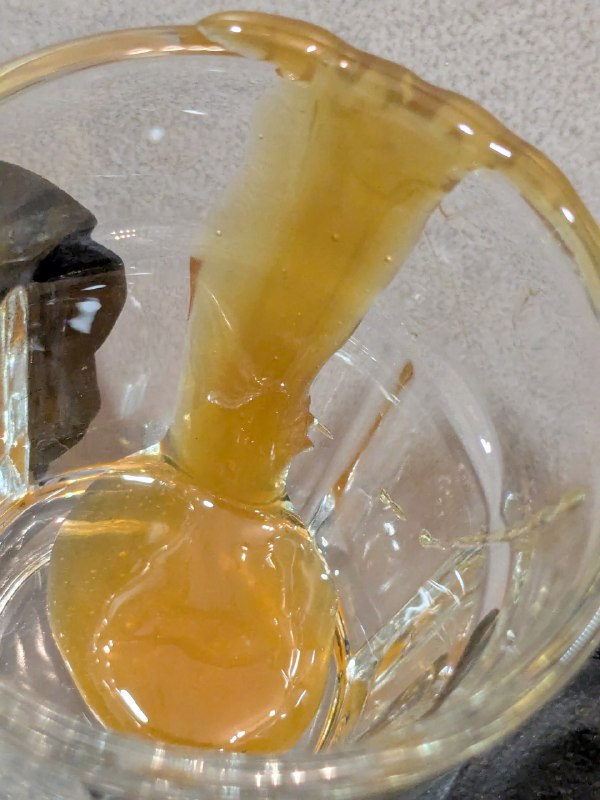
check my picture how golden it is, it looks so cool
 
I'm just concerned that you say you feel high when evaporating hexane ... that's not a good sign, and your convenience could be being paid for by permanent nerve damage to you, and any others breathing nearby:


So be sure to avoid inhaling the vapours during evaporation and if you vape the end product be very sure there's no hexane left in there.

It does look nice and golden, it also looks a bit like there's still zeolite in there with those grey streaks where it's running down the glass, and overall opacity.

Have you tried Heptane? That might work better and has been found to be far less neurotoxic than hexane ( you still want to avoid the fumes though) .
 
yeah I know there's zeolite. I don't care because I eat it. I've also started drinking a tablespoon of zeolite everyday, it helps the digestive system a lot.
but sometimes I just smoke it with zeolite and naphtha odor, it's fine. it's a bit irritant for the throat but I'm fine with that.
 
You'll only notice chronic hexane toxicity when you can't feel your fingers or toes anymore, or start getting tremors that won't go away ... and you won't get better, ever.

Just so you know what you're playing with here. Harm reduction is the philosophy of this place: a little one off exposure probably won't hurt you, getting into a long term habit of exposure will.

Personally I just eat the whole baked paste, no solvents to faff about with, and it works just fine when dissolved in a bit of butter then mixed into cooking chocolate. There's no noticeable grit or taste.
 
[CBD → THC conversion - Final thoughts before a break – Updated guide after 100g experience]


Hey everyone,
Soon I’ll have to take a longer break from experimenting and consuming, so I wanted to share my updated insights on production quality and efficiency, after working through almost 100g of CBD.


My methods are tailored to simple, affordable, home setups and focused on the most effective, low-effort process possible. No deep chemistry knowledge is needed—just follow the instructions and tips in this post to save time and money.


I won’t repeat info from my previous post (linked here: TEK - Converting CBD to THC using only Zeolite and heat.), so some things will be updated or skipped. Refer back to that post if needed.


⚠️ Disclaimer: I’m a hobbyist. Some steps may not be the most efficient, but they aim to be safe and beginner-friendly (in my opinion).


Part 1: Getting started – What you need

Here’s what I use in my setup:


  • ≥99% CBD isolate
  • 100% Zeolite (clinoptilolite)
  • Old oven (10+ years – more on this later)
  • Aluminum foil
  • Baking/parchment paper
  • Ethanol
  • Coconut oil
  • Lab filter paper (I use Whatman knockoffs from Amazon – the lower the µm, the better: 2–10 µm is ideal)
  • Pocket scale
  • Kitchen thermometer (for liquids only – not oven-safe; consider an oven thermometer)
  • Jars
  • Bowls
  • Syringes
  • Funnel


Optional prep

If your zeolite or CBD feels clumpy or moist, it might help to dry them separately before mixing. This can slightly improve conversion.


  • Zeolite: 200 °C for 2h
  • CBD: 40 °C for 30 mins – 2h

⚠️ Recommended: keep sample size ≤10g (e.g. 5g zeolite + 5g CBD)


Conversion process

  1. Weigh zeolite and CBD in a 1:1 ratio.
    Smaller zeolite ratios might improve conversion in theory, but 1:1 has worked best for me.
  2. Crush the CBD thoroughly.
    No clumps. You can mix it with zeolite first—makes crushing easier. Avoid metal tools.
  3. Spread the mixture thinly on parchment paper.
    The thinner the layer, the better the heat distribution = better conversion. Don’t make a ball or puck.
  4. Wrap the parchment in aluminum foil.
    Make 2–3 layers, wrapping from different angles. Don’t go overboard—you don’t want too much insulation. Seal each layer by folding the edges and pressing out trapped air.
    💡 Tip: Use foil sheets roughly the length of two A4 pages. Aim for a firm but flexible envelope.
  5. Ensure a semi-sealed pack.
    It’s OK if the pouch isn't 100% airtight—it should be able to vent excess pressure. If you want to fully deoxygenate it, that’s a whole different method (not covered here).


Part 2: Baking

Here’s where it gets interesting. The oven turned out to be the biggest variable in my results. Even with identical settings, my old oven would produce different results in different sessions.


An oven thermometer can help you standardize, but I’ve learned to “speak the language” of my oven over time.


Let’s compare:


Original method (from linked post):

  1. Preheat oven to 105 °C
  2. Insert foil packet
  3. Raise temp to 150 °C
  4. Bake for 15 mins
  5. Cool and unwrap

➡️ Expected result: dark powder


🧪 Reality (for me): I always got something hash-like, not powdery.


My method (based on 100g+ experience)

  1. Use convection setting (fan)
    Not sure why, but convection gives me more even, reliable results—even though theory says air movement could reduce performance. Check if this setting works for you.
  2. Preheat oven to 130–140 °C, After inserting it, set the oven to 150°C.
    This works well with older ovens. For newer ovens, try starting at 110–120 °C. Higher temp = stronger effects in my case.
  3. Bake for 15–25 minutes
    Longer than 25 mins starts to reduce smell and potency (in my experience).

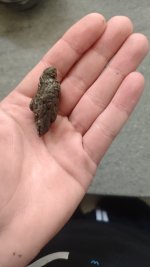
🧠 Tip: The stronger and sweeter the smell, the better the effect. Best batches have a brown/orange hash look. A greenish/gray hash is usually weaker—though not always. I once got a strong batch from an old oven where the result looked weak. Sometimes random luck beats logic.


⚠️ If your final product is powdery, dry, and white-specked hash like, the conversion likely failed. Bad wrapping or low baking time. You can try re-baking if you haven’t frozen it yet.


  1. Cool the foil pouch at room temp
  2. (Optional) Put it in the freezer for 5–30 minutes
    Makes the product less sticky and easier to collect.
  3. Peel/scrape off the material
  4. Weigh the result
    You’ll likely lose 0.05–1g per batch. Not a big deal—it’s easier to make a new batch than to recover every bit.

🎉 Congrats! You now have active edible hash (THC/CBD mix). It’s already decarboxylated and ready to eat.


Part 3: Edibles

Not much has changed since my previous post.


Basic concept:
Melt your hash into coconut or MCT oil using a water bath (~40–50 °C). You now have infused oil. Butter also works, but MCT oil hits harder and faster.


Yes, MCT is worth the extra money, but regular coconut oil is still good enough.


What I do:
I make a high-potency oil (lots of hash, just enough oil to dissolve). Then I add:


  • A few squares of dark chocolate
  • Some powdered sugar
  • Orange flavoring

Result: a chocolate-orange cream with high potency (a small spoon = 200–300mg).
I don’t like the texture of zeolite and don’t bother filtering it out—this method masks the taste and texture in a small, pleasant dose. Just stir if it separates over time.


It works as well a month later as on day one.


Part 4: Filtering & Vape

Controversial topic, but I’ve found a cheap and effective method with minimal losses.


🧪 Prepare 3–4 containers (I use 2 jars and a bowl).


  1. Put your finished hash in jar #1
  2. Add 6–10ml ethanol per 1g hash
    Ethanol works fast and clean. IPA is cheaper but much more toxic and harder to fully purge. Ethanol/IPA must also be 100% evaporated.
  3. Close loosely and chill in the fridge for 30–60 mins
    Zeolite settles to the bottom.
  4. Use a syringe to extract the clear liquid into jar #2, leaving the zeolite sludge behind.
  5. Weigh a new clean jar
  6. Place a folded lab filter in a funnel
    I use 2 filters for better results (slower, but cleaner).
  7. Filter in small steps (10–20ml per filter).
    Filters absorb a little liquid—not a big deal.
  8. Keep filtering until the liquid is clear, no particles. Shine a light to confirm.


Now choose:

Option A: Let it sit for 2–3 days
The resin will separate naturally—you can use it however you want.


Option B: Water bath evaporation


  • Heat water to 70–80 °C
  • Place the jar in the bath and let it evaporate
  • When not much left. Weigh the jar every 5–10 minutes to track evaporation progress
  • Smell, bubble size, and weight are your best indicators:
    • Strong smell = alcohol still present
    • Large bubbles = alcohol
    • No smell + no weight drop for 15+ mins = done
  • Final step: Weigh again to know how much resin you got

⚠️ It's best to use a container with a large evaporation surface to both methods — I use a bowl. Evaporation in a narrow jar can literally take weeks, as the alcohol will condense on the walls.


Vaping

Straight to the point:

  • Use CBD isolate cartridges with ceramic coils – they must support thick oils
  • Warm your resin in a water bath (40–50 °C) to make it flow better
  • Add a few drops of a liquefier:
    • Either PG (90:10 or 95:5 resin to PG ratio)
    • Or cannabis-derived terpenes (start with 3–5%)
  • Mix well until smooth and homogenous
  • If still too thick, dilute further or switch to a wax/dab pen
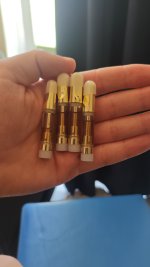
  • If the cartridge gets burnt or clogged, throw it out – don't try to save it. It's even worse than zeolite particlesIMG_20250407_092439 (1).jpgIMG_20250430_154645.jpg
 
Last edited:
Back
Top Bottom