• Members of the previous forum can retrieve their temporary password here, (login and check your PM).

TEK Ethyl acetate approach [CIELO]

This topic contain a TEK
Migrated topic.
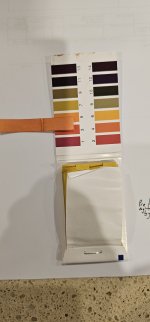
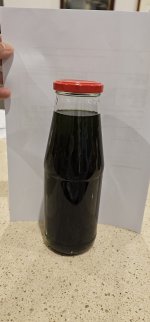
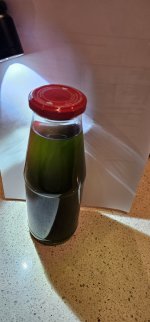
Where am I going wrong? I used 100g SP powder and followed the CIELO Tek - all seemed to be going fine. I had my powder / EA (post-French press) sitting for a few days before adding the 1tspn citric acid and firing up the magnetic stirrer. The stirrer had been pumping for about 5 hours with no visible action (crystals). So I put in another teaspoon of CA. I can't see anything of interest to date - the color is green but has a reddish hue in certain light. The photos show the current pH (which looks between a 4 and a 5 to my eye), the extract, and the extract with light.

Am I doomed?
 

Attachments

  • 20250523_175032.jpg
    20250523_175032.jpg
    981.4 KB · Views: 17
  • 20250523_174545.jpg
    20250523_174545.jpg
    1.1 MB · Views: 17
  • 20250523_174627.jpg
    20250523_174627.jpg
    1 MB · Views: 17
This maybe within the thread but I want to make sure... Why specifically calcium hydroxide for the base? Can it be substituted for sodium carbonate?
 
Where am I going wrong? I used 100g SP powder and followed the CIELO Tek - all seemed to be going fine. I had my powder / EA (post-French press) sitting for a few days before adding the 1tspn citric acid and firing up the magnetic stirrer. The stirrer had been pumping for about 5 hours with no visible action (crystals). So I put in another teaspoon of CA. I can't see anything of interest to date - the color is green but has a reddish hue in certain light. The photos show the current pH (which looks between a 4 and a 5 to my eye), the extract, and the extract with light.

Am I doomed?
What is your starting material? Are you sure it contains mescaline?

And what do you mean you had powder/EA sitting for a few days? You mean you had the extract EA alone sitting for a few days, right?

You used calcium hydroxide to make the crumbs, correct?
 
This maybe within the thread but I want to make sure... Why specifically calcium hydroxide for the base? Can it be substituted for sodium carbonate?
Calcium hydroxide keeps the wet crumbs loose during the extraction so the solvent can penetrate. Sodium carbonate will make a mess and turn them into a sludge and won't work well.
 
Quick question about temperature during the crystallisation process:

Is there an optimal temperature to hold the salted extract at while xtals form?

Is room temperature always going to be ok, leaving aside extreme scenarios?
 
Hi, I may have taken a wrong turn on my second attempt and am looking for feedback and possibly how to recover.

My first attempt went pretty well. I used a nameless pach from the garden, and followed instructions using fumaric. Got less than 1% yield but that could very well be the max yield of the plant used.

The second attempt, I used a small portion of some powder I prepared from a "Lima" pach (Sacred Succulents) that had been aged for about two months. I have quite a bit more powder from this plant but wanted to test a small amount first for analysis purposes (and because I was short on EA). I have no idea what kind of alkaloid content to expect from this plant.

I was waiting for some fresh EA so I neutralized the recovered solvent from the previous batch via sodium carbonate and a bit of water, mag stirred overnight. pH strip read neutral. After filtering and returning to the bottle, I put it in the freezer overnight and decanted. So I believe the EA used should be pretty dry.

I used 25 mg of pach powder, 7g lime, and 35ml distilled water to prepare the wet crumbs. I probably could have used a bit more water but the crumbs were sticking together at that point. First pull was with ~100 ml EA, then 5x more with 50 ml EA each. pH strips were used with each pull, the first two coming out dark blue, 3 and 4 looking lighter blue, and 5-6 quite light/almost neutral. Total volume of recovered/filtered solvent: ~300ml.

I did a fridge rest for 4 hrs in a sealed bottle (saw only a couple drops of water at the bottom), then decanted through a filter. I used 1.25g anhydrous citric acid (note that this is my first time using citric, I used fumaric last time), fairly coarse grained. The citric acid grains sat at the bottom of the bottle for quite a while, I think it took 3-4 hours to fully dissolve. At that point the EA had turned pretty cloudy. pH strip indicated it was quite acidic.

24 hrs later, EA was still cloudy but no sign of any crystallization. Perhaps I should've been more patient and left it alone another day or two.

I'd read that too little water can hinder precipitation, and given that I'd had pretty dry cactus crumbs, and done a fridge rest, I decided to add a bit of water. I used a pipette to add 2ml to my 300ml EA. This just sat on the bottom of the jar so after a while I placed it on the mag stirrer, on low. Within a minute or two, the water was dissolved, and the EA became clear.

At this point I figured I'd probably made a mistake and wanted to get a sense for how much water is in the solution, so I put the jar in the freezer, which is where it is now. There appears to be around ~5 ml of water at the bottom now (hard to estimate, but you have to tilt the jar to get it to collect in a corner to really see it). The water is kind of frothy looking, like lots of little bubbles that haven't coalesced.

Any thoughts on what my next move should be? Options that come to mind:

- Let it return to room temp, do nothing and see what happens
- Let it return to room temp, get the water mixed back in and see what happens
- Pipette out the water, evaporate it, add the resulting precipitate back to the EA, and see what happens
- ??

Thanks for reading, really appreciate any feedback or advice.
 
Hi, I may have taken a wrong turn on my second attempt and am looking for feedback and possibly how to recover.

My first attempt went pretty well. I used a nameless pach from the garden, and followed instructions using fumaric. Got less than 1% yield but that could very well be the max yield of the plant used.

The second attempt, I used a small portion of some powder I prepared from a "Lima" pach (Sacred Succulents) that had been aged for about two months. I have quite a bit more powder from this plant but wanted to test a small amount first for analysis purposes (and because I was short on EA). I have no idea what kind of alkaloid content to expect from this plant.

I was waiting for some fresh EA so I neutralized the recovered solvent from the previous batch via sodium carbonate and a bit of water, mag stirred overnight. pH strip read neutral. After filtering and returning to the bottle, I put it in the freezer overnight and decanted. So I believe the EA used should be pretty dry.

I used 25 mg of pach powder, 7g lime, and 35ml distilled water to prepare the wet crumbs. I probably could have used a bit more water but the crumbs were sticking together at that point. First pull was with ~100 ml EA, then 5x more with 50 ml EA each. pH strips were used with each pull, the first two coming out dark blue, 3 and 4 looking lighter blue, and 5-6 quite light/almost neutral. Total volume of recovered/filtered solvent: ~300ml.

I did a fridge rest for 4 hrs in a sealed bottle (saw only a couple drops of water at the bottom), then decanted through a filter. I used 1.25g anhydrous citric acid (note that this is my first time using citric, I used fumaric last time), fairly coarse grained. The citric acid grains sat at the bottom of the bottle for quite a while, I think it took 3-4 hours to fully dissolve. At that point the EA had turned pretty cloudy. pH strip indicated it was quite acidic.

24 hrs later, EA was still cloudy but no sign of any crystallization. Perhaps I should've been more patient and left it alone another day or two.

I'd read that too little water can hinder precipitation, and given that I'd had pretty dry cactus crumbs, and done a fridge rest, I decided to add a bit of water. I used a pipette to add 2ml to my 300ml EA. This just sat on the bottom of the jar so after a while I placed it on the mag stirrer, on low. Within a minute or two, the water was dissolved, and the EA became clear.

At this point I figured I'd probably made a mistake and wanted to get a sense for how much water is in the solution, so I put the jar in the freezer, which is where it is now. There appears to be around ~5 ml of water at the bottom now (hard to estimate, but you have to tilt the jar to get it to collect in a corner to really see it). The water is kind of frothy looking, like lots of little bubbles that haven't coalesced.

Any thoughts on what my next move should be? Options that come to mind:

- Let it return to room temp, do nothing and see what happens
- Let it return to room temp, get the water mixed back in and see what happens
- Pipette out the water, evaporate it, add the resulting precipitate back to the EA, and see what happens
- ??

Thanks for reading, really appreciate any feedback or advice.
Your water blobs have emulsified slightly, probably due to some kind of particulates at the liquid/liquid interface. This isn't altogether surprising given the circumstances - the somewhat dry paste may have released some lime particles, and the reused EA may have contained saponified material. One to chalk(!) down to experience. It may also have been wiser to follow up the carbonate wash with a water wash.

Those droplets are very likely to be mesc citrate solution, of course.

How long has it been in the freezer? Has it been long enough for the droplets to freeze? And how cold does your freezer get? The dissolved solids may well be acting as antifreeze, but if you're lucky, this might get the water-soluble components to drop out alongside any water ice. You can then decant off the EA and see what's left from the melted ice after evaporation.

After that, I'd let it warm up and just wait and see. The container might need to be well-sealed to avoid letting too much condensation form in it while it's cold.

If all else fails you can, after letting it warm back up to room temperature, add more water, separate and evaporate that to recover mesc citrate, albeit likely with considerable CA contamination. That's a last resort since ideally you'll recover crystals direct from the EA.

One classic trick for coaxing things into crystallising is to scratch the bottom of the beaker with a glass rod (inside, where solution is, naturally).
 
Your water blobs have emulsified slightly, probably due to some kind of particulates at the liquid/liquid interface. This isn't altogether surprising given the circumstances - the somewhat dry paste may have released some lime particles, and the reused EA may have contained saponified material. One to chalk(!) down to experience. It may also have been wiser to follow up the carbonate wash with a water wash.

Very insightful, thank you. When you say water wash, are we talking about just adding water to the EA, allowing to settle and decanting (perhaps at fridge temp)? I assume the goal is to remove particles and any other water-soluble cactus junk from the EA before reuse.

My EA re-up arrived so I think for now I will stick to using fresh EA (storing the used solvent of course) and venture into reuse once I'm more confident in the tek.

How long has it been in the freezer? Has it been long enough for the droplets to freeze? And how cold does your freezer get? The dissolved solids may well be acting as antifreeze, but if you're lucky, this might get the water-soluble components to drop out alongside any water ice. You can then decant off the EA and see what's left from the melted ice after evaporation.

It's been in the freezer about 36 hrs now. Freezer temp measured by IR is -9 C. I could get it a little colder if that would help. It looks like the bottom water layer is now frozen. And, there are a bunch of snowflake-like ice crystals suspended in the EA. They seem to be settling very slowly. I'm thinking I will let this play out for a couple more days and see how much the water ice coalesces. Then decant the EA, evap the water and see what I get.

It seems that there was probably a lot more water in the EA than I expected. I'm wondering how effective my sodium carb neutralization was at drying... the sodium carb is from the spa care closet (pH up) and is pretty old. I did see a little clumping with the first spoonful but by the time the mag stir had finished, it was very loose in the EA (no idea what that means, just observing). Next time I will dry it in the oven before using. Or just get some new stuff for extraction use if that is recommended.

If all else fails you can, after letting it warm back up to room temperature, add more water, separate and evaporate that to recover mesc citrate, albeit likely with considerable CA contamination. That's a last resort since ideally you'll recover crystals direct from the EA.

I've read that some use IPA to separate citric acid and mesc citrate. Let's assume that whatever water portion I separate from my EA will be saturated with citric acid... since it seems like there is in fact a lot of water, that could be a lot of CA. In that case, I would evaporate the water, then cover with IPA?

One classic trick for coaxing things into crystallising is to scratch the bottom of the beaker with a glass rod (inside, where solution is, naturally).

Noted.
 
the sodium carb is from the spa care closet (pH up) and is pretty old.
sod.carb. slowly turns into the bicarbonate if it gets exposed to the atmosphere. It should still neutralise citric acid, just not as effectively weight-for-weight. And, as you note, a good bake in the oven will convert it back to (anhydrous) carbonate.
I've read that some use IPA to separate citric acid and mesc citrate. Let's assume that whatever water portion I separate from my EA will be saturated with citric acid... since it seems like there is in fact a lot of water, that could be a lot of CA. In that case, I would evaporate the water, then cover with IPA?
Yes, this would work. It's best if the IPA is cold, but also as water-free as possible (ideally 99+%), but IPA's a bit hygroscopic, and cold IPA will cause condensation. Depending on your local humidity levels, you'll probably want to work swiftly and use stoppered flasks.

-9°C is a bit disappointing to hear for a freezer. Mine goes below -24°C if it's put on max power - fun for freezing water out of vodka (amongst other things)! Fortunately, yours still seems adequate for this particular situation.
 
Dear forum team, I've finally managed to register. I've been a silent reader for quite some time and am extremely excited about the Cielo Tek. Thank you so much for your motivation and your warm openness in sharing such important knowledge with the whole world. I really appreciate it.

My first experiment is currently making its rounds in the magnetic mixer.

Now I have two questions:

How do I properly dispose of the used cactus powder?

and

Can I leave the ethyl acetate in a jar for a few days after extraction and then process it for reuse when the opportunity arises (using the magnetic mixer method)?

Or does this have to happen as soon as possible?

Thank you so much for a quick response. I'll definitely be speaking up more in the near future and contributing to this friendly community.

Best regards,
Leer.gut
 
Dear forum team, I've finally managed to register. I've been a silent reader for quite some time and am extremely excited about the Cielo Tek. Thank you so much for your motivation and your warm openness in sharing such important knowledge with the whole world. I really appreciate it.

My first experiment is currently making its rounds in the magnetic mixer.

Now I have two questions:

How do I properly dispose of the used cactus powder?

and

Can I leave the ethyl acetate in a jar for a few days after extraction and then process it for reuse when the opportunity arises (using the magnetic mixer method)?

Or does this have to happen as soon as possible?

Thank you so much for a quick response. I'll definitely be speaking up more in the near future and contributing to this friendly community.

Best regards,
Leer.gut
1) let it dry and put it in a compost pile or the trash
2) Yes that should be OK
 
Screenshot 2025-07-30 152824.png


So,
I made some side to side extraction. I also split the resulting EA in half : half got backsalted with CA, the other half with vinegar.
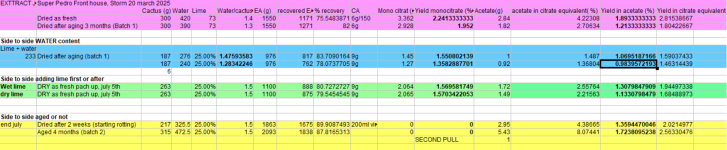
The purpose was to test the AGED vs NOT AGED difference. So i cutted the cactus in chuncks to age, taking a 10-20% "tax" from each to dry immediatly rather than aging, so it's not just the top or bottom part

We will look first at the results of the monocitrate

First test(pink), something probably went wrong, as the yields are out of the chart and I can't explain why – I suspect the scale failed me when I weighted the cactus (even though the amount of water and everything else seems coherent... so i'm not sure). Could be a calcium citrate contamination? But the crystals look like usual !

Because of that, I did other side side to side :

2 : Varying the water content (blue tabs)
That show that more water (Water/cactus 1.3 vs 1.5) improved the yield (1.35% vs 1.55% ), maybe just because it helped with solvent recovery.


3: Wetting the lime first or mixing it dry (green tabs).
Mixing the lime dry into the powder (suspecting that some lime would not hydrate properly and would get into the EA...) , or mixing it with the water then adding it...
That side to side showed that it makes no difference (exatly the same yield)
That also prooved that my technique is not so crap !
It also show the exact same yield as the aged cactus... (it's from the same clone, but that says nothing, as it was harvested on a different date)

4 : I did only vinegar backsalt and no citrate, because me and my friends prefer to the full spectrum to the asceptic monocitrate crystals.


Vinegar :
Don't look too closely at the numbers ; The yields depends on the stirring time ; but I realize this quite late ;
A 3 hour stirring yields much less than a 3 days stirring. Not sure about the resulting purity.
A second backsalting with vinegar generally yield an extra 10-20%, depending of how long was stirred the first one.
Any comment on this could be appreciated !
But the final product is richer in effects, with more “layers” than the pure crystal ( no double blind yet to proove it).

TLDR :
I still can't conclude AT ALL about the effect of aging the cactus!
I will redesign an experiment in the next months!
 
Last edited:
View attachment 104183


So,
I made some side to side extraction. I also split the resulting EA in half : half got backsalted with CA, the other half with vinegar.
The purpose was to test the AGED vs NOT AGED difference. So i cutted the cactus in chuncks to age, taking a 10-20% "tax" from each to dry immediatly rather than aging, so it's not just the top or bottom part

We will look first at the results of the monocitrate

First test(pink), something probably went wrong, as the yields are out of the chart and I can't explain why – I suspect the scale failed me when I weighted the cactus (even though the amount of water and everything else seems coherent... so i'm not sure). Could be a calcium citrate contamination? But the crystals look like usual !

Because of that, I did other side side to side :

2 : Varying the water content (blue tabs)
That show that more water (Water/cactus 1.3 vs 1.5) improved the yield (1.35% vs 1.55% ), maybe just because it helped with solvent recovery.


3: Wetting the lime first or mixing it dry (green tabs).
Mixing the lime dry into the powder (suspecting that some lime would not hydrate properly and would get into the EA...) , or mixing it with the water then adding it...
That side to side showed that it makes no difference (exatly the same yield)
That also prooved that my technique is not so crap !
It also show the exact same yield as the aged cactus... (it's from the same clone, but that says nothing, as it was harvested on a different date)

4 : I did only vinegar backsalt and no citrate, because me and my friends prefer to the full spectrum to the asceptic monocitrate crystals.


Vinegar :
Don't look too closely at the numbers ; The yields depends on the stirring time ; but I realize this quite late ;
A 3 hour stirring yields much less than a 3 days stirring. Not sure about the resulting purity.
A second backsalting with vinegar generally yield an extra 10-20%, depending of how long was stirred the first one.
Any comment on this could be appreciated !
But the final product is richer in effects, with more “layers” than the pure crystal ( no double blind yet to proove it).

TLDR :
I still can't conclude AT ALL about the effect of aging the cactus!
I will redesign an experiment in the next months!
Nice try, hope it works out better next time.
Can you share the spreadsheet data as the screenshot's a bit, uh, unhändig? Ta very much.

Question:
Can we replaced D-limonene with EA in a Q21 tek , making a kind of CIELO for MHRB?
Yes, this has been tried - look up HIELO tek.
 
Thank you loveall for your very helpfull answer.
This brings up the next question. Unfortunately, the first extraction attempt was unsuccessful because it apparently wasn't Bridgesii as promised. I had this from a previous source and wasn't entirely sure about it, but I wanted to give it a try anyway.

Fortunately, I now have reliable sources regarding the origin and nomenclature of cacti.

Well, now I have the solvent and I'm not sure if it could be dangerous if I use it again the next time. It would be a shame because of the waste, but I still want to be sure.

I certainly won't make this mistake again.

Does anyone have experience with this or have the relevant expertise?

Kind regards,
Leer.gut
 
After having the second and most definitive yet mesc fumarate trip and having amazing insights into the life of my 20 years old peruvianus friend, we can share the almost CIELO extraction we did.

5 g of outer skin peruvianus dried and powdered that has been kept in the freezer for about 3 years as such was used as a small scale trial. 0.5 g of sodium carbonate was added, mixed, and 5 g of purified water added and mixed to what quickly became a congealed mass of yellow green becoming darker beauty after 10 min. To it 30 ml of ethyl acetate was added and the congealed mass was squeezed with a fork and etac became very yellow. Collected and repeated 2x times with more 30 ml etac with hard squeezing of mass. Solution was filtered and sodium carb added for a chem dry, which went from powder to larger chunks due to water absorption. Solution filtered again. 10 ml was fractioned in 1 ml or so aliquots to which tannic, citric, fumaric, malic, nicotinic a and folic acids were sprinkled and all heavily mixed. After a few hours at room temp malic gave small crystals, fumaric gave powder, citric gave orange goo, tannic and folic stayed clouds and nothing really dropped and nothing happened with nicotinic as it didn't dissolve at all. The 80 ml was then halved and to each was added 50 mg of fumaric and malic acid which repeated what was said above. It was washed by mix and decanting in cold etac until solution came clear. Dry yield was 50 mg malate and 39 mg fumarates (1.5%?). Mouth watered, eyes sparkled and compulsion and angst led to sublingual consumption of all of it. Absolutely active, but very light.

Then 45 g of the same was processed as above but proportionally larger volumes and weight, with total 300 ml of loaded etac dark green, cause it took a damn long time to squeeze and process the larger mass and it became obvious that the longer it took the darker etac came out, plus the squeezing that was even more aggressive. Those 300 was separated as 200 ml to malic and 100 ml to fumaric. Yielding 300 mg slightly crystalline powdery malate and 200 mg powdery fumarates perfectly white. A roughly 1.1% yield.

200 mg of fumarate was consumed as 150 mg dissolved in water and 50 mg sublingual. Slightly bitter, smells like fresh cacti, didn't really have the fumaric taste. Overall, absolutely amazing 10 hours of light to moderate effects. Nausea and body load (which I am used to and so no vomit but it is unfortunate cause it takes attention off the experience) for the first 3-4 hours. Peaked at 4 hrs but it is difficult to state that as it is so persistent and changing effects... At 8 hours in it was still rolling. Many moments of personal power. Inspiration. Personal memories came up vividly and emotionally engaging. Deep introspection. Sociability stimuli (meaning I talked a lot with the babysitter partner until it fell asleep a few times). Intense visual and audio acuity. Visual hallucinations started with a strange shimmering at 2 hrs. Time dilation moments were common. Surfaces went plastic and contours moved about. Closed eyes things were very populated and colorful but shapes were not obvious.

The life cycle of my friend the peruvian and our 20 year-old relationship was reviewed from seed to baby to pup to adult to clones to cuttings to CIELO to my brain for the message exchange moment which looped infinitely into itself. We are bound to each other and it is my muse and lover which I must preserve.

Next episode will be the 300 mg of malate for a moderate trip.

Comments on protocol: only had sodium carb so went with it, indeed congeals the mass and has zero etac penetrability, had to squeeze hard... That probably explains why citric went gooey. Maybe adding much less sod carb? I put a bet into the sod carb chemical dry step. Still, fumaric and malic worked fine for my dummy attempt... In fact, malic acid seemed to be perfect. On the next extraction there will be evidence to be shared for this fumarate and malate work up.

Thank you everyone involved in this collaborative effort. You made part of my life make sense.
 
Back
Top Bottom