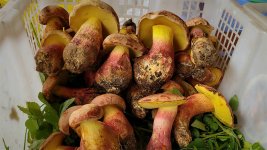
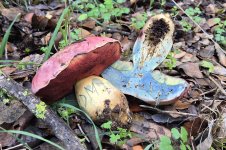
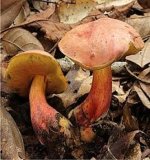
The University of Utah reports on a traditional mushroom known to cause visions of little people. It has been known by several cultures in Asia.
Research is ongoing and the active chemical(s) are unknown.
Unknown to western science, the mushroom has been used traditionally for possibly thousands of years. From the article ( Mushroom causes fairytale-like hallucinations - @theU ):
" A prominent Daoist text from the 3rd century CE refers to a “flesh spirit mushroom,” which, according to the text, if consumed raw, allows one to “see a little person” and “attain transcendence immediately.”"
Anyone from the region have access to this mushroom? The article mentions a closely related species in the US that is rarely eaten (but are eaten). Anyone know what this species could be?
PS: I searched the nexus for this topic and did not find it. Apologies to the mods if I missed it.
Research is ongoing and the active chemical(s) are unknown.
Unknown to western science, the mushroom has been used traditionally for possibly thousands of years. From the article ( Mushroom causes fairytale-like hallucinations - @theU ):
" A prominent Daoist text from the 3rd century CE refers to a “flesh spirit mushroom,” which, according to the text, if consumed raw, allows one to “see a little person” and “attain transcendence immediately.”"
Anyone from the region have access to this mushroom? The article mentions a closely related species in the US that is rarely eaten (but are eaten). Anyone know what this species could be?
PS: I searched the nexus for this topic and did not find it. Apologies to the mods if I missed it.